
Key Takeaways
- Virginia is home to three main types of hornets and hornet-like wasps: the European Hornet, the Bald-Faced Aerial Yellowjacket, and the Eastern Cicada Killer.
- The European Hornet (Vespa crabro) is the only true hornet in Virginia and is often mistaken for the Northern Giant Hornet, but they are not the same species.
- Knowing how to identify each species can help you avoid unnecessary panic and stings.
- If you find a hornet nest in your home, contact Connor’s Pest Pros to have it safely removed.
- Connor’s Pest Pros offers professional stinging insect identification and removal throughout Virginia, with same-day service and a 100% satisfaction guarantee.
What Types of Hornets Are Found in Virginia?
Virginia’s forests, suburbs, and open lawns are home to some of the most misunderstood insects in the eastern United States. When most people spot a large, buzzing insect near their porch or tree line, knowing what you’re actually looking at changes everything. Not every large wasp is a hornet, and not every hornet is a threat.
Connor’s Pest Pros works with Virginia homeowners year-round to identify and safely manage stinging insects.
|
Connor’s Pest Pros: Family-Owned Pest Control Experts Choose Your Pest Protection Solution:
Customer Praise:
★★★★★ “Quick to answer my call and available same-day… I recommend them to anyone looking for pest control in NOVA.” – Jacquelyn L.
Why Choose Connor’s Pest Pros:
|
How Do You Identify Virginia’s Three Hornet Species?
Technically speaking, true hornets belong to the genus Vespa, which means Virginia has just one true hornet species: the European Hornet (Vespa crabro).
However, two other species are so frequently grouped into the “hornet” category by Virginia residents (the Bald-Faced Aerial Yellowjacket and the Eastern Cicada Killer) that they deserve equal attention here. Each of these insects has a distinct appearance, behavior, and risk level that every Virginia resident should know.
1. European Hornet (Vespa crabro)
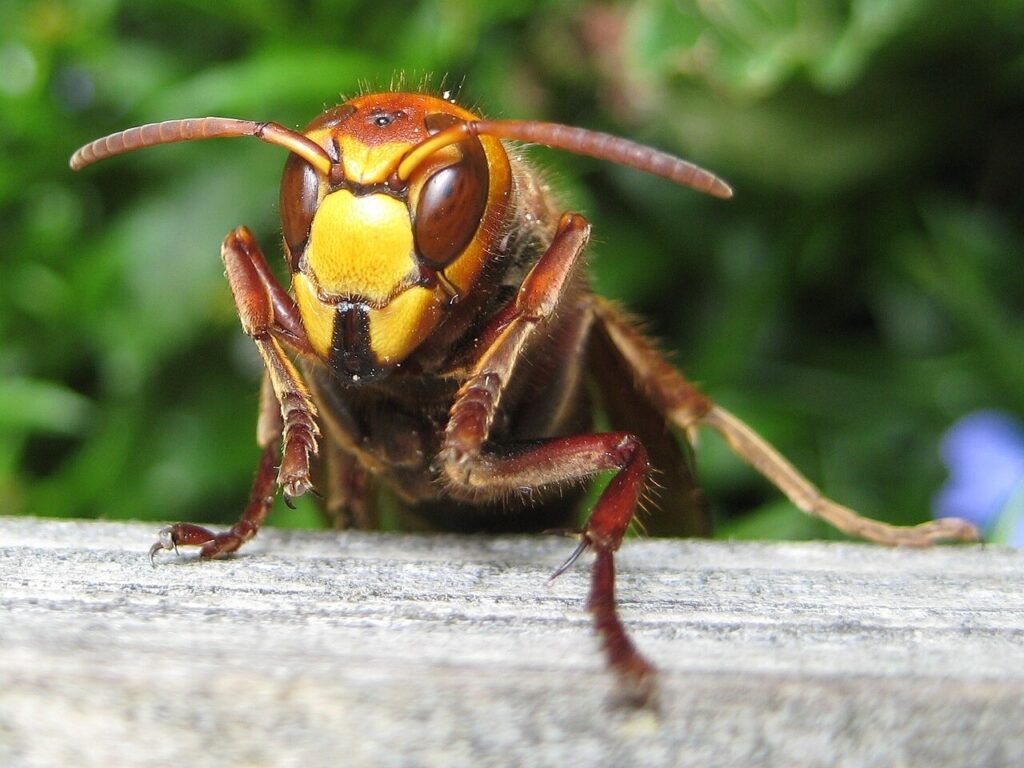
European Hornets are the only true hornets in Virginia (Image source:“European Hornet” by Aconcagualicensed under CC BY-SA 3.0, via Wikimedia Commons)

The European Hornet is the largest eusocial wasp found in Virginia and the only true hornet present in the state. Introduced to the eastern United States in the 1800s, it has since established itself across much of the country, thriving particularly well in Virginia’s forested regions.
Size, Color, and Markings
European Hornets measure approximately 1 inch (25 mm) in length for workers, while queens can reach up to 1.3 inches (35 mm). Their coloration is a combination of brown and yellow, with distinctive dark “drip” markings along the abdomen. The thorax tends to be a rich reddish-brown, and the wings carry a subtle amber tint.
Nesting Habits and Where to Find Them in Virginia
European Hornets prefer to nest inside hollow trees, which makes Virginia’s dense woodlands an ideal habitat. They will also occasionally nest inside wall voids, attics, or other enclosed spaces in homes that border forested areas.
Unlike many other stinging insects, European Hornets are also active at night, which is a behavior that surprises many Virginia residents who spot them flying toward porch lights after dark. This nocturnal activity is relatively unusual among wasps and is one of the species’ most distinctive behavioral traits.
Are European Hornets Dangerous?
European Hornets can sting, and they will defend their nest aggressively if disturbed. The real concern is for those with venom allergies, for whom any wasp or hornet sting can trigger a serious reaction requiring immediate medical attention. When a nest is in a high-traffic area or poses a direct risk to people or pets, professional removal is strongly recommended.
2. Bald-Faced Aerial Yellowjacket (Dolichovespula maculata)
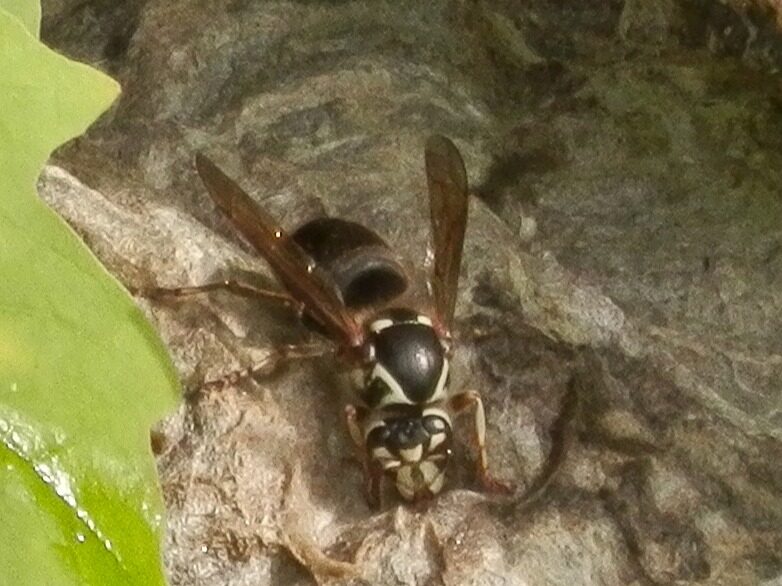
The Bald-Faced Aerial Yellowjacket is predominantly black, with white and pale yellow markings across its body. (Image source:“Bald-faced Aerial Yellowjacket” by Ryan Hodnettlicensed under CC BY-SA 2.0, via Wikimedia Commons)
_-_Kitchener,_Ontario_02.jpg)
Despite being widely known as the “Bald-Faced Hornet,” this species is actually a yellowjacket, not a true hornet. The name change to Bald-Faced Aerial Yellowjacket reflects its correct taxonomic classification, though the old name remains deeply embedded in everyday conversation.
Size and Physical Appearance
The Bald-Faced Aerial Yellowjacket is a large, predominantly black insect with striking white or pale yellow markings across the face, thorax, and abdomen. The face and head are largely white, which is exactly where the “bald-faced” name comes from.
Queens reach up to 20 mm (0.7″) in length, while workers are noticeably smaller, typically ranging from 12 to 15 mm (0.5″–0.6″).
Nest Shape, Size, and Location
The nests built by Bald-Faced Aerial Yellowjackets are oval-shaped and constructed from a paper-like material made from chewed wood fibers mixed with saliva, which is the same basic material used by other social wasps.
In Virginia, these nests are most commonly found attached to tree limbs, shrubs, or the eaves of buildings. They can grow quite large by late summer. Sometimes, they may reach the size of a basketball or larger.
Nests are always abandoned at the end of the season and are never reused the following year.
Sting Risk and Allergic Reactions
Bald-Faced Aerial Yellowjackets are significantly more defensive than European Hornets, particularly when their nest is disturbed. They are capable of stinging repeatedly. Unlike honeybees, they do not lose their stinger after a single sting, and a disturbed colony can mobilize quickly.
The stings are painful and typically cause localized swelling, redness, and itching that can persist for several hours. For individuals with venom allergies, a sting from a Bald-Faced Aerial Yellowjacket can be a medical emergency.
3. Eastern Cicada Killer (Sphecius speciosus) – “Sand Hornet”
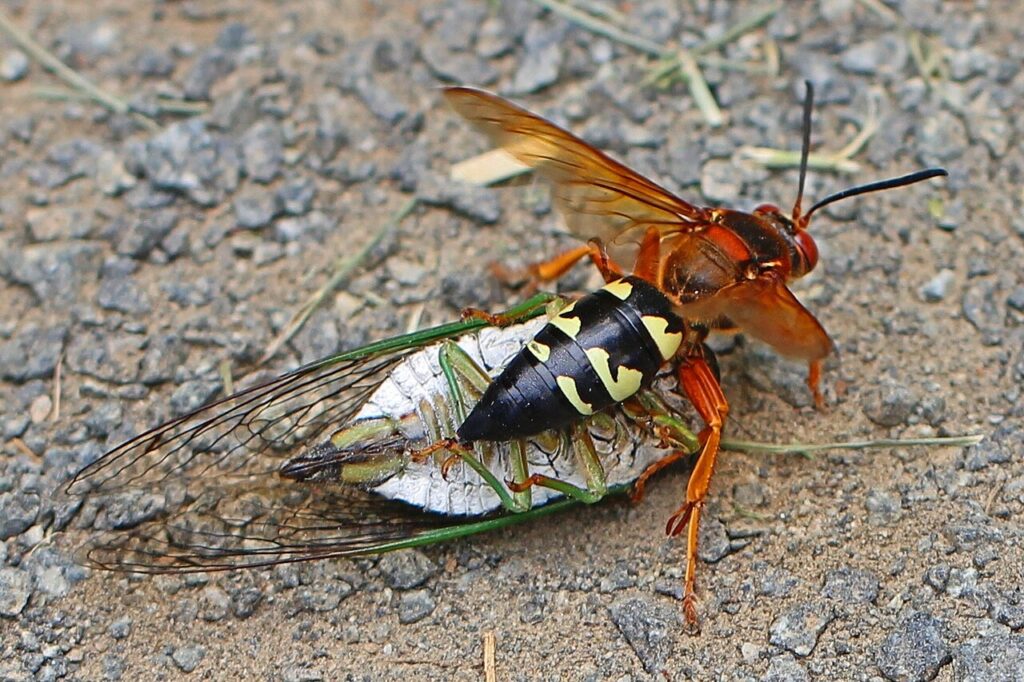
Eastern Cicada Killers are also nicknamed Sand Hornets (Image source:“Eastern Cicada Killer” by Judy Gallagherlicensed under CC BY 2.0, via Wikimedia Commons)
_with_Cicada_-_Bles_Park,_Va.jpg)
The Eastern Cicada Killer is one of the most visually alarming insects a Virginia homeowner can encounter. The females are noticeably larger than the males, and for good reason: their size is directly tied to their remarkable hunting strategy.
Why It Is Mistakenly Called a Sand Hornet
The “sand hornet” label is purely a nickname born from observation, not taxonomy. The name stuck in regional usage across Virginia and much of the Southeast, but it has no scientific basis.
Eastern Cicada Killers are solitary wasps, meaning each female operates entirely independently. There is no queen, no worker caste, and no shared nest to protect. This is the critical distinction that separates their behavior from true social hornets like the European Hornet.
Physical Appearance
Eastern Cicada Killers are large and robust, with females reaching up to two inches in length and males being noticeably smaller. Their coloring is a mix of black and yellow banding on the abdomen, similar enough to yellowjackets that the size difference is often the fastest way to tell them apart. The thorax is rusty-red to black, and the wings carry an amber tint.
Danger and Threat
Male Eastern Cicada Killers are completely stingless and may hover aggressively near people entering their territory, but it’s entirely bluster. Females do have a stinger capable of delivering venom, but they are focused almost entirely on hunting cicadas and are extremely reluctant to sting a human. Provocation (like stepping on one or grabbing it) is really the only scenario where a sting is likely.
Hornets in Virginia: Summary Table
| Species | True Hornet? | Size | Color | Nest Type | Aggression Level |
| European Hornet (Vespa crabro) | Yes | Workers ~1 inch; queens up to 1.3 inches | Brown, yellow, reddish-brown | Hollow trees, wall voids | Moderate: defensive near nest |
| Bald-Faced Aerial Yellowjacket (Dolichovespula maculata) | No (yellowjacket) | Workers 12–15 mm; queens up to 20 mm | Black with white/pale markings | Aerial paper nest in trees or eaves | High: very defensive near nest |
| Eastern Cicada Killer (Sphecius speciosus) | No (solitary wasp) | Up to 2 inches | Black and yellow | Underground burrows in sandy soil | Very low: solitary, non-colonial |
Secure Your Virginia Home Against Hornets With Connor’s Pest Pros
Finding a hornet nest on your property doesn’t have to become an emergency, but it does require the right approach.
At Connor’s Pest Pros, we specialize in identifying and safely removing stinging insect nests from Virginia homes, including European Hornets nesting in wall voids, Bald-Faced Aerial Yellowjacket nests in trees and eaves, and Eastern Cicada Killer burrow clusters in lawns and garden beds.
If you’ve found a nest, noticed significant hornet activity around your home, or simply want a professional assessment before the peak season, we are here to help you.
Contact us to get a FREE quote today!
Frequently Asked Questions (FAQs)
What is the most common hornet in Virginia?
The most commonly encountered large stinging insect that Virginia residents refer to as a “hornet” is the Bald-Faced Aerial Yellowjacket (Dolichovespula maculata), primarily because its large paper nests are highly visible and frequently built in trees, shrubs, and on the eaves of homes. However, the only true hornet species present in Virginia is the European Hornet (Vespa crabro).
Are there Northern Giant Hornets in Virginia?
No. The Northern Giant Hornet (Vespa mandarinia), sometimes referred to by the sensationalized name “murder hornet,” has not been confirmed in Virginia. Confirmed detections in North America were limited to Washington State and British Columbia, Canada. In December 2024, the USDA officially declared the species eradicated from the United States.
What time of year are hornets most active in Virginia?
Hornet and hornet-like wasp activity in Virginia peaks between August and October. Colonies begun by overwintering queens in early spring reach maximum population size by mid to late summer, which is when stinging incidents are most likely.
The Eastern Cicada Killer has a tighter window, emerging in late June through early July in sync with the annual cicada population, with adults remaining active through September.
What should you do if you find a hornet’s nest in your home in Virginia?
Do not attempt to remove the nest yourself. Keep people and pets away from the area and avoid any action that could disturb the colony. Both European Hornets and Bald-Faced Aerial Yellowjackets defend their nests aggressively and can sting repeatedly without dying. Contact Connor’s Pest Pros for a professional assessment. Their team can identify the species, evaluate the risk level, and remove the nest safely without putting your household at risk.
Can Connor’s Pest Pros help remove a hornet’s nest from your home?
Yes. Connor’s Pest Pros provides professional stinging insect identification and nest removal services throughout Virginia, handling everything from accessible aerial nests to hornets that have established colonies inside wall voids, attics, and other structural spaces.
For Virginia homeowners dealing with recurring stinging insect problems, Connor’s Pest Pros also offers preventative inspections and exclusion work to reduce the conditions that make your property attractive to nesting hornets and wasps in the first place.