
Key Takeaways
- North Carolina has two established termite species plus a third that arrives in imported wood, and each one leaves a different warning sign.
- Eastern subterranean termites cause nearly every infestation in the state, and mud tubes along the foundation are your first clue.
- Formosan subterranean termites stay mostly coastal but build the largest colonies, which means damage adds up fast once they settle in.
- West Indian powderpost termites usually arrive inside furniture or timber shipped from Florida, so inspect secondhand wood before it comes indoors.
- Connor’s Pest Pros confirms the species first, then treats the colony directly, because the wrong product buys the termites more time.
Which Termite Is Damaging Your NC Home
Three termite species turn up in North Carolina homes, and each one leaves a different warning sign that tells you which species you have. Eastern subterranean termites build mud tubes along the foundation, Formosan termites pack carton nests inside walls, and West Indian powderpost termites leave frass pellets under pinhole holes in the wood.
Getting the species wrong is what costs homeowners the most. A product aimed at subterranean termites in the soil does nothing for drywood termites living inside a beam, so the colony keeps feeding while you think it’s handled. That lost time is what turns a manageable problem into major structural repair.
Because termites work out of sight and can feed for months before anyone notices, a professional inspection is your best defense. The North Carolina Department of Agriculture recommends an annual inspection, though homes in higher-risk coastal areas or with a past infestation may need more frequent checks. Connor’s Pest Pros offers inspection services, identifies the species first, then treats the colony at its source, so you’re not guessing while the damage grows.
Connor’s Pest Pros: Trusted, Family-Owned Pest Control
4.9★ Google Rating | 100% Satisfaction Guarantee
Protect Your Home, Pest-Free:
Get customized, ongoing pest control that adjusts with the seasons, covering everything from ants and spiders to termites, rodents, and bed bugs. Same-day or next-day visits mean fast relief.
What Sets Us Apart:
✓ 950+ 5-star reviews on Google
✓ Family-owned, D.C. metro area
✓ Member of the NPMA
✓ Angi Super Service Award Winner (2024)
✓ 100% Satisfaction Guarantee
Don’t let pests take over your home. Act now.
Request Your Free Estimate →3 Types of Termites in North Carolina
1. Eastern Subterranean Termites
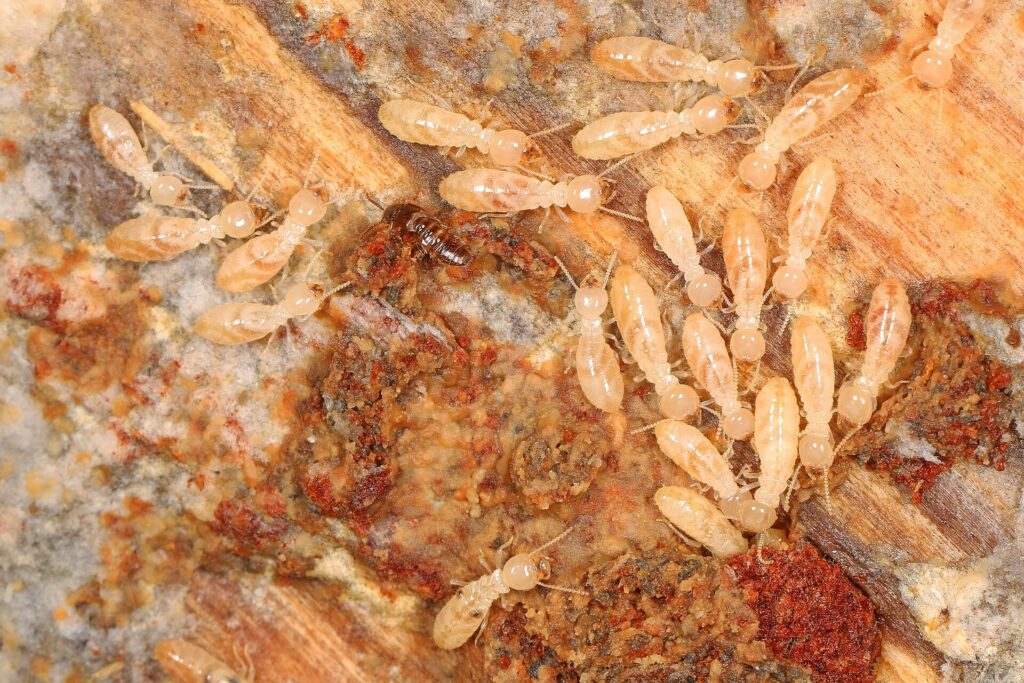
Eastern subterranean termites are the most common termite species in North Carolina. (Image source: “Eastern Subterranean Termite – Reticulitermes flavipes and Rove Beetle (Aleocharinae subfamily), Robert W. Duncan Wildlife Management Area, Ruther Glen, Virginia, May 18, 2023 (53531674791)” by Judy Gallagher licensed under CC BY 2.0, via Wikimedia Commons.)

If your North Carolina home has a termite infestation, Eastern subterranean termites (Reticulitermes flavipes) are the most likely cause. These insects are widely distributed throughout the entire eastern United States and are by far the most frequently encountered termite species in NC.
They live in underground colonies and build distinctive mud tubes (pencil-width tunnels made from soil, wood particles, and saliva) to travel from the ground into your home’s wooden structures while staying protected from open air. These mud tubes are one of the most reliable early warning signs of an active infestation.
Eastern subterranean termites swarm in the spring, typically following rainfall. Swarmers (also called alates) measure approximately three-eighths of an inch long with wings and have dark brown to black bodies. Spotting swarmers near your home (especially near windowsills, door frames, or light sources) is a strong indicator that a colony is nearby.
Their preferred food sources include:
- Structural lumber and floor joists
- Wood paneling and subflooring
- Cardboard boxes stored in crawl spaces or basements
- Wood debris left near the foundation
A single Eastern subterranean colony is destructive on its own, as infestations often go undetected for months or even years, allowing extensive structural damage to accumulate silently inside walls and under floors.
2. Formosan Subterranean Termites
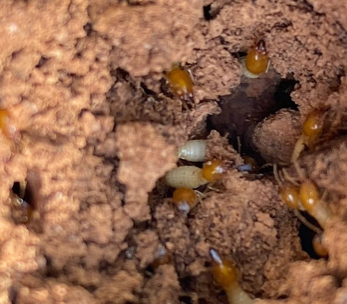
Formosan subterranean termites are among the most destructive termite species. (Image source: “Formosan termites in tree no wings” by Teechippy licensed under CC BY-SA 4.0, via Wikimedia Commons.)

Formosan subterranean termites (Coptotermes formosanus) are less common in North Carolina than Eastern subterranean termites, but don’t let that lower your guard. These insects are widely considered one of the most destructive termite species in the world.
A mature Formosan colony can contain several million individual termites, compared to the few hundred thousand typically found in an Eastern subterranean colony. That sheer population size means a Formosan infestation can cause structural damage in a fraction of the time it would take other species.
Like their Eastern cousins, Formosan termites are subterranean. They nest underground and require moisture to survive. They’re especially attracted to homes with:
- Leaking pipes or poor drainage
- Damp crawl spaces or basements
- Humid attic spaces
- Wood-to-soil contact at the foundation
Formosan termites also build carton nests (secondary nests made from chewed wood, soil, and moisture) inside walls and structural voids. This allows them to survive without returning to the soil, making them significantly harder to eliminate than other subterranean species.
3. West Indian Powderpost Termites
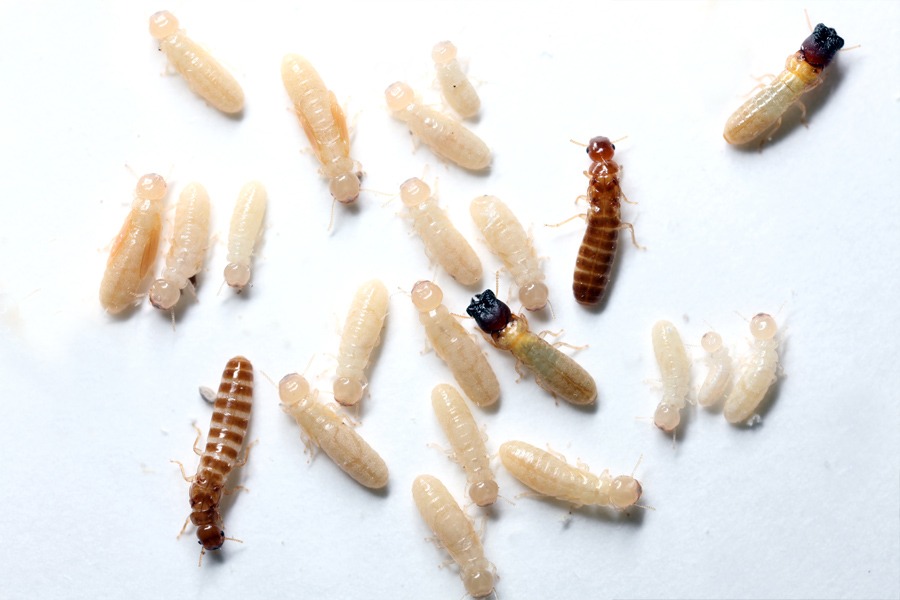
West Indian powderpost termites do not need moisture to live. (Image source: “Colonia de Cryptotermes Brevis Walker” by Davidmoradelpozo licensed under CC BY-SA 3.0, via Wikimedia Commons.)

West Indian powderpost termites (Cryptotermes brevis) are established in Florida, Hawaii, and along the southeastern Gulf Coast, and they turn up in North Carolina mainly as introductions in infested furniture or timber rather than as an established local population. What makes this species unusual is what they don’t need: moisture.
While most termite species are drawn to damp or decaying wood, West Indian powderpost termites specifically target dry, sound timber with very low moisture content. This means finished furniture, structural beams, picture frames, and decorative woodwork are all fair game, items that homeowners rarely think to inspect for termite activity.
Colonies are relatively small compared to subterranean species, but the damage they cause can be deceptively severe. They hollow out wood from the inside, leaving only a thin outer shell intact.
The most common giveaway is frass: tiny six-sided fecal pellets that pile up beneath pinhole-sized kick-out holes in the wood. By the time visible damage appears on the surface, significant structural compromise may have already occurred beneath it.
3 Types of Termites in North Carolina: Summary Table
| Species | Habitat | Preferred Wood | Colony Size | Common Locations in NC | Key Warning Sign |
| Eastern Subterranean | Underground soil | Sound structural wood as well as damp, decaying wood | Hundreds of thousands | Statewide | Mud tubes near foundation |
| Formosan Subterranean | Underground + carton nests | Moist structural wood | Several million | Coastal NC counties, including the Wilmington and New Bern areas | Carton nests inside walls |
| West Indian Powderpost | Dry wood, no soil needed | Low-moisture dry timber | Small | Arrives in imported furniture or timber | Frass: six-sided pellets under pinhole kick-out holes. |
Let Connor’s Pest Pros Handle Termite Infestations in Your NC Home
All three species damage wood, but they do it differently, and they respond to different treatments. At Connor’s Pest Pros, we treat termites across Greensboro and the surrounding Piedmont Triad, starting with a full inspection to confirm the species before we apply any product.
Our technicians handle localized treatments, soil barriers, and ongoing monitoring, all backed by our satisfaction guarantee. Request your free termite estimate today and get a clear answer on what you’re dealing with.
Frequently Asked Questions (FAQs)
What types of termites are common in North Carolina?
Two termite species are established in North Carolina (Eastern subterranean and Formosan subterranean termites), and a third, the West Indian powderpost termite, is periodically introduced in infested wood. Eastern subterranean termites are by far the most common statewide, while West Indian powderpost termites are not established in the state and show up mainly in furniture or timber brought in from Florida and the Gulf Coast.
What is a termite’s worst enemy?
Termites have several natural predators, but ants (particularly fire ants and carpenter ants) are among their most effective natural enemies. Ants will actively raid termite colonies, killing workers and soldiers to eliminate competition for food and territory.
That said, natural predators alone won’t protect your home from a termite infestation. A thriving colony contains hundreds of thousands to millions of individuals, and no natural predator population is large enough to eliminate that many termites without professional intervention.
Which smell do termites hate?
Termites are repelled by scents like cedarwood, cinnamon, and clove oil. However, while these scents may discourage termites temporarily, they are not a substitute for professional treatment and will not eliminate an existing colony.
Can you control termites yourself?
DIY termite control products (including bait stations and liquid termiticides) are available at hardware stores, but they come with significant limitations. Most over-the-counter products only address termites at the surface level and fail to reach the queen or the deeper portions of the colony.
Without eliminating the colony at its source, the infestation will persist and continue causing structural damage. For any confirmed or suspected termite activity, professional treatment is strongly recommended.
Does Connor’s Pest Pros offer termite treatment services?
Yes. Connor’s Pest Pros provides comprehensive termite treatment services across Greensboro and the surrounding Piedmont Triad, including inspections, targeted treatments, and ongoing monitoring programs designed to keep termites from returning.
*Price estimates reflect current market costs and may vary based on your specific situation. For a personalized quote tailored to your needs, contact us directly or request your FREE estimate today!