
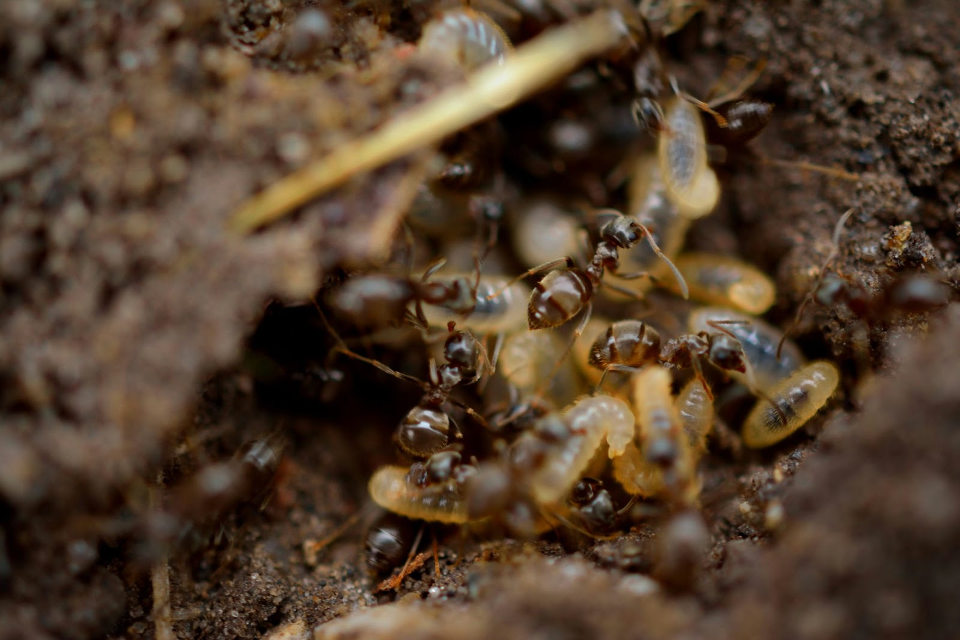
Key Takeaways
- Termites have equal wings, straight antennae, and thick waists, while ants show bent antennae, uneven wings, and narrow waists.
- Swarming termites emerge in spring after rain, while flying ants often appear in summer and swarm longer indoors or outdoors.
- Termites eat wood from the inside, leaving mud tubes and hollow structures, while carpenter ants carve smooth galleries and push out frass.
- Quick checks like tapping wood, spotting mud tubes, or collecting wings help confirm which pest is present.
- Connor’s Pest Pros provides expert termite and ant control with eco-friendly, customized treatments, same-day service, and guaranteed long-term protection.
Body Features That Set Termites & Flying Ants Apart
Termites refer to a distinct species of wood-eating insects while flying ants refer to a phase or stage that many ant species go through.
The most reliable way to separate termites from flying ants is by their physical traits. These details reflect their ecological roles—termites as wood eaters that can damage homes, and ants as foragers or predators. Knowing the difference helps homeowners decide how urgently to act.
Wing Structure
Termites have four wings of equal length, extending well beyond their bodies. Their wings are pale or smoky, with fine veins, and are often shed in complete sets of four, commonly left in piles near windows, doors, or light fixtures after swarming. Flying ants have two pairs of wings, with the front pair larger than the back. Their wings show a more amber or brown tint, fewer veins, and are usually shed more gradually and unevenly.
Antennae Shape
Termites have straight, bead-like antennae that project forward, while ants display the characteristic bent, “elbowed” antennae that give them better sensory function for foraging.
Waist Comparison
A termite’s body appears thick and uniform, with no pinched waist, giving it a cigar-like shape. Flying ants, in contrast, show the narrow waist that defines ants, making their segments clearly visible.
Color & Size
Termite swarmers are usually dark brown to black, sometimes reddish, with consistent body coloring. Flying ants vary more, often showing red, brown, or black contrasts. Carpenter ants, which are frequently mistaken for termites, are larger than most other ants and are typically solid black or red-and-black.
|
Connor’s Pest Pros: Family-Owned Pest Control Experts Choose Your Pest Protection Solution:
Customer Praise:
★★★★★ “Quick to answer my call and available same-day… I recommend them to anyone looking for pest control in NOVA.” – Jacquelyn L.
Why Choose Connor’s Pest Pros:
|
Behavior Patterns That Help With Identification
Physical traits aren’t the only clues because termites and flying ants also show distinct behaviors. Swarming seasons, flight style, and nesting habits can all help homeowners identify which pest they’re facing, even without seeing the insects directly.
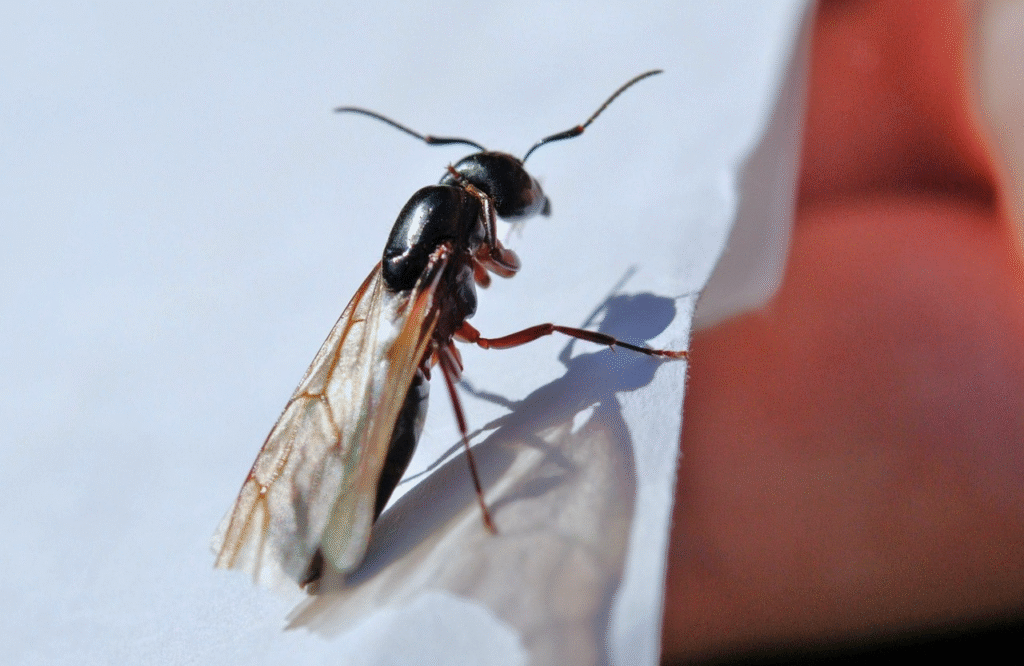
Bent antennae and uneven wings are a telltale sign of flying ants, not termites.
Swarming Seasons
Termites usually swarm in spring or early summer, often after rain and mostly in daylight. Subterranean species emerge from February to May, while drywood termites swarm later into fall. Their swarms are brief, often lasting under an hour.
Flying ants, especially carpenter ants, swarm in late spring or summer, though some species may swarm any time indoors. Their swarms can last hours or even days, often in late afternoon or evening.
Flight & Wing Shedding
Termites are weak, erratic fliers, traveling only short distances before dropping all four wings in neat piles near windows or lights. Flying ants are stronger fliers with more directed movement. Queens keep their wings longer and shed them gradually, leaving scattered wings of uneven sizes.
Nesting & Damage
Termites build colonies in soil or wood, eating through softer growth layers and filling tunnels with soil and excrement, giving them a muddy look. Carpenter ants don’t eat wood but carve smooth galleries across the grain, pushing out sawdust-like frass mixed with insect parts. Other flying ants rarely damage wood, nesting instead in soil, walls, or cavities.
Property Damage: What to Look For
Even if you don’t see the insects, the type of damage they leave behind can help you identify them. Each pest creates distinct evidence that can be spotted early with a careful eye.
Termite Damage
Termites start eating wood from the inside, leaving hollow-sounding structures and thin, blistered surfaces that break easily. Subterranean termites also build pencil-thin mud tubes along foundations, something ants never do. Inside the wood, their galleries are filled with soil and excrement, giving a layered, cardboard-like look. Severe infestations may cause sagging floors, bubbling paint, or buckling wood.
Carpenter Ant Damage
Flying ants usually don’t damage wood, but carpenter ants carve smooth, sanded galleries across the grain. They push out frass, sawdust mixed with insect parts, that often piles up below damaged areas. Their activity is usually tied to damp or decaying wood caused by leaks or poor ventilation.
Other Ant Activity
Most flying ant species don’t attack wood at all. Instead, they nest in soil, wall voids, or cavities, sometimes leaving dirt mounds or visible trails. These infestations are more of a nuisance than a structural threat.
DIY Identification Tests You Can Do Today
If you’ve found winged insects or suspicious damage, a few simple checks can help you tell termites from flying ants. These quick tests require no special tools and can guide your next steps, potentially saving costly repairs if termites are involved.
The Wing Test
Collect discarded wings near windows or lights. Termite wings are all equal in size, translucent, and often twice the body length. Flying ant wings show clear size differences, the front pair larger than the back, with fewer veins and a faint amber tint.
The Mud Tube Check
Look along foundations, crawlspaces, and soil-to-wood areas for pencil-thin mud tubes. Breaking one open often reveals cream-colored termite workers. Unlike termites, ants never build true mud tubes; instead, carpenter ants create loose wood debris tunnels without any soil construction.
Wood Inspection
Tap wood with a screwdriver—termite-damaged wood sounds hollow and has soil-filled galleries running with the grain. Carpenter ant galleries are smooth, clean, often cross the grain, and accompanied by frass (sawdust-like shavings mixed with insect parts).
Effective Termite Treatment Options
Once termite infestations are confirmed, fast action is key to stopping structural damage.
1. Liquid Termite Barriers
The most common treatment for subterranean termites, liquid termiticides, create a chemical zone around your foundation that kills or repels intruders. Applied through trenching and drilling, these barriers can last 5–10 years. They act quickly and provide broad coverage, but proper application by professionals is critical to ensure no gaps remain.
2. Baiting Systems
Bait stations, installed around the property, exploit termite foraging behavior. Termites feed on the bait and spread it through the colony, eventually killing the queen. Though slower than liquid treatments, they use less chemicals, are minimally invasive, and can wipe out entire colonies over time. They’re especially useful in sensitive environments or where liquid barriers aren’t practical.
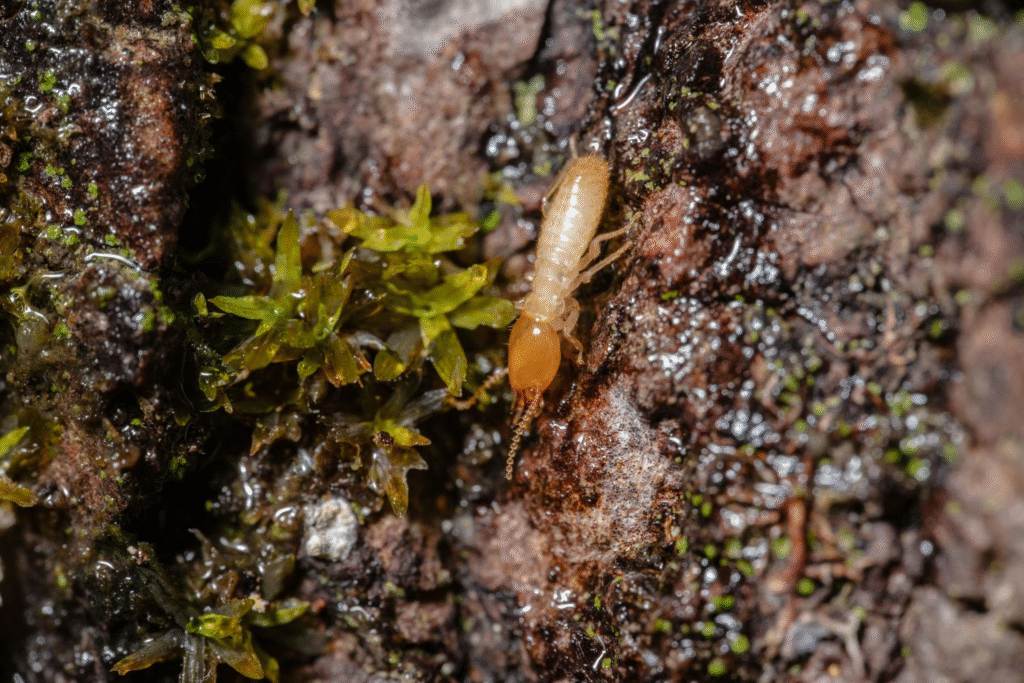
Termites usually swarm in spring after rainfall, emerging from soil or wood.
3. Wood Treatments
For localized infestations or drywood termites, borate sprays, foams, or injections can protect specific wood areas. These penetrate the surface to stop termites from feeding. While effective for smaller problems and prevention, they require careful inspection since missed areas may allow termites to survive.
4. Fumigation
For severe or widespread drywood infestations, whole-house fumigation may be necessary. The home is sealed in a tent and treated with gas that penetrates all wood, killing termites everywhere inside. Though disruptive and requiring 2–3 days of evacuation, it offers near-total elimination when other methods can’t reach hidden colonies.
Flying Ant Control Methods That Work
Flying ants usually need less intensive treatment than termites, but carpenter ants, because of their wood damage, require stronger action.
1. Locate & Eliminate the Nest
The best long-term solution is treating the parent colony. Outdoors, check tree stumps, decaying wood, or landscaping features. Indoors, nests often hide in wall voids near moisture. Directly apply insecticide dusts or sprays, and for carpenter ants, drill into galleries to reach the colony.
2. Use Ant Baits
When nests can’t be found, baits are effective. Workers carry poisoned food back to the colony, eventually killing the queen. Gel baits are best indoors, while granular baits suit outdoors. Replace regularly until activity stops.
3. Perimeter Sprays
Residual insecticides applied around foundations, entry points, and access routes create a barrier that lasts weeks or months. Apply before swarming season or after eliminating colonies to prevent reinfestation.
4. Natural Repellents
For a chemical-free approach, diatomaceous earth, peppermint or tea tree oil, and vinegar-water solutions can repel or kill ants. These options are safer for sensitive spaces but may need frequent reapplication.
Prevention Strategies to Protect Your Home
Prevention is the most cost-effective way to manage termites and flying ants. By addressing the conditions that attract these pests, like moisture, wood-to-soil contact, and clutter, you can reduce the chance of infestations while making early detection easier.
| Prevention Focus | Termite Benefits | Flying Ant Benefits |
| Moisture Control | Eliminates essential water source for subterranean termites | Reduces attractiveness for carpenter ants that prefer damp wood |
| Wood-Soil Barriers | Blocks primary access route for subterranean termites | Minimal impact (ants don’t require wood-soil contact) |
| Regular Inspections | Enables early detection before significant damage occurs | Identifies potential nesting sites before colonies mature |
| Landscape Management | Reduces wood debris that supports termite colonies | Eliminates potential nesting sites for many ant species |
Moisture Control Techniques
Excess water creates ideal conditions for termites and carpenter ants. Fix leaks quickly, maintain gutters and downspouts that direct water away from the foundation, and ensure good ventilation in crawlspaces, attics, and bathrooms. Vapor barriers in damp crawlspaces can also help.
Wood-to-Soil Barriers
Keep at least 6 inches of clearance between soil and wooden structures such as siding or supports. Use metal or concrete bases for posts and opt for pressure-treated or termite-resistant lumber. These small adjustments cut off a major access route for subterranean termites.
Regular Inspections
Check exterior wood monthly and crawlspaces or attics quarterly. Look for mud tubes, discarded wings, hollow wood, or frass piles. Schedule a professional inspection yearly, especially after heavy rains. Keep dated notes and photos of your findings—documentation can even help when selling a home.
Landscape Management
Maintain a clear zone around the foundation, remove dead wood, and store firewood at least 20 feet away and off the ground. Inspect outdoor wooden structures regularly, and replace foundation mulch with gravel or stone where possible to reduce moisture and pest attraction.
When to Call Pest Control Experts
Homeowners can often manage minor flying ant problems, but certain situations require professional help, especially with termites. Knowing when to call saves time, money, and prevents costly structural damage. For example, we at Connor’s Pest Pros provide expert inspections and treatments for both termites and ants.
Warning Signs That Need Immediate Action
For termites, call experts if you see mud tubes, hollow wood, visible tunneling, discarded wings, or swarmers emerging from structural wood. These signs point to active colonies already causing damage.
For flying ants, professional help is needed when large indoor swarms appear, ant trails persist despite DIY efforts, or carpenter ant frass piles are found near wood. Since termites and ants require very different treatments, expert identification is essential if you’re unsure which pest is present.
Professional vs DIY Checklist
- Call immediately for: mud tubes, hollow-sounding wood, swarmers or wings indoors, tunneling, frass piles, or major ant swarms.
- DIY may suffice for: occasional indoor flying ants, small outdoor nests, or minor trails leading outside.
When contacting professionals, provide clear details and photos if possible to ensure they bring the right tools and plan for your situation.
Choosing the Right Pest Control Company
Ask about their experience with termites vs ants, methods of identification, treatment success rates, warranties, and re-treatment policies. Confirm licensing, insurance, and technician training. Reputable companies provide references, clear explanations, and no high-pressure sales tactics.
Why Choose Connor’s Pest Pros for Termite & Ant Protection

Targeted treatments protect your home from structural damage and long-term infestations.
When dealing with pests like termites, carpenter ants, or other invasive species, professional help makes all the difference. At Connor’s Pest Pros, we deliver tailored pest control solutions designed to protect homes in Virginia, Maryland, and the DC metro area.
Our services go beyond one-time fixes as we provide customized treatment plans, seasonal adjustments, and same-day or next-day service so you’re never left waiting while pests continue to spread.
If you’re facing termites eating away at structural wood, carpenter ants leaving frass behind, or nuisance ants finding ways indoors, our targeted approach ensures both immediate relief and long-term protection.
Key benefits of working with Connor’s Pest Pros include:
- Expert termite and ant control with species-specific treatments
- Recurring pest protection plans for year-round peace of mind
- Eco-friendly, family-safe methods that protect your home and loved ones
- Satisfaction guaranteed, so if pests return, they’ll come back at no extra cost
From nuisance ants to severe termite damage, we have the knowledge, tools, and commitment to solve your problem quickly and effectively. With hundreds of 5-star reviews and flexible scheduling, we have earned our reputation as a trusted local pest control provider.
Reach out today for a free quote!
Frequently Asked Questions (FAQs)
Do flying ants cause structural damage like termites?
No. Most flying ants are a nuisance. Only carpenter ants excavate wood for nesting, leaving frass, while termites consume wood internally, potentially compromising the home’s structural integrity.
When do termites and flying ants typically swarm?
Termites usually swarm in spring or early summer after rain. Flying ants swarm later in spring or summer, often in the afternoon or evening. Swarm timing can help with early identification.
Can termites and flying ants infest the same house simultaneously?
Yes, both can infest one property at the same time, often drawn by moisture and wood. They occupy different niches as termites eat wood and ants forage for food. Professional inspection ensures correct identification, treatment, and control of shared attractants.
Are there regional differences in termite and flying ant species?
Absolutely. Subterranean termites dominate eastern states, while drywood species appear in the west and south. Carpenter ants are common in northern regions, while fire ants thrive in the south. Local expertise ensures the right treatment for your area’s pests.
Can I prevent reinfestation after successful treatment?
Yes. Keep moisture under control, remove wood-to-soil contact, and use preventative treatments like borates. Annual inspections are essential, and pear control service providers like Connor’s Pest Pros offer protection plans with retreatment guarantees, ensuring long-term barriers against termites and ants.