
Key Takeaways
- Skunks rarely attack cats but will spray when cornered.
- Skunks are a primary vector of rabies, and any bite or scratch requires immediate veterinary attention.
- Prevention strategies include modifying your cat’s outdoor schedule, securing your property, and removing food attractants.
- Protect your cat from dangerous skunk encounters; Connor’s Pest Pros provides professional, pet-safe wildlife removal that works.
Do Skunks Attack Cats? Understanding the Physical Threat
Skunks rarely pick fights with cats. They’d much rather waddle away than throw down. But here’s the catch: cats and skunks are roughly the same size, so your curious kitty might not see that black-and-white critter as a threat. Instead, their natural hunting or territorial instincts might kick in, leading them to chase or corner a skunk. That’s when things go sideways.
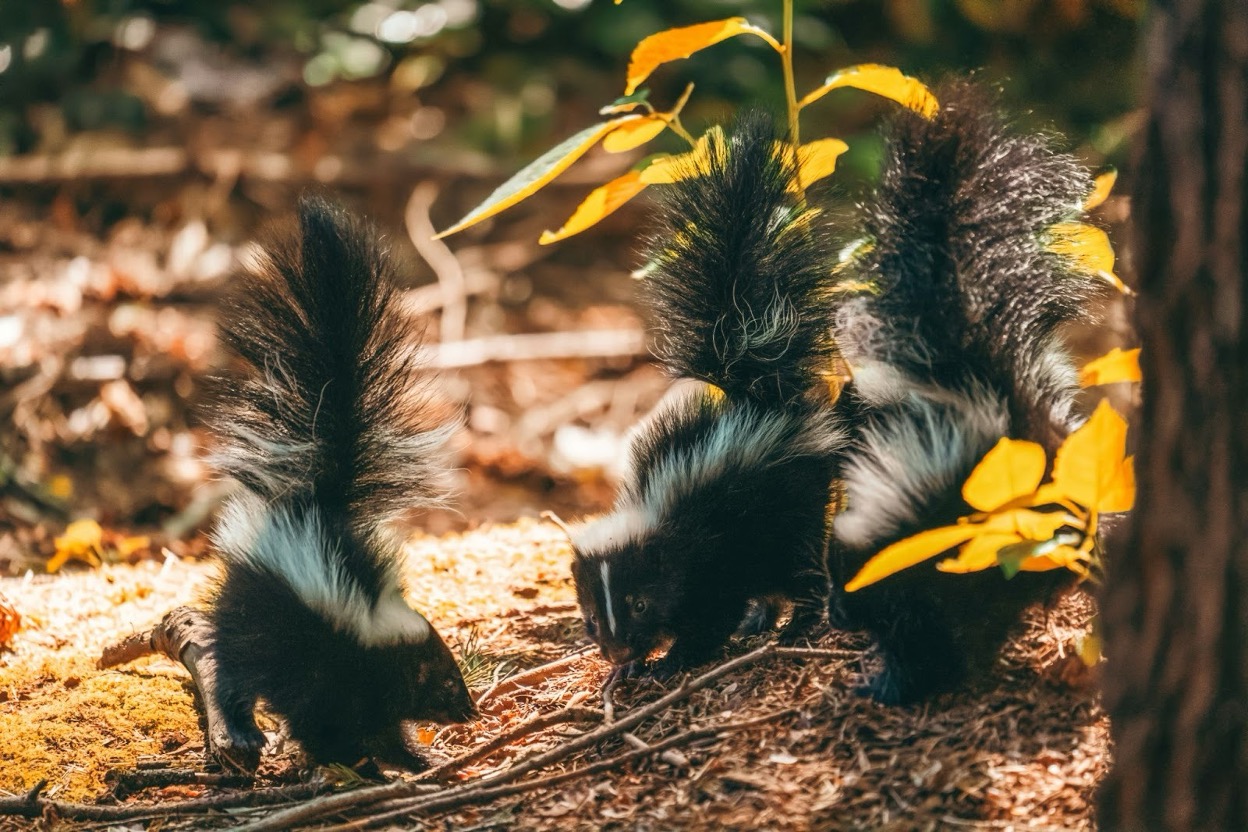
Before resorting to their spray, skunks display clear warning behaviors: stamping their front feet, raising their tail, hissing, and making short charging movements. If these warnings are ignored, a skunk can accurately spray its potent, oily musk up to 10–15 feet, targeting a cat’s face and eyes with sulfur compounds called thiols.
When physical quarrels do occur, the results can be serious. Skunks have powerful forelegs with sturdy digging claws and teeth that can inflict deep, infection-prone wounds. More critically, skunks are a primary vector of rabies, making any bite or scratch a potential risk of disease transmission.
Young kittens and smaller cat breeds face heightened danger, as they may prompt more direct physical confrontations rather than warning sprays. Any cat sustaining injuries from a skunk encounter requires immediate veterinary attention to address both wound infection risks and potential rabies exposure.
|
Connor’s Pest Pros: Family-Owned Pest Control Experts Choose Your Pest Protection Solution:
Customer Praise:
★★★★★ “Quick to answer my call and available same-day… I recommend them to anyone looking for pest control in NOVA.” – Jacquelyn L.
Why Choose Connor’s Pest Pros:
|
Health Risks Your Cat May Face After Getting Sprayed
Skunk spray isn’t just smelly. It’s a potent chemical cocktail that can seriously harm your cat.
Skunks are sharpshooters. They deliberately aim for the face and rarely miss. When that oily spray hits your cat’s eyes, it causes immediate burning, redness, swelling, and excessive tearing. In severe cases, cats can experience temporary blindness. You might notice your cat squinting, pawing at their face, or struggling to keep their eyes open. If spray gets in your cat’s eyes, flush them with cool water for at least 15 minutes and contact your vet right away.
Many cat owners also overlook that cats groom themselves obsessively, so they’ll lick the toxic spray right off their fur. Ingesting skunk spray can cause nausea, drooling, vomiting, and gastrointestinal upset. If your cat shows notable symptoms after a skunk encounter, get to the vet immediately.
Beyond the spray itself, any physical contact with a skunk puts your cat at risk for rabies, a fatal disease transmitted through bites and scratches. If you suspect your cat was bitten or scratched during a skunk encounter, contact your veterinarian immediately, even if your cat is vaccinated.
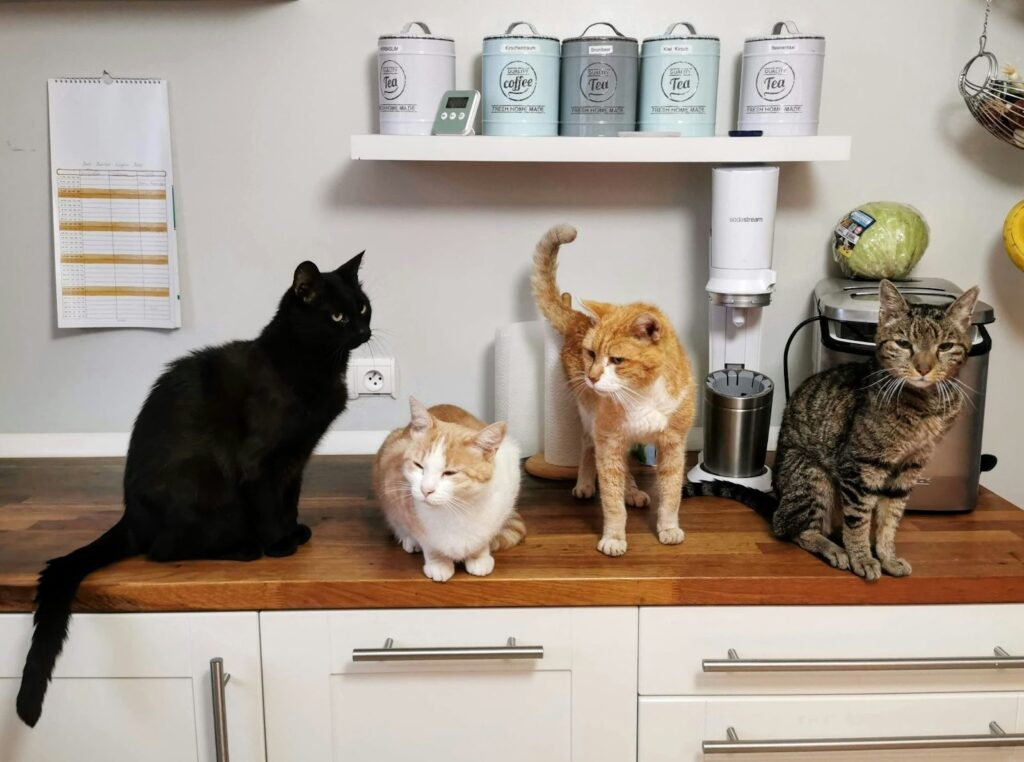
Any physical contact with a skunk can expose your cat to rabies, so call your veterinarian immediately if you think your cat was bitten or scratched.
What to Do When Your Cat Gets Sprayed by a Skunk
If your cat has had an unfortunate encounter with a skunk, acting quickly is essential to minimize both discomfort and potential health risks.
- Keep your cat outdoors if possible. This prevents odor from permeating your home. Use a garage or well-ventilated space.
- Protect yourself with thick rubber gloves. This guards against odor transfer and chemical contact with your skin.
- Check and flush your cat’s eyes immediately. If red or irritated, or if your cat is pawing at them, flush gently with cool water or a veterinary eye wash for 5–15 minutes; contact your vet if irritation persists.
- Prepare deodorizing solution. Mix 4 cups of 3% hydrogen peroxide, ¼ cup baking soda, and 1–2 teaspoons liquid dish soap in a large open container. Never store this mixture, as it can cause containers to burst. And never use hydrogen peroxide concentrations higher than 3%, as they can burn your cat’s skin.
- Apply the solution to your cat’s fur. Work into the coat thoroughly but gently. Avoid the eyes, ears, and mouth.
- Rinse and shampoo. Rinse completely after 5 minutes, then follow with a gentle cat-specific shampoo; repeat if odor persists.
- Monitor for symptoms. Watch for labored breathing, persistent eye irritation, vomiting, or lethargy. Seek immediate veterinary attention if any symptoms appear.
While treating your cat is the immediate priority, addressing the root cause prevents future incidents. If a skunk sprayed your cat on your property, it’s likely nesting nearby, and it will return. Contact Connor’s Pest Pros to humanely remove skunks and secure your property before your cat becomes a repeat victim.
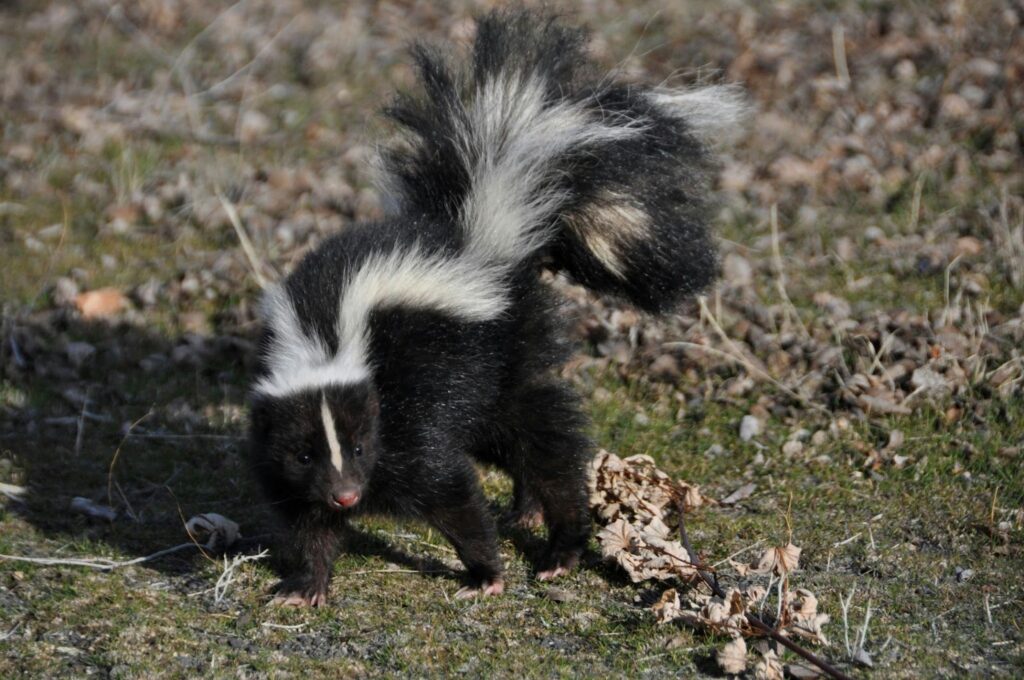
Skunks pose grave dangers to cats, so take preventive measures to keep them away.
5 Safety Tips to Prevent Skunk-Cat Encounters
1. Secure Your Property Against Skunks
Make your property less inviting to skunks by eliminating potential den sites beneath decks, porches, sheds, and crawl spaces. Install sturdy hardware cloth or welded wire fencing buried at least 12 inches deep around these vulnerable areas, extending at least 3 feet above ground level.
Regularly inspect for signs of skunk activity (small lawn holes, five-toed tracks, or musky odors) and address issues promptly before they become established dens.
2. Modify Your Cat’s Outdoor Schedule
Skunks are primarily active at dawn, dusk, and night, so limiting your cat’s outdoor access to daylight hours significantly reduces the risk of dangerous encounters.
This simple schedule adjustment allows your cat to enjoy outdoor enrichment while avoiding peak skunk activity times.
3. Install Motion-Activated Deterrents
Motion-activated sprinklers deliver sudden bursts of water that startle skunks and condition them to avoid your property without causing harm. Supplement with motion-activated lights in areas where water use is impractical, as skunks prefer darkness, and sudden illumination discourages lingering.
Position these deterrents near potential entry points, garbage storage areas, or other skunk-attracting locations for maximum effectiveness.
4. Create Safe Outdoor Spaces for Cats
A secure cat enclosure, or “catio,” is one of the most effective ways to let your cat enjoy the outdoors while preventing encounters with wildlife. Enclosed spaces, such as screened window boxes, keep your cat contained and wildlife out.
For cats wanting more freedom, cat-specific fence toppers that prevent climbing can create a safe perimeter when combined with skunk exclusion methods.
5. Remove Attractants from Your Yard
Skunks are opportunistic foragers drawn to easy food sources, so never leave pet food outdoors and secure garbage cans with locking lids. Address lawn grubs and insects with natural control measures, as skunks feed heavily on these pests.
Maintain a tidy yard with minimal debris and dense undergrowth to reduce hiding places and make your property less appealing to shelter-seeking skunks.
Keep Your Cat Safe from Skunks With Professional Wildlife Control Services

Choose professional wildlife removal services to keep skunks away from your pets.
The risks skunks pose to cats go far beyond that notorious smell. We’re talking potential injuries, painful chemical burns, and even rabies exposure. When skunks have made themselves at home on your property, professional intervention is the safest and most effective solution—and that’s where Connor’s Pest Pros comes in.
As a family-owned business serving the D.C. metro area, with 415+ five-star reviews and an Angi Super Service Award, we specialize in humane wildlife management with pet safety as our top priority. We offer same-day service when you need it most, using proven exclusion techniques and following the National Pest Management Association’s standards. Our team conducts thorough property assessments, pinpoints hidden entry points and den sites, and implements strategies that prevent future encounters. They are all backed by our 100% satisfaction guarantee with free re-treatments until you’re completely satisfied.
Don’t wait for a midnight skunk showdown or a trip to the emergency vet. Protect your cat with Connor’s Pest Pros’ expert wildlife control.
Contact us today for your free quote!
Frequently Asked Questions (FAQs)
Can skunks transmit diseases to cats?
Yes, skunks can transmit several serious diseases to cats, with rabies being the most significant concern, as skunks are a primary vector for rabies.
Beyond rabies, skunks may carry leptospirosis and harbor external parasites, such as fleas, ticks, and mites, that can be transmitted to cats during close contact. This is why maintaining your cat’s rabies vaccination is absolutely essential, even for primarily indoor cats.
Can a skunk hurt a cat?
While skunks generally prefer avoidance to confrontation, they can inflict significant physical injury on cats when cornered or threatened, using sharp claws and teeth that can create infection-prone puncture wounds.
The chemical spray also constitutes an injury, causing intense discomfort and potential tissue damage to sensitive areas such as the eyes. Any cat showing signs of physical injury following a suspected skunk encounter should receive immediate veterinary evaluation.
How do I get rid of a skunk without harming my cat?
Attempting DIY skunk removal risks exposure to their spray for both you and your cat, and skunks may carry rabies or become aggressive when cornered.
Professional wildlife removal is the safest, most effective approach. Experts use humane trapping and exclusion techniques that protect your pets while permanently eliminating the threat.
What does it mean when skunks hang around your house?
Skunks stick around when they find reliable food and shelter. Check for unsecured trash, outdoor pet food, or gaps under structures where they may be nesting.
What services does Connor’s Pest Pros offer to address this issue?
Connor’s Pest Pros specializes in humane skunk removal that keeps your family and pets safe. Our wildlife control experts trap and relocate skunks, secure your property against re-entry, and eliminate attractants like food sources and shelter spots.