
Key Takeaways
- Boxelder and stink bugs both invade homes during autumn to overwinter, though they possess distinct physical characteristics and behavioral patterns.
- Boxelder bugs feature black bodies with red markings, whereas stink bugs are identified by their mottled brown coloring and unique shield-like shape.
- Avoid crushing these pests indoors to prevent foul odors and staining; instead, seal entry points and use a vacuum for safe removal.
- While boxelder bugs primarily target specific trees, invasive stink bugs can cause significant damage to a wide variety of garden fruits and vegetables.
- Connor’s Pest Pros offers professional, family-owned pest management solutions and same-day service to effectively eliminate seasonal boxelder and stink bug invasions.
Boxelder Bug and Stink Bug: What Are You Dealing With?
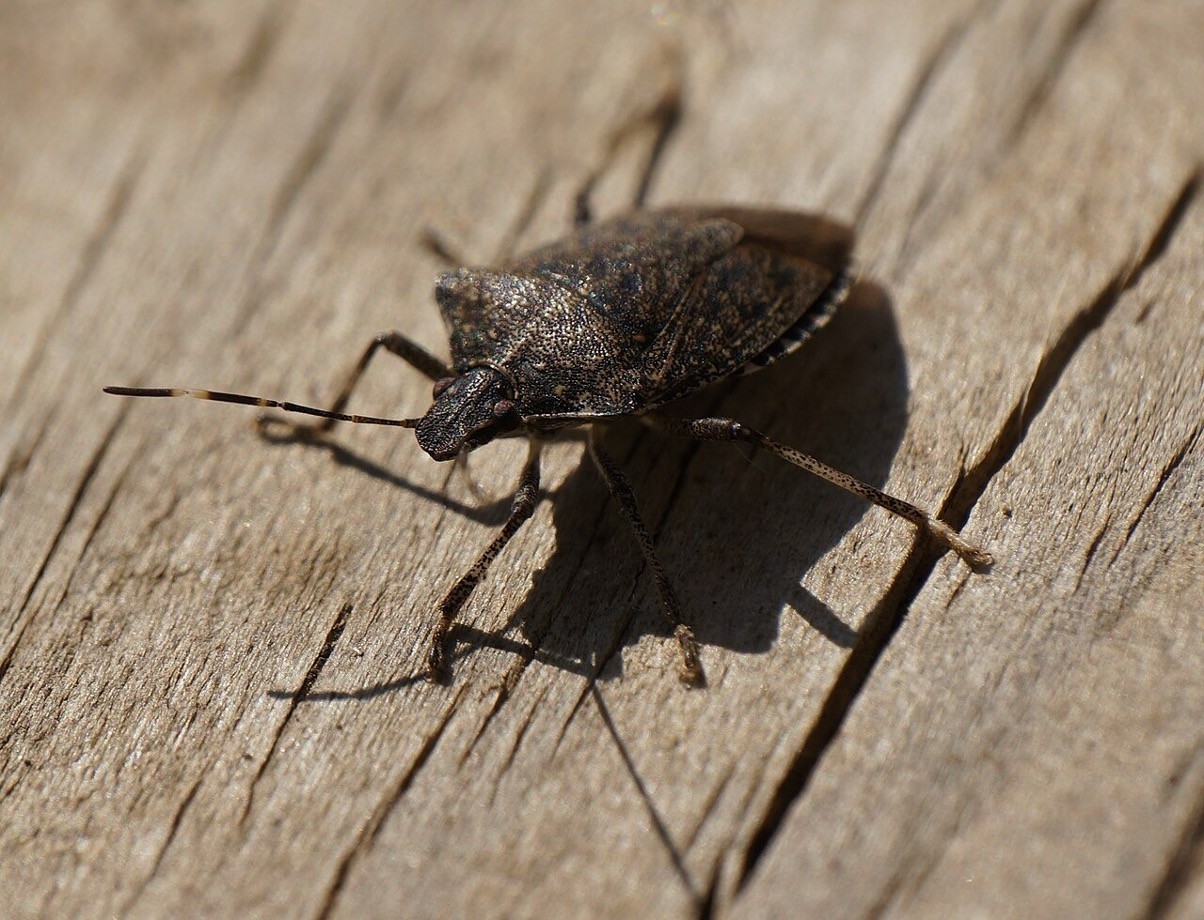
Boxelder bugs and brown marmorated stink bugs both invade homes during autumn to overwinter, but they require different management strategies. Boxelder bugs are native North American insects identifiable by their sleek black bodies and distinct red or orange markings. In contrast, the brown marmorated stink bug is an invasive species from East Asia recognized by its wide, mottled-brown, shield-shaped body.
While neither pest poses a direct health threat to humans, they both release foul odors and can stain indoor surfaces when crushed. Stink bugs are a more significant threat to gardens and agriculture, often damaging fruits and vegetables with their piercing mouthparts. To effectively eliminate an infestation, homeowners should seal exterior cracks and use a vacuum for removal rather than swatting or crushing the insects.
|
Connor’s Pest Pros: Family-Owned Pest Control Experts Choose Your Pest Protection Solution:
Customer Praise:
★★★★★ “Quick to answer my call and available same-day… I recommend them to anyone looking for pest control in NOVA.” – Jacquelyn L.
Why Choose Connor’s Pest Pros:
|
Boxelder Bug
The boxelder bug (Boisea trivittata) is named after its primary food source: the boxelder tree. They’re a North American native pest that’s particularly active in late summer through fall when they begin their migration toward sheltered overwintering spots.
Physical Appearance
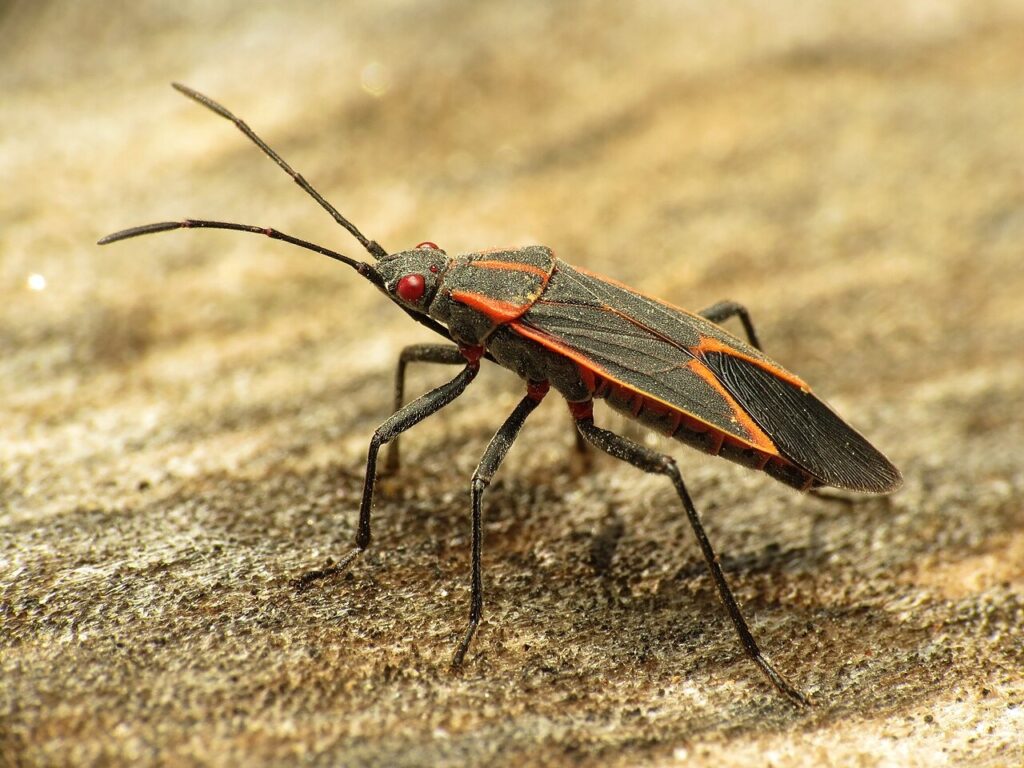
(Image source:“Eastern Boxelder Bug”by Katja Schulzlicensed under CC BY 2.0, via Wikimedia Commons)

Adult boxelder bugs are about ½ inch long, flat, and elongated with a distinctly black body marked by three red or orange lines running along the thorax and red veining across their wings. When their wings fold flat against their back, they form a recognizable red “X” pattern, which is one of the easiest ways to identify them on sight.
Young nymphs look quite different. At just one-sixteenth of an inch when newly hatched, they’re almost entirely bright red, developing their black coloring as they mature through several nymph stages.
Why Boxelder Bugs Are a Nuisance
Boxelder bugs rarely bite, don’t sting, and don’t carry disease. However, when hundreds of boxelder bugs invade a home, they become impossible to ignore, making professional pest control a necessity.
Their fecal matter leaves reddish-orange stains on curtains, upholstery, and walls that are notoriously difficult to remove. When handled or crushed, they also release a strong, unpleasant odor.
How to Get Rid of Boxelder Bugs
The most effective approach combines exclusion with direct removal. Trying to solve a boxelder bug problem with just a can of spray rarely works long-term.
Start by sealing every possible entry point: caulk gaps around windows, doors, utility pipes, and any cracks in your foundation. This alone will dramatically reduce how many bugs make it inside.
For bugs already in the home, a vacuum works better than crushing them, since crushing triggers that staining and odor problem. Outdoors, removing or reducing female boxelder trees near your home removes the food source that draws them to your property in the first place.
A licensed pest professional can apply residual perimeter treatments in late summer before the invasion begins. Timing is everything when treating boxelder bugs.
Stink Bug
The brown marmorated stink bug (Halyomorpha halys) is not a native North American insect but has spread to nearly every U.S. state since it was introduced in the mid-1990s. Like boxelder bugs, they become a major household nuisance in fall when they seek warm places to overwinter, but the similarities mostly end there.
Physical Appearance
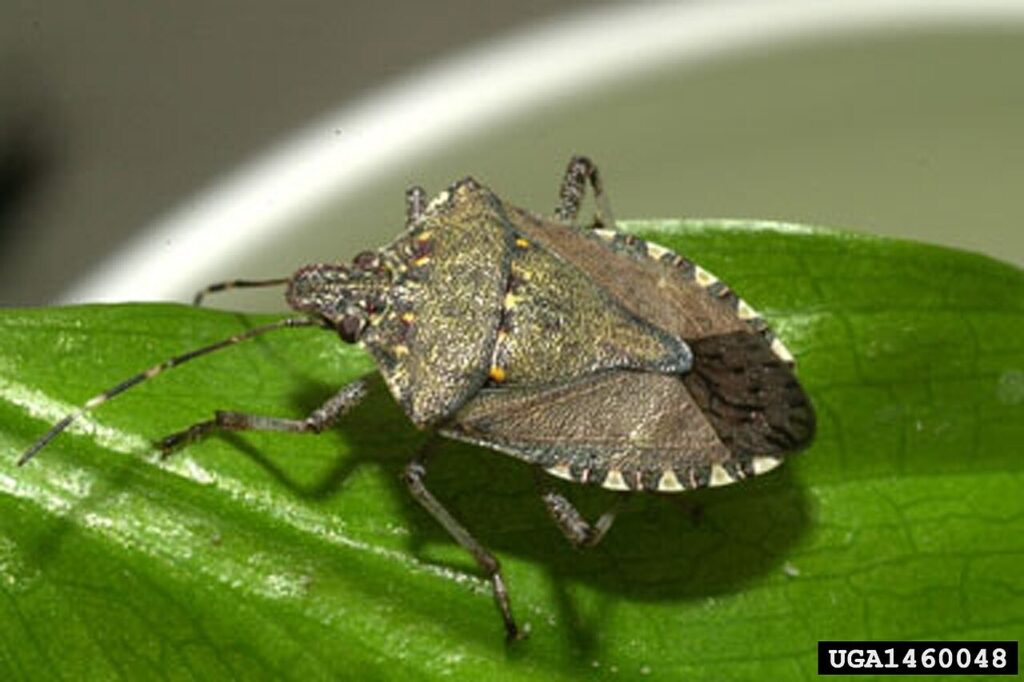
(Image source:“Brown marmorated stink bug adult”by David R. Lance licensed under CC BY 3.0 U.S., via Wikimedia Commons)

The brown marmorated stink bug is immediately recognizable by its shield-like shape—a broad, flat body that tapers toward the bottom and measures roughly ¾ inch long. Its coloring is a mottled mix of brown, gray, and copper tones, with alternating light and dark banding on the antennae and along the edges of the abdomen.
The underside is typically lighter (white or cream), which becomes visible when the bug lands on a window or light-colored surface.
Unlike the boxelder bug’s bold red markings, the stink bug is designed to blend in. Its mottled brown pattern provides natural camouflage against tree bark and dead leaves. They’re also capable, strong fliers, which helps them travel widely and colonize new areas rapidly.
Why Stink Bugs Are a Nuisance
When a stink bug feels threatened or gets crushed, scent glands on the underside of its thorax release a pungent odor that is notoriously difficult to clear from a room. That alone makes dealing with an indoor infestation miserable. But the problems go well beyond the smell:
- Stink bugs feed on a wide range of fruits, vegetables, and ornamental plants, piercing the skin and leaving behind scarring, deformities, and rot that makes produce unsellable or inedible.
- Adult stink bugs seek shelter in homes as temperatures drop, squeezing through cracks around windows, doors, utility pipes, and rooflines.
- Unlike native pests, stink bugs have very few local predators keeping their population in check, which is why they spread so rapidly.
- Like boxelder bugs, they congregate in massive numbers on sun-warmed surfaces before moving indoors, making an infestation feel overwhelmingly fast.
How to Get Rid of Stink Bugs
Stink bugs require a slightly different approach than boxelder bugs because of how aggressively they push into structures and how badly they smell when disturbed.
The golden rule: never crush them indoors. The resulting odor is potent and persistent. Instead, safely remove them using a vacuum.
Exclusion is again the frontline defense. Stink bugs are remarkably good at finding tiny entry points, so a thorough seal-up of the home’s exterior before mid-September is critical.
For serious infestations, perimeter insecticide treatments applied by a licensed pest control professional are the most reliable solution. Treating the surrounding vegetation near the home’s foundation using products registered for residential outdoor use is the most effective strategy available.
Boxelder Bug vs. Stink Bug: Comparison Table
| Feature | Boxelder Bug | Stink Bug |
| Scientific Name | Boisea trivittata | Halyomorpha halys |
| Origin | Native to North America | Invasive from East Asia |
| Size | ~½ inch | ~¾ inch |
| Color/Markings | Black with red/orange lines and X pattern | Mottled brown with banded antennae and abdomen edges |
| Body Shape | Flat, elongated oval | Shield/heraldic crest shape |
| Odor When Crushed | Yes (unpleasant smell) | Yes (strong, chemical odor) |
| Bites Humans | Rarely, only in self-defense | No |
| Primary Food Source | Boxelder tree seeds and leaves | Fruits, vegetables, ornamental plants |
| Plant/Crop Damage | Negligible (no appreciable damage to trees in most cases) | Significant (fruit deformity and crop loss) |
| Overwinters Indoors | Yes | Yes |
| Stains Surfaces | Yes (reddish-orange fecal stains) | Rarely |
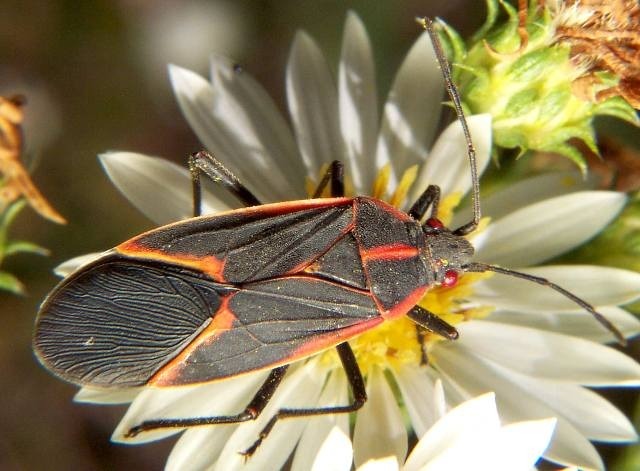
(Image source:“Boxelder Bug”by Bruce Marlinlicensed under CC BY-S.A. 2.5., via Wikimedia Commons)

Keep Boxelder and Stink Bugs Away with Connor’s Pest Pros
Boxelder bugs and stink bugs are persistent, but they’re no match for a targeted treatment plan from a team that knows pest control inside and out. We offer same-day service, free inspections, and fully customized solutions so your home is protected quickly and entirely on your terms.
We back every single job with a 100% satisfaction guarantee, which means free re-treatments if pests come back. When you choose us, you’re getting lasting peace of mind from a team that genuinely cares about getting it right.
Ready to take your home back? Reach out today and we’ll get started.
Contact us today for a free quote!
Frequently Asked Questions (FAQs)
Can boxelder bugs and stink bugs infest a home at the same time?
Yes. Both species follow the same seasonal pattern, seeking warm overwintering sites in early autumn. A single home can harbor both bugs simultaneously, hiding in wall voids, attics, and around window frames.
Do boxelder bugs cause damage to trees or gardens?
Boxelder bugs feed primarily on the seed pods of female boxelder trees, and to a lesser extent on maple and ash trees. They occasionally feed on the fruits of plum and apple trees, which can cause slight surface scarring.
Why do stink bugs smell so bad when you kill them?
When threatened, crushed, or disturbed, the brown marmorated stink bug releases a chemical compound from scent glands located on the underside of its thorax. The smell is often described as a sharp, cilantro-like or skunk-like odor that lingers far longer than you’d expect from an insect so small.
Are boxelder bugs and stink bugs the same species?
No. They are completely different insects. Boxelder bugs (Boisea trivittata) belong to the family Rhopalidae and are native to North America. Stink bugs (Halyomorpha halys) belong to the family Pentatomidae and are an invasive species originating from East Asia. While both share certain biological traits (like piercing-sucking mouthparts), their appearance, diet, behavior, and the specific problems they cause for homeowners are all distinctly different.
Can Connor’s Pest Pros get rid of boxelder bugs and stink bugs?
Absolutely. The most effective treatments for both of these pests are timed perimeter applications performed in late summer and early fall. Connor’s Pest Pros’ professional approach targets the visible bugs along with the harborage areas and entry points that make recurring infestations possible year after year.