
Key Takeaways
- Carpenter ants and termites are both wood-destroying pests, but they damage wood in completely different ways.
- Body shape is the fastest way to tell them apart: carpenter ants have a pinched waist and elbowed antennae, while termites have a thick, uniform body and straight beaded antennae.
- Termites eat wood from the inside out, making them far more destructive and harder to detect early.
- Carpenter ants tunnel through wood but don’t eat it, leaving behind smooth, clean galleries and coarse sawdust-like frass near their nesting sites.
- If you find either pest invading your home, Connor’s Pest Pros offers professional pest control services to help you get rid of them for good.
Termite or Carpenter Ant: How Can You Tell Them Apart?
At a quick glance, carpenter ants and termites can look surprisingly similar, especially when you spot a winged version of either pest crawling across your windowsill. But these two insects are very different in how they look, how they behave, and most importantly, what they do to your home.
Getting the identification right from the start can help you solve the problem at its root.
|
Connor’s Pest Pros: Family-Owned Pest Control Experts Choose Your Pest Protection Solution:
Customer Praise:
★★★★★ “Quick to answer my call and available same-day… I recommend them to anyone looking for pest control in NOVA.” – Jacquelyn L.
Why Choose Connor’s Pest Pros:
|
Termites
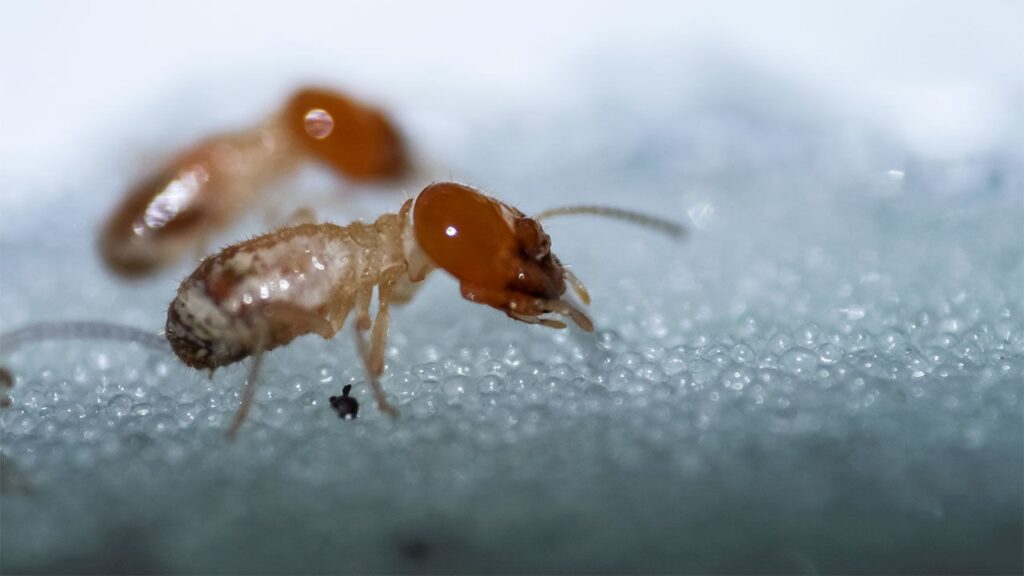
Termites cause grave structural damage (Image source:“Odontotermes obesus Termites Isoptera” by Nikhil Morelicensed under CC BY-SA 4.0, via Wikimedia Commons)
_01.jpg)
Termites are among the most destructive insects on the planet. By the time most homeowners notice a problem, termites have often been active for months or even years.
Key Characteristics
Termites are social insects that live in large, highly organized colonies. A single colony can contain hundreds of thousands of individuals, all working continuously to find and consume cellulose-based materials, primarily wood. Unlike carpenter ants, termites don’t rest or slow down seasonally in the same way, which is a big part of why their damage accumulates so rapidly.
There are three main types of termites found in the U.S.: subterranean, drywood, and dampwood termites. Subterranean termites are the most common and the most destructive. They build their colonies underground and travel up into structures through mud tubes, which are pencil-thin tunnels made of soil and termite saliva that you might spot along your foundation walls or crawl space.
Physical Appearance and Size
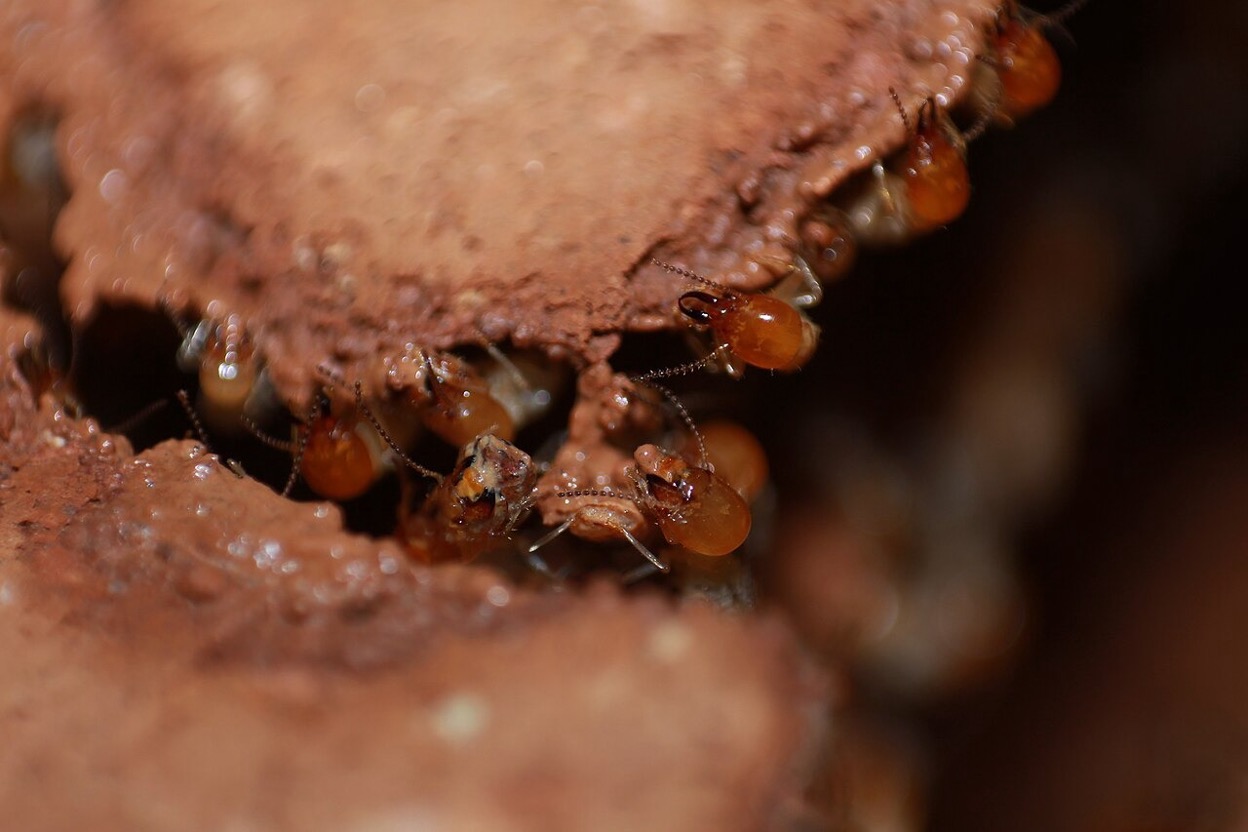
Termites are small, typically measuring no more than ½ inch in length. Their bodies are soft, pale, and almost creamy white to light brown in color.
One of the most reliable identification features is their body shape. Termites have a broad, uniform waist with no visible narrowing between the thorax and abdomen. Their antennae are straight and bead-like, almost resembling a tiny string of pearls.
Winged termites, called swarmers or alates, are often the first visible sign of a termite problem. Both pairs of their wings are equal in length and extend well beyond their body. This wing detail is critical when comparing them to winged carpenter ants, as we’ll cover shortly.
Risk and Damage
Termites feed on wood as their primary food source. They target cellulose, which is found in wood, paper, cardboard, and even some insulation materials. Their feeding patterns cause wood to hollow out from the inside, leaving behind thin, papery walls or a honeycomb-like interior structure.
Key warning signs of termite activity include:
- Mud tubes running along your foundation, walls, or floor joists
- Wood that sounds hollow when tapped
- Paint that appears bubbled or uneven (often mistaken for water damage)
- Small piles of tiny, pellet-shaped droppings called frass (drywood termites)
- Discarded wings near windowsills or entry points after a swarm
Left untreated, termite damage can compromise load-bearing beams, floor joists, and wall studs, ultimately threatening the structural integrity of the entire home. This is what makes early detection and professional treatment so critical.
Carpenter Ants
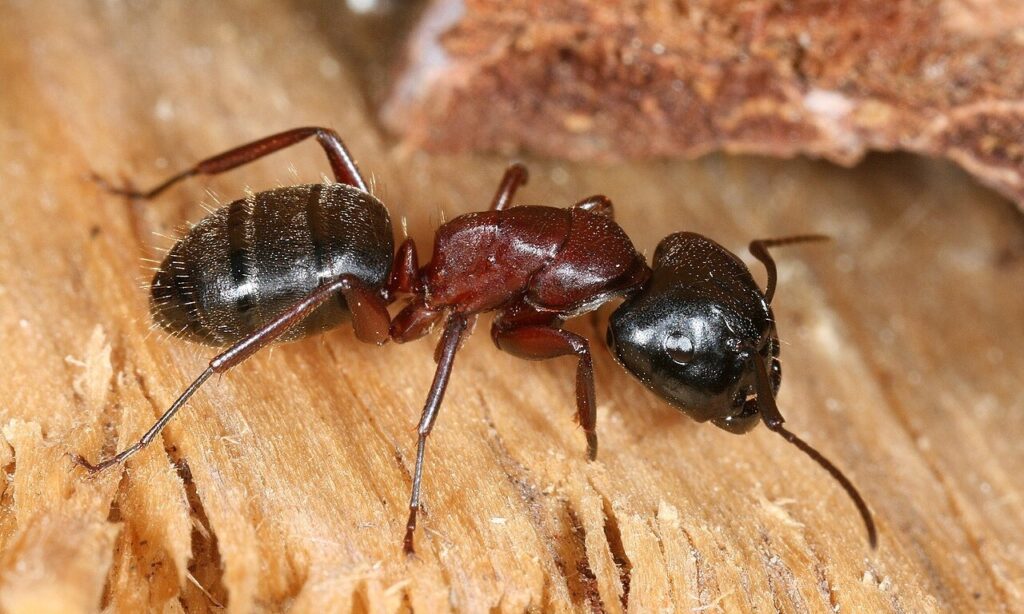
Carpenter ants are also known for being wood destroyers (Image source:“Camponotus sideview” by Richard Bartz, Munich Makro Freaklicensed under CC BY-SA 2.5, via Wikimedia Commons)

Carpenter ants are the most common wood-destroying ant species in North America. While they don’t get the same level of attention as termites, a mature carpenter ant colony left untreated can still cause serious structural damage over time, particularly in homes with moisture problems or aging wood.
Key Characteristics
Like termites, carpenter ants are social insects that live in colonies. However, their colonies are significantly smaller, typically ranging from 2,000-3,000 workers. They establish their primary nest outdoors (usually in a rotting tree stump, log, or dead wood) and then create satellite colonies inside your home as the population grows.
One important behavioral distinction: carpenter ants are most active at night. If you’re seeing large black ants trailing through your kitchen after dark, that’s a red flag worth investigating. They’re foraging for food, which consists of proteins and sugars, not wood. They excavate wood purely for shelter, not sustenance.
Physical Appearance and Size
Carpenter ants are noticeably larger than termites, measuring between ¼ inch and 1 inch in length. They are typically black, though some species have reddish or yellowish coloring on parts of their body. The single most reliable physical identifier is their pinched, narrow waist, a defined constriction between the thorax and abdomen that gives them a classic “ant” silhouette.
Their antennae are elbowed, bending at a distinct angle rather than running straight like a termite’s. Winged carpenter ants (swarmers) have two pairs of wings, but unlike termites, their front wings are noticeably longer than their hind wings. This size difference in the wings is one of the quickest ways to separate a winged carpenter ant from a termite swarmer when you’ve got one in hand.
Risk and Damage
Carpenter ants excavate wood to build their galleries and tunnels, but they don’t eat it. Instead, they push the wood debris out of the nest in the form of a coarse, sawdust-like material called frass. Finding small piles of this material near baseboards, window frames, or wall voids is one of the clearest signs of an active infestation.
While carpenter ant damage is generally slower to accumulate than termite damage, don’t underestimate it. A colony that’s been established inside your walls for several years can hollow out significant sections of structural wood, especially in areas like window frames, door frames, and sub-flooring where moisture tends to collect.
How Does Termite Damage Compare to Carpenter Ant Damage?
| Feature | Termite | Carpenter Ant |
| Body Shape | Broad, uniform waist | Pinched, narrow waist |
| Antennae | Straight, bead-like | Elbowed, bent |
| Size | Up to ½ inch | ¼ inch to 1 inch |
| Color | Pale white to light brown | Black, red, or yellow |
| Wings (swarmers) | Equal length, both pairs | Front wings longer than hind |
| Wood Interaction | Eats wood | Tunnels through wood |
| Damage Signs | Mud tubes, hollow wood, bubbled paint | Sawdust frass, smooth galleries |
| Activity Time | 24/7 | Primarily nocturnal |
| Colony Size | Hundreds of thousands | 2,000–3,000 workers |
| Destruction Speed | Fast, continuous | Slower, moisture-dependent |
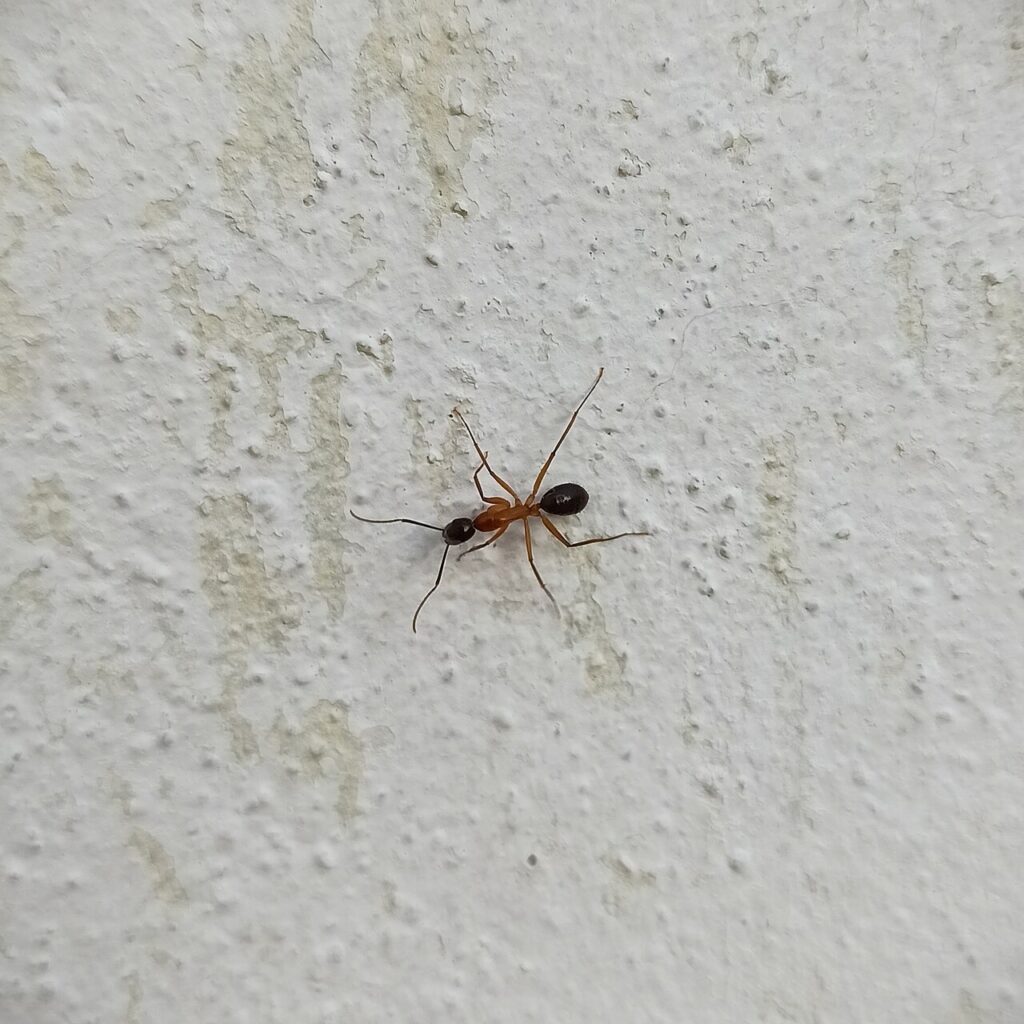
Carpenter ants find shelter in wood (Image source:“Carpenter Ant” by Juan Carlos Fonesca Matalicensed under https://creativecommons.org/licenses/by-sa/4.0/deed.en, via Wikimedia Commons)
.jpg)
Why Connor’s Pest Pros Is the Right Call
Both termites and carpenter ants cause real structural damage, and the longer either pest goes untreated, the more expensive the outcome. We are a family-owned company offering same-day service, pet and child-friendly treatments, and a 100% satisfaction guarantee backed by free re-treatments until the job is done.
With 415+ five-star reviews on Google and our website, a National Pest Management Association membership, and an Angi Super Service Award, we’ve built a track record that Northern Virginia homeowners rely on. Every inspection comes with a clear, specific treatment plan, so there’s no guesswork about what’s in your walls or what happens next.
If you spotted mud tubes, frass, or suspicious ant activity, call us and book your inspection before a contained problem turns into a structural repair bill.
Contact us today for a free quote!
Frequently Asked Questions (FAQs)
Can carpenter ants and termites infest the same home at the same time?
Yes, it’s possible and more common than you may think. Both pests are attracted to moisture-damaged or softened wood, which means the same conditions that invite one can easily attract the other. A home with a leaking roof, aging sub-floor, or damp crawl space is essentially putting out a welcome mat for both insects simultaneously.
Do carpenter ants eat wood like termites do?
No. Carpenter ants do not eat wood. They excavate it to create smooth, clean galleries and tunnels for nesting and expanding their colony. The wood they remove gets pushed out of the nest as coarse, gritty frass that often collects near baseboards, door frames, or wall openings.
What does carpenter ant damage look like compared to termite damage?
Carpenter ant damage produces smooth, clean tunnels that run along the wood grain. The interior walls of their galleries almost look sanded. There’s no soil, mud, or debris packed inside. You’ll typically find coarse sawdust-like frass nearby, sometimes mixed with dead ant body parts, which is a reliable indicator that a nest is active close by.
Termite damage looks completely different. Subterranean termites pack their galleries with mud and soil as they tunnel, giving the wood a dirty, layered appearance when broken open. Drywood termite damage tends to look more hollow, with thin papery walls and small kick-out holes where frass pellets are expelled. Termite-damaged wood also frequently sounds hollow when tapped with a screwdriver handle.
Are termites or carpenter ants more dangerous to a home’s structure?
Termites are significantly more dangerous. Because they feed on wood continuously (24 hours a day, seven days a week) and because their colonies can number in the hundreds of thousands, they can compromise load-bearing beams, floor joists, and wall studs in a fraction of the time it would take a carpenter ant colony to cause comparable damage.
Carpenter ants are still a serious concern, particularly in homes with existing moisture issues, but the scale and speed of termite destruction puts them in a different category of threat entirely.
Does Connor’s Pest Pros provide termite treatment?
Yes. At Connor’s Pest Pros, we provide comprehensive termite inspections and treatment plans for homeowners, including targeted solutions for both subterranean and drywood termite infestations. Our team can also assess and treat carpenter ant colonies and help identify the moisture conditions that make a home vulnerable to future infestations.