
Key Takeaways
- Maryland homeowners face three termite species: Eastern Subterranean (the most destructive and most common), Dampwood, and Drywood, with each requiring a different treatment approach.
- Eastern Subterranean Termites cause the most structural damage in the state, entering through soil contact and building mud tubes to reach wood inside your home.
- Dampwood termites signal an underlying moisture problem and fixing the moisture source is just as important as eliminating the termites.
- Drywood termites aren’t native to Maryland but can arrive hidden in furniture or wooden items; because they leave no mud tubes, infestations often go undetected for years.
- Connor’s Pest Pros offers same-day termite treatment for Maryland homeowners, covering all three species found in the region.
What Termites Can Be Found in Maryland?
Maryland is home to three termite species that homeowners need to know: the Eastern Subterranean Termite, the Dampwood Termite, and the Drywood Termite. The state’s humid summers, mild winters, and wooded residential areas make it prime territory for termite activity year-round.
Each of the three termite species behaves differently, targets different wood conditions, harbors unique physical traits, brings different damage problems, and requires a different response. Here’s what you need to know about each one.
|
Connor’s Pest Pros: Family-Owned Pest Control Experts Choose Your Pest Protection Solution:
Customer Praise:
★★★★★ “Quick to answer my call and available same-day… I recommend them to anyone looking for pest control in NOVA.” – Jacquelyn L.
Why Choose Connor’s Pest Pros:
|
1. Eastern Subterranean Termite (Reticulitermes flavipes)
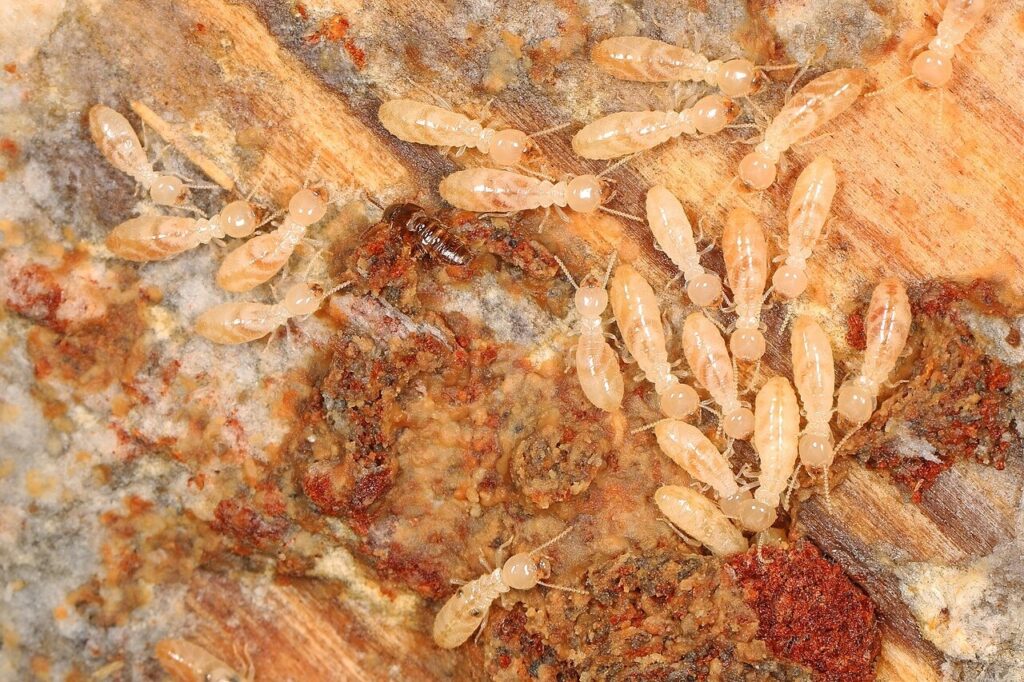
Eastern Subterranean Termites are the most common ones in Maryland (Image source:“Eastern Subterranean Termite” by Judy Gallagherlicensed under CC BY 2.0, via Wikimedia Commons)
,_Robert_W._Duncan_Wildlife_Management_Area,_Ruther_Glen,_Virginia,_May_18,_2023_(53531674791).jpg)
Being indigenous to Maryland, the Eastern Subterranean Termite is the termite that homeowners are most likely to encounter. It is also the one that causes the most structural damage across the state.
Eastern Subterranean Termites originate from the ground, entering structures through soil contact, foundation cracks, or expansion joints. They need moisture to survive and will build distinctive mud tubes to travel from the ground to wood sources above.
They can be found in the following areas:
- Along foundation walls and crawl spaces
- In wood that contacts soil directly (deck posts, door frames, wooden steps)
- Inside walls, especially near moisture sources
- Under concrete slabs through expansion joints or cracks
- In basements where wood meets concrete
Eastern Subterranean Termite Attacks
Eastern Subterranean Termites feed on cellulose (the organic compound found in wood) and they do it silently and continuously. A mature colony can contain hundreds of thousands to several million individuals. Because they work from the inside out, significant structural damage is usually underway long before any visible signs appear.
Hollowed-out wood that sounds papery when tapped, sagging floors, and bubbling paint are all warning signs that a colony has been active for some time.
2. Dampwood Termite
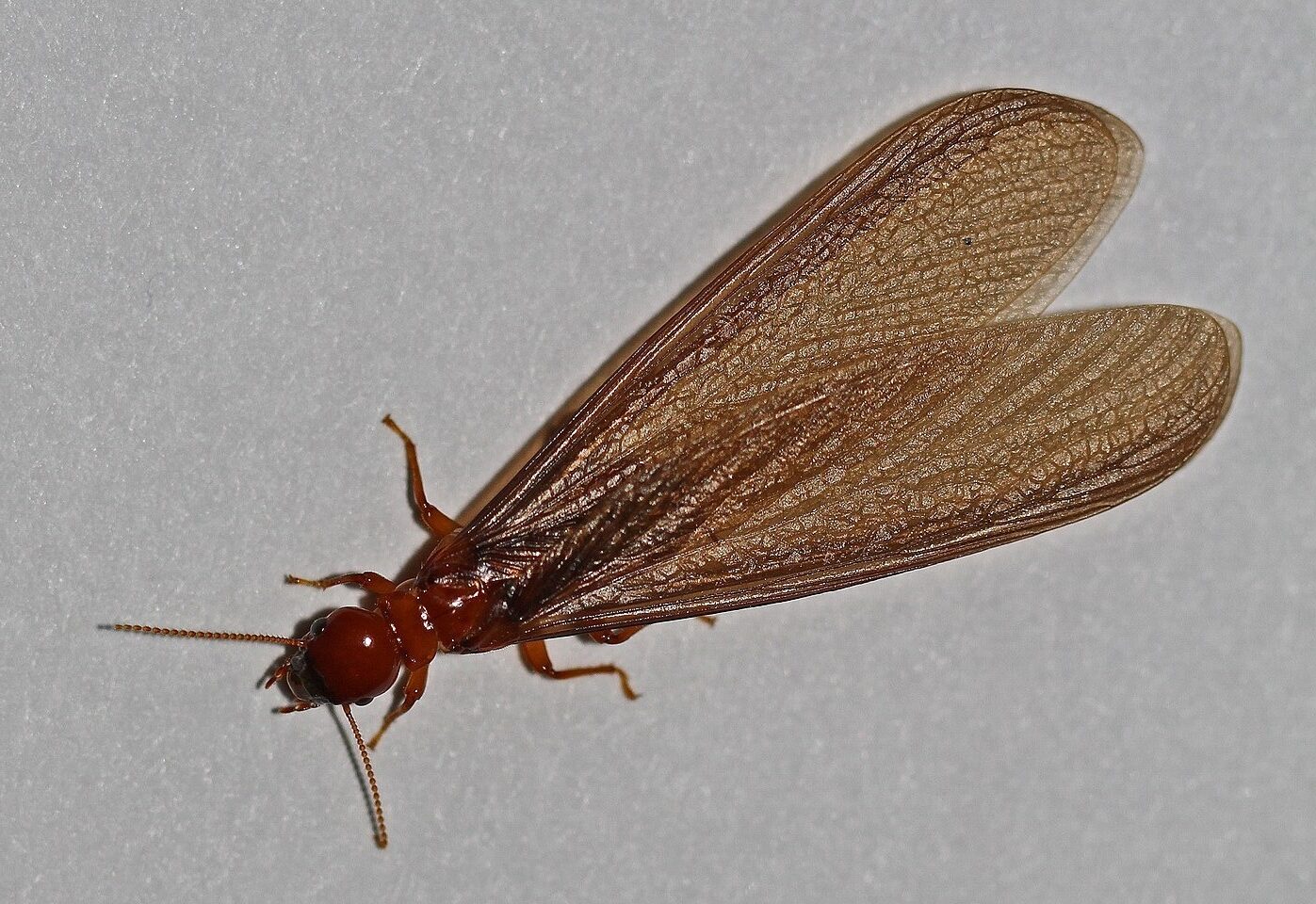
The presence of dampwood termites could signal a moisture-related problem. (Image source:“Pacific Coast Dampwood Termite” by Judy Gallagherlicensed under CC BY 2.0, via Wikimedia Commons)

Dampwood termites are uncommon in Maryland, but they do appear, and finding them in your home is a red flag that something else is going wrong.
Dampwood termites are larger than Eastern Subterranean Termites and generally brown in color, ranging from dark to light shades. Unlike subterranean termites, dampwood termites do not need soil contact to survive. They get all the moisture they need directly from the wet wood they inhabit.
Dampwood termites are drawn exclusively to wood with high moisture content. You won’t find them in dry, well-maintained structural lumber. Their presence almost always points to an underlying moisture problem in the home.
Common locations where dampwood termites are found include:
- Wood in direct contact with soil or standing water
- Areas with plumbing leaks behind walls or under floors
- Structures with poor ventilation or drainage issues
- Wall cavities where old, clogged gutters have caused moisture buildup
- Felled timber, dead trees, and stumps on or near the property
- Dead limbs of living standing trees
Dampwood Termite Attacks
Dampwood termites attack wood directly and typically do not burrow through soil to reach their food source. Their galleries (the tunnels they carve inside wood) tend to follow the grain of the wood and are often partially filled with fecal pellets. This is one way to distinguish dampwood damage from subterranean termite damage, which is usually packed with soil.
While dampwood termites can cause real structural damage if left unchecked, their presence points to a moisture problem that will keep attracting wood-destroying pests regardless of treatment. Addressing the root cause (a leaking pipe, poor drainage, or inadequate ventilation) is just as critical as eliminating the termites themselves.
3. Drywood Termite
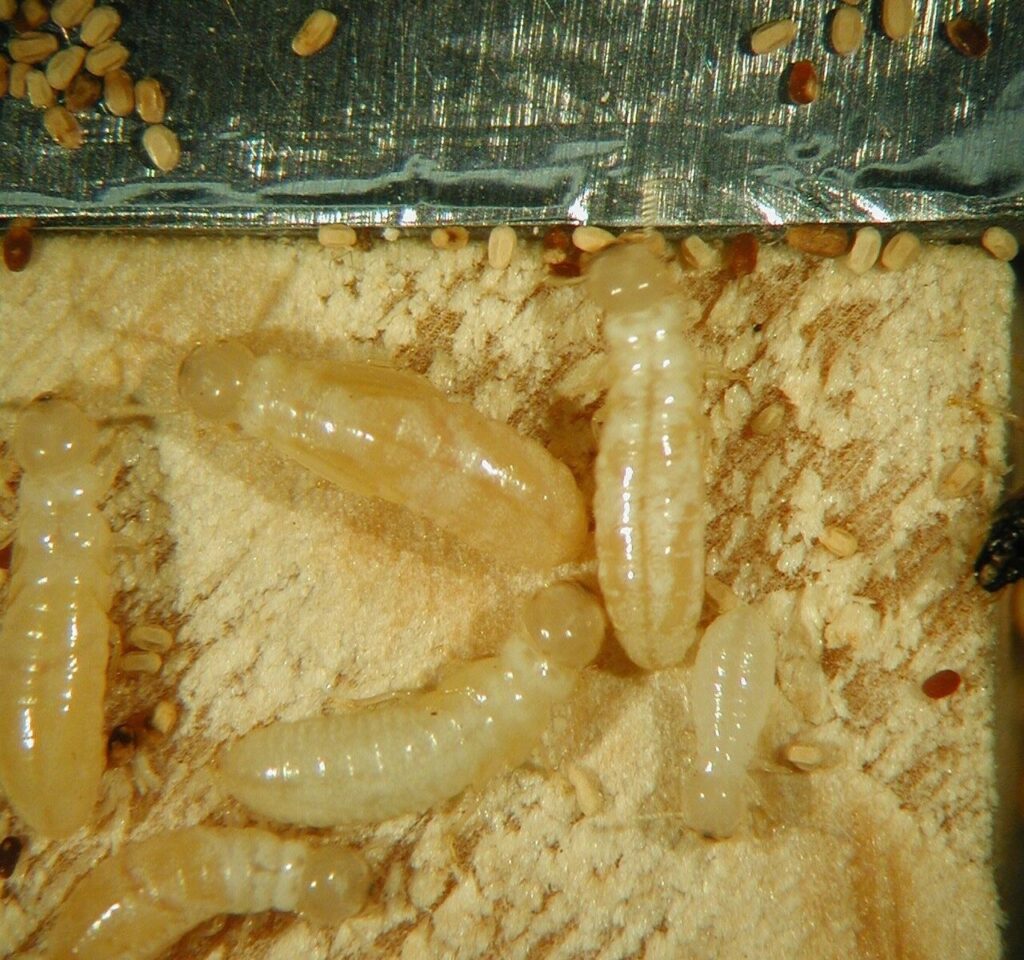
Drywood termites do not need moisture for survival (Image source:“Workers of the drywood termite Cryptotermes domesticus” by Ra Inta, CSIROlicensed under CC BY 3.0, via Wikimedia Commons)

Drywood termites aren’t established in Maryland, but they can still show up, and when they do, they’re a serious problem that many homeowners aren’t prepared for.
Drywood termites thrive in hard, dry wood and don’t need soil contact or a moisture source to survive. Unlike subterranean or dampwood termites, they extract all the water they need directly from the wood they consume. Their colonies are typically smaller than subterranean termite colonies, but the damage they cause is no less serious.
Because Maryland isn’t within their native range, drywood termites most commonly arrive hidden inside wooden furniture, antiques, wine crates, or other wooden objects transported from areas where they are established. Once introduced, they can form colonies and spread if not caught early.
Risk and Damage
Drywood termites infest structural timbers, furniture, picture frames, banisters, and virtually any dry wooden item in a home. They seal themselves inside the wood, creating isolated colonies that are nearly impossible to detect without a professional inspection. Infestations are commonly found in attic framing, wooden furniture, door and window frames, and hardwood flooring.
Because drywood termites work silently inside dry wood with no external signs like mud tubes, infestations can go undetected for years. By the time frass appears or wood begins to visibly hollow out, the colony has often been active for a significant period. Treatment typically requires professional intervention.
Termites in Maryland: Summary Table
| Feature | Eastern Subterranean | Dampwood | Drywood |
| Soil Contact Required? | Yes | No (except desert species) | No |
| Wood Preference | Any cellulose-containing wood | High-moisture, decaying wood | Hard, dry wood |
| Colony Size | Hundreds of thousands+ | Moderate | Small to moderate |
| Key Warning Sign | Mud tubes, swarmers | Moist damaged wood, fecal pellets in galleries | Frass (fecal pellets), kick-out holes |
| Primary Risk Level | High | Moderate | Low to Moderate |
| Treatment Approach | Soil treatment, bait systems | Fix moisture source + wood treatment | Localized or fumigation |
Stop Termite Attacks with Connor’s Pest Pros
If you’ve spotted swarmers, mud tubes, or suspicious wood damage, or you simply want to confirm your home is protected before a problem starts, a professional inspection is the right first step.
At Connor’s Pest Pros, we offer specialized termite treatment for Maryland homeowners, with targeted solutions for whichever species is threatening your property. As a family-owned business and a 100% satisfaction guarantee, we provide same-day service so you’re not left waiting when it matters most.
Termites rarely announce themselves. By the time damage is visible, colonies have usually been active for months or years. A professional inspection is the fastest way to know where you stand.
Get a free termite treatment quote
Frequently Asked Questions (FAQs)
What is the most common termite in Maryland?
The most common termite in Maryland is the Eastern Subterranean Termite (Reticulitermes flavipes). It is the only termite species fully established and widespread throughout the state, living in underground colonies and traveling through soil to reach wood in homes and structures. It is also responsible for the overwhelming majority of termite-related structural damage in Maryland.
Are drywood or subterranean termites worse?
Subterranean termites are generally considered worse in terms of overall damage potential. A mature colony typically contains around 300,000 individuals, with some colonies reaching several million.
Drywood termite colonies are significantly smaller, which limits the speed of destruction. That said, drywood termites are harder to detect early since they leave no mud tubes and work entirely inside dry wood, meaning infestations can go unnoticed for years. Both species require professional treatment and neither should be ignored.
How do you identify dampwood termites?
Dampwood termites are noticeably larger than Eastern Subterranean Termites. Their color ranges from dark to light brown, and some individuals can appear reddish, particularly toward the abdomen.
The most reliable way to confirm a dampwood termite infestation is by locating damaged wood near a moisture source. The galleries they carve inside wood tend to follow the wood grain and are often partially filled with fecal pellets. If you find wood damage near a plumbing leak, a poorly drained area, or old clogged gutters, dampwood termites are a likely culprit.
What is the difference between dampwood and drywood termites?
The core difference is moisture. Dampwood termites require wood with high moisture content to survive. They’re almost always found near water damage, leaks, or drainage problems. Drywood termites are the opposite: they thrive in hard, dry wood and need no external moisture source, extracting water directly from the wood they consume.
Dampwood termites typically infest decaying or waterlogged wood outdoors or near structural moisture issues, while drywood termites infest furniture, framing, and other dry interior wood. Their damage patterns also differ: dampwood galleries are moist and often soil-free, while drywood termites produce dry, hard, ridged fecal pellets called frass.
Does Connor’s Pest Pros offer termite treatment?
Yes. Connor’s Pest Pros offers professional termite treatment services for Maryland homeowners, covering the termite species most relevant to the region. Whether you’re dealing with an active Eastern Subterranean Termite infestation, a moisture-driven dampwood problem, or drywood termites introduced through infested furniture, their team can assess the situation and recommend the right course of action.