

Key Takeaways
- Bee stings leave a barbed stinger behind and cause localized swelling, while wasps and hornets can sting multiple times without losing their stinger.
- Hornet stings tend to be the most painful of the three due to higher concentrations of acetylcholine in their venom.
- Wasp venom contains serotonin and hyaluronidases that break down tissue, which is why wasp stings often produce more significant swelling than bee stings.
- Most hornet and wasp stings can be treated at home with ice, antihistamines, and cleaning, but severe reactions, such as throat swelling, require emergency care.
- At Connor’s Pest Pros, we offer same-day stinging insect removal across the D.C. metro area with pet- and child-friendly treatment options.
What to Know About Hornet, Wasp, and Bee Stings
Hornet, wasp, and bee stings differ in pain level, symptoms, and appearance based on each insect’s venom composition and stinger mechanics. Hornets and wasps have smooth, retractable stingers that allow multiple stings in quick succession, while honeybees have barbed stingers that remain embedded in the skin after a single sting.
Venom varies as well: hornet venom includes acetylcholine, which makes hornet stings the most painful of the three, wasp venom contains serotonin and tissue-breaking hyaluronidases, and bee venom is rich in melittin.
Hornet stings tend to cause deeper, longer-lasting pain with more pronounced swelling. Wasp stings often produce more significant swelling due to enzymes in the venom, and bee stings typically present as a raised red welt with swelling that peaks within 24 to 48 hours.
Most stings respond to basic at-home care, but systemic reactions like throat swelling or difficulty breathing require emergency attention.
|
Connor’s Pest Pros: Family-Owned Pest Control Experts Choose Your Pest Protection Solution:
Customer Praise:
★★★★★ “Quick to answer my call and available same-day… I recommend them to anyone looking for pest control in NOVA.” – Jacquelyn L.
Why Choose Connor’s Pest Pros:
|
Hornet Sting: Symptoms & Appearance
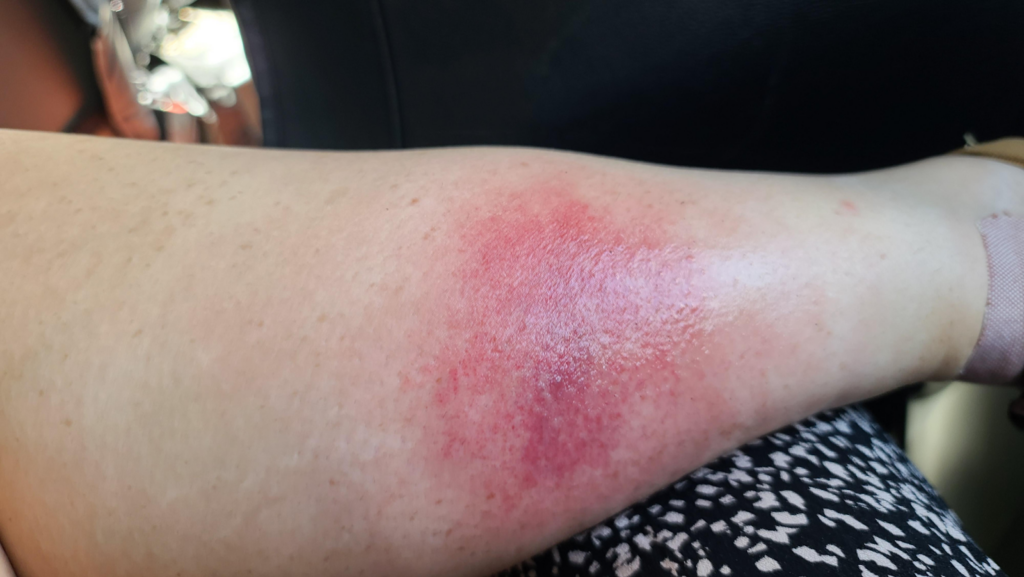
Hornet stings are the most painful among common stinging insects, producing large, warm welts with prolonged swelling. (Image source: NewsWeek)
Hornet stings are widely considered the most painful among common stinging insects in North America. The sting site develops into a large, red, raised welt that is often warm to the touch. Like wasps, hornets retain their stingers and can deliver multiple stings.
Pain from a hornet sting tends to be deeper and longer-lasting, and swelling at the site is usually more pronounced. Some hornet species also release an alarm pheromone when they sting, which can attract other hornets in the vicinity and increase the risk of multiple stings.
Multiple hornet stings can produce systemic symptoms such as nausea, headache, and fever, even in people who are not allergic, simply due to the cumulative venom load.
Bee Sting: Symptoms & Appearance
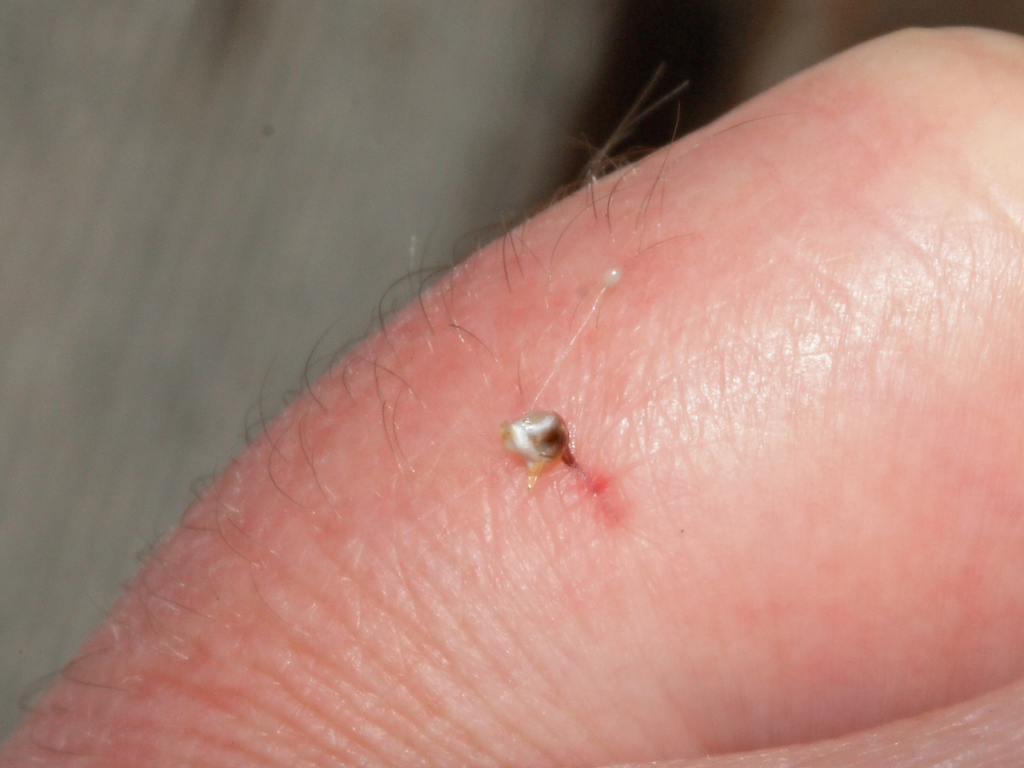
A bee sting leaves a raised red welt with the barbed stinger embedded in the skin, causing pain and swelling. (Image source: “Stinger of a honey bee 2 minutes after a bee sting” by Waugsberg, licensed under CC BY-SA 3.0, via Wikimedia Commons)

A bee sting typically presents as a raised, red welt with a visible white dot at the center where the stinger entered. Because the barbed stinger stays embedded in the skin, you can often see or feel it protruding from the sting site. Immediate symptoms include a sharp burning pain, followed by redness and swelling that can spread several inches around the wound.
In most cases, swelling peaks around 24 to 48 hours after the sting and fades within five to seven days. Some people experience a larger local reaction, with swelling extending beyond 10 centimeters, which is uncomfortable but generally not dangerous.
Severe allergic reactions, known as anaphylaxis, can occur in people with venom hypersensitivity, which affects an estimated 5 to 7.5% of the population and causes symptoms like hives, difficulty breathing, dizziness, and a rapid drop in blood pressure.
Wasp Sting: Symptoms & Appearance
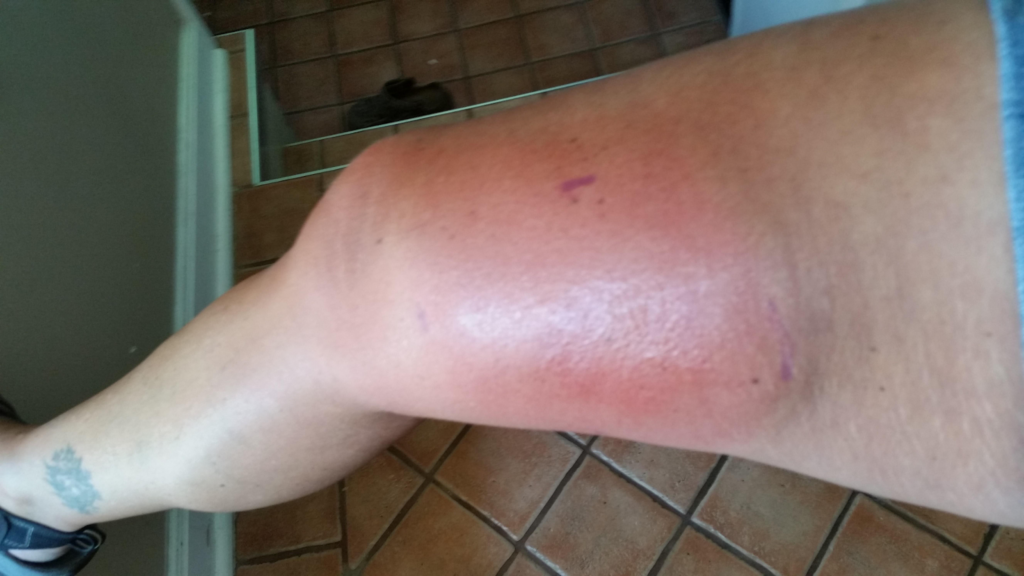
Wasp stings cause sharp pain, redness, and swelling that can spread across an entire limb without leaving a stinger behind. (Image source: Reddit)
Wasp stings produce a sharp, immediate pain that many describe as more intense than a bee sting. The sting site becomes red and swollen, often with a small puncture mark at the center, but no stinger is left behind. Because wasps can sting repeatedly, it is common to find multiple welts in a cluster if the insect feels threatened.
Localized itching typically develops within the first hour and can persist for several days. Wasp venom also contains enzymes called hyaluronidases that break down tissue, which is why wasp stings sometimes produce more significant swelling than bee stings of similar size. Large local reactions can cause the entire affected limb to swell, though this is a localized immune response rather than full-body anaphylaxis.
Treatment Options for Stinging Insect Injuries
At-Home Treatment
For a standard sting without signs of an allergic reaction, treatment is straightforward. If a stinger is visible (bee stings), scrape it out with a flat edge, like a credit card, rather than squeezing it with tweezers, which can push more venom into the skin. Wash the area with soap and water, then apply a cold compress for 10 to 15 minutes to reduce swelling.
Over-the-counter oral antihistamines like diphenhydramine can ease itching, and ibuprofen or acetaminophen helps manage pain. A paste made from baking soda and water applied directly to the sting site is a common home remedy that may provide some relief, though scientific evidence for its effectiveness is limited.
When to Seek Medical Attention

Seek emergency care for systemic sting reactions like throat swelling, difficulty breathing, or widespread hives, especially with multiple stings.
Any sign of a systemic reaction requires immediate emergency care. Symptoms to watch for include swelling of the face, lips, tongue, or throat; difficulty breathing or swallowing; widespread hives or flushing beyond the sting site; a rapid pulse; nausea or vomiting; and loss of consciousness.
People with a known allergy should carry an epinephrine auto-injector and use it at the first sign of anaphylaxis. Even after administering epinephrine, calling emergency services is still necessary since symptoms can return. If you have been stung more than 10 times, or if a child or elderly person receives multiple stings, seek medical evaluation regardless of allergy history.
Hornet vs Wasp vs Bee Sting: Comparison Table
| Feature | Bee Sting | Wasp Sting | Hornet Sting |
| Stinger left behind | Yes (barbed) | No (smooth) | No (smooth) |
| Can sting multiple times | No | Yes | Yes |
| Pain level | Moderate | Moderate to high | High |
| Typical swelling | Localized, 2–5 cm | Moderate, can spread | Pronounced, often warm |
| Peak swelling time | 24–48 hours | 24–48 hours | 24–48 hours |
| Venom highlight | Melittin | Serotonin, hyaluronidase | Acetylcholine |
| Anaphylaxis risk | Yes | Yes | Yes |
Why Connor’s Pest Pros Is Your Go-To for Stinging Insect Removal

Connor’s Pest Pros offers same-day stinging insect removal with a satisfaction guarantee and 24/7 emergency response in the D.C. metro area.
Treating a sting is one thing, but if a nest is the source of the problem, it needs professional attention. At Connor’s Pest Pros, we provide same-day stinging insect removal with a 100% satisfaction guarantee, plus 24/7 emergency response for urgent situations, such as an active hornet nest near a doorway.
As a family-owned business serving the D.C. metro area, we use pet- and child-friendly treatments customized to your property. With 415+ five-star reviews and recognition as an Angi Super Service Award winner in 2024, our track record speaks for itself. We also offer free re-treatments until the problem is fully resolved.
Get fast, professional stinging insect removal today.
Frequently Asked Questions (FAQs)
How do I know if I got stung by a hornet or a wasp?
You can usually tell by the reaction and appearance: hornet stings cause deeper, longer-lasting pain with a large, warm welt, while wasp stings tend to produce sharp, immediate pain with redness and swelling that can spread across the affected area, but without a stinger left behind.
Are hornet stings worse than wasp stings?
Yes, hornet stings are generally more painful because their venom contains acetylcholine, which triggers stronger pain responses and longer-lasting discomfort.
What makes Connor’s Pest Pros a trusted choice for stinging insect control?
We are a family-owned company with 415+ five-star reviews and recognition as an Angi Super Service Award winner. At Connor’s Pest Pros, we offer same-day service, 24/7 emergency response for urgent infestations, and free re-treatments until the problem is fully resolved.
*Price estimates reflect current market costs and may vary based on your specific situation. For a personalized quote tailored to your needs, contact us directly or request your FREE estimate today!