

Key Takeaways
- Lizard droppings carry a chalky white tip from uric acid waste, making them easy to distinguish from the uniformly dark mouse droppings found in homes.
- Mouse droppings are pointed at both ends, measure 1/8 to 1/4 inch, and appear scattered across pantries, cabinets, and along baseboards.
- A single mouse produces 50 to 75 droppings daily, so heavy scattered piles signal an active infestation that needs fast professional attention.
- At Connor’s Pest Pros, we deliver same-day rodent inspections across the D.C. metro area, with free re-treatments until your home is fully mouse-free.
Decoding the Droppings on Your Floor
Small dark pellets on a windowsill or pantry shelf can mean very different things depending on the culprit. Lizard droppings carry a chalky white tip from uric acid, sit in small clusters near walls or light fixtures, and often contain insect fragments. Mouse droppings have pointed ends on both sides, scatter widely along travel paths, and turn from glossy black to dull gray as they age.
The differences matter beyond curiosity. Mice multiply quickly, contaminate food, and shed pathogens that cause severe respiratory illness. A few stray lizard pellets near a porch light usually mean nothing more than a hungry gecko. Knowing which animal left the calling card determines whether cleanup is a five-minute task or a real rodent problem.
|
Connor’s Pest Pros: Family-Owned Pest Control Experts Choose Your Pest Protection Solution:
Customer Praise:
★★★★★ “Quick to answer my call and available same-day… I recommend them to anyone looking for pest control in NOVA.” – Jacquelyn L.
Why Choose Connor’s Pest Pros:
|
What Lizard Poop Looks Like

Lizard droppings are identifiable by a chalky white uric acid cap on one end of a dark, cylindrical pellet. (Image source: flickr by Marc Kummel)
Lizard droppings show a feature no rodent dropping shares: a chalky white cap on one end. That white portion is solidified uric acid, which reptiles excrete alongside their solid waste through a single opening called the cloaca. The dark part of the pellet is the actual feces, ranging from deep brown to black depending on the lizard’s recent meals.
Most household lizard pellets measure around a quarter inch in length, though geckos and skinks leave smaller deposits, and larger species produce bigger ones. The shape is cylindrical with one tapered end and one rounded end topped by that telltale white spot. Fresh droppings feel slightly moist; over a day or two, they harden into a chalky pellet.
Look closely, and you might spot bits of beetle shells, ant heads, or other insect fragments embedded in the dark portion. That undigested debris is a clear marker, since lizards eat insects rather than seeds or food scraps.
What Mouse Poop Looks Like
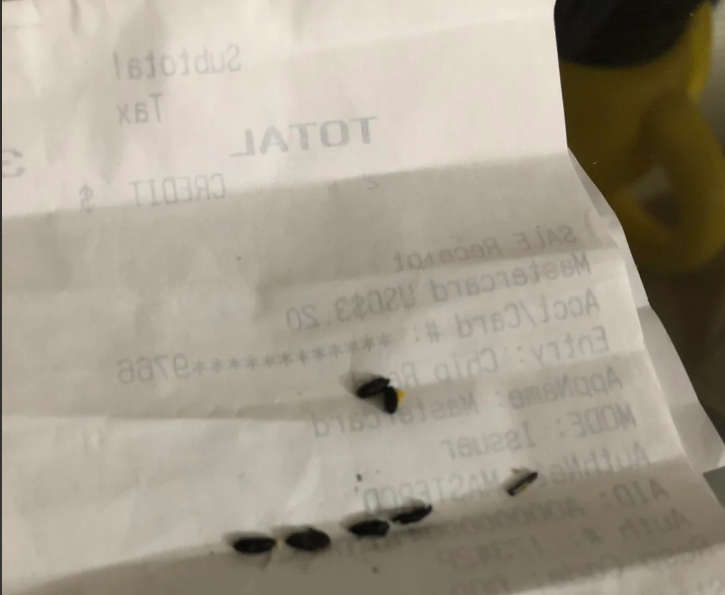
House mouse droppings resemble dark rice grains, 1/8–1/4 inch long, with pointed ends and color fading from black to gray. (image source: Reddit).
House mouse droppings look like dark grains of rice, typically 1/8 to 1/4 inch long with sharply pointed ends on both sides. There is no white cap, no chalky tip, and no tapering to one blunt end. The pellet remains uniform and slim throughout its length.
Color shifts with age. Fresh droppings glisten with a slight sheen and appear nearly black. Within a few days, the color fades to dark brown, and after a week or two, the pellets turn gray and crumble when touched. Sorting fresh from old droppings helps gauge how active an infestation actually is.
Quantity is the loudest signal. A single house mouse produces between 50 and 75 droppings every day, so a kitchen drawer holding dozens of scattered pellets points to one or more active mice running travel paths through the space.
Side-by-Side: How to Tell Lizard Poop from Mouse Poop
Three features do most of the work: the color signature, the scatter pattern, and what shows up when you look closely at what the pellet contains.
The White Tip Is the Fastest Tell
The single quickest way to settle an ID is the white cap. Lizard droppings carry a small, chalky white portion fused to one end. Mouse droppings stay uniformly dark across their entire length, fading only as they age. If you see a clearly two-toned pellet, you’re almost certainly looking at lizard waste. A darkly colored pellet indicates mice or another rodent.
Scattered Trails vs Small Clusters
Mice defecate while moving, so droppings appear scattered along baseboards, inside drawers, behind appliances, and across pantry shelves. Finding dozens of pellets along the same wall is a hallmark sign. Lizards drop waste far less often and tend to leave a few pellets in one spot near a wall, window, garage corner, or light fixture where they were resting. Sparse, clustered pellets at a single location usually indicate a lizard; widespread scatter indicates a rodent.
Insect Bits vs Food Crumbs
Crush a fresh pellet gently with a paper towel and look at what’s inside. Lizard droppings often contain pieces of beetle wings, ant parts, or other insect fragments because lizards are insectivores.
Mouse droppings tend to be a more uniform paste of digested grains, seeds, and kitchen food scraps. Visible insect debris is a strong vote for a lizard; smooth dark material with no visible exoskeleton points to a rodent.
Lizard Poop vs Mouse Poop: Comparison Table
| Feature | Lizard Droppings | Mouse Droppings |
| Size | About 1/4 inch | 1/8 to 1/4 inch |
| Shape | Cylindrical, one tapered end | Spindle, pointed on both ends |
| White tip | Yes (uric acid cap) | No |
| Color | Dark brown to black with a white cap | Black, fading to brown, then gray |
| Quantity | Few, in small clusters | 50 to 75 per mouse per day, scattered |
| Common location | Walls, windows, light fixtures | Pantries, cabinets, baseboards |
| Visible contents | Insect fragments | Digested grains, food paste |
Stop Guessing & Get Mice Out for Good with Connor’s Pest Pros

Connor’s Pest Pros offers same-day licensed mice removal with pet-safe treatments and free re-treatments backed by a satisfaction guarantee.
A few chalky-tipped pellets by the porch light is one thing. Rice-sized droppings scattered across your kitchen baseboards is another, and the longer mice stay, the harder they are to evict.
At Connor’s Pest Pros, we send a licensed technician out the same day you call, confirm the ID on-site, find the entry points mice are using, and treat the home with pet- and child-safe products that fit your household. We’ve built our reputation across the D.C. metro area with hundreds of five-star reviews, a 2024 Angi Super Service Award, and free re-treatments backed by our 100% Satisfaction Guarantee.
Schedule Your Same-Day Service →
Frequently Asked Questions (FAQs)
Can lizard poop make you sick?
Yes, lizard droppings can carry Salmonella bacteria, which cause diarrhea, fever, and stomach cramps. The risk is far lower than with mouse waste because volumes are small and lizards rarely visit food prep areas, but you should still wear gloves during cleanup and wash your hands thoroughly afterward.
How do I know if mouse droppings are fresh or old?
Fresh mouse droppings appear shiny black or dark brown with a slight moist sheen and feel soft to the touch. Within a few days, they dry out, fade to lighter brown, and eventually turn gray and crumbly. Finding shiny black pellets indicates that at least one mouse is currently active in the area.
Is it safe to vacuum or sweep up mouse poop?
No. Sweeping or vacuuming mouse droppings can aerosolize hantavirus particles, which you can then inhale.
The CDC recommends starting with ventilation: open doors and windows for 30 minutes before you begin cleaning. Next, put on rubber or plastic gloves and spray the droppings with an EPA-registered disinfectant or a bleach solution until the area is very wet. Let it soak for 5 minutes, then wipe everything up with paper towels. Finally, throw the used paper towels in a covered garbage can.
How can I tell if it’s a gecko or a mouse leaving droppings on my patio?
Gecko droppings form small clusters near porch lights or window frames and have a clear white tip. Mouse droppings scatter randomly along walls or under furniture, lack any white portion, and often appear in much larger numbers, since one mouse produces dozens of pellets daily.
What makes Connor’s Pest Pros different from other pest control companies?
At Connor’s Pest Pros, we’re a family-owned business serving the D.C. metro area with same-day service, and a 100% Satisfaction Guarantee backed by free re-treatments. We’re also members of the National Pest Management Association and won the 2024 Angi Super Service Award, so you get certified expertise with neighborly attention.
*Price estimates reflect current market costs and may vary based on your specific situation. For a personalized quote tailored to your needs, contact us directly or request your FREE estimate today!