
Key Takeaways
- Termite frass consists of uniform, hexagonal pellets with six concave sides, while carpenter ant frass looks like irregular sawdust mixed with insect body parts.
- Termite droppings are actual fecal pellets made of digested wood, while carpenter ant frass is excavation debris pushed out of the wood as ants tunnel through it.
- Termite frass forms neat piles below small kick-out holes, while carpenter ant frass shows up scattered near moisture-damaged wood, cracks, or oval gallery openings.
- Getting rid of both requires professional treatment. Termites are managed through localized wood injection or whole-structure fumigation, while carpenter ant treatment involves targeting the nest and fixing the moisture problem that attracted them.
- At Connor’s Pest Pros, we identify the exact pest, locate the full extent of the infestation, and deliver targeted treatments, all backed by our 100% Satisfaction Guarantee.
How Termite Droppings & Carpenter Ant Frass Compare
Termite frass consists of uniform, six-sided fecal pellets pushed out through tiny kick-out holes in wood, while carpenter ant frass is rough excavation debris mixed with insect body parts, wood shavings, and soil. Both appear near wood surfaces and can look similar at first glance, but the shape, contents, and location of the pile point to different pests that each require a different treatment approach.
A few simple visual checks, including pellet shape, pile contents, and proximity to moisture damage, can narrow the answer in minutes. Connor’s Pest Pros offers same-day inspections and free estimates across the DC metro area and Greensboro, NC, so if you’ve found frass and want a definitive ID and treatment plan, you can get professional confirmation the same day.
Connor’s Pest Pros: Trusted, Family-Owned Pest Control
4.9★ Google Rating | 100% Satisfaction Guarantee

Protect Your Home, Pest-Free:
Get customized, ongoing pest control that adjusts with the seasons, covering everything from ants and spiders to termites, rodents, and bed bugs. Same-day or next-day visits mean fast relief.
What Sets Us Apart:
✓ 950+ 5-star reviews on Google
✓ Family-owned, D.C. metro area
✓ Member of the NPMA
✓ Angi Super Service Award Winner (2024)
✓ 100% Satisfaction Guarantee
Don’t let pests take over your home. Act now.
Request Your Free Estimate →What Does Termite Frass Look Like?
Drywood termite frass is one of the most distinctive pest indicators you will find in a home. The pellets are tiny (roughly 1 millimeter in length), and each one has six slightly concave sides, giving it a hexagonal cross-section.
Color varies depending on the type of wood the termites have been consuming. A colony feeding on pine will leave lighter tan pellets, while termites working through darker hardwoods will produce pellets ranging from reddish-brown to nearly black.
You may find the pile directly beneath a small, clean circular kick-out hole in the wood surface above. That hole is typically 1 to 2 millimeters in diameter with smooth edges.
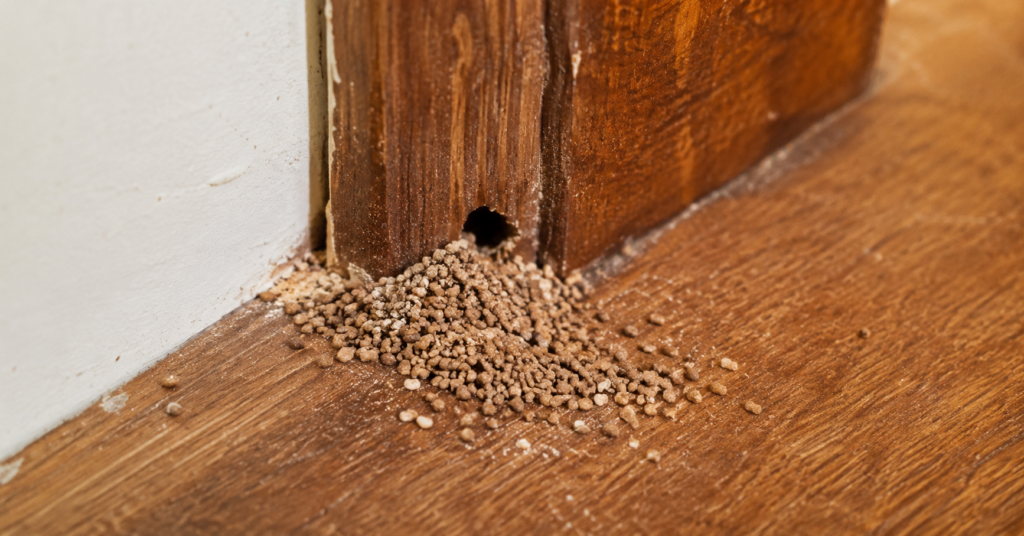
Up close, a pile of termite frass looks like coarse sand or fine coffee grounds, but with a surprisingly uniform, almost sculptured appearance.
What Does Carpenter Ant Frass Look Like?
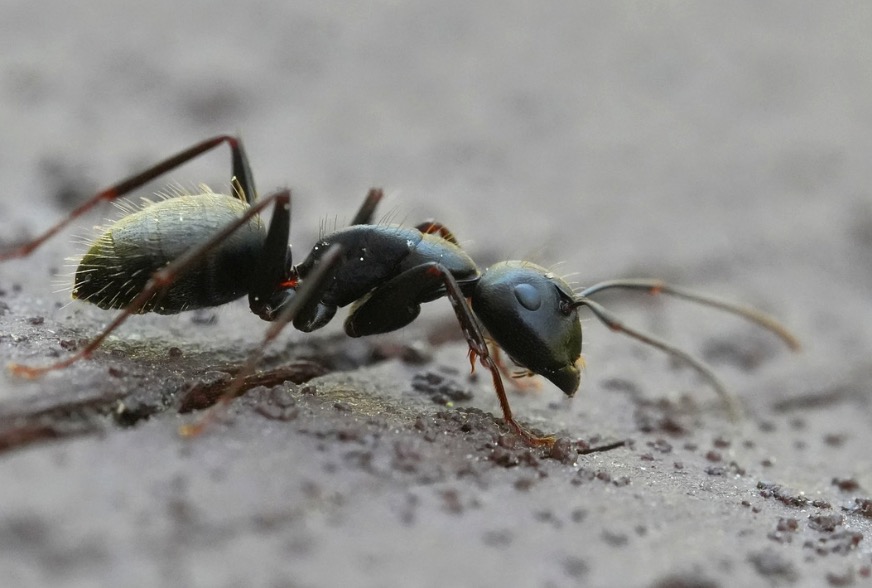
Carpenter ant frass is rougher, more irregular, and visibly more complex than termite frass. Because carpenter ants do not eat the wood they excavate, their frass is essentially a dumped collection of everything that was in their path.
A typical pile will include coarse wood shavings with a fibrous, splinter-like texture, along with soil, small gravel particles, and fragments of dead insects including legs, wings, and body segments.
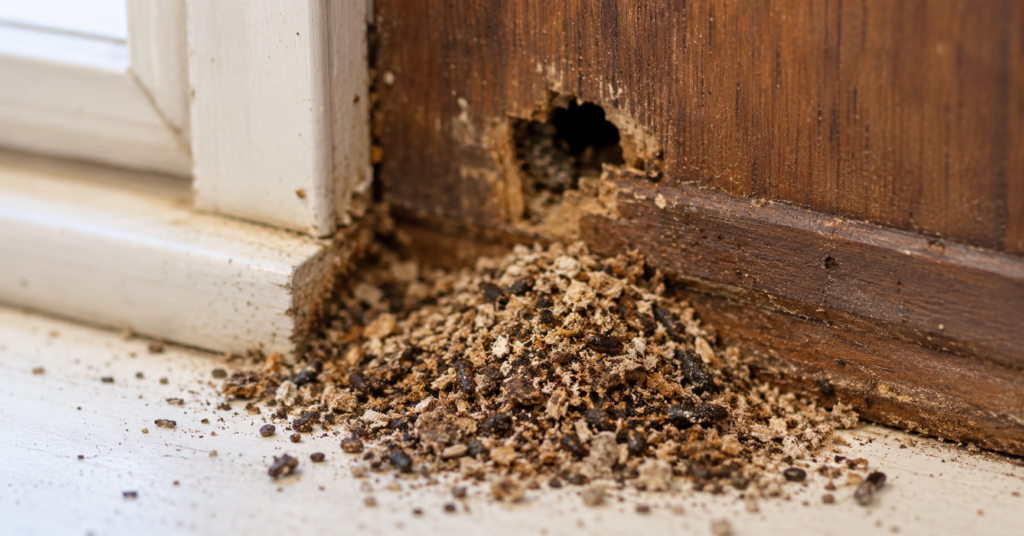
The color of carpenter ant frass is usually light, almost cream or tan, though it can darken depending on what debris is mixed in.
Termite Droppings vs Carpenter Ant Frass: Key Differences
Color & Texture
Termite frass color tracks directly with the wood being consumed. It could be tan, beige, brown, or dark brown, but the texture is always the same: fine, gritty, and uniform, similar to coarse sand. Carpenter ant frass is lighter in color overall and feels fibrous and splinter-like between your fingers.
Contents of the Frass
Pick up a small sample and look closely. Termite frass presents as pellets only, with no insect body parts, no soil chunks, and no fibrous strands. On the other hand, carpenter ant frass is a visible mix of wood debris, soil, gravel, and insect body fragments, including legs, wings, and segments of the ant’s body.
If you see insect parts, you are likely looking at carpenter ant frass. Termites never leave body parts in their frass because they are simply excreting digested wood, not clearing out dead colony members or debris from their environment.
Location
Drywood termite frass almost always appears in neat, isolated piles directly below kick-out holes in wood surfaces, including window frames, door frames, baseboards, furniture, and structural beams.
Carpenter ant frass shows up differently. Because carpenter ants actively push debris out of their nest openings, you will often find frass near visible cracks, gaps, or oval-shaped openings in wood, particularly in areas with moisture damage, since carpenter ants strongly prefer soft, damp wood for nesting.
Common locations include window sills, door frames, attic beams, crawl spaces, and areas around plumbing where wood has been exposed to moisture over time.
How To Get Rid of Termite Droppings & Carpenter Ant Frass
Before you clean anything or call expert exterminators, take a photo of the frass pile in place. This information is valuable for a pest control professional. It helps establish a baseline so you can tell if new frass appears after cleanup, which would indicate the infestation is still active.
When you are ready to clean, use a vacuum with a HEPA filter to remove the frass, wipe the area with a damp cloth and a mild disinfectant, and dispose of the vacuum contents immediately in a sealed bag outside your home.
Treating a Drywood Termite Infestation
Only a professional can effectively treat a termite infestation. The two most effective approaches are localized wood-injection treatments for small, contained infestations and whole-structure fumigation for widespread activity. For smaller infestations, a licensed professional can inject termiticide directly into the affected wood through drilled holes, killing the colony without the need for full fumigation.
Treating a Carpenter Ant Infestation
Effective carpenter ant treatment starts with finding the nest, and often there are multiple satellite nests connected to a main outdoor colony. A professional treatment targets the nest directly using residual insecticide dusts or liquid treatments injected into the galleries, combined with perimeter treatments to cut off trailing ants from re-entering the structure.
Just as important is addressing the moisture problem that attracted the carpenter ants in the first place. Without fixing the underlying water damage or leak, a new colony will simply move into the same softened wood after treatment.
Termite Droppings vs Carpenter Ant Frass: Comparison Table
| Feature | Drywood Termite Frass | Carpenter Ant Frass |
| What it is | Fecal pellets (digested wood) | Excavation debris (not droppings) |
| Pellet shape | Oval with 6 concave sides (hexagonal) | Irregular, no consistent shape |
| Texture | Fine and gritty, like coarse sand | Fibrous and splintery, like sawdust |
| Color | Tan to dark brown (varies with wood type) | Light tan to cream, with darker debris mixed in |
| Contains insect parts? | No | Yes, legs, wings, body fragments |
| Contains soil or gravel? | No | Yes |
| Associated hole type | Small circular kick-out hole (1–2 mm) | Smooth oval gallery opening |
| Pile appearance | Neat, contained pile below hole | Scattered, mixed debris pile |
| Location in home | Below wood surfaces, furniture, beams | Near moist or damaged wood, crawl spaces, attics |
Got Termites or Carpenter Ants? Call Connor’s Pest Pros
Finding frass in your home is not something to sit on. Both drywood termites and carpenter ants demand professional intervention that targets the colony directly. Do not guess when it comes to wood-destroying insects. Instead, get in touch with professionals, as a licensed inspection gives you a definitive answer and a clear plan of action.
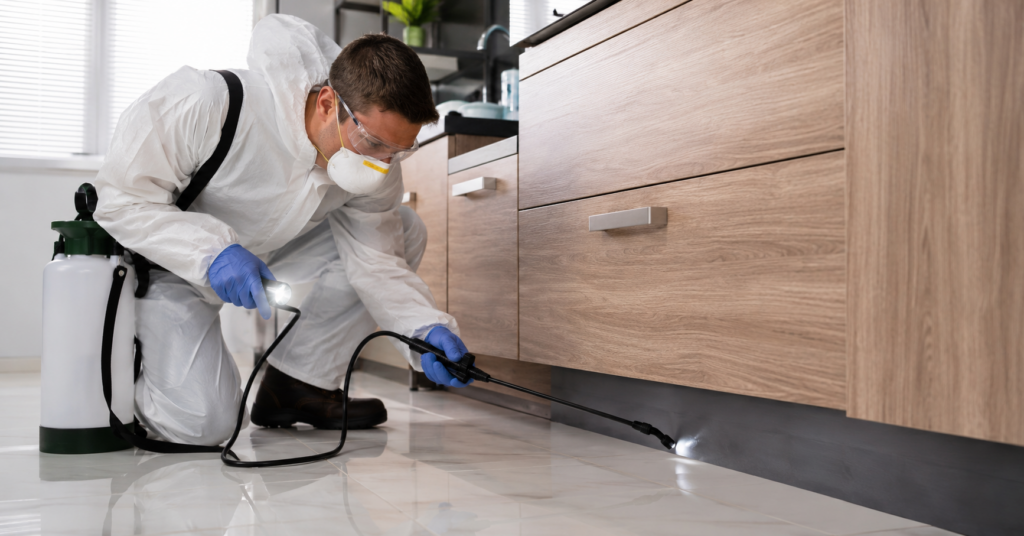
A licensed pest control inspector can confirm the species, locate the full extent of the infestation using moisture meters and probing tools, and recommend the correct treatment approach.
At Connor’s Pest Pros, we serve homeowners with professional-grade pest control. Our team draws on decades of combined experience treating wood-destroying pests. We provide thorough inspections and targeted treatment plans tailored to your specific situation, whether that means whole-structure fumigation or carpenter ant nest elimination paired with moisture remediation guidance. Call us at 888-284-6968 or request your free estimate today to tackle your pest problem.
Frequently Asked Questions (FAQs)
How to know the difference between carpenter ants and termites?
The easiest way to tell them apart is by looking at the frass. Termite frass consists of uniform, hexagonal pellets with no insect body parts. Carpenter ant frass is irregular, fibrous debris that contains insect legs, wings, and body fragments mixed in with wood shavings.
What can be mistaken for termite droppings?
Several things can look like termite frass at a glance, including fine sawdust from construction or drilling, dirt and sand tracked indoors, mouse droppings (which are larger and tapered at the ends), and debris from wood-boring beetles. The key distinguishing feature of termite frass is the hexagonal pellet shape with six concave sides.
Do termites leave behind frass?
Yes, drywood termites specifically produce frass as a byproduct of feeding. Unlike subterranean termites, which use their frass to help build their mud tubes, drywood termites push their fecal pellets out of the colony through small kick-out holes to keep their tunnels clean. These pellets accumulate in piles below the hole and are often the first visible sign of a drywood termite infestation.
Does Connor’s Pest Pros treat termite or carpenter ant infestations?
Yes, at Connor’s Pest Pros, we handle both termite and carpenter ant infestations with professional-grade treatments tailored to the specific pest and the extent of the infestation. Every service we deliver is backed by our 100% Satisfaction Guarantee, so if activity persists between visits, we return and re-treat at no additional cost.
*Price estimates reflect current market costs and may vary based on your specific situation. For a personalized quote tailored to your needs, contact us directly or request your FREE estimate today!