
Key Takeaways
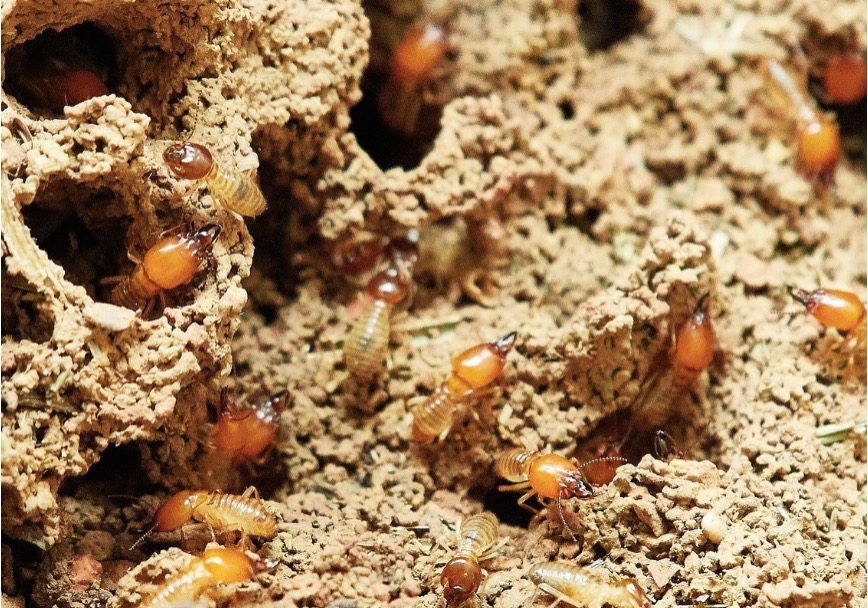
- Subterranean termites nest underground, while drywood termites live within the wood they eat.
- Subterranean colonies can reach several million individuals, while drywood colonies rarely exceed 2,500 to 3,000 termites.
- Subterranean termites leave mud tubes along foundations, and they can be treated with liquid termiticide barriers, bait systems, or borate wood treatments.
- Drywood termites push hexagonal frass pellets out of small kick-out holes in wood, and they can be treated with a spot treatment applied directly to the wood.
- At Connor’s Pest Pros, we identify the exact termite species, provide effective treatment plans, and back every service with our 100% Satisfaction Guarantee.
Which Termite Species Is in Your Home?
Mud tubes along your foundation point to subterranean termites, while tiny hexagonal pellets collecting beneath wood surfaces signal drywood termites. Each species nests differently, causes damage differently, and requires a completely different treatment approach, so the warning signs you’re seeing are the fastest way to narrow down what you’re dealing with.
Both species cause structural damage that compounds the longer it goes untreated, but applying the wrong method wastes time and money while the colony keeps feeding. Connor’s Pest Pros offers same-day inspections and free estimates across the DC metro area and Greensboro, NC, with species-specific treatment plans backed by a 100% satisfaction guarantee.
Connor’s Pest Pros: Trusted, Family-Owned Pest Control
4.9★ Google Rating | 100% Satisfaction Guarantee

Protect Your Home, Pest-Free:
Get customized, ongoing pest control that adjusts with the seasons, covering everything from ants and spiders to termites, rodents, and bed bugs. Same-day or next-day visits mean fast relief.
What Sets Us Apart:
✓ 950+ 5-star reviews on Google
✓ Family-owned, D.C. metro area
✓ Member of the NPMA
✓ Angi Super Service Award Winner (2024)
✓ 100% Satisfaction Guarantee
Don’t let pests take over your home. Act now.
Request Your Free Estimate →How to Identify Subterranean Termites
Subterranean termites are the most destructive termite species in the United States, found in every state except Alaska. They build their colonies underground and need consistent moisture to survive, which is why they’re almost always found near soil.
The workers are small, pale, and soft-bodied, typically measuring around ⅛ of an inch. Soldiers have elongated yellowish heads with large, powerful mandibles used to defend the colony.
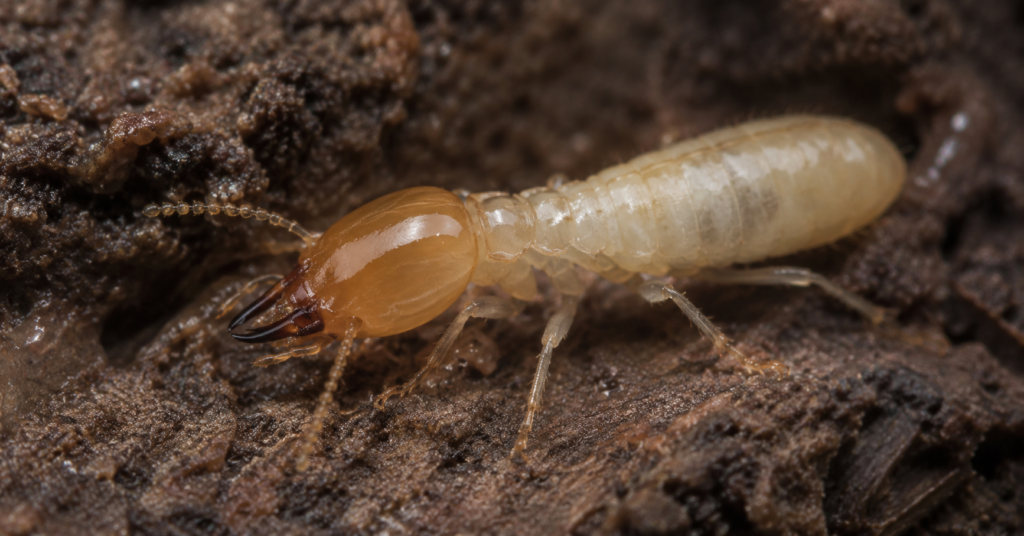
Subterranean termites build colonies underground and eat wood along the grain.
How to Identify Drywood Termites
Drywood termites don’t need soil contact or moisture to survive because they get all the water they need from the wood they inhabit. This makes them uniquely dangerous because they can infest virtually any dry wood in your home, including furniture, wooden frames, hardwood floors, and structural beams.
Drywood termites are noticeably larger than subterranean termites. Worker drywood termites can measure up to ⅜ inch in length.
One of the clearest signs of a drywood termite infestation is the presence of frass, which are tiny, hexagonal, pellet-shaped droppings that look like sawdust or coffee grounds. Unlike subterranean termites, drywood termites push their waste out of small kick-out holes in the wood.
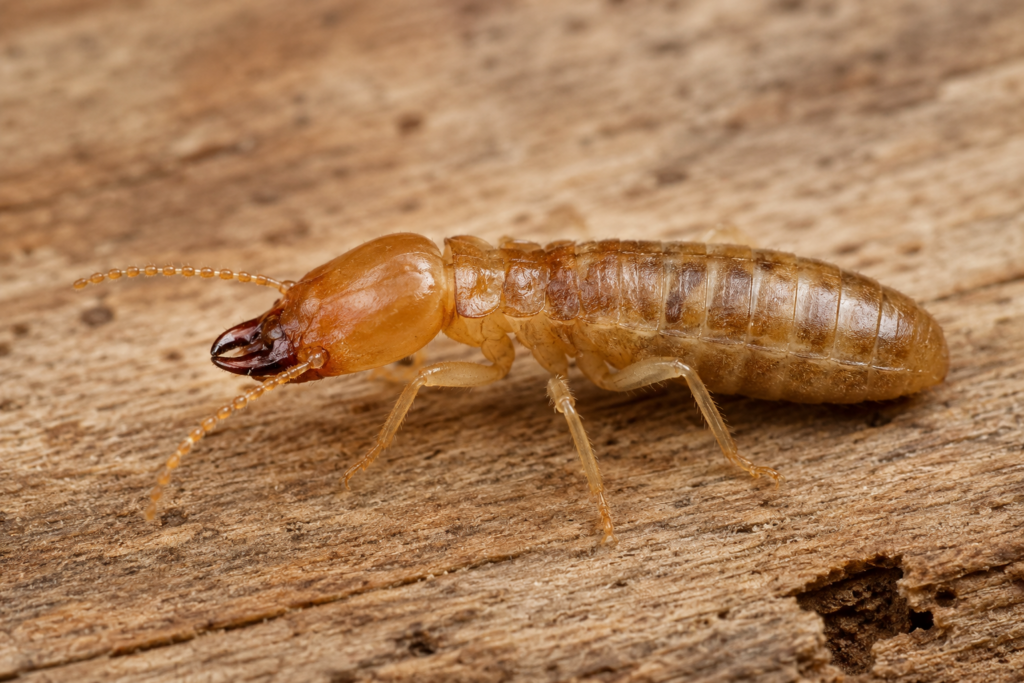
Drywood termites are most commonly found in the southern United States, coastal California, and Hawaii.
Subterranean vs Drywood Termites: Key Differences
Habitat & Moisture Needs
Subterranean termites are entirely dependent on moisture and must maintain contact with the soil to survive. Their underground colonies require consistent humidity, which is why they’re most active after rainfall and most commonly found in areas with high soil moisture.
Drywood termites have no such requirement. They extract moisture directly from the wood they consume, which means they can thrive in dry, indoor environments where subterranean termites simply couldn’t survive. This is what allows drywood termites to infest furniture, picture frames, wooden attic beams, and other isolated wooden objects that have zero contact with soil or external moisture sources.
Colony Size & Growth Rate
A mature subterranean termite colony can contain anywhere from 100,000 to several million individual termites. Drywood termite colonies, by comparison, rarely exceed 2,500 to 3,000 individuals.
However, the slower growth rate of drywood colonies also means infestations are harder to catch early, since the population builds quietly inside the wood over months and years before any outward signs appear.
Geographic Range Across the U.S.
Subterranean termites are found in every U.S. state except Alaska, making them the most geographically widespread termite threat in the country. They thrive in warm, humid climates and are especially problematic in the Southeast, Gulf Coast states, and California. The eastern subterranean is the most commonly encountered species across the eastern half of the country.
Drywood termites have a more limited range, primarily concentrated in the southern coastal states (Florida, Georgia, South Carolina, Texas, California), and Hawaii. They can, however, be transported to other regions through infested furniture or wooden goods, which means no homeowner in the country should rule them out if the signs are present.
Solutions to Drywood Termites
1. Spot Wood Treatment
Spot treatment is the least invasive option and works well when the infestation is caught early and confined to a specific, accessible area. A pest control professional will drill small holes into the infested wood and inject termiticide directly into the galleries where the termites live. After that, the treated area is then sealed.
2. Fumigation for Whole-Structure Infestations
When drywood termites have spread beyond a single localized area, whole-structure fumigation becomes the most reliable solution. The entire home is sealed under a tent and filled with a penetrating gas that reaches every void, gallery, and hidden pocket of wood in the structure. All living termites are eliminated within the treatment period, typically 24 to 72 hours.
Despite the inconvenience, fumigation remains the best approach for widespread drywood termite infestations because it can reach areas that no other treatment can. Licensed professionals like Connor’s Pest Pros manage the full process from tent setup through post-treatment inspection, ensuring the treatment meets safety standards and delivers complete elimination.
3. Heat Treatment
Heat treatment is a chemical-free alternative that raises the internal temperature of the structure or a targeted section to around 120-140°F, which is lethal to termites at all life stages. It’s particularly useful for homeowners who want to avoid chemical exposure or for treating specific rooms or sections of a building.
The process typically takes several hours and, like fumigation, leaves no ongoing residual protection. It’s most effective when combined with follow-up inspections and preventive measures.
Solutions to Subterranean Termites
1. Soil Termiticide Barriers
Liquid termiticide barriers are one of the most widely used subterranean termite treatments. A pest control technician trenches and drills around the home’s foundation and injects a termiticide into the soil.
This creates a treated zone that either kills termites on contact or transfers the treatment back to the colony through social grooming, eventually eliminating the entire colony. The treatment can remain effective in the soil for several years when properly applied.
2. Bait & Monitoring Systems
Termite bait systems use in-ground stations placed around the home’s perimeter. These stations contain cellulose bait laced with an insect growth regulator that disrupts termite molting. Workers find the bait, feed on it, and share it with the colony.
Over time, the colony declines and eventually collapses. Bait systems are slower than liquid barriers but ideal for situations where liquid application isn’t practical, such as near wells or in environmentally sensitive areas.
3. Wood Treatments for Localized Damage
For localized subterranean termite damage that hasn’t spread extensively, targeted wood treatments with borate-based products such as Timbor or BoraCare can be applied directly to the affected wood.
These termite treatments penetrate the wood, making it toxic to termites that feed on it. While not a standalone solution for an active infestation, wood treatments work well as a supplemental measure alongside soil barriers or bait systems, and as a preventive step during new construction or renovation.
Subterranean vs Drywood Termites: Comparison Table
| Feature | Subterranean Termites | Drywood Termites |
| Habitat | Underground, soil-dependent | Inside dry wood, no soil needed |
| Moisture Needs | High, require constant soil moisture | Low, extract moisture from wood |
| Colony Size | 100,000 to several million | Rarely exceeds 2,500–3,000 |
| Worker Size | ~⅛ inch | Up to ⅜ inch |
| Feeding Pattern | Along the grain | Across the grain |
| Key Warning Sign | Mud tubes along foundation | Hexagonal frass pellets near wood |
| Geographic Range | All U.S. states except Alaska | Southern coastal states, Hawaii |
| Primary Treatment | Soil barriers, bait systems | Fumigation, spot treatment, heat |
Call Connor’s Pest Pros for Your Termite Problem
Identifying whether your home has subterranean or drywood termites is the first meaningful step toward protecting it. Whether you’re seeing mud tubes along your foundation, frass pellets near a window frame, or swarmers emerging from the walls, the worst move you can make is to wait and see if the problem resolves itself, because it won’t.
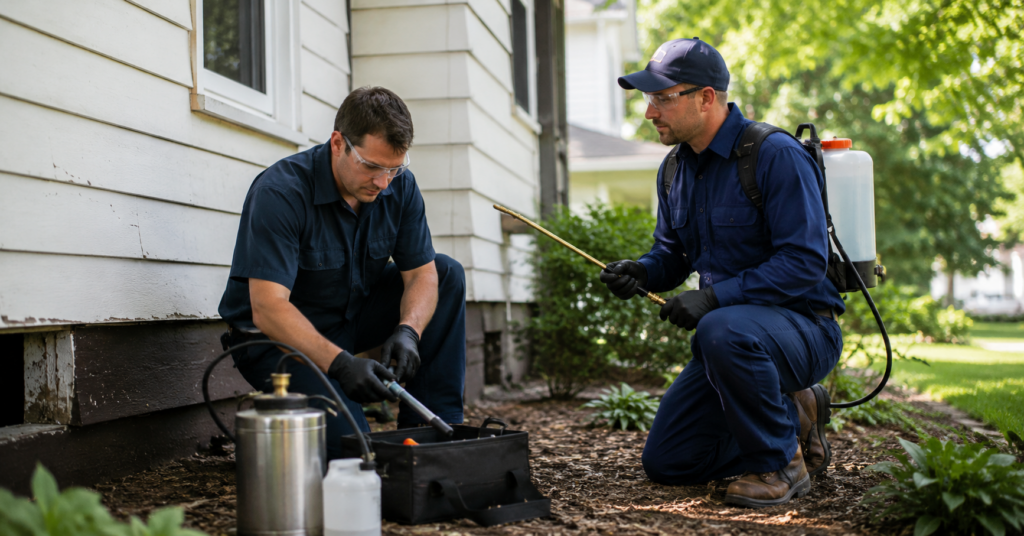
Connor’s Pest Pros is ready to help you identify, treat, and protect your home from whichever termite species has made itself at home in yours.
At Connor’s Pest Pros, our licensed technicians handle both species across the DC metro area, Northern Virginia, Maryland, and Greensboro, NC, combining thorough species identification with treatment plans built around your home’s specific structure and infestation level. Call us at 888-284-6968 or request your free estimate today.
Frequently Asked Questions (FAQs)
What’s the best treatment for subterranean termites?
The best treatment for subterranean termites is a liquid termiticide soil barrier applied around the full perimeter of the home’s foundation. For situations where liquid application isn’t practical, a bait system like the Sentricon System is an equally effective alternative. A professional inspection is essential to first determine which approach best fits your specific infestation and property layout.
How to treat drywood termites compared to other termites?
Drywood termites are treated very differently from subterranean termites because there’s no soil or underground colony to target. Treatment goes directly to the wood. For localized infestations, a pest control professional will inject termiticide into drilled access holes in the infested wood. For widespread infestations, whole-structure fumigation using sulfuryl fluoride gas is the most thorough solution, penetrating every void and gallery in the structure.
Are drywood termites hard to get rid of?
Yes, drywood termites are generally harder to detect and eliminate than subterranean termites. Because they live within the wood they infest and leave minimal external signs, infestations often go undetected for months or even years. By the time frass pellets or swarmer activity become visible, the colony may already be well established inside the structure.
What do subterranean termites look like?
Subterranean termite workers are small, pale cream or white, soft-bodied, and wingless. Soldiers are similar in size but have elongated, yellowish heads with large, dark mandibles. Swarmers (the reproductive caste) are darker, typically dark brown to black, with two pairs of equal-length wings that they shed shortly after swarming.
Does Connor’s Pest Pros offer termite treatments?
Yes, at Connor’s Pest Pros, our team handles both subterranean and drywood termite infestations using treatment approaches matched to the specific species and severity, including soil termiticide barriers, bait systems, spot treatment, and whole-structure fumigation. Every treatment is backed by our 100% Satisfaction Guarantee, so if activity persists between visits, we return and re-treat at no additional cost.
*Price estimates reflect current market costs and may vary based on your specific situation. For a personalized quote tailored to your needs, contact us directly or request your FREE estimate today!