
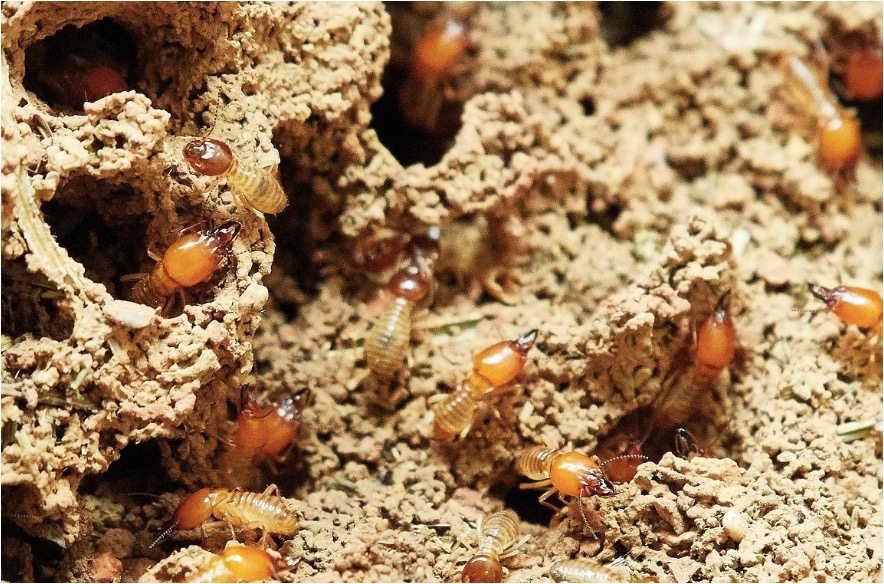
Key Takeaways
- Termite droppings (frass) are uniform, six-sided pellets about the size of a poppy seed, while sawdust is irregular, fluffy, and inconsistent in shape.
- Frass color varies from light beige to nearly black depending on the wood being consumed, while sawdust matches the specific species of wood it came from.
- To confirm what you’re looking at, check the shape with a low-angle flashlight, look for kick-out holes above the pile, and smell it, comparing the wood scent to the frass’s lack of odor.
- A confirmed frass pile means active drywood termite activity; take photos and reach out to a professional for extermination.
- At Connor’s Pest Pros, we specialize in drywood termite inspections, offering same-day termite inspections and treatment across the DC metro area and Greensboro, NC.
Termite Frass vs Sawdust: Shape, Location, & Smell
Termite droppings and sawdust look similar at a glance because both are pale, dry, and collect near wood surfaces, but they come from completely different sources and the distinction matters. Frass is biological waste that drywood termites push out of tiny holes in infested wood, while sawdust is mechanical debris left behind by cutting, drilling, or sanding. Confusing the two can mean months of unchecked termite damage inside your walls.
Three simple field tests, covering shape, location, and smell, can confirm which one you’re looking at in under a minute. Connor’s Pest Pros provides same-day termite inspections across the DC metro area and Greensboro, NC, so if the tests point to frass, you can get a professional confirmation and treatment plan without waiting.
Connor’s Pest Pros: Trusted, Family-Owned Pest Control
4.9★ Google Rating | 100% Satisfaction Guarantee

Protect Your Home, Pest-Free:
Get customized, ongoing pest control that adjusts with the seasons, covering everything from ants and spiders to termites, rodents, and bed bugs. Same-day or next-day visits mean fast relief.
What Sets Us Apart:
✓ 950+ 5-star reviews on Google
✓ Family-owned, D.C. metro area
✓ Member of the NPMA
✓ Angi Super Service Award Winner (2024)
✓ 100% Satisfaction Guarantee
Don’t let pests take over your home. Act now.
Request Your Free Estimate →What Termite Droppings Look Like
Shape
Drywood termite frass consists of uniform, six-sided (hexagonal) pellets. Every single grain is the same shape. Under a phone flashlight held at a low angle, the pellets look like tiny, deflated footballs, consistently shaped, consistently sized.
Size
Each frass pellet is roughly the size of a poppy seed, about 1 millimeter in length. The pile itself might look small and insignificant, but even a modest-sized mound represents a significant amount of termite activity happening inside your wood.
Color
Frass color isn’t fixed. It ranges from light beige all the way to dark brown or black, and the variation comes directly from the type of wood the termites are consuming. A colony feeding on light pine will leave behind pale tan pellets. One feeding on darker hardwood may leave pellets that look almost black.
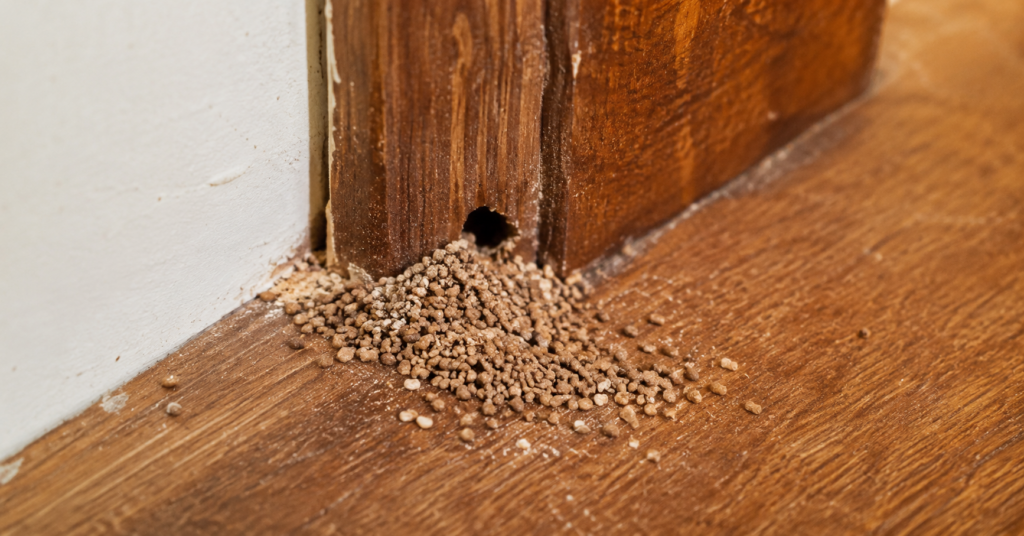
You’ll often find a kickout hole in the wood above a pile of frass, signaling that termites are actively consuming the wood.
What Sawdust Looks Like
Shape
Sawdust is completely irregular. The particles vary widely, and could be thin slivers, fluffy fibers, coarse chunks, fine powder, all mixed in the same pile. There’s no repeating geometric shape the way there is with frass. If you look at a pile and every grain looks different from the next, you’re likely looking at sawdust.
Size
Sawdust particle size depends on the tool that created it. A circular saw leaves coarser shavings. Sandpaper leaves an almost talcum-powder-fine dust. This inconsistency in size within a single pile is another clear indicator that what you’re looking at is mechanical wood debris, not frass.
Color
Sawdust color matches the wood it came from: light yellow for pine, reddish-brown for cedar, pale cream for oak. It’s consistent with the wood species and doesn’t vary much within a single pile.
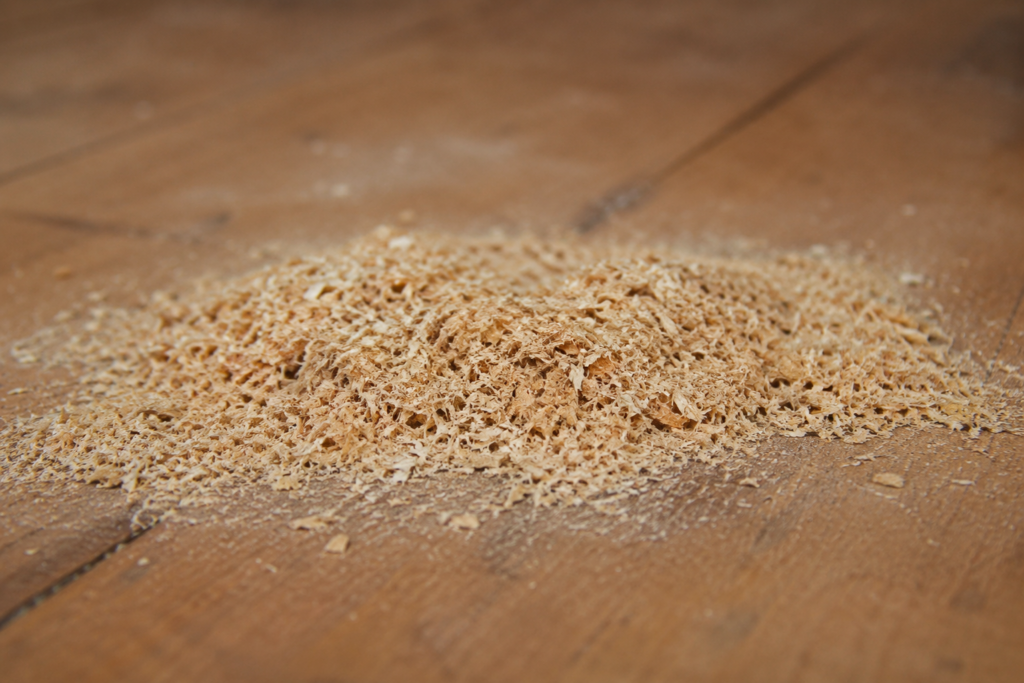
Sawdust is usually thinner and fluffier than termite droppings.
How to Tell the Difference Between Termite Droppings and Sawdust: A Simple Field Test
The Shape Test
Crouch down and hold your phone flashlight at a low angle across the surface of the pile. If the grains are uniform and six-sided, each one roughly the same size and shape, you are almost certainly looking at drywood termite frass. If the grains are mixed, some long, some fluffy, some powdery, it’s likely sawdust. This single test is the most reliable method professionals use in the field, and it takes a few seconds.
The Location Test
Look directly above the pile, at the window frame, door frame, wall trim, or ceiling molding. If you can spot one or more tiny kick-out holes (about the size of a pinhead) in the wood surface, that confirms active drywood termite activity. The termites push frass out through these holes, and it falls and collects in a pile directly below. Sawdust has no source hole because it comes from a saw blade or drill, not from inside the wood itself.
The Smell Test
Fresh sawdust has a distinct, pleasant woody smell; cedar smells sharp and aromatic; pine smells sweet and resinous. Termite frass has almost no smell at all. It’s dry, inert waste material. If you lean in and there’s no noticeable wood scent, that’s a strong indicator you’re not dealing with fresh sawdust.
What to Do If You Find Termite Droppings
Document Pictures Before Sweeping the Pile
Take a photo of it with your phone immediately, and include something for scale, like a coin placed next to it. Before sweeping it away, note the exact location: which room, which wall, how high up on the wall the pile appears to originate from. This information directly helps the inspector trace the kick-out holes back to the colony’s location inside the wood.
Check the Same Spot Again in One Week
If you’re still unsure whether what you found is frass or old sawdust from a past project, here’s the definitive test: carefully sweep the pile away, mark the date, and check back in exactly one week. If a new pile has formed in the same spot, it is frass. Sawdust doesn’t regenerate, but termite colonies do, and they continuously push fresh waste out of those kick-out holes every single day.
Call a Termite Control Professional Immediately
A confirmed frass pile is not a wait-and-see situation. Drywood termite colonies are slow to establish but relentless once they’re active, and they don’t stop eating until the wood is gone or they’re eliminated.
The longer you wait, the more of your home’s structural wood becomes hollowed out from the inside, and the higher your eventual repair bill runs. Contact a licensed termite control professional as soon as possible to schedule a full inspection of the affected area and any adjacent wood structures.
At Connor’s Pest Pros, we offer same-day termite inspections and free estimates so you don’t have to wait days or weeks to find out how bad the problem is. Our team knows exactly what to look for during an inspection, including active kick-out holes, hidden galleries inside the wood, and the structural damage that isn’t visible on the surface.

Termite control specialists can help you identify termite droppings quickly and prepare treatment plans to take care of them once and for all.
Termite Droppings vs Sawdust: Comparison Table
| Feature | Termite Frass | Sawdust |
| Shape | Uniform six-sided (hexagonal) pellets | Irregular — mixed splinters, fibers, powder |
| Size | ~1 mm, highly consistent | Varies widely within the same pile |
| Color | Light beige to black (depends on wood consumed) | Matches the specific wood species cut |
| Texture | Dry, hard, gritty granules | Fluffy, fibrous, or fine powder |
| Smell | Little to no smell | Fresh, distinctive wood scent |
| Source | Tiny kick-out holes in wood above the pile | Near saws, drills, or sanding equipment |
| Reappears after cleaning? | Yes, new frass pushed out daily | No, does not regenerate on its own |
Call Connor’s Pest Pros for Expert Termite Control
Running the simple shape, location, and smell tests gives you enough information to determine whether you’re dealing with harmless mechanical debris or active drywood termites already inside your home. The clean-up test after one week seals it. If a fresh pile reappears, termites are actively working through your wood, and you must reach out to the experts for help.
At Connor’s Pest Pros, we’ve been protecting homes across the DC metro area, Northern Virginia, Maryland, and Greensboro, NC from termite damage for years. Our licensed technicians use targeted treatments along with ongoing monitoring to eliminate active colonies and prevent new ones from taking hold. Call us at 888-284-6968 or request your free estimate to get your termite problem taken care of today.
Frequently Asked Questions (FAQs)
Do termite droppings look like sawdust?
Termite droppings do look like sawdust because they have the same general color range, similar pile size, and both tend to appear near wood surfaces. However, the critical difference is shape. Termite frass is made up of uniform, six-sided pellets that are all roughly the same size and structure. Sawdust is completely irregular, made up of a random mix of splinters, fibers, and powder.
How do you identify termite poop?
Termite frass is characterized by its consistent hexagonal pellet shape, approximately 1mm in size, and a dry, gritty texture. It accumulates in neat piles directly below kick-out holes, tiny pinhead-sized openings that drywood termites create in the wood surface to expel their waste. Color ranges from light beige to near-black depending on the wood being consumed, so shape and location are always more reliable identifiers than color alone.
What can be mistaken for termite droppings?
Several common household materials can be mistaken for termite frass, including sawdust from recent construction or repairs, fine dirt or sand tracked indoors, dried insect carcasses that have crumbled, wood filler or caulk dust, and even coffee grounds in certain lighting conditions. The shape test immediately eliminates almost all of these alternatives. Frass has a geometric consistency that no other household debris replicates.
How can you tell the difference between termite damage and wood rot?
Drywood termite damage leaves clean, smooth galleries in the wood, with tunnels that cut across the grain, often filled with frass. The wood may sound hollow when tapped. Wood rot, by contrast, causes the wood fiber itself to break down. It becomes soft, spongy, crumbles easily, and often has a dark discoloration spreading through the grain with no clean tunnel structure.
How does Connor’s Pest Pros handle termite infestations?
At Connor’s Pest Pros, we start with a thorough inspection to confirm the termite species, locate the colony, and assess the extent of activity in and around your home. Based on those findings, we build a custom treatment plan matched to the species designed to eliminate the colony and prevent reinfestation. Every treatment is backed by our 100% Satisfaction Guarantee, so if activity persists between visits, we return and re-treat at no additional cost.
*Price estimates reflect current market costs and may vary based on your specific situation. For a personalized quote tailored to your needs, contact us directly or request your FREE estimate today!