
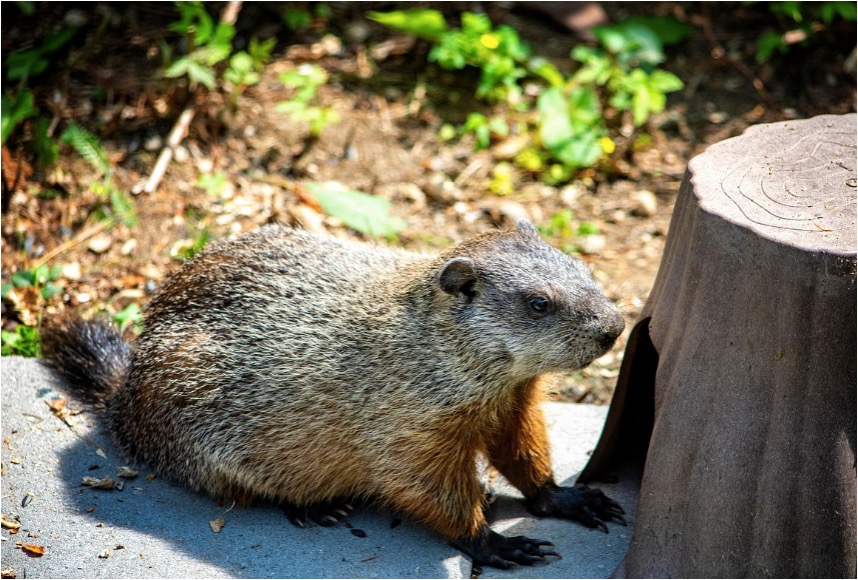
Key Takeaways
- Groundhog poop is small, dark, and pellet-like, but rarely visible above ground because groundhogs use latrine chambers inside their burrows. It typically measures about 0.5–1 inch long.
- Raccoon scat is 2–3 inches long, tubular with blunt ends, and consistently deposited in communal piles called latrines on decks, roofs, and other flat surfaces.
- Location is the most reliable way to tell them apart: burrow openings with disturbed soil point to groundhogs, while repeated piles on elevated surfaces point to raccoons.
- Raccoon droppings often contain visible undigested food like berries, seeds, or insect parts, while groundhog droppings are uniform and fibrous because they’re herbivores.
- Connor’s Pest Pros provides wildlife removal services to help identify and resolve groundhog and raccoon activity before it causes serious property damage, and each service is backed by a 100% satisfaction guarantee.
Groundhog Poop Is Usually Hidden; Raccoon Poop Is Hard to Miss
Groundhog and raccoon droppings can both appear dark and cylindrical, but they behave very differently as evidence of an infestation. Most homeowners searching for groundhog poop never find it, because groundhogs typically relieve themselves in dedicated latrine chambers inside their burrows. Raccoons, by contrast, return to the same communal latrine repeatedly, building up visible piles of scat in highly exposed locations.
Getting this identification wrong has real consequences. An unrecognized raccoon latrine is not just a nuisance; raccoon feces can carry Baylisascaris procyonis, a roundworm parasite that poses a serious health risk to humans and pets. Treating a raccoon problem like a groundhog problem, or vice versa, leads to the wrong removal strategy and a problem that keeps coming back.
Connor’s Pest Pros offers wildlife identification and removal services for exactly this kind of situation, helping homeowners determine which animal is responsible and how to address it safely and effectively.
Connor’s Pest Pros: Trusted, Family-Owned Pest Control
4.9★ Google Rating | 100% Satisfaction Guarantee

Protect Your Home, Pest-Free:
Get customized, ongoing pest control that adjusts with the seasons, covering everything from ants and spiders to termites, rodents, and bed bugs. Same-day or next-day visits mean fast relief.
What Sets Us Apart:
✓ 950+ 5-star reviews on Google
✓ Family-owned, D.C. metro area
✓ Member of the NPMA
✓ Angi Super Service Award Winner (2024)
✓ 100% Satisfaction Guarantee
Don’t let pests take over your home. Act now.
Request Your Free Estimate →What Does Groundhog Poop Look Like?
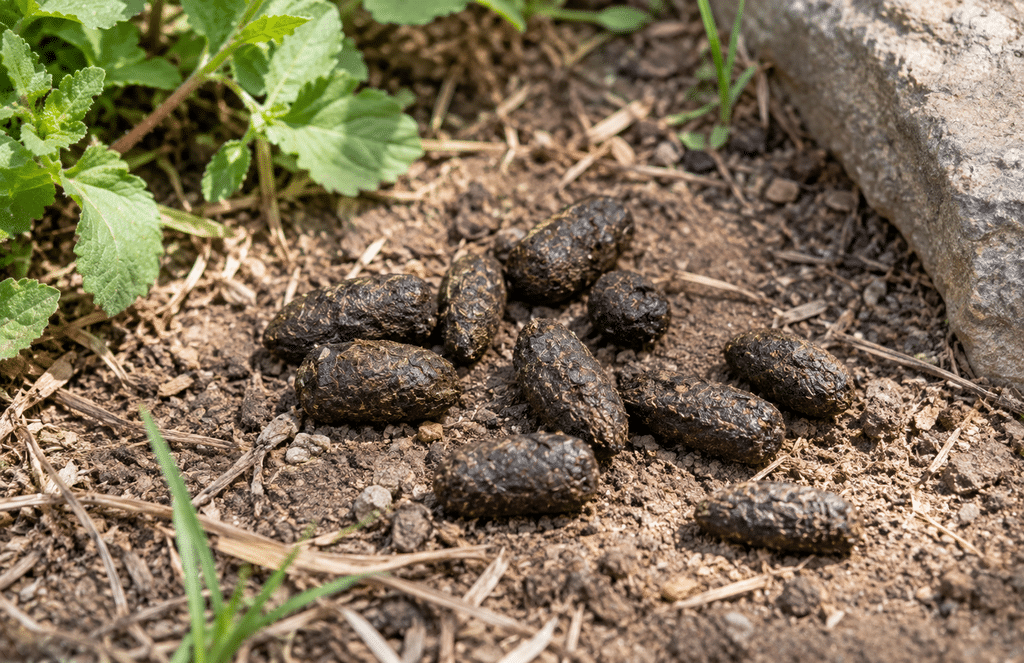
If groundhog droppings are spotted near a burrow entrance, they will typically appear as small, dark, compact pellets clustered in a limited area at ground level.
Groundhog droppings are compact, dark brown to almost black. They typically measure about 0.5–1 inch long and appear as small oval pellets or short, blunt cylindrical pieces.
Because groundhogs are herbivores, their scat is uniformly fibrous with no visible food remnants like seeds or insect parts. The texture is firm and relatively dry, and the pieces tend to be smaller than those of similarly sized mammals.
What Does Raccoon Poop Look Like?
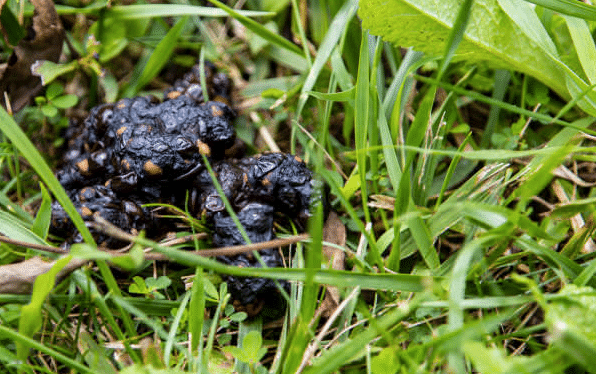
Raccoon poop is often inconsistent in texture, showing remnants of seeds and undigested food.
Raccoon scat is tubular with blunt ends and measures about 2–3 inches long, with a diameter roughly the size of a dime or nickel. The color ranges from dark brown to nearly black depending on recent diet, and the surface often has a slightly segmented texture.
Fresh raccoon droppings have a strong, unpleasant odor that becomes more noticeable as the latrine accumulates over time. Because raccoons are omnivores, their scat is visually inconsistent, unlike groundhog droppings.
How Can You Tell the Difference Between Groundhog Poop & Raccoon Poop?
- Check How Much Scat Is Present: Groundhog scat, when visible above ground at all, tends to appear in small, isolated amounts near a burrow entrance rather than in a concentrated pile. A raccoon latrine builds up over time because raccoons return to the same spot repeatedly, often producing a dense, layered accumulation of droppings.
- Look at Where It Was Found: Groundhog droppings, when they appear above ground, will be at ground level near a wide burrow opening with disturbed or freshly piled soil. They will not appear on rooftops, elevated decks, attic floors, or woodpiles. Raccoon latrines are almost always on flat or elevated surfaces: deck railings, rooftop corners, attic floors, the tops of woodpiles, and chimney bases.
- Check for Food Remains in the Droppings: Look closely at what is inside the droppings. Groundhog scat will appear uniform and fibrous throughout, with no identifiable food particles, because groundhogs eat almost entirely plant matter. Raccoon scat, by contrast, often contains clearly visible undigested material, including berry seeds, grape skins, corn, insect parts, or other mixed food remnants.
- Look for Tracks Nearby: Groundhog tracks show four toes on the front feet and five on the hind feet; they’re more compact and rounded than a raccoon’s and are typically accompanied by visible claw impressions. Raccoon tracks are distinctive and often described as hand-like, with five long, spread toes that leave an impression resembling a small human handprint.
What to Do If You Find Groundhog or Raccoon Poop in Your Yard?
If you find droppings in your yard, leave them where they are and take a photo from a safe distance so you can compare the size, shape, and contents against the descriptions above. Keep children and pets away from the area until you know what left it, because the two animals call for very different responses.
Contact a professional wildlife control company. Its experts will inspect the property to confirm what is there and how it is getting in, remove the animal, and seal the entry points behind it so the problem doesn’t start over next season.
Groundhog Poop vs Raccoon Poop: Comparison Table
| Feature | Groundhog Poop | Raccoon Poop |
| Shape | Small oval pellets or short blunt cylinders | Tubular with blunt ends |
| Size | Small, compact, about 0.5–1 inch long | 2–3 inches long, dime-to-nickel diameter |
| Color | Dark brown to black | Dark brown to black |
| Contents | Uniform, fibrous, plant-based | Variable; may contain seeds, berries, insect parts |
| Typical location | Underground latrine chambers or near burrow at ground level | Communal latrines on decks, roofs, attic floors, woodpiles |
| Accumulation pattern | Small, isolated quantities rarely seen above ground | Layered piles that build up over repeated visits |
| Associated signs | Wide burrow opening (10–12 inches), disturbed soil, plant damage | Tracks resembling small handprints, strong odor, food debris |
| Health risk | Low direct risk | Potential Baylisascaris procyonis roundworm contamination |
Protect Your Home From Wildlife With Connor’s Pest Pros

Connor’s Pest Pros is a family-owned pest control company that provides humane wildlife removal services.
Identifying the droppings is only the first step. Groundhog burrowing damages garden beds and lawns, while raccoon latrines carry health risks that need careful handling. Misidentifying the animal leads to the wrong removal approach and can cause the problem to return.
At Connor’s Pest Pros, we provide professional wildlife identification and removal services, giving homeowners clear answers and safe solutions. Our technicians are trained in humane wildlife removal, and we back every service with a 100% satisfaction guarantee, with same-day and next-day service available for emergencies. Contact Connor’s Pest Pros to get a free estimate.
Frequently Asked Questions (FAQs)
How can I identify raccoon poop?
Raccoon poop is tubular with blunt ends, typically 2–3 inches long with a diameter around the size of a dime or nickel. It is dark brown to black and often contains visible undigested material such as berry seeds, corn, or insect parts. You can most reliably identify it by location: raccoons use communal latrines and return to the same spot repeatedly, building layered piles on decks, rooftops, attic floors, and woodpiles.
How can I identify groundhog poop?
Groundhog poop looks like small, compact, dark oval pellets or short, blunt cylindrical pieces. Because groundhogs are herbivores, the droppings are uniform and fibrous with no visible food particles inside. Groundhogs typically use dedicated latrine chambers within their burrows, so the most reliable signs of groundhog activity are a wide burrow entrance of roughly 10–12 inches with freshly excavated soil nearby, combined with damage to garden plants or vegetation rather than visible droppings.
What can be mistaken for a groundhog?
Groundhogs are sometimes confused with other burrowing mammals, particularly woodchucks, though woodchuck is simply another common name for the same animal, Marmota monax. In terms of droppings and field signs, groundhog activity can occasionally be confused with rabbit activity, as both produce dark, compact pellets near ground level.
Does Connor’s Pest Pros provide wildlife removal services?
Yes. Connor’s Pest Pros handles humane wildlife removal across the DC metro area, covering raccoons, groundhogs, squirrels, bats, moles, and similar nuisance animals. Every job begins with a free inspection to confirm what is there and find how it is getting in, followed by removal and exclusion work that seals those openings so the animal cannot return.
*Price estimates reflect current market costs and may vary based on your specific situation. For a personalized quote tailored to your needs, contact us directly or request your FREE estimate today!