
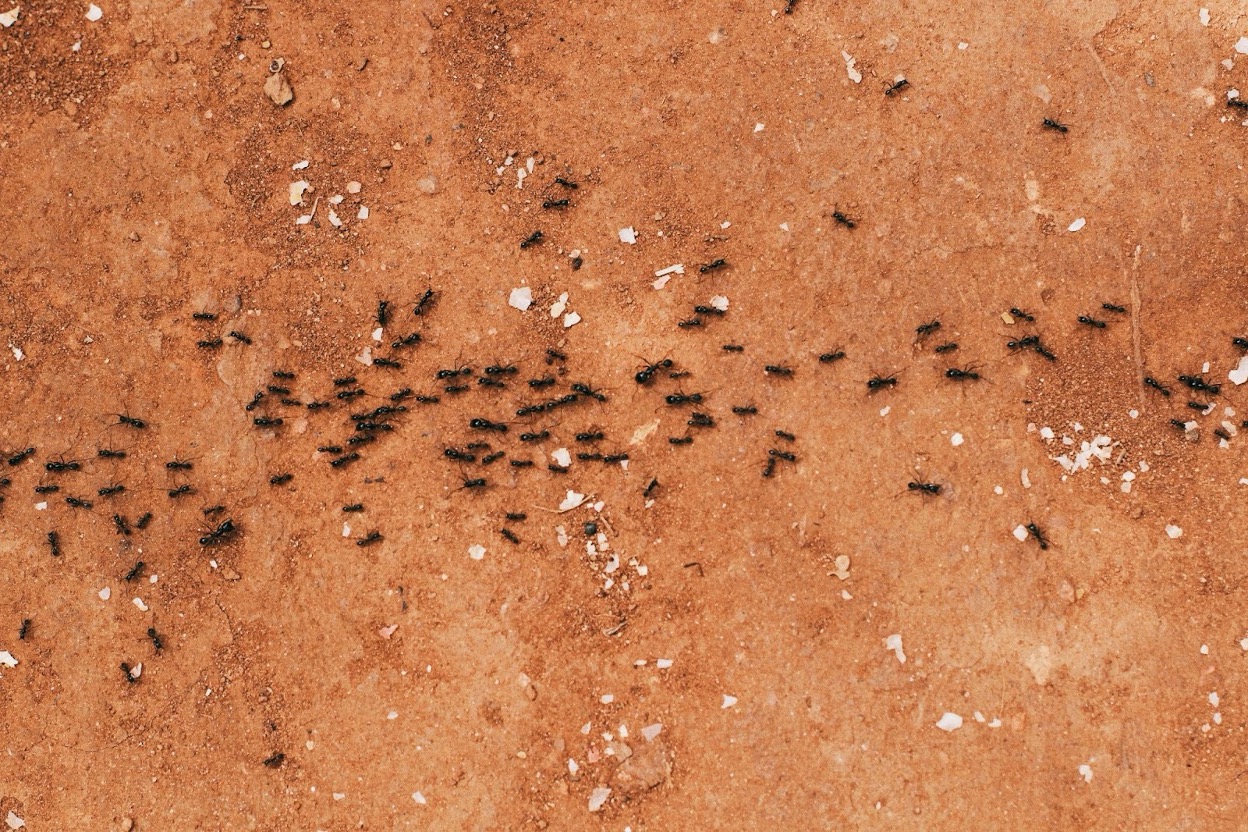
Key Takeaways
- Ant bites and flea bites look similar at first glance, but their patterns, locations, and progression are distinctly different.
- Flea bites appear in clusters of three or more, often in a straight line, earning the nickname “breakfast, lunch, and dinner” bites, a pattern well-documented in pest control and dermatology literature.
- Fire ant bites are in a league of their own, causing white, pus-filled pustules within 24 hours.
- You don’t need pets to get flea bites, as fleas can live in your yard, carpet, and furniture and will bite humans when given the chance.
- If bites keep coming back, a professional treatment from Connor’s Pest Pros is the fastest way to stop the cycle for good.
How Can You Tell If You Were Bitten by an Ant or a Flea?
The fastest way to tell ant and flea bites apart is to look at the pattern and the progression.
Flea bites typically show up in a line or cluster, stay small, and appear most often around the ankles and lower legs. Ant bites, on the other hand, tend to appear wherever skin was exposed to the ant, and fire ant bites specifically develop into fluid-filled blisters within hours, which is a dead giveaway.
|
Connor’s Pest Pros: Family-Owned Pest Control Experts Choose Your Pest Protection Solution:
Customer Praise:
★★★★★ “Quick to answer my call and available same-day… I recommend them to anyone looking for pest control in NOVA.” – Jacquelyn L.
Why Choose Connor’s Pest Pros:
|
What do Ant Bites Look Like?
Ants bite when they feel threatened. If you’ve stepped on a nest, brushed against a trail, or unknowingly disturbed a colony, an ant will defend itself by biting exposed skin. The result is a sharp, immediate pain followed by a red, raised bump that feels hot and itchy.
What Ant Bites Look Like

Fire ant bites can lead to the formation of white pustules that contain pus (Image source:“Pustule from Fire Ant Bite” by Ed Uthmanlicensed under CC BY 2.0, via Wikimedia Commons)
.jpg)
Most ant bites look like small, red, pimple-like marks on the skin. The area around the bite becomes swollen and red fairly quickly, and the bite itself carries a distinctive burning sensation that sets it apart from other insect bites.
Fire ant bites escalate quickly. Within 24 hours of being stung, white, fluid-filled pustules form at the bite site. These blisters can last several days to about one week, and they’re one of the clearest visual identifiers that you’re dealing with fire ants specifically rather than another ant species.
Severe reactions aren’t limited to the bite site either. Ant bites can trigger hives, widespread itching, and redness that develops away from the bite. Some people also experience digestive symptoms like nausea, stomach cramps, and diarrhea, which are signs that the body is reacting systemically to the venom.
Fire Ant Bites vs Common Ant Bites
Common ant bites are an irritation. Fire ant bites are a different experience entirely.
Regular ants bite using their mandibles, leaving a small red mark that itches and fades within a week. Fire ants are venomous. They bite to grip the skin, then pivot and sting repeatedly with their abdominal stinger, injecting venom that causes sharp, immediate pain followed by the development of pus-filled pustules. For people with venom allergies, fire ant stings can cause anaphylaxis, which is a life-threatening emergency requiring immediate medical attention.
Where Do Ant Bites Typically Appear on Your Body?
Ant bites almost always appear on exposed skin, particularly the feet and lower legs, since ants travel along the ground and encounter humans from the ground up.
If you’ve stepped near or on a nest, multiple bites in a cluster are typical. Ants release alarm pheromones that signal others to attack, which is why a single encounter with a nest can result in dozens of bites in rapid succession.
What Do Flea Bites Look Like?
Fleas are small, fast, and nearly impossible to spot, which makes figuring out the source of their bites frustrating. These tiny insects, which range from light brown to almost black and top out at roughly the size of a sesame seed, are built for one thing: feeding on blood. And while they strongly prefer animals with thick fur, they’ll bite humans without hesitation when the opportunity arises.
What They Look Like
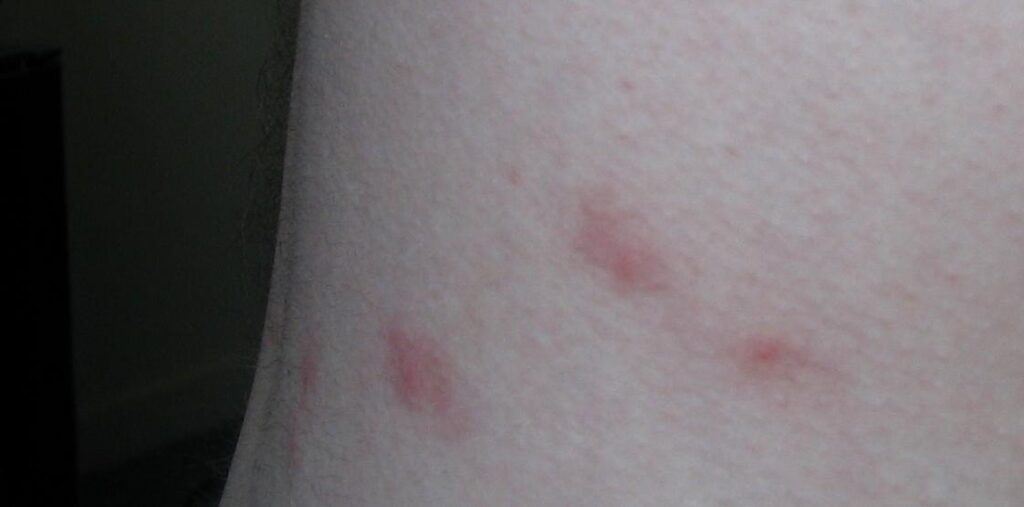
Fleas tend to bite multiple times, leading to clusters of bites (Image source:“Flea bites” by Ed Uthmanlicensed under CC BY-SA 3.0, via Wikimedia Commons)

Flea bites appear as small, discolored bumps on the skin. On lighter skin tones, they show up as red, slightly swollen spots. On darker skin tones, the color difference may be subtle, but the bites are still identifiable by their characteristic pattern, inflammation, and intense itching.
Unlike mosquito bites, flea bites remain small and don’t swell into large welts. If flea bites are scratched repeatedly, they can develop into blisters and become vulnerable to secondary bacterial infection.
The “Breakfast, Lunch, and Dinner” Bite Pattern
Pest control professionals and dermatologists have a memorable name for the way flea bites arrange themselves on the skin: “breakfast, lunch, and dinner.” This refers to the distinctive pattern of three or more bites appearing in a straight line or tight cluster. It happens because a flea feeds, moves a short distance, feeds again, and continues, leaving a trail of bites along the skin rather than a single isolated mark.
This linear bite pattern is one of the most reliable ways to confirm you’re dealing with fleas rather than another insect. Ant bites cluster around a single point of contact with a nest, while flea bites track along a path. The difference is subtle but consistent.
Flea bites most commonly appear around the ankles, lower legs, waist, armpits, and the area behind the knees. These are the spots where clothing fits snugly against the skin or where body heat accumulates. If you’re waking up with new bites in these areas every morning, a flea infestation in your bedding or carpet is a strong possibility.
Ant vs Flea Bites: Comparison Table
| Feature | Ant Bite | Flea Bite |
| Size | Small red mark; fire ant bites develop pustules | Small bump; does not swell like a mosquito bite |
| Pattern | Clustered at the point of nest contact | Line or cluster of 3+ bites (“breakfast, lunch, dinner”) |
| Common Locations | Feet, legs, any exposed skin near a nest | Ankles, lower legs, waist, armpits, behind knees |
| Key Visual Marker | Pus-filled pustule within 24 hours (fire ants only) | Red halo around bite center |
| Sensation | Sharp pain, burning, intense itch | Intense itch, mild swelling |
| Risk of Infection | Yes, if scratched or blistered | Yes, scratching can cause blisters and infection |
| Severe Reaction Risk | High with fire ants (anaphylaxis possible) | Possible allergic reaction; fleas can transmit disease |
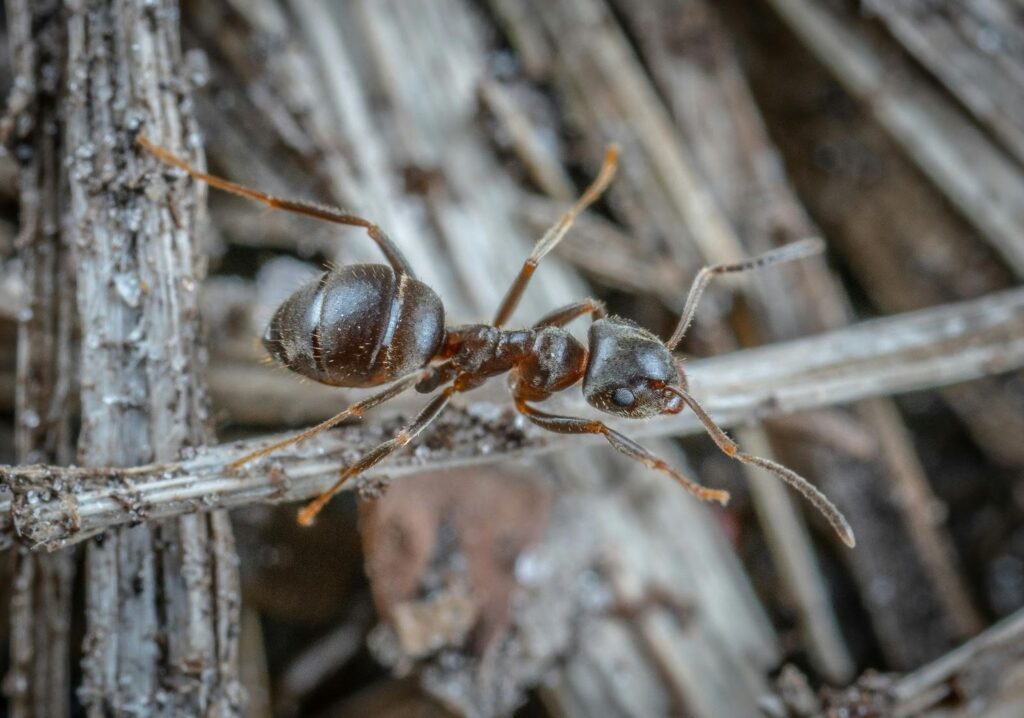
Fire ants use both their mandibles and stinger when they attack.
Clear Your Home From Ants and Fleas with Connor’s Pest Pros
If you’re dealing with fire ants in the yard or a flea infestation that’s taken hold in your carpet, professional treatment is the most reliable way to get ahead of the problem before it gets worse. For homeowners across Northern Virginia, Maryland, and the DC metro area, Connor’s Pest Pros is the local team to call..
As a family-owned business with 415+ 5-star reviews, we treat both ant and flea infestations, protecting your home and your family from bites, recurring problems, and the health risks that come with them.
Bites are the first sign, and an infestation is what comes next. Same-day service, pet and child-friendly treatments, and free re-treatments until the problem is fully resolved. If you’re seeing bites and aren’t sure what’s causing them, we’ll figure it out and take care of it.
Contact us today for a free quote!
Frequently Asked Questions (FAQs)
Can flea bites make you seriously ill?
Yes, in some cases. Fleas are classified as vectors, meaning they can carry and transmit diseases between animals and humans through their bites.
How long do ant bites take to heal?
Most common ant bites clear up within about a week. The initial redness, swelling, and burning sensation typically peak within the first 24 to 48 hours and gradually improve after that. Fire ant bites take longer. The white, pus-filled pustules that form within 24 hours of the sting can persist for several days to about one week before fully resolving.
Do flea bites always appear in a straight line?
Not always, but the linear or clustered pattern of three or more bites is the most consistent visual characteristic of flea bites. Pest control professionals and dermatologists use this pattern (nicknamed “breakfast, lunch, and dinner”) as a key identifier.
However, if a flea moves more erratically while feeding, the bites can appear as a loose cluster rather than a perfect line. What stays consistent is the grouping of multiple bites close together, rather than a single isolated mark.
Can you get flea bites without having pets?
Absolutely. Fleas thrive outdoors in cool, damp, shaded environments. They can be found around trees, tall grass, shrubs, and leaf litter. You can pick them up simply by walking through your yard. Once inside, fleas can hide in carpet, upholstered furniture, bedding, and cracks in the floor, where they can survive and reproduce even without a pet host.
Can Connor’s Pest Pros get rid of ants and fleas?
Yes. Both ant infestations and flea infestations require targeted treatment. Connor’s Pest Pros treats ant and flea infestations with proven methods, same-day availability, and free re-treatments until the problem is gone.