
Key Takeaways
- Raccoons primarily pose danger through disease transmission rather than direct attacks, with rabies and raccoon roundworm being the most serious health concerns.
- Abnormal raccoon behavior, such as daytime activity, staggering gait, or a lack of fear of humans, can indicate rabies and require immediate reporting to wildlife authorities and professional removal.
- Female raccoons protecting young (kits) during spring and early summer become significantly more defensive, making maternal assessment critical before any removal attempt to prevent orphaning complications.
- Never approach, feed, or attempt to handle wild raccoons—even healthy raccoons may become aggressive when cornered.
- Connor’s Pest Pros provides humane, expert raccoon removal in Northern Virginia and Maryland through humane handling methods and maternal assessment.
Raccoon Danger: What You Need to Know
Raccoons may look harmless, but they can pose real risks when they search for food or shelter around homes.
They’re intelligent, resourceful, and able to access places other animals can’t, which brings them closer to people. While raccoon attacks are uncommon, they can become defensive if they feel threatened, so it’s important to know how to respond during an encounter.
The bigger danger isn’t aggression but the diseases raccoons can carry without showing symptoms. These pathogens can harm humans and pets, making it essential for anyone living in raccoon-active areas to understand the risks and take steps to avoid direct contact.
|
Connor’s Pest Pros: Family-Owned Pest Control Experts Choose Your Pest Protection Solution:
Customer Praise:
★★★★★ “Quick to answer my call and available same-day… I recommend them to anyone looking for pest control in NOVA.” – Jacquelyn L.
Why Choose Connor’s Pest Pros:
|
The Real Threats Raccoons Pose to Humans
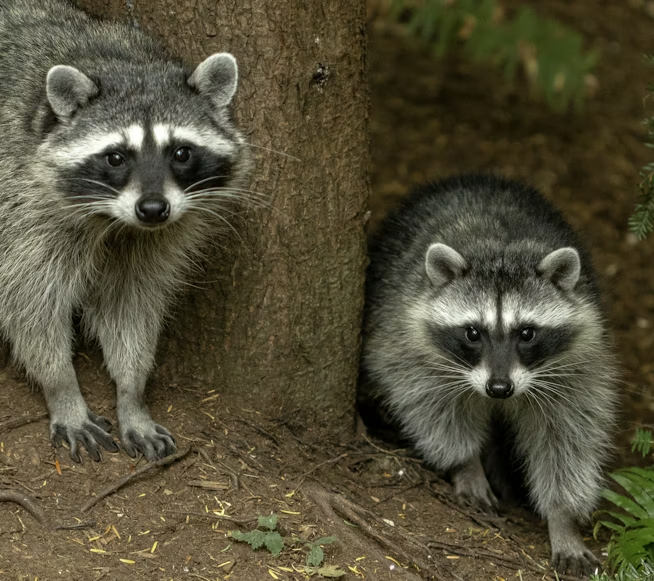
While raccoon attacks on humans are uncommon, these animals can pose several significant health and safety risks that should not be underestimated.
Disease Transmission: Rabies and Roundworm Risk
The most serious danger raccoons pose to humans is the transmission of disease. Raccoons are primary carriers of rabies in North America, a viral disease that attacks the central nervous system and is almost always fatal once symptoms appear.
Transmission typically occurs through bites or scratches, with the virus present in the animal’s saliva. Any raccoon bite or scratch should be considered a potential rabies exposure requiring immediate medical attention.
Another significant health risk is Baylisascaris procyonis, commonly known as raccoon roundworm. This parasite’s eggs are shed in raccoon feces and can remain viable in soil for years.
Humans, particularly children, can become infected through accidental ingestion of contaminated soil or objects. The infection can lead to severe neurological damage as the larvae migrate through the body, potentially causing blindness, brain damage, or death in serious cases.
Raccoons can also transmit leptospirosis, salmonella, and other bacterial infections through their urine and feces. These pathogens can contaminate soil, water sources, or home surfaces, creating invisible health hazards for homeowners and their pets.
Physical Attack Potential
Healthy raccoons typically avoid confrontation with humans, but they may become aggressive if cornered, threatened, or protecting their young. Female raccoons with babies (known as kits) are particularly defensive during spring and early summer when their maternal instincts are strongest.
Raccoon attacks often involve scratching and biting, which can result in deep wounds requiring medical attention. Their sharp claws and teeth can cause significant tissue damage, and any raccoon bite or scratch should be considered a potential exposure to rabies.
Even seemingly minor wounds should be thoroughly cleaned and evaluated by a healthcare professional as soon as possible.
Damage to Property & Food Contamination
Beyond direct health risks, raccoons can cause significant property damage when seeking food or shelter. Their dexterous paws allow them to open trash cans, doors, and even complex latches. Once inside attics, crawl spaces, or chimneys, they may tear up insulation, damage wiring (creating fire hazards), and contaminate areas with urine and feces.
Food contamination is another indirect danger. Raccoons frequently raid garbage cans, gardens, and pet food left outdoors. They can spread bacteria and parasites to any food sources they contact, potentially leading to foodborne illness if these items are subsequently consumed by humans or pets.
What to Do During a Raccoon Encounter
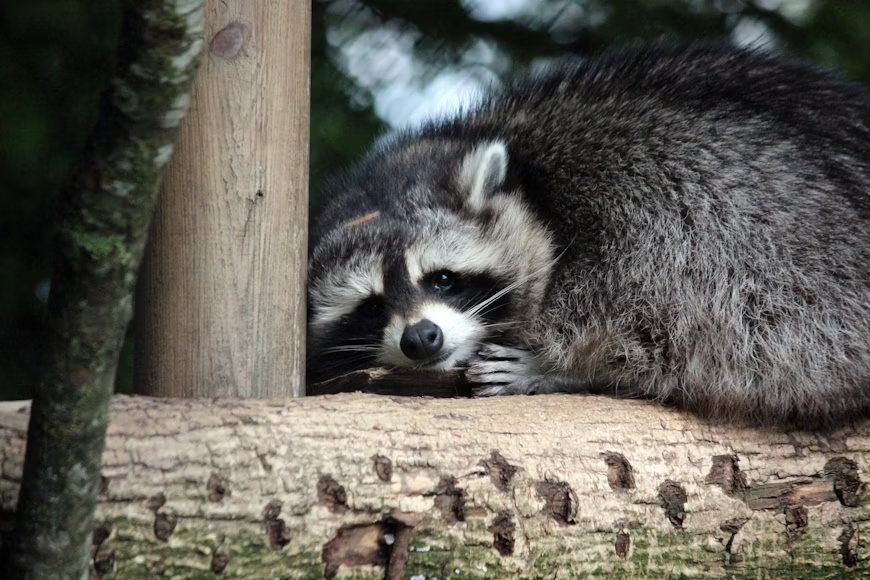
Knowing how to respond can make the difference between a harmless encounter and a potentially dangerous situation.
Step 1: Stay Calm & Keep Your Distance
When encountering a raccoon, your first priority should be maintaining distance between yourself and the animal. It is recommended to stay at least 25 feet away from any wild raccoon. Remain calm and avoid sudden movements that might startle the animal or be interpreted as threatening.
If you have children or pets with you, calmly gather them close. Pick up small children if possible, and keep dogs on a tight leash. Never let your dog chase or interact with a raccoon, as this could result in serious injuries to your pet and potentially expose it to rabies or other diseases.
Step 2: Make Yourself Look Bigger
If a raccoon approaches you and doesn’t appear frightened, try making yourself appear larger by raising your arms above your head or opening your jacket wide.
This technique, commonly used with many wildlife encounters, can help discourage the animal from approaching further. You can also make loud noises by clapping your hands, speaking in a firm, loud voice, or using noisemakers if available.
The goal is to convince the raccoon that you’re not an easy target and that approaching you further would be risky. Most healthy raccoons will choose to retreat when confronted with this display.
However, be aware that a raccoon that continues to approach despite these deterrence efforts may be ill or rabid, warranting extra caution.
Avoid high-pitched screams or sounds that might mimic injured prey, as these could potentially trigger predatory instincts in some wildlife. Instead, use deep, authoritative vocalizations that communicate confidence and dominance.
Step 3: Back Away Slowly
Never turn your back on or run away from a raccoon that’s showing aggressive behavior. Instead, back away slowly while maintaining visual contact with the animal. Sudden movement or running can trigger a chase response, as many predatory animals instinctively pursue fleeing prey.
Try to maintain awareness of your surroundings as you retreat to avoid tripping or backing into obstacles. If possible, move toward an area where the raccoon is less likely to follow, such as an open space or a building with a door you can close. Continue backing away until the raccoon loses interest or you’ve reached a safe location.
If the raccoon continues to follow you aggressively despite your deterrent efforts, this is highly unusual behavior that could indicate rabies. In such rare cases, you may need to use available objects as barriers or shields while continuing to back toward safety.
Step 4: Protect Children & Pets
Children are particularly vulnerable during wildlife encounters because of their small size and unpredictable behavior. If children are present during a raccoon encounter, immediately instruct them to stand still and quiet.
Then calmly gather them close to you or pick them up if they’re small enough. Children should be taught never to approach, touch, or feed wildlife, no matter how cute or friendly the animals might appear.
Pets, especially dogs, may try to chase or confront raccoons, which can lead to serious injuries or the transmission of disease. Keep dogs leashed in areas where raccoons are common, especially during dawn and dusk when these nocturnal animals are most active.
If your pet does get into a confrontation with a raccoon, do not attempt to separate them with your bare hands. Instead, use a broom, stick, or other object to create distance between them.
After any pet-raccoon encounter, even if no injuries are apparent, consult your veterinarian immediately. Your pet may need a rabies booster vaccination or treatment for wounds that aren’t immediately visible. Remember that raccoons can transmit diseases to pets through scratches, bites, or exposure to their bodily fluids.
Connor’s Pest Pros: Expert Wildlife Management

Connor’s Pest Pros provides maternal assessment expertise, systematically identifying dependent young before mother removal.
At Connor’s Pest Pros, our approach to raccoon removal goes beyond simply trapping visible animals. We conduct thorough property assessments identifying why raccoons are attracted to your specific location—unsecured garbage creating food sources, pet food left outdoors, accessible den sites under decks or in crawlspaces, water sources, and structural vulnerabilities enabling entry.
Addressing these attractants prevents future raccoon conflicts more effectively than removal alone. Our exclusion work seals all entry points raccoons use to access structures while ensuring no animals are trapped inside.
Our humane removal methods prioritize both effective results and environmental responsibility. We use eco-friendly, pet-safe, and child-safe approaches that protect your family while resolving wildlife conflicts sustainably.
This comprehensive approach delivers complete resolution rather than temporary relief followed by new raccoons moving into the same attractive habitat. Our 415+ five-star reviews reflect consistent success through thorough assessment and complete solutions that simple trap-and-release cannot achieve.
Complete Pest & Wildlife Management
Beyond raccoon removal, we provide comprehensive pest management to protect your property from all threats.
- Our residential pest control handles everything from ants to spiders with same-day service and satisfaction guaranteed.
- Our commercial pest control safeguards business investments with enterprise-focused solutions.
- Our termite treatment provides proactive 24/7 control to protect home values.
- Our bed bug treatment delivers rapid elimination through professional-grade protocols.
- Our repair services address structural damage caused by wildlife intrusion.
Results You Can Trust
The 2024 Angi Super Service Award reflects a commitment to service excellence that balances customer needs with humane wildlife treatment. Our 100% satisfaction guarantee covers complete resolution; if raccoons return through entry points we sealed or through attractants we identified, we return at no charge.
We also provide same-day service for raccoon removal when you call before noon—typically arriving that afternoon for urgent situations.
Contact us today for your free quote!
Frequently Asked Questions (FAQs)
Are raccoons more dangerous at night or during the day?
Raccoons are naturally nocturnal, so their activity at night is normal and generally less concerning than daytime activity. However, this also means you’re more likely to encounter them after dark when visibility is reduced.
Raccoons spotted during daylight hours, especially if behaving erratically or showing no fear of humans, may be ill and potentially more dangerous.
What diseases can humans catch from raccoons?
Raccoons can transmit several serious diseases to humans. Rabies is the most concerning, transmitted through bites or scratches, and is nearly always fatal if untreated before symptoms appear. Raccoon roundworm (Baylisascaris procyonis) eggs are shed in raccoon feces and can cause severe neurological damage if accidentally ingested, particularly in children.
Other diseases include leptospirosis, salmonellosis, and giardiasis, which humans can contract through contact with raccoon urine, feces, or contaminated water sources.
Can raccoons be safely relocated if they’re living on my property?
Relocating raccoons is generally not recommended and may be illegal in many jurisdictions without proper permits. Relocated raccoons often die trying to find new territory, food, and shelter in unfamiliar areas. Additionally, if the original habitat issues aren’t addressed, new raccoons will likely move into the vacated space within weeks.
The most effective approach focuses on exclusion—making your property less attractive by removing food sources, securing garbage, blocking access to den sites, and sealing entry points.
Connor’s Pest Pros specializes in this comprehensive approach, identifying why raccoons are attracted to your specific property and implementing complete solutions to prevent future conflicts.
How can I tell if a raccoon has rabies?
Rabid raccoons typically exhibit abnormal behaviors such as staggering, disorientation, unusual aggression, apparent tameness, self-mutilation, excessive drooling, and partial paralysis (especially in the hind legs).
Daytime activity, combined with a lack of fear of humans, is particularly concerning. However, these symptoms can also indicate other illnesses, and some rabid animals show few obvious signs early in infection.