
Key Takeaways
- In pictures, rat droppings are dark cylindrical pellets with rounded ends for Norway rats and pointier ends for roof rats, while groundhog droppings look dark, oval, and coarse.
- Norway rat droppings measure 3/4 to 1 inch and roof rat droppings about 1/2 inch, while groundhog scat has no official size and estimates vary, often 1/2 to 3/4 inch.
- Because the size ranges overlap, location settles most cases: droppings in attics, cabinets, or along indoor walls point to rats, and droppings beside a foot-wide burrow point to groundhogs.
- Groundhogs use separate underground chambers for waste, so surface droppings are rare, while rats leave many pellets along travel routes with gnaw marks and nesting material nearby.
- Connor’s Pest Pros provides a free inspection to confirm rodent or wildlife activity and build a custom treatment plan through its pest control services.
Why Photos Alone Can Misidentify Droppings
Groundhog poop and rat poop are easiest to tell apart by shape and setting, because their lengths overlap too much for a ruler to settle the question.
Photos make this harder than it looks. Online pictures rarely show scale, so a single pellet can pass for either animal. They also leave out the details that usually give the answer away, such as a burrow, gnaw marks, or chewed garden plants. A picture works best as a starting point to compare with what you see around the droppings.
The answer also decides your next step. Rats point to a problem inside the home, while a groundhog is an outdoor wildlife issue. Connor’s Pest Pros handles both rodent control and wildlife control, so the same team can help with either result.
Connor’s Pest Pros: Trusted, Family-Owned Pest Control
4.9★ Google Rating | 100% Satisfaction Guarantee

Protect Your Home, Pest-Free:
Get customized, ongoing pest control that adjusts with the seasons, covering everything from ants and spiders to termites, rodents, and bed bugs. Same-day or next-day visits mean fast relief.
What Sets Us Apart:
✓ 950+ 5-star reviews on Google
✓ Family-owned, D.C. metro area
✓ Member of the NPMA
✓ Angi Super Service Award Winner (2024)
✓ 100% Satisfaction Guarantee
Don’t let pests take over your home. Act now.
Request Your Free Estimate →What Does Groundhog Poop Look Like?
Groundhog Poop Picture Clues
When groundhog droppings show up above ground, wildlife guides describe them as dark brown to black and oval or oblong. Groundhogs eat plants such as garden greens, clover, and grasses, so their droppings may look coarser and more plant-based than the smooth, compact pellets a rat leaves behind.
The animal itself is a bigger-picture clue. Rutgers NJAES describes groundhogs as large ground-dwelling rodents that weigh 5 to 15 pounds and measure 16 to 26 inches long. The University of Maryland Extension adds that they have powerful front feet built for digging. If a photo shows droppings beside a wide hole with fresh dirt piled around it, a groundhog is a far more likely source than a rat.
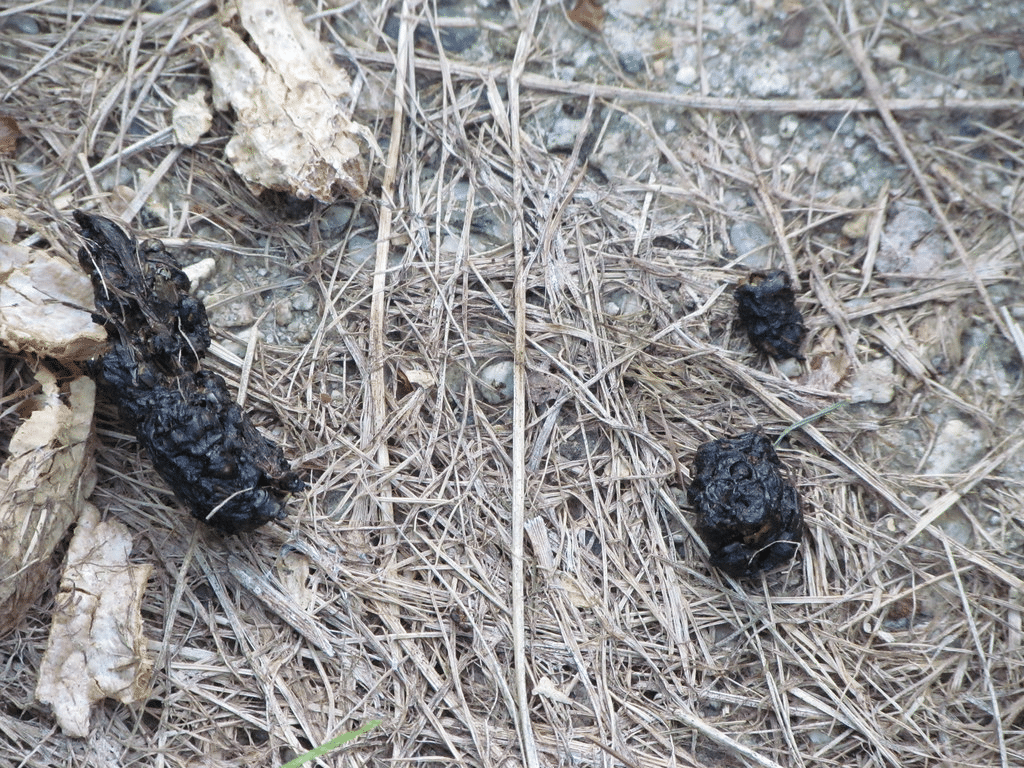
Groundhog droppings are dark and oblong, often coarser and more plant-based than a rat’s smooth, compact pellets. (Image courtesy of Flickr)
Groundhog Poop Size
No government or university source gives a clear, exact measurement for groundhog droppings. Secondary wildlife guides give widely different figures for groundhog scat, from about 1/4 inch to more than 1 inch long, with 1/2 to 3/4 inch a common estimate, so treat any number as a rough field clue rather than an official figure.
That estimated range overlaps with rat droppings, so size alone should not be the deciding factor. Consider shape and location along with any measurements you take.
What Does Rat Poop Look Like?
Rat Poop Picture Clues
Cornell IPM says rodent droppings are generally cylindrical with pointed to rounded edges and are usually black.
NC State Extension notes that rat droppings are dark when fresh. Fresh droppings tend to look moist and shiny, while older ones dry out, turn grayish, and crumble easily. The end shape can also point to the species. Norway rat droppings are more rounded at the ends, and roof rat droppings tend to have pointier ends.
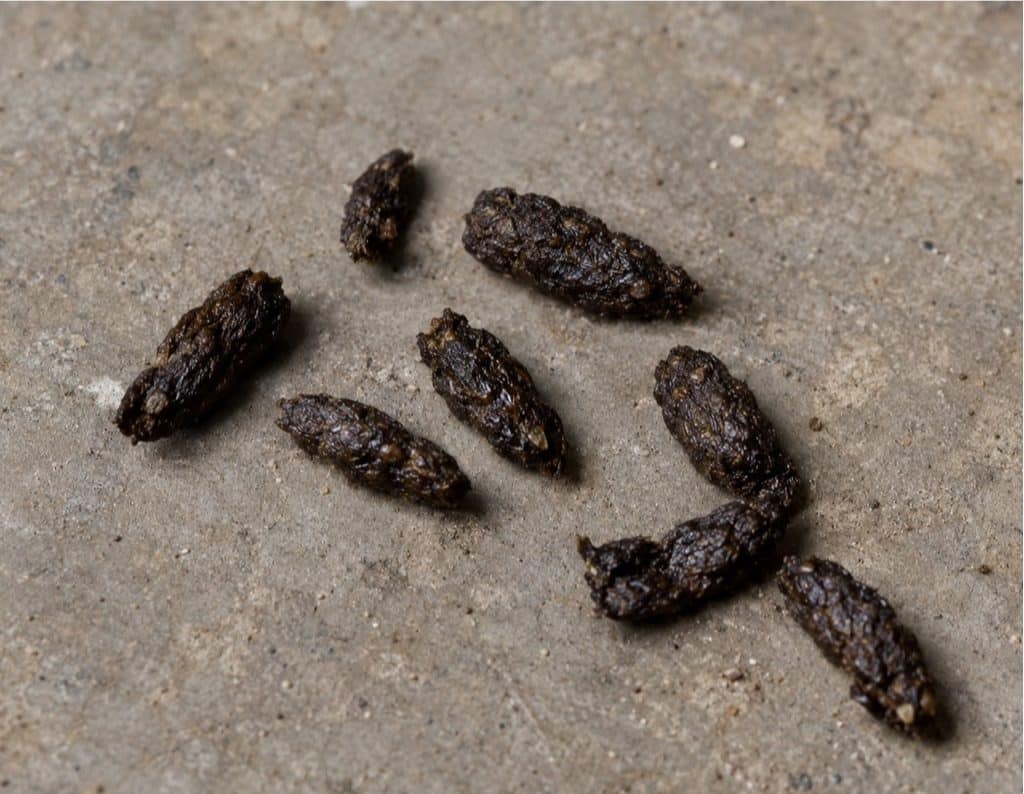
Norway rat droppings tend to have rounded ends, while roof rat droppings are usually smaller and pointier at the tips.
Rat Poop Size
Cornell IPM lists Norway rat droppings at 3/4 to 1 inch long and roof rat droppings at about 1/2 inch long. NC State Extension gives a general range of roughly 1/2 to 3/4 inch for rat droppings.
For reference, mouse droppings are much smaller, at only 1/8 to 1/4 inch long. If the pellets you find are that small, you are more likely dealing with mice than rats or a groundhog.
How Can You Tell Groundhog Poop From Rat Poop?
Shape & Texture
Rat droppings are cylindrical with rounded or pointed tips and usually look smooth and compact. Groundhog droppings are usually oval or oblong and may look coarser because of the animal’s plant-heavy diet. If the pellets are cylindrical with clear tapered or blunt ends, rats are the more likely source.
Location & Burrow Clues
Location is often the fastest way to tell them apart. Droppings inside a home, garage, attic, or cabinet point strongly to rats. Droppings outdoors next to a burrow entrance about a foot wide, with a soil mound and chewed garden plants nearby, point to a groundhog.
Keep in mind that Norway rats also burrow near foundations. A large opening with a big pile of excavated dirt near a garden or open field fits a groundhog much better.
Quantity & Pattern
Rats leave droppings scattered along their travel routes, so you will often see many pellets lined up along a wall or collected near a food source. Other signs often appear, such as gnaw marks on wood, plastic, or food packaging; greasy rub marks along walls; and shredded paper or insulation used for nesting.
Groundhogs work differently. Because they use separate underground chambers for waste, you will usually see few droppings on the surface, if any. A single small group of droppings near a burrow, with no signs inside the house, fits a groundhog much better than rats.
Groundhog Poop vs Rat Poop Comparison Table
| Feature | Groundhog | Norway Rat | Roof Rat |
| Dropping length | Often estimated at 1/2 to 3/4 inch (secondary guides vary widely; no official measurement) | 3/4 to 1 inch | About 1/2 inch |
| Shape | Oval or oblong | Cylindrical, more rounded ends | Cylindrical, pointier ends |
| Color | Dark brown to black | Usually black, dark when fresh | Usually black, dark when fresh |
| Where found | Underground chambers, sometimes near burrow entrances | Ground level, foundations, basements, garbage areas, indoor runways | Attics, upper levels of buildings, indoor runways |
| Pattern | Few droppings on the surface | Scattered along travel routes and near food | Scattered along travel routes and near food |
| Other signs | Burrow opening about a foot wide with a soil mound, chewed garden plants | Gnaw marks, grease marks, nesting material | Gnaw marks, grease marks, nesting material in upper areas |
Match the Droppings to the Right Treatment With Connor’s Pest Pros

Connor’s Pest Pros offers free inspections in Washington, DC, Northern Virginia, and Maryland, to identify whether rats or groundhogs left the droppings.
Droppings inside the home, along walls or near food, point to rats, while a few droppings beside a foot-wide burrow with a soil mound point to a groundhog. When shape and size leave you unsure, the setting and the signs around the droppings should make the final call.
At Connor’s Pest Pros, we handle rodent and wildlife control across Washington, DC, Northern Virginia, and Maryland, so one free inspection can identify the animal behind the droppings and lead to a treatment plan built for it. Schedule your free inspection with us today.
Frequently Asked Questions (FAQs)
What animal poop looks like rat poop?
Mouse droppings and groundhog droppings can both resemble rat droppings. Mouse droppings are much smaller, at only 1/8 to 1/4 inch long. Groundhog droppings are often estimated at 1/2 to 3/4 inch, though guides vary, so their size can overlap with rats, but they look oval and coarse and usually sit near a burrow.
How can you tell if rat droppings are fresh?
Fresh rat droppings look dark, moist, and shiny. Older droppings dry out, turn grayish, and crumble easily. The end shape can still help with older pellets that are intact, since Norway rat droppings have rounder ends and roof rat droppings have pointier ends.
Do rats dig burrows like groundhogs?
Yes, Norway rats burrow near foundations, but their burrows look different from a groundhog’s. A groundhog burrow entrance can grow to about a foot wide with a large mound of excavated soil, usually close to a garden or open field. Droppings near that kind of opening point to a groundhog.
Is rat poop dangerous to clean up?
Yes, it can be. The CDC says rodent diseases can spread to people through contact with droppings or urine, through contaminated food, and by breathing in contaminated air, so never sweep or vacuum droppings. Wear gloves, soak the droppings with disinfectant or a bleach solution for at least 5 minutes, wipe them up with paper towels, and wash your hands afterward.
Why call Connor’s Pest Pros for rodent or wildlife signs?
Connor’s Pest Pros handles both rodent control and wildlife control, so one team can deal with rats or a groundhog. The free, complete inspection identifies the animal, and the team explains what they find before building a custom treatment plan. Service is available in Washington, DC, Northern Virginia, and Maryland.