
Key Takeaways
- Lizard pellets are 1/8 to 1/4 inch long with a signature white uric acid tip on one end, usually scattered near windows, lights, garages, and ceilings where geckos hunt insects.
- Rat droppings are 1/2 to 3/4 inch long, capsule-shaped, and uniformly dark on both ends, clustered in drawers, pantries, attics, and along baseboards. A single rat can leave 40 to 50 droppings in one night.
- Lizard pellets often contain insect exoskeleton fragments, while rat droppings come with greasy rub marks, gnaw damage, and a musky ammonia odor that confirms a rodent infestation.
- Rat droppings can harbor infectious diseases for days. DIY traps and store-bought baits only treat the symptoms; locating entry points, removing the colony, and sealing gaps is what actually solves the problem
- At Connor’s Pest Pros, we provide same-day rodent removal and humane wildlife exclusion across the D.C. metro area, with free re-treatments until you’re 100% satisfied.
Telling Lizard & Rat Droppings Apart in Your Home
Lizard droppings and rat droppings are easiest to tell apart by three features: size, end shape, and the chalky white uric acid tip. Lizard pellets run 1/8 to 1/4 inch with a white cap on one end, while rat droppings measure 1/2 to 3/4 inch and stay uniformly dark on both sides.
Getting the identification right matters because the two pests carry very different risks. Lizards usually mean a harmless gecko hunting insects near your lights, while rats signal a hidden infestation that can contaminate food, damage wiring, and spread hantavirus or Salmonella.
In this article, we’ll break down what each type of dropping looks like, where you’ll typically find them, and the surrounding clues that confirm the pest. And once you’ve confirmed rats are the problem, you’ll want a team that handles removal cleanly — Connor’s Pest Pros backs every inspection across the D.C. metro area with same-day service, humane exclusion, and free re-treatments until you’re 100% satisfied.
|
Connor’s Pest Pros: Family-Owned Pest Control Experts Choose Your Pest Protection Solution:
Customer Praise:
★★★★★ “Quick to answer my call and available same-day… I recommend them to anyone looking for pest control in NOVA.” – Jacquelyn L.
Why Choose Connor’s Pest Pros:
|
What Does Lizard Poop Look Like?
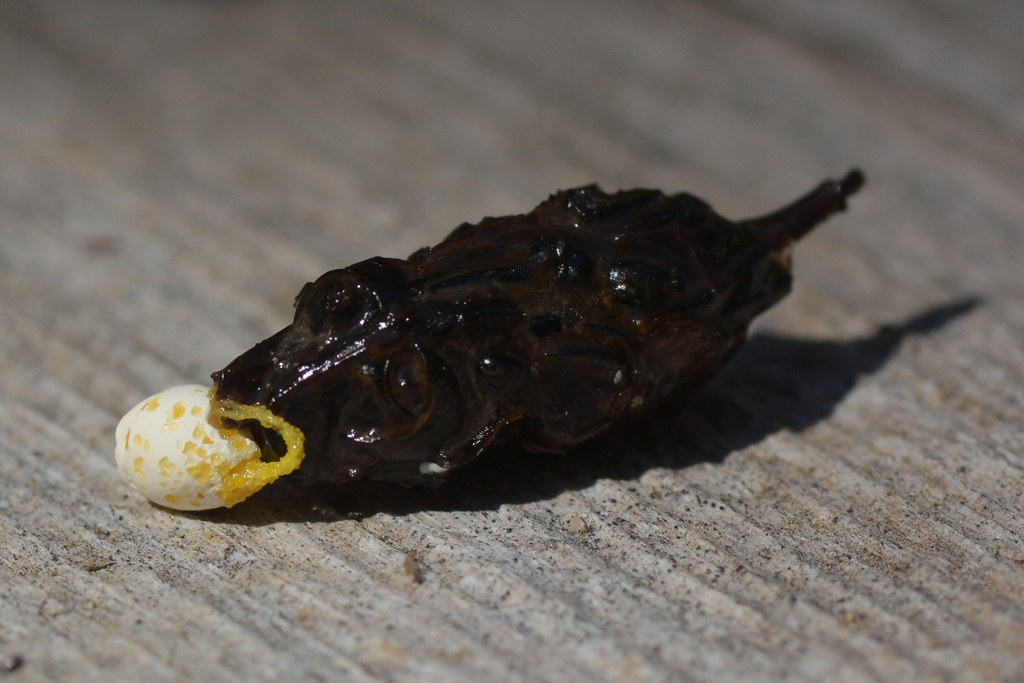
Lizard droppings are small cylindrical pellets with a signature white uric acid tip, often containing insect exoskeleton fragments. (Image source: flickr by Marc Kummel)
Lizard droppings are small, cylindrical pellets that usually measure between 1/8 and 1/4 inch in length, roughly the size of a Tic Tac for a common house gecko. Their most reliable feature is the white tip on one end, which is dried uric acid crystals from the lizard’s urine. Lizards excrete solid and liquid waste through the same opening called the cloaca, which is why every dropping carries that signature chalky cap.
Fresh lizard waste looks dark brown or black and feels slightly moist. As it dries, the texture turns crumbly, and the white portion becomes more visible. Because lizards eat insects, you may notice tiny bits of exoskeletons, legs, or wings embedded inside the pellet. House geckos and anoles tend to leave droppings near light sources, on windowsills, behind picture frames, in garages, or anywhere they hunt moths and mosquitoes after dark.
What Does Rat Poop Look Like?
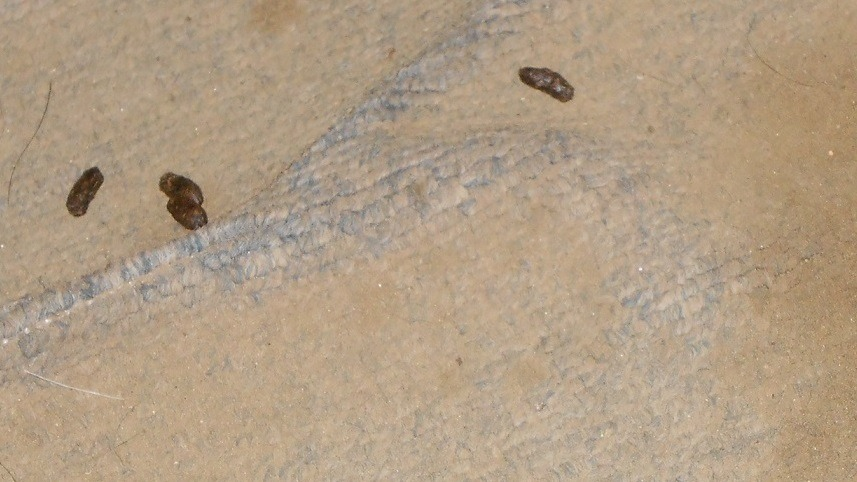
Rat droppings are dark, capsule-shaped pellets up to 3/4 inch long, often found grouped along travel routes in homes. (Image source: cdc.gov)
Rat droppings are noticeably larger and more substantial. Norway rat feces measure roughly 3/4 inch long with blunt ends on both sides, while roof rat droppings are slightly thinner, around 1/2 inch long, and pointed or tapered at the tips. Both types appear dark brown to black when fresh and fade to gray as they dry and lose moisture.
Unlike the single white-tipped pellets lizards leave behind, rats produce significant volume. A single rat can leave 40 to 50 droppings in one night, and you will usually find them grouped along travel routes. Common hot spots include kitchen cabinets, pantries, behind appliances, inside attic insulation, along baseboards, and near pet food storage. Greasy rub marks on walls, gnawed packaging, or a musky ammonia smell often accompany the droppings.
Differences Between Lizard & Rat Droppings
The fastest way to tell the two apart is to compare three things side by side: size, end shape, and surrounding evidence.
Size & Shape
Lizard pellets are small enough to be mistaken for grains of rice, while rat droppings are closer to the size of a raisin or olive pit. Lizard waste always tapers to that telltale white tip on one end. Rat waste has dark, dry ends on both sides, with no chalky cap anywhere on the pellet.
Color & Texture
Both fresh lizard and rat droppings are dark, but rat droppings stay uniformly dark while lizard pellets carry the bright white uric acid. Older rat droppings dry into hard, gray, brittle capsules. Older lizard droppings crumble more easily and may show insect fragments embedded throughout.
Location & Pattern
Lizard droppings appear as scattered individual pellets, often on flat horizontal surfaces near windows, lights, and ceilings. Rat droppings cluster heavily along walls, in drawers, in attics, and around food storage areas. If you find dozens of dark capsules in one corner, you are almost certainly dealing with rats rather than lizards.
Lizard Poop vs Rat Poop: Comparison Table
| Feature | Lizard Droppings | Rat Droppings |
| Size | 1/8 to 1/4 inch long | 1/2 to 3/4 inch long |
| Shape | Cylindrical pellet with a white uric acid tip | Capsule shape, blunt (Norway) or pointed (roof) |
| Defining mark | White tip of uric acid on one end | Uniformly dark, no white cap |
| Color (fresh) | Dark brown to black | Dark brown to black |
| Color (dry) | Crumbly, lighter, chalky | Hard, gray, brittle |
| Quantity | Scattered, few at a time | Clustered, 40 to 50 per rat per night |
| Common locations | Windowsills, near lights, garages, ceilings | Cabinets, pantries, attics, along baseboards |
| Other clues | Insect fragments inside the pellet | Greasy rub marks, gnaw damage, musky odor |
Get Accurate Pest Identification with Connor’s Pest Pros

Connor’s Pest Pros offers expert pest identification, rodent removal, and wildlife exclusion across Northern Virginia and the D.C. metro area.
Knowing the difference between a lizard pellet and a rat dropping is the easy part. Figuring out where the pests are entering, how many are inside the walls, and how to remove them without exposing your family to contamination is the hard part. That is the work our team has been doing across Northern Virginia and the D.C. metro area for years, and we treat every inspection with the same care we would give our own homes.
At Connor’s Pest Pros, our specialized pest elimination service handles rodent trapping, entry-point sealing, and safe cleanup, while our wildlife and exclusion work keeps lizards and other small invaders out. Backed by hundreds of 5-star reviews, an Angi Super Service Award, and free re-treatments until you’re satisfied, we’re the call to make when a few droppings turn into something bigger.
Schedule Your Same-Day Service →
Frequently Asked Questions (FAQs)
Can lizard droppings make my dog sick?
Lizard droppings can carry Salmonella bacteria, which may cause vomiting, diarrhea, or fever in dogs that sniff or eat them. The risk is highest with very young, elderly, or immunocompromised pets. Clean up droppings quickly with disinfectant and discourage your dog from licking surfaces where lizards have been active.
How long do rat droppings stay infectious?
According to public health guidance, hantavirus in fresh rodent urine and droppings is typically viable for about two to three days at normal room temperature, and up to four days depending on conditions. Because the virus does not die off immediately and dried particles can become airborne when disturbed, the CDC recommends keeping the affected area vacant and well-ventilated for about a week before final cleaning, with disinfectant applied throughout.
Do lizards attract rats or other pests?
Lizards usually eat the same insects that draw cockroaches and ants, so they are not a direct attractant for rats. However, the same household gaps that let lizards inside, such as openings under doors and around vents, also give rodents easy access. Sealing those entry points keeps both out.
Should I be worried if I only find a few droppings?
A handful of lizard pellets near a window is rarely serious, but even a few rat droppings often signal a larger hidden population, since rats produce dozens of droppings each night. Inspect attics, cabinets, and behind appliances, and consider a professional inspection if you find clusters anywhere.
What makes Connor’s Pest Pros the right choice for rodent problems in the D.C. metro area?
We are a family-owned pest control company with 415-plus 5-star reviews, an Angi Super Service Award for 2024, and membership in the National Pest Management Association. At Connor’s Pest Pros, we provide same-day service, pet and child-friendly treatments, free re-treatments, and humane wildlife removal for raccoons, squirrels, and rodents alike.
*Price estimates reflect current market costs and may vary based on your specific situation. For a personalized quote tailored to your needs, contact us directly or request your FREE estimate today!