
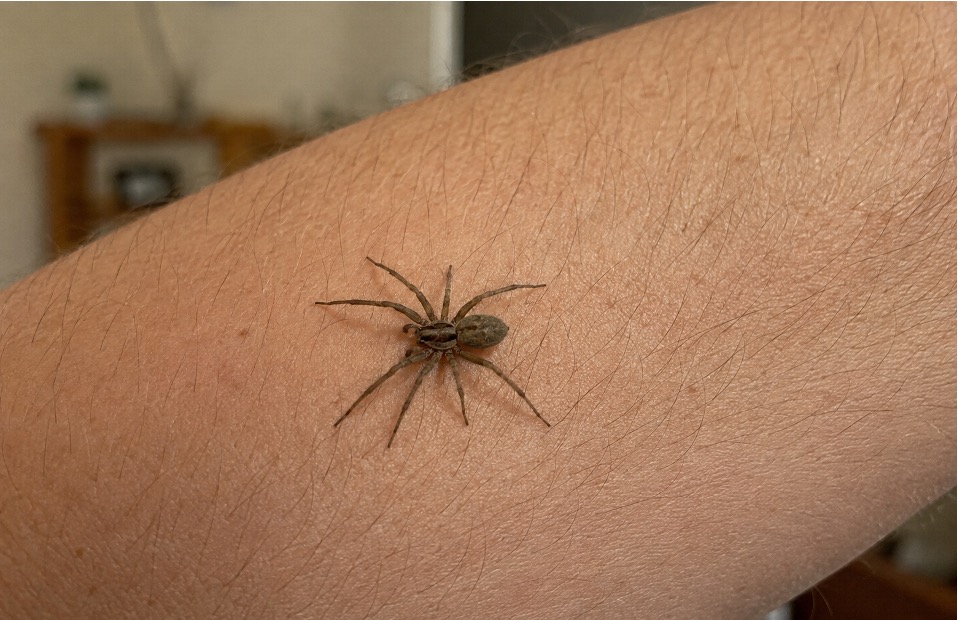
Key Takeaways
- Spider bites usually appear as a single red, swollen bump; visible twin fang marks are rare, while tick bites can leave an expanding rash called erythema migrans, sometimes bull’s-eye in shape.
- Ticks actively seek out hosts to feed on, while spiders bite only as a defense mechanism, so the circumstances of the bite are completely different.
- For spider bites, wash the area, apply a cold compress, elevate the site if possible, and seek medical care if pain, redness, or fever worsen.
- For tick bites, remove the tick with fine-tipped tweezers, save it for identification, clean the site with rubbing alcohol, and watch for symptoms over the next 30 days.
- If spiders or ticks are becoming a repeat problem around your home, Connor’s Pest Pros offers targeted treatments and seasonal perimeter service across the Metro DC and NOVA area.
Spider Bites vs Tick Bites: Here Is How to Tell Them Apart Fast
Spider bites and tick bites can both leave a red mark on the skin, but the way they show up and what they mean for your health are very different. A spider bite may or may not be felt at the time, whereas a tick bite is usually painless enough that most people do not realize they have been bitten until they spot the tick still attached.
You are most likely to encounter spiders in dark, undisturbed spaces indoors, such as basements, garages, closets, storage boxes, and the corners of low-traffic rooms. Ticks live outdoors, especially in tall grass, brush, leaf litter, and wooded areas along yard edges.
Understanding where each is commonly found is often the first step in knowing what bit you and how urgently you need to respond. Whichever pest you’re struggling with, professional pest control is your best defense. Reducing spider and tick populations around your home dramatically lowers your risk of being bitten in the first place.
Connor’s Pest Pros: Trusted, Family-Owned Pest Control
4.9★ Google Rating | 100% Satisfaction Guarantee

Protect Your Home, Pest-Free:
Get customized, ongoing pest control that adjusts with the seasons, covering everything from ants and spiders to termites, rodents, and bed bugs. Same-day or next-day visits mean fast relief.
What Sets Us Apart:
✓ 950+ 5-star reviews on Google
✓ Family-owned, D.C. metro area
✓ Member of the NPMA
✓ Angi Super Service Award Winner (2024)
✓ 100% Satisfaction Guarantee
Don’t let pests take over your home. Act now.
Request Your Free Estimate →What a Spider Bite Looks Like
Most spider bites are so mild that people don’t even realize they’ve been bitten. The typical spider bite looks a lot like any other insect bite: a small, red, slightly swollen bump that may itch or cause mild discomfort. What can set spider bites apart visually is the possible presence of two tiny puncture marks side by side, though these aren’t always visible.
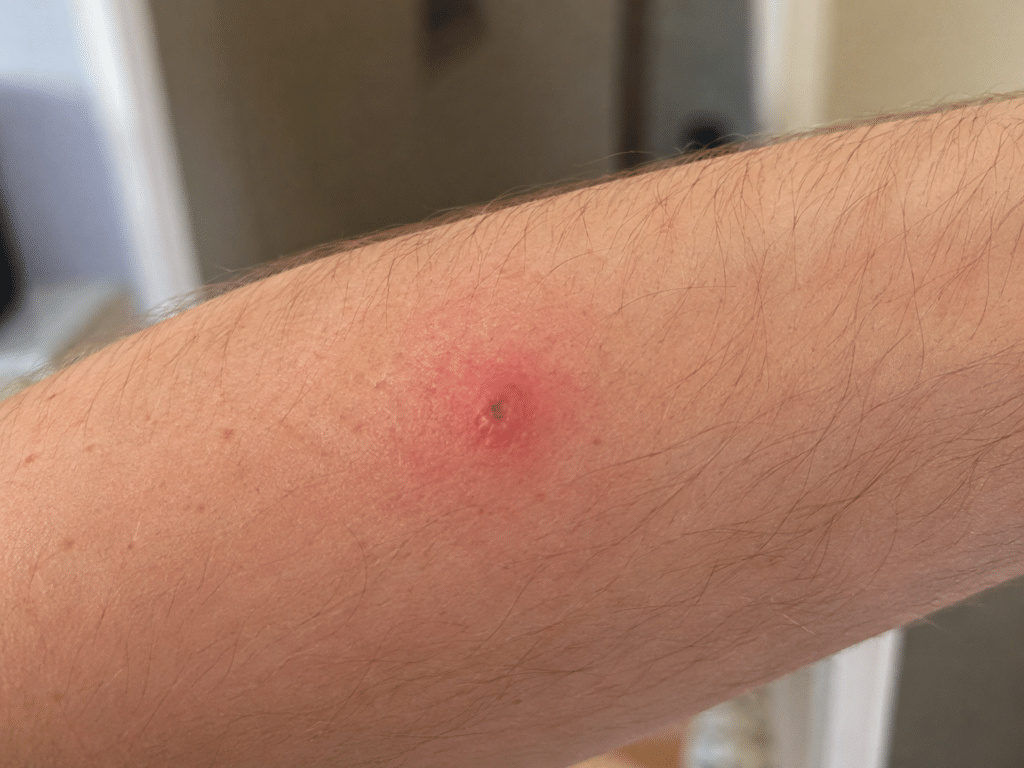
A spider bite rash can range in color from pink and red to violet or brown depending on the species and reaction severity.
What a Tick Bite Looks Like
A tick bite has one feature that no spider bite ever will: the tick itself may still be there. Ticks burrow their mouthparts into the skin and feed for anywhere from a few hours to several days. If you spot a small, dark, oval-shaped bug embedded in your skin that you can’t simply brush away, that’s a tick, not a spider.
Once a tick detaches or is removed, the bite site often appears as mild redness around the area. But the hallmark sign of a tick bite that has transmitted Lyme disease is erythema migrans, an expanding red or purplish patch at the bite site.
It is often described as a bull’s-eye, but the classic ring-within-a-ring pattern appears in only a minority of US cases; most EM rashes are uniformly red and simply grow outward.
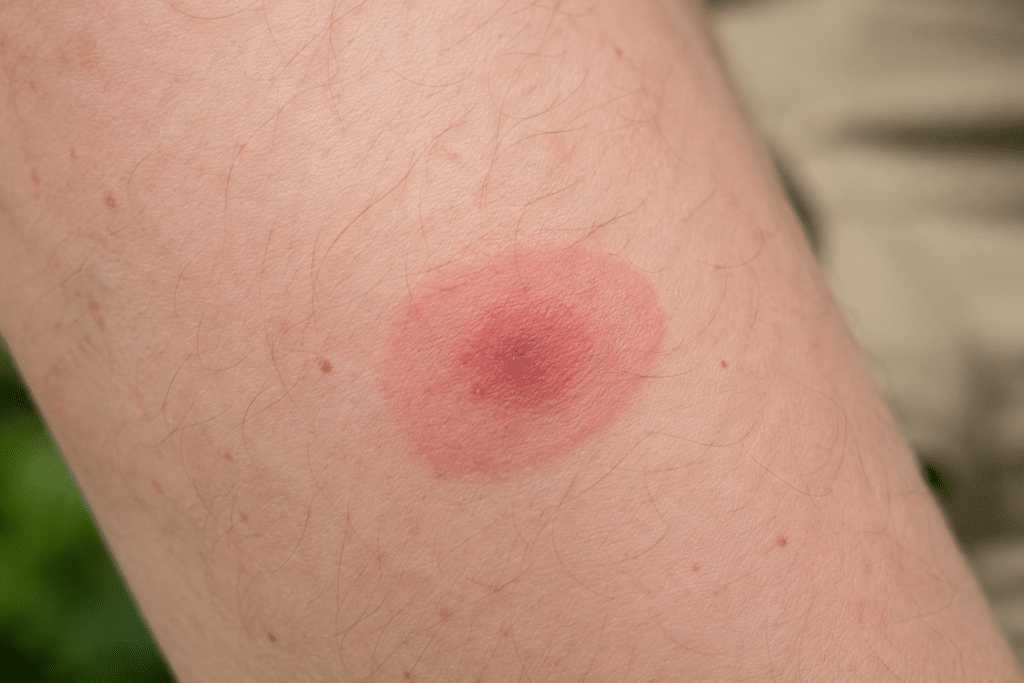
Tick bites may result in an expanding rash that can reach 12 inches or more across and typically appears 3 to 30 days after the bite.
Spider Bite vs Tick Bite: Side-by-Side Differences
Location on the Body
Spider bites tend to happen on exposed skin areas like the hands, arms, feet, ankles, and other places where a person might accidentally disturb a spider hiding in clothing, bedding, or a dark corner.
Tick bites, by contrast, favor warm, hidden areas of the body where the skin is thin, and blood vessels are close to the surface. Common tick bite locations include the scalp, behind the ears, under the arms, around the waistband, behind the knees, and in the groin area.
Pain Level & Onset Speed
Whether you feel a spider bite depends on the species. Black widow bites usually cause sharp, pinprick-like pain right away, while brown recluse bites are often painless at first, with pain and burning developing over the next few hours.
Meanwhile, tick bites are almost entirely painless in real time. Ticks secrete a mild anesthetic in their saliva, which helps them stay attached and feed for so long without being noticed.
Swelling, Redness, & Rash Patterns
Redness and swelling from a spider bite typically stay localized around the bite site and develop within minutes to a couple of hours. It can look pink, red, or even slightly purple depending on the venom involved.
The initial redness right after a tick detaches may look minor, but watch what happens over the following days. A rash that expands outward from the bite site is a major red flag for Lyme disease and needs immediate medical attention, whether or not it forms the classic bull’s-eye ring.
Presence of the Bug Itself
If a bug is still embedded in your skin and won’t brush off, it’s a tick. Ticks anchor themselves using barbed mouthparts designed to stay in place during feeding. You will not accidentally dislodge one. A spider, by contrast, bites and immediately retreats. Spiders do not linger on the skin after biting.
What to Do Right After You’ve Been Bitten
If a Spider Has Bitten You
- Wash the bite: Use soap and water to remove any surface bacteria and reduce the risk of infection.
- Apply a cold compress to the affected area: A wrapped ice pack or cold cloth for 10–15 minutes can reduce swelling and ease discomfort.
- Elevate the bite site if possible: Keeping the affected limb raised helps reduce swelling and discomfort.
- Monitor the bite for 24 to 72 hours: Watch for spreading redness, worsening pain, or any change in the wound’s appearance.
- Seek medical care for severe symptoms: Intense muscle pain, fever, nausea, or a wound that visibly worsens are signs to see a doctor or go to the emergency room without delay. Always err on the side of caution if you live in an area where black widows or brown recluses are common.
- Call a pest control professional to inspect your home: Multiple spider bites or repeat encounters usually indicate a hidden nesting site nearby, and a pest control specialist can identify entry points and treat the source before it becomes a bigger problem.
If a Tick Has Bitten You
- Remove the tick correctly: Use fine-tipped tweezers to grip the tick as close to the skin as possible and pull upward with steady, even pressure. Avoid twisting, crushing, or burning the tick, as these can cause the mouthparts to break off in the skin.
- Clean the bite site: Wash the area with soap and water or wipe it with rubbing alcohol.
- Save the tick in a sealed bag or container: Knowing the species can help your doctor assess your risk. Note that the CDC advises against commercial tick testing, since those results should not drive treatment decisions.
- Watch for symptoms over the next 30 days: Common signs of tick-borne illness include a bull’s-eye rash, fever, fatigue, headache, and joint pain.
- Contact your doctor promptly if any symptoms appear: Early antibiotic treatment for Lyme disease is highly effective when caught in the first weeks.
- Reach out to a pest control professional: Regular tick encounters usually mean the yard, perimeter, or nearby vegetation is providing shelter, and an outdoor treatment plan is the most reliable way to reduce future exposure.
Spider Bite vs Tick Bite: Comparison Table
| Feature | Spider Bite | Tick Bite |
| Pain at time of bite | Varies by species: immediate and sharp (black widow) or painless at first (brown recluse) | Painless due to anesthetic in saliva |
| Visible marks | Single red bump; twin puncture marks rare | Small red mark or embedded bug |
| Rash pattern | Localized redness, swelling | Expanding red rash, sometimes bull’s-eye (if Lyme) |
| Bug still present | No, a spider bites and leaves | Yes, a tick stays attached to feed |
| Common locations | Hands, arms, feet, ankles | Scalp, groin, behind knees, armpits |
| Disease risk | Low (unless black widow/brown recluse) | Lyme disease, Rocky Mountain spotted fever |
| Onset of symptoms | Minutes to hours | Days to weeks |
| Treatment priority | Clean, monitor, seek care if severe | Remove tick properly, monitor for illness |
Prevent The Next Bite Before It Happens With Connor’s Pest Pros

Connor’s Pest Pros delivers customized spider and tick control across Metro DC and NOVA, backed by a 100% satisfaction guarantee.
Spider bites and tick bites are usually one-off encounters, but repeat bites signal something different. Multiple spider bites often mean an active nesting site somewhere in your home, while frequent tick encounters point to yard conditions that are quietly attracting them. In both cases, the bite is only a symptom of something bigger.
At Connor’s Pest Pros, we build custom treatment plans that address both. We start with a free inspection to identify entry points, active nesting sites, and outdoor conditions attracting pests, then apply targeted treatments that keep pressure off your home month after month. Recurring service adjusts with the seasons, so your protection follows the pests through the year. Request your free estimate today.
Frequently Asked Questions (FAQs)
How can I tell if my bite is from a spider?
A spider bite may cause immediate pain, burning, or stinging, though bites from some species, including the brown recluse, go unnoticed at first. Twin puncture marks are often cited as a giveaway, but they are rarely visible to the naked eye; most spider bites show a single small red bump.
What are the first stages of a spider bite?
Most spider bites begin with mild redness, slight swelling, pain, or itching at the bite site, which appear within minutes to a couple of hours. In harmless bites, this is typically as bad as it gets, and symptoms resolve within a few days. However, bites from a brown recluse may appear mild initially and then worsen significantly over 24 to 72 hours, developing into a darkening, necrotic wound.
What kills ticks immediately?
Rubbing alcohol kills ticks on contact and is the recommended way to dispose of a removed tick. Drop it into a small amount of rubbing alcohol in a sealed container. On the body, the goal isn’t to kill the tick in place, but to remove it correctly using fine-tipped tweezers with steady upward pressure. For your yard, professional-grade acaricide treatments are the most effective way to eliminate tick populations at the source.
When should I worry about a tick bite?
You should seek medical attention if you develop a rash, especially a bull’s-eye pattern expanding from the bite site, within 30 days of a tick bite. Other warning signs include fever, chills, fatigue, headache, muscle and joint aches, or swollen lymph nodes appearing days to weeks after the bite.
Does Connor’s Pest Pros offer same-day service for residential pest problems?
Yes, at Connor’s Pest Pros, we understand pest problems don’t follow a convenient schedule, so we offer same-day service for residential customers with urgent situations. We also offer next-day appointments when same-day service is not possible. A 100% satisfaction guarantee backs every visit, and if pests return before your next scheduled treatment, we include free re-treatments at no extra cost.
*Price estimates reflect current market costs and may vary based on your specific situation. For a personalized quote tailored to your needs, contact us directly or request your FREE estimate today!