
Key Takeaways
- Spotted lanternflies are established throughout Fairfax County, with the tree of heaven being the primary driver of rapid local spread.
- Tree of heaven (Ailanthus altissima), the spotted lanternfly’s preferred host, grows abundantly along Fairfax roadsides and property edges, accelerating population establishment beyond what occurs in areas without this invasive tree.
- Grapevines, apple trees, maples, black walnuts, and willows face the highest risk of damage in Fairfax residential landscapes, with repeated feeding seasons capable of killing younger trees.
- Winter egg mass destruction between October and March offers the highest-impact control opportunity, with each destroyed egg mass eliminating up to 50 potential insects before spring hatch.
- Connor’s Pest Pros provides professional spotted lanternfly treatment for heavy infestations on high-value trees, using targeted insecticide applications that homeowner methods cannot match.
Why Fairfax County Faces Accelerated Spread
Fairfax County has one major vulnerability that accelerates spotted lanternfly establishment: abundant tree of heaven (Ailanthus altissima). This invasive tree from East Asia is the spotted lanternfly’s preferred host. The tree of heaven grows aggressively along roadsides, fence lines, and disturbed areas throughout the county, giving newly arrived lanternflies exactly what they need to establish and multiply quickly.
The combination of heavy suburban tree cover, proximity to major highways like I-66 and I-95, and dense residential neighborhoods makes Fairfax an ideal environment for this pest to thrive unchecked without community intervention.
This article covers identifying spotted lanternflies at each life stage, the specific damage they cause, step-by-step control methods for homeowners, and when professional treatment is necessary.
|
Connor’s Pest Pros: Family-Owned Pest Control Experts Choose Your Pest Protection Solution:
Customer Praise:
★★★★★ “Quick to answer my call and available same-day… I recommend them to anyone looking for pest control in NOVA.” – Jacquelyn L.
Why Choose Connor’s Pest Pros:
|
How to Identify Spotted Lanternflies at Each Life Stage
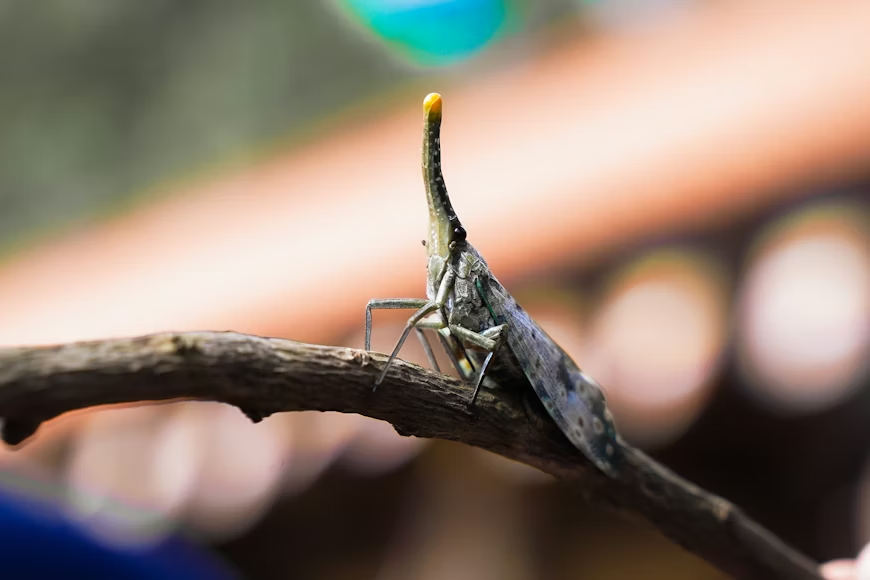
Identifying spotted lanternflies correctly is the first step toward controlling them; Virginia has several native insects that look similar
Eggs: Flat Gray Masses on Nearly Any Surface
Egg masses are laid in the fall and remain viable through winter into spring, typically hatching between April and May. They appear as flat, grayish-brown smears roughly one inch long, resembling dried mud or a smudge of putty. A single egg mass contains 30 to 50 eggs.
What makes egg masses dangerous is where they’re laid: tree bark, stone walls, outdoor furniture, vehicle bumpers, farm equipment, and patio surfaces. Scraping and destroying them before they hatch is one of the highest-impact actions any Fairfax resident can take.
Nymphs: Black with White Spots, Then Red
Early-stage nymphs (instars 1–3) are small, about a quarter inch, black with white spots. By the fourth instar, they develop red patches alongside the black-and-white pattern, making them more visually striking and easier to identify. Nymphs are active from May through July and move fast, which is why catching them early, before they mature into breeding adults, is critical.
During the nymph stage, spotted lanternflies feed aggressively on a wide range of host plants. While the tree of heaven is the top preference, nymphs have been documented feeding on over 70 plant species, including grapes, apples, hops, maples, black walnuts, and willows.
Adults: Gray Wings with Red Underwings
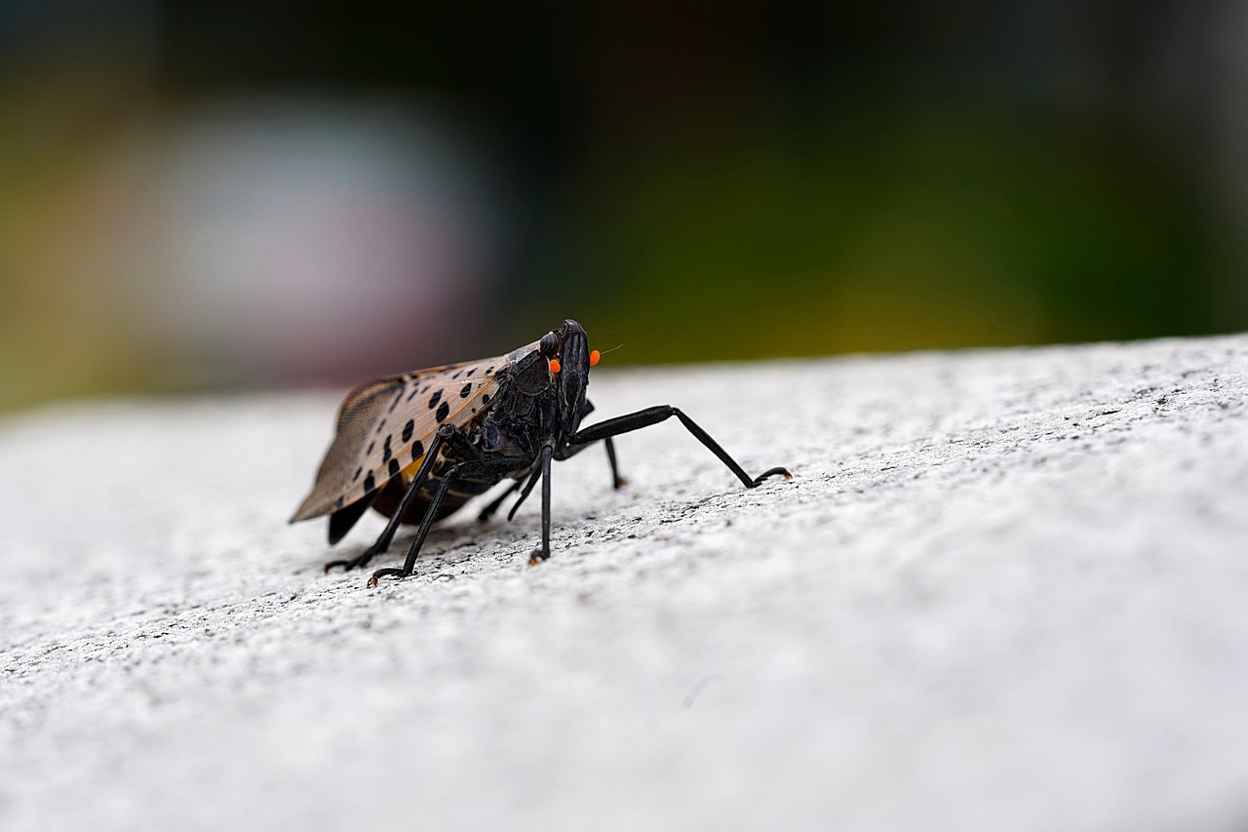
Adult spotted lanternflies emerge in July and remain active through December. At about one inch long, their forewings are light gray with black spots and a brick-patterned tip. When the wings open, a flash of bright red underwing with black spots is visible, the most distinctive identification feature. Adults are the primary feeding and reproductive stage, and a single season of unchecked adult activity can deposit hundreds of egg masses on your property.
The Risks & Damage Spotted Lanternflies Cause
Honeydew & Sooty Mold
As spotted lanternflies feed, they excrete a sugary liquid waste called honeydew. This substance coats leaves, branches, and the ground beneath infested trees, creating the perfect environment for sooty mold, a black fungal growth that blocks sunlight from reaching leaves and further weakens the plant.
A heavily infested tree can be coated in this mold by late summer, visually alarming and genuinely harmful to long-term tree health. Repeated feeding seasons without intervention can kill younger trees and severely stress mature ones.
Plants at Highest Risk in Fairfax County
Virginia’s agricultural sector faces significant economic pressure from this pest. Vineyards, orchards, and hop farms are among the most vulnerable operations, as spotted lanternflies feed heavily on grapevines, apple trees, and hops.
Even without the tree of heaven on your lot, your ornamental plantings, shade trees, and fruit-bearing shrubs are all potential feeding targets once local populations grow large enough.
Step-by-Step Control Methods for Homeowners
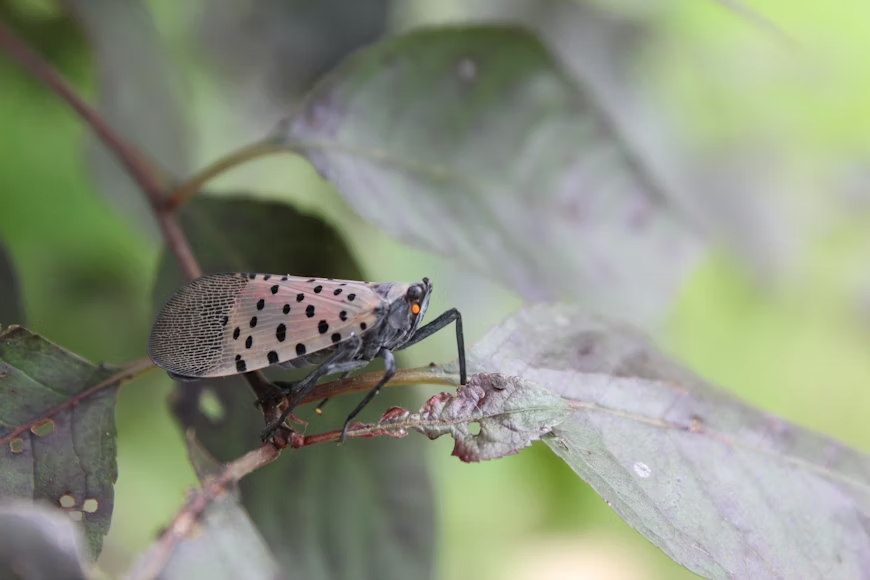
Seeing a spotted lanternfly in Fairfax County means two immediate responsibilities: kill it and report it. Both steps matter equally.
Killing Methods by Situation
Spotted lanternflies can be killed by hand. Stomping on them works. They don’t bite or sting, and direct contact poses no risk to humans or pets. For larger numbers, a spray bottle filled with dish soap and water kills them on contact.
When dealing with nymphs or adults on tree trunks, a sticky band trap can capture them as they climb, though these traps should use a wildlife-safe barrier around the outside to prevent the accidental trapping of birds or small animals.
How to Destroy Egg Masses
- Locate egg masses on hard outdoor surfaces: tree bark, fence posts, stone walls, patio furniture, and vehicles parked under trees
- Use a stiff card or putty knife to scrape the mass off the surface
- Deposit the scraped material directly into a zip-lock bag filled with hand sanitizer or rubbing alcohol
- Seal the bag completely before disposal
- Check all outdoor surfaces between October and March for maximum impact
Crushing alone isn’t reliable enough. The eggs need to be submerged in alcohol or double-bagged and disposed of in the trash to ensure they don’t hatch.
Reporting Sightings
Fairfax County still encourages residents to report sightings through the iNaturalist mobile app, take a clear photo and submit the location to help local urban forestry teams track activity. Note that VDACS no longer requires spotted lanternfly reports from Fairfax County residents, as the infestation is already established county-wide. Reporting through iNaturalist remains valuable for Fairfax County’s neighborhood-level monitoring.
When Professional Treatment Becomes Necessary

Connor’s Pest Pros provides professional spotted lanternfly treatment using commercial-grade products and targeted application methods.
For properties with heavy infestations affecting multiple trees, professional treatment delivers results that homeowner methods cannot match. Connor’s Pest Pros provides professional spotted lanternfly treatment for Fairfax County properties with infestations beyond the reach of DIY methods.
Our technicians assess infestation severity across your property, identify all affected trees and the tree of heaven specimens that may be attracting populations, and implement targeted treatment using commercial-grade products applied according to Virginia Tech guidelines.
Contact us today for your free quote!
Frequently Asked Questions (FAQs)
Are spotted lanternflies dangerous to humans or pets?
Spotted lanternflies pose no danger to humans or pets. They do not bite, sting, or transmit disease. Direct contact, including handling them to crush or remove them, carries no health risk. Pets that eat large numbers may experience mild stomach upset, but the insects are not toxic.
What plants in Fairfax County face the highest risk?
Grapevines consistently show the most severe damage, followed by apple and stone fruit trees. Sugar maple, silver maple, black walnut, and willow are all high-preference hosts common in residential landscapes in Fairfax. Tree of heaven attracts the heaviest concentrations but is itself an invasive species that VDACS recommends removing.
Can spotted lanternflies survive Virginia winters?
Adults die with the first hard frost, typically late October to November in Fairfax. However, egg masses are cold-hardy and survive typical winters, hatching in April to May. This means infestations grow year over year unless egg masses are destroyed during the October through March window.
Where in Fairfax County have spotted lanternflies been confirmed?
The entire county has confirmed infestations. Specific neighborhood-level data is available through public sighting records on the iNaturalist app. The practical approach is to treat your property as if spotted lanternflies are present or imminent, regardless of whether you’ve personally seen them.
When should I call a professional for spotted lanternfly treatment?
Professional treatment becomes valuable when infestations affect multiple trees, when high-value landscape specimens require protection, or when DIY methods aren’t adequately controlling populations. Connor’s Pest Pros provides targeted treatment using commercial-grade products and application methods that deliver results beyond what homeowner approaches can achieve for heavy infestations.