
Key Takeaways
- Warning signs of termite activity include mud tubes on foundations, hollow-sounding wood, discarded swarmer wings near windows, and frass pellets beneath infested timber.
- Treatment in the Greensboro area typically costs $224 to $327, with ongoing protection programs starting around $95 per month to prevent costly structural damage.
- Mud tubes and hollow wood point to subterranean termites, while uniform pellet-like frass near baseboards or furniture indicates drywood termite activity inside the wood.
- Treatment options include liquid soil barriers, bait station systems, spot treatments for contained infestations, and full fumigation for severe, widespread drywood termite cases.
- Connor’s Pest Pros offers inspection-led termite protection with customized treatment plans, same-day scheduling, ongoing monitoring, and a full satisfaction guarantee.
Complete Guide to Termite Protection, Signs, Treatment, and Repair in Irving Park
Irving Park’s older homes, mature landscaping, and crawl-space foundations create conditions in which subterranean termites thrive, often undetected for months before visible damage appears. Most homeowners’ insurance policies in North Carolina do not cover termite damage, classifying it as preventable maintenance, which means the full cost of repairs falls on the homeowner.
That cost escalates fast. A contained infestation may need only minor wood replacement, but once termites reach joists, subfloors, or wall framing, repairs become major structural work. Treatment in the Greensboro area typically runs $224 to $327, while the damage itself can cost significantly more if caught late.
Knowing the warning signs, understanding available treatment methods, and investing in ongoing protection are the most reliable ways to stay ahead of the problem. Connor’s Pest Pros provides inspection-led termite programs for Irving Park homeowners starting at $95 per month.
Connor’s Pest Pros: Family-Owned Pest Control for Greensboro & the Piedmont Triad
4.9★ Google Rating | 100% Satisfaction Guarantee

Get Pests Out of Your Greensboro Home or Facility:
Connor’s treats rodents, termites, ants, mosquitoes, and common pests like silverfish and ticks. Service starts with a free inspection. For mice and rats, Connor’s seals the gaps they use to get in and sets traps for the ones already inside. Termite protection uses bait stations. Choose one-time or recurring service, with eco-friendly treatments safe for pets and kids. Run a food distribution center, meat processing plant, or pharmaceutical facility? Get audit prep support and recurring service for your site.
What Sets Connor’s Apart:
✓ Audit prep support for food facilities
✓ 24/7 emergency service for rodents and bed bugs
✓ 950+ 5-star reviews on Google
✓ Member of the National Pest Management Association (NPMA)
✓ Free re-treatments backed by a 100% Satisfaction Guarantee
Book your free inspection and get a pest plan for your home or facility.
Request Your Free Estimate →Warning Signs of a Termite Infestation in Your Home
Mud Tubes Along Foundation Walls
Mud tubes are one of the most recognizable signs of subterranean termites. These thin, pencil-sized tunnels are made from soil, wood particles, and saliva, and they run along foundations, crawl space walls, or piers. If broken open, active tubes may be rebuilt quickly, which is a strong indicator that termites are still present and active.
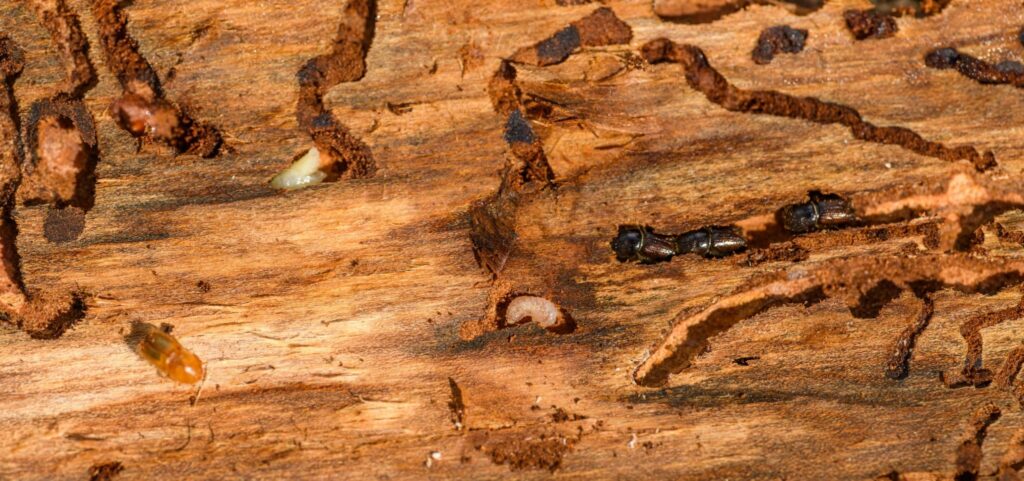
Mud tubes along foundations are one of the earliest and most reliable indicators of subterranean termite activity.
Hollow-Sounding Wood & Sagging Floors
Tapping on baseboards, door frames, or window trim can reveal hidden damage. Termite-damaged wood often sounds hollow or papery instead of solid. In more advanced cases, floors may feel slightly soft or uneven, especially in moisture-prone areas like kitchens and bathrooms, where subfloor damage can develop over time.
Discarded Wings Near Windowsills & Doors
Swarming termites shed their wings after pairing up, leaving small piles near light sources, windows, or door frames. These wings are all equal in size, which helps distinguish them from ants. Finding them indoors often suggests a nearby or active colony, sometimes even within the structure itself.
Frass: What Termite Droppings Look Like
Drywood termites leave behind tiny, pellet-like droppings called frass, which are usually found near baseboards, windowsills, or wooden furniture. These piles often resemble sawdust but are more uniform in shape and size. Their presence typically indicates an active drywood infestation within the wood. Although drywood termites are not the main specie of termites in the Greensboro area, they make occasional appearances.
What Termite Damage Actually Costs to Repair
Termite treatment in the Greensboro area, according to industry data, typically costs $224 to $327, though the full range spans from $69 for a basic inspection to $686 for extensive treatment. The final price depends on the size of the infestation, the treatment method, and the extent of the home that needs protection.
Treatment costs, however, are only part of the picture. Once termites reach joists, subfloors, or wall framing, repairs shift from minor wood replacement to full construction work. The longer an infestation goes undetected, the more hidden damage accumulates, and the higher the final bill climbs.
Ongoing protection programs from Connor’s Pest Pros typically start around $95 per month, providing continuous coverage that helps catch activity early and prevent the kind of damage that turns a pest problem into a renovation project.
Termite Treatment Options Available in Irving Park
Liquid Soil Treatments & Chemical Barriers
This is the most common method for subterranean termites. A liquid termiticide is applied around the foundation, creating a treated zone in the soil. As termites pass through it, they unknowingly spread it back to the colony, helping eliminate the entire population over time.
Termite Bait Stations
Bait stations are placed around the home’s perimeter and monitored for activity. Once termites are detected, bait is introduced that spreads slowly through the colony and leads to elimination.
This method is less invasive than soil treatments but typically works more gradually, making it a strong option for monitoring and prevention.
Fumigation & Tenting for Severe Infestations
Fumigation is used for widespread drywood termite infestations. The home is sealed and treated with gas that penetrates all wood areas, eliminating termites throughout the structure.
It’s highly effective but disruptive, requiring homeowners to leave the property during treatment.

Fumigation is used for severe infestations and treats the entire structure at once for deeper coverage.
Spot Treatments for Localized Drywood Termite Activity
Spot treatments are used when termites are limited to a small area, like trim, framing, or window sections. The treatment is applied directly into the affected wood.
It’s the least invasive option, but only works when the infestation is clearly contained.
Professional Termite Protection with Connor’s Pest Pros
The most effective way to deal with termites is through early detection and choosing the right treatment method based on the type of termite and the level of infestation. Whether it’s soil treatments, bait systems, or targeted spot applications, selecting the correct approach early helps prevent minor activity from turning into serious structural damage.
Professional inspections help identify termite activity that homeowners typically miss during routine checks.
Connor’s Pest Pros offers inspection-led termite protection built around this exact approach. Instead of a one-size-fits-all service, treatments are customized for what’s actually found during inspection, with ongoing protection plans to help prevent infestations before they reach costly repair stages. Schedule your termite inspection today.
Frequently Asked Questions (FAQs)
What are the first signs of termites in a house?
Early signs include mud tubes on walls or foundations, hollow-sounding wood, discarded wings near windows or doors, and small pellet-like droppings called frass, often found near wooden structures or baseboards.
How long does a termite treatment take to complete?
Treatment time varies by method, with some options completed in a few hours and others requiring more time, depending on severity. The timeline is determined by the inspection results and the type of treatment needed, especially for more extensive infestations.
How often should Irving Park homeowners schedule termite inspections?
Homeowners in Irving Park should schedule termite inspections at least once a year, with higher-risk properties needing more frequent checks. Regular inspections help catch early activity before it leads to hidden structural damage.
How do I know if I have subterranean or drywood termites in Irving Park?
Subterranean termites are usually found near the ground and leave mud tubes along foundations, while drywood termites are higher in the structure and leave small pellet-like droppings instead of soil tunnels.
In Irving Park, subterranean termites are more common, but a proper inspection is needed to confirm the type. Connor’s Pest Pros can help identify the issue and determine the right treatment based on what’s found.
*Price estimates reflect current market costs and may vary based on your specific situation. For a personalized quote tailored to your needs, contact us directly or request your FREE estimate today!