
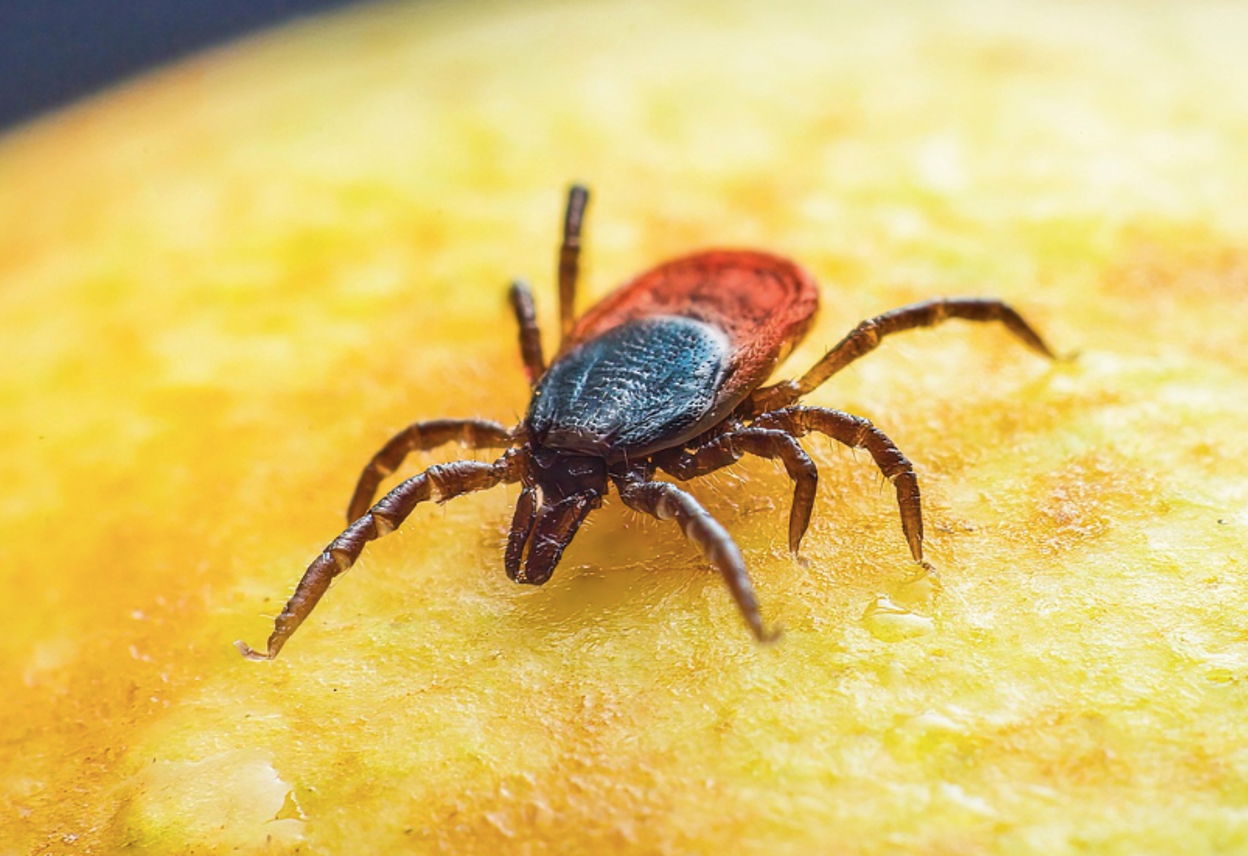
Key Takeaways
- Ticks attach to the skin and stay there until they’re full, often leaving a single bite. Meanwhile, fleas hop on and off quickly, leaving clusters or zig-zag lines of bites concentrated around the ankles, lower legs, and waist.
- Tick bites typically start as a small red bump and may develop into a bullseye rash if the tick was carrying Lyme disease. Flea bites are smaller, more numerous, intensely itchy, and often appear in groups of three or four.
- Ticks transmit serious tick-borne illnesses, including Lyme disease, Rocky Mountain spotted fever, and ehrlichiosis, making prompt removal and monitoring essential. Fleas are more often associated with allergic reactions, severe itching, and skin infections from scratching.
- Treatment follows similar but distinct steps. For tick bites: remove the tick promptly with tweezers, wash the area, and watch for signs of bullseye rash, fever, or fatigue over the following weeks. For flea bites: wash the area, apply a cold compress, and use hydrocortisone cream or calamine lotion to ease itching.
- Treating bites is only part of the solution; eliminating the source is what truly ends the problem. At Connor’s Pest Pros, we offer expert tick and flea treatment across the D.C. metro area, with targeted yard and indoor treatments, eco-friendly products, and a 100% satisfaction guarantee with free re-treatments.
What Are the Differences Between Tick and Flea Bites?
The fastest way to tell tick bites from flea bites is by pattern and location. A single red mark in a hidden spot like the scalp or groin usually points to a tick, while small itchy bumps clustered around the ankles or lower legs point to fleas. The distinction matters because ticks can transmit Lyme disease and Rocky Mountain spotted fever, while fleas cause allergic reactions and skin infections from scratching.
Knowing what bit you is only half the battle, since both pests reproduce fast and rarely leave on their own. Tick bites call for careful removal of the tick followed by weeks of watching for fever or a bullseye rash, while flea bites are managed with cold compresses, hydrocortisone, and antihistamines to calm the immediate itch.
Professional treatment is the smarter route over chasing the problem with store-bought sprays. At Connor’s Pest Pros, we have helped homeowners across the D.C. metro area resolve tick and flea infestations for years, outperforming larger competitors like Terminix and Orkin with same-day service and eco-friendly products.
This guide walks through how to spot each bite, treat it, and stop the source.
|
Connor’s Pest Pros: Family-Owned Pest Control Experts Choose Your Pest Protection Solution:
Customer Praise:
★★★★★ “Quick to answer my call and available same-day… I recommend them to anyone looking for pest control in NOVA.” – Jacquelyn L.
Why Choose Connor’s Pest Pros:
|
Tick Bites: Appearance & Symptoms
What Tick Bites Look Like
A tick bite typically appears as a single small red bump, similar to a mosquito bite. What sets it apart is that the tick often remains attached to the skin while feeding, sometimes for hours or even days.
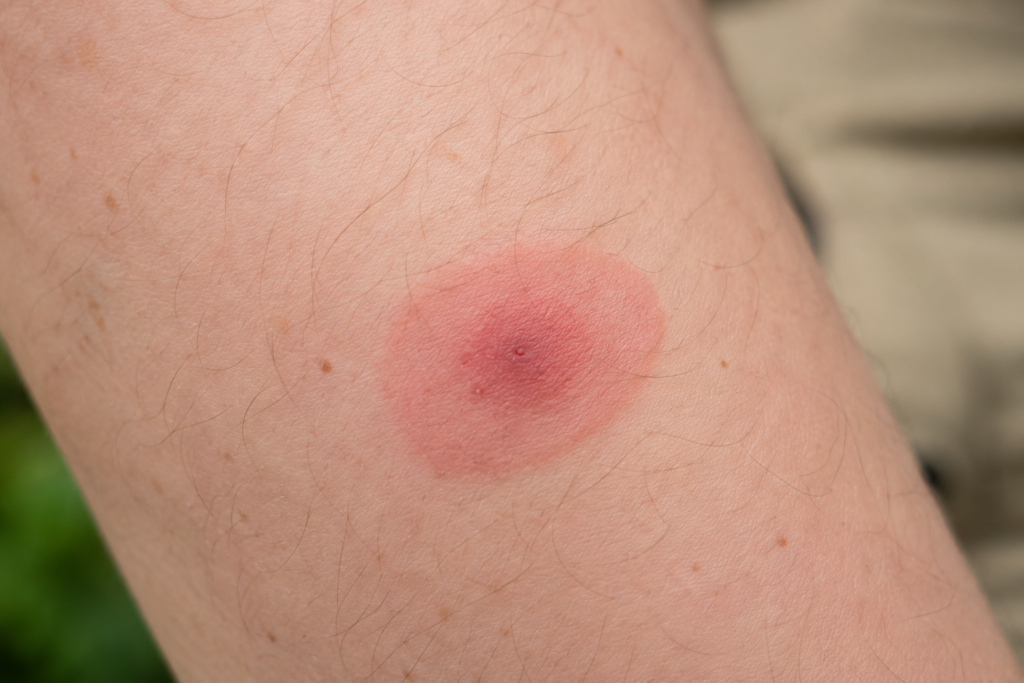
A tick bite site may feel slightly raised and warm to the touch, but it is usually not painful in the early stages.
The bullseye rash, medically known as erythema migrans, is the most well-known sign of a tick bite associated with Lyme disease. It appears as a red circle with a clear center, expanding outward from the bite site.
This rash typically appears anywhere from 3 to 30 days after the bite. It is not always perfectly round, and it does not always itch, which is why many people miss it entirely. The most common bite locations include the back of the knees, the groin area, the armpits, and the scalp and hairline.
In the first few hours, a tick bite may look like nothing more than a tiny red dot. Over time, mild swelling and redness can develop around the site. If the tick is not removed, the skin around the bite may become more irritated and inflamed as the tick continues feeding.
Tick Bite Symptoms to Watch For
Tick bites carry a higher potential for serious illness than flea bites, which is why symptom monitoring matters so much after any suspected tick exposure. In the first one to three days after a tick bite, watch closely for these early symptoms:
- A red, expanding rash at the bite site.
- Mild fever or chills.
- Unusual fatigue or tiredness.
- A headache that does not resolve with standard pain relief.
- Muscle or joint aches without an obvious cause.
- Lyme disease symptoms include additional rashes on other parts of the body, facial palsy, severe headaches, neck stiffness, heart palpitations, and nerve pain.
- Rocky Mountain Spotted Fever (RMSF) symptoms include a spotted rash that typically begins on the wrists and ankles before spreading to the rest of the body.
Flea Bites: Appearance & Symptoms
What Flea Bites Look Like
Flea bites are small, red, and intensely itchy. A small halo of redness typically surrounds them and may have a tiny puncture mark at the center.
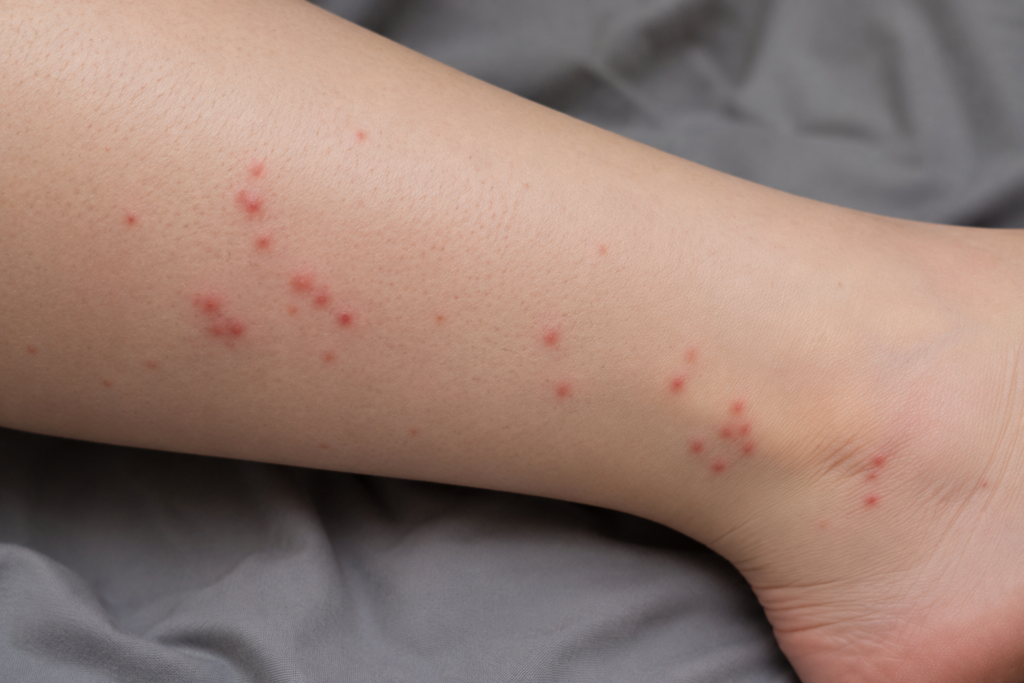
Unlike tick bites, flea bites rarely swell significantly, but the itch is often far more immediate and intense.
Fleas are ground-level insects. They jump from carpets, bedding, or pet fur onto the nearest available skin, which, for humans, usually means the lower legs and ankles. Flea bites almost always appear in groups of three or more, often arranged in a rough line or irregular cluster.
Compared to mosquito bites, flea bites are smaller and do not swell as much. Compared to bed bug bites, flea bites tend to appear lower on the body rather than on the arms, neck, or torso. The intense, almost immediate itching is a flea-bite trademark; most people notice it within minutes of being bitten, not hours later.
Flea Bite Symptoms to Watch For
Unlike a mosquito, which bites and leaves, a flea may bite multiple times in quick succession, injecting saliva repeatedly and compounding the reaction. This is why flea bites tend to produce that maddening, persistent itch that feels worse than the bite size would suggest.
- Hives or a spreading rash beyond the bite site.
- Significant swelling around the bitten area.
- Blistering or open sores from scratching.
- Shortness of breath or throat tightening in rare, severe reactions.
- If any breathing difficulty or throat swelling occurs after a flea bite, treat it as a medical emergency and seek help immediately.
How to Treat a Tick Bite at Home?
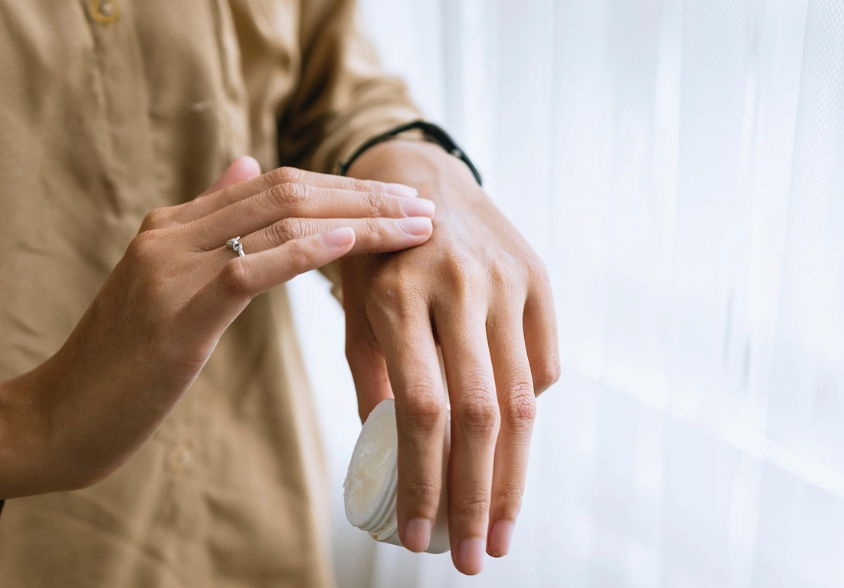
The first line of action after getting bitten by a tick is to disinfect the bite and use hydrocortisone cream to relieve itching.
If you find a tick attached to your skin, staying calm matters. Use fine-tipped tweezers and follow these steps exactly:
- Grasp the tick as close to the skin surface as possible.
- Pull upward with steady, even pressure.
- Avoid squeezing the tick’s body, which can force fluids into the bite.
- Once removed, clean the bite site and your hands with rubbing alcohol or soap and water.
- Pat dry gently, then rub over-the-counter hydrocortisone cream directly onto the bite to relieve itching.
Go to a doctor immediately if you develop a bullseye rash, a fever above 100°F, severe headache, muscle aches, or any unusual rash anywhere on your body following a tick bite.
Even without symptoms, it is worth calling your doctor if the tick was attached for more than 36 hours, if you are unsure how long it was attached, or if you live in or recently visited a region with high rates of tick-borne illness.
How to Treat Flea Bites at Home?
Here’s how you can treat flea bites at home:
- The first step with flea bites is to wash the affected area with soap and cold water. Cold water helps reduce swelling and slows the itch response, while warm or hot water can actually intensify itching by increasing blood flow to the area.
- Pat dry gently and avoid any friction that could break the skin.
- For ongoing itch relief, the most effective at-home options include over-the-counter hydrocortisone cream applied directly to the bite and oral antihistamines such as cetirizine (Zyrtec) or diphenhydramine (Benadryl).
- Use a cold compress held against the skin for 10 minutes at a time to also relieve swelling and itching.
- A few natural options also have real evidence behind them. A small dab of pure aloe vera gel straight from the plant reduces inflammation and cools the skin on contact.
Tick Bite vs Flea Bite: Side-by-Side Comparison
| Feature | Tick Bite | Flea Bite |
| Appearance | Single red mark, possible bullseye rash | Small red bumps, often in clusters |
| Location on body | Hidden areas: scalp, groin, armpits, behind knees | Ankles, lower legs, waistband area |
| Itch level | Mild to moderate | Intense and immediate |
| Tick or insect present | The tick may still be attached | Flea rarely found at the bite site |
| Disease risk | High: Lyme disease, RMSF, and others | Lower: typhus, plague (rare) |
| Swelling | Mild localized swelling | Minor swelling, more redness |
| When symptoms appear | Days to weeks after bite | Minutes to hours after bite |
Connor’s Pest Pros: The Best Solution to Your Tick or Flea Problem
Tick and flea bites can look alike, but their patterns, locations, and health risks tell different stories. Treating the bite is only the first step; getting rid of the source is what truly ends the problem, since both pests reproduce quickly and hide where home treatments cannot reach.
At Connor’s Pest Pros, we help families across the D.C. metro area clear tick and flea infestations with same-day service, eco-friendly products, and a 100% satisfaction guarantee. If you want to stop the bites at the source, request a free quote today.
Reach out to us today for a free quote.
Frequently Asked Questions (FAQs)
Can a tick bite look like a flea bite?
Yes, in the earliest stages, a tick bite can look nearly identical to a flea bite, often appearing as a small red bump with mild surrounding redness. The key differentiating factors are the tick’s location on the body, whether the tick is still attached, and how the bite progresses over time. A flea bite stays small and clusters with others; a tick bite may expand into a rash or remain isolated as a single mark.
Do flea bites always appear in clusters?
Not always, but clusters are the most common pattern because fleas tend to bite multiple times in one feeding session and move along the skin as they feed. A single isolated flea bite is possible but less typical. If you are seeing random single bites in different locations across the body, a different insect is more likely the culprit than a flea.
Can fleas live on humans the way they live on pets?
Fleas strongly prefer animal hosts with dense fur, such as cats and dogs, because fur provides both shelter and easier access to the skin. Human body hair is not dense enough to make us a preferred host. Fleas will bite humans opportunistically when no animal host is available, but they do not take up permanent residence on human skin or hair the way they do on pets.
How do I know if a tick bite requires a doctor’s visit?
Go to a doctor if you develop a fever, expanding rash, bullseye pattern around the bite, severe headache, muscle aches, or any neurological symptoms like facial drooping or numbness within days to weeks of a known or suspected tick bite. Also seek medical evaluation if the tick was attached for more than 36 hours, if you are unable to remove the tick completely, or if you are pregnant and were bitten.
Does Connor’s Pest Pros offer same-day service?
Yes, at Connor’s Pest Pros, we understand that pest problems do not wait for a convenient appointment window, and we offer same-day service across the D.C. metro area. Whether you’re dealing with bed bugs, cockroaches, ticks, fleas, wildlife, or any other infestation, our team is built to respond quickly and resolve the problem on the same day whenever possible.
*Price estimates reflect current market costs and may vary based on your specific situation. For a personalized quote tailored to your needs, contact us directly or request your FREE estimate today!