
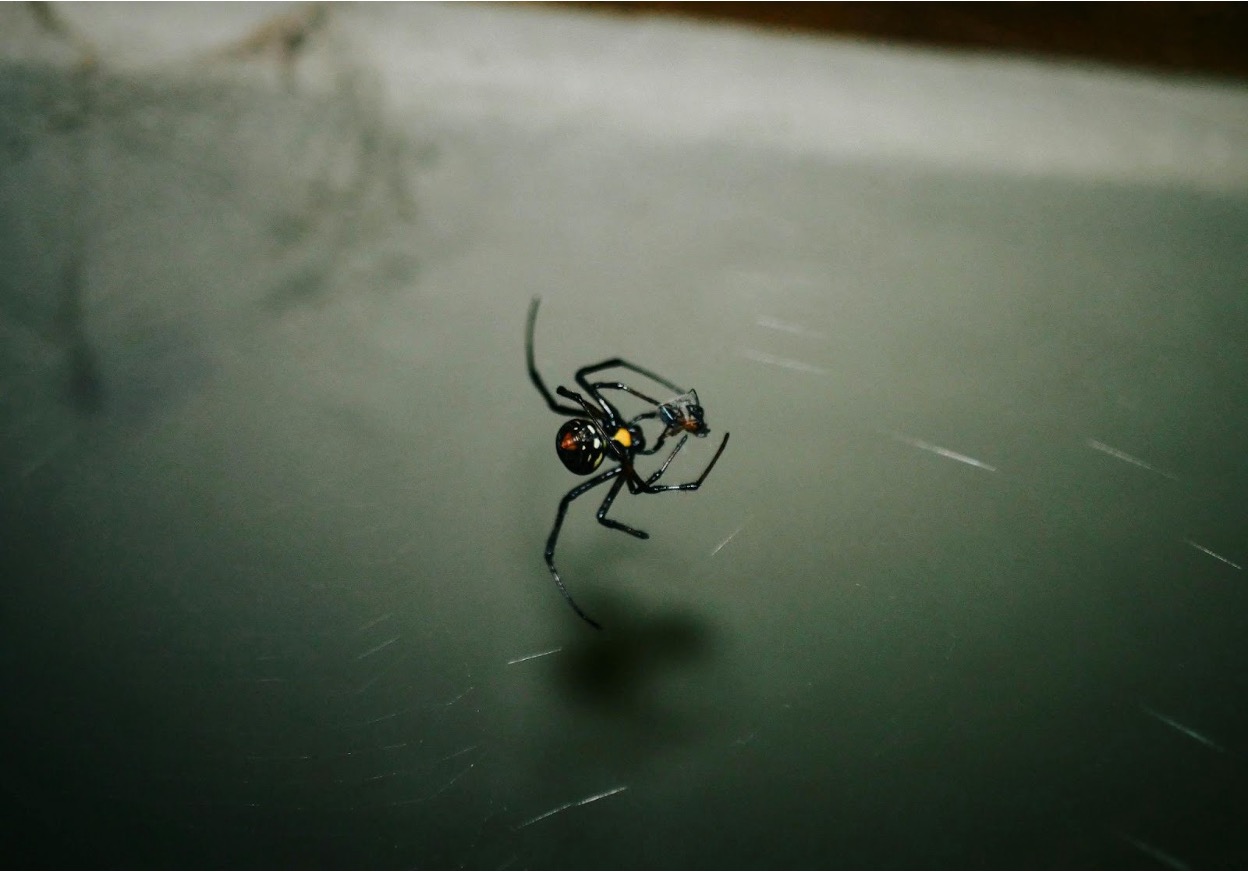
Key Takeaways
- Northern Virginia is home to several spider species, including two that pose real health risks: the black widow and the brown recluse.
- Knowing how to identify each spider by its markings, eye arrangement, and behavior tells you whether to leave it alone or call a professional.
- Black widow venom contains a powerful neurotoxin, but no deaths from black widow bites have been recorded in the U.S. since 1983.
- If you spot a black widow or brown recluse indoors, contact a pest professional rather than trying to remove it yourself.
- Connor’s Pest Pros serves Northern Virginia with same-day spider control and free re-treatments.
What Spiders Are in Northern Virginia?
Northern Virginia’s mix of suburban neighborhoods, wooded lots, and older homes creates ideal habitat for a surprising variety of spiders. The four most commonly encountered species are the black widow, brown recluse, wolf spider, and jumping spider.
Two of these (the black widow and brown recluse) are considered medically significant, meaning their bites can cause serious reactions in some people. The other two are harmless to humans, though they can still catch people off guard with their size or speed.
|
Connor’s Pest Pros: Family-Owned Pest Control Experts Choose Your Pest Protection Solution:
Customer Praise:
★★★★★ “Quick to answer my call and available same-day… I recommend them to anyone looking for pest control in NOVA.” – Jacquelyn L.
Why Choose Connor’s Pest Pros:
|
4 Spiders in Northern Virginia
1. Black Widow Spider
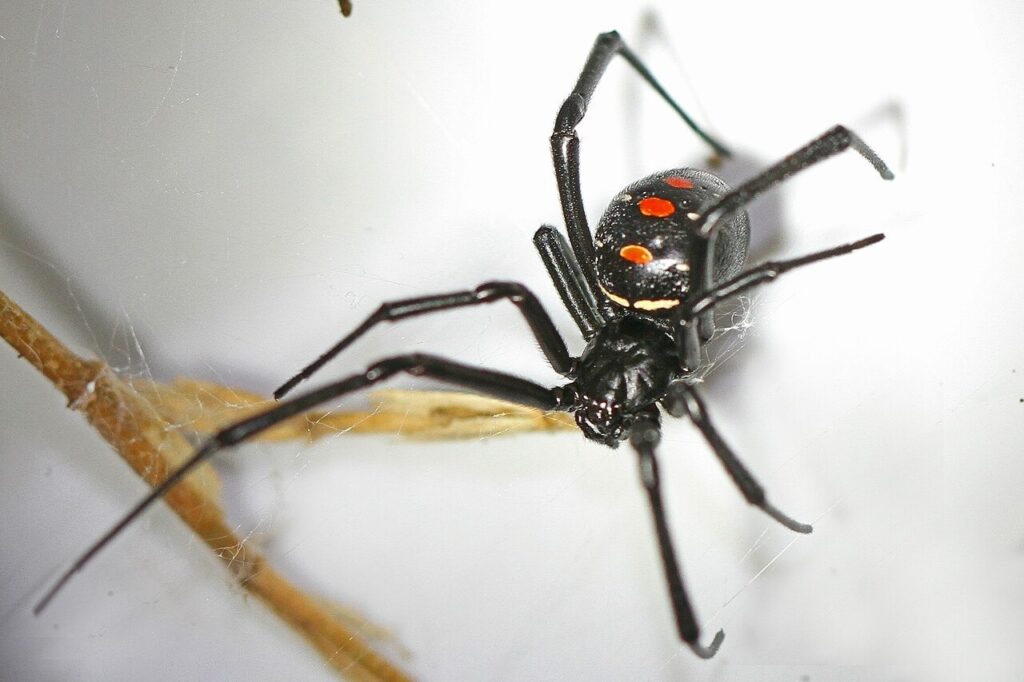
Black widows carry dangerous venom (Image source:“Northern Black Widow – Latrodectus variolus, Woodbridge, Virginia” by Judy Gallagherlicensed under CC BY 2.0, via Wikimedia Commons)

Both the northern black widow (Latrodectus variolus) and the southern black widow (Latrodectus mactans) are found in Virginia. While their defensive bites are rarely fatal, the venom they carry is a powerful neurotoxin that can cause serious symptoms. The good news is that no deaths from black widow bites have been recorded in the U.S. since 1983. If you spot one indoors, contact a pest professional.
Key Characteristics
- Venom: Neurotoxic; can cause muscle cramping, nausea, and sweating
- Temperament: Non-aggressive; bites only when threatened
- Size: Mature males are roughly half the size of females
- Medical concern: Females are considered medically significant; immature spiders and males are not
In Northern Virginia, you’re most likely to find black widows in garages, woodpiles, sheds, and similar sheltered spots. They tend to avoid high-traffic areas, which is why these spider bites are more common when people are handling firewood, moving stored items, or reaching into cluttered spaces without looking first.
How to Identify a Black Widow
Female black widows are shiny black with a distinctive red marking on the underside of the abdomen, but the exact shape of that marking differs between the two species found in Virginia.
- Southern black widow: The hourglass shape on the underside is fully connected in the middle, and there is an additional red spot near the spinnerets (the silk-producing organ) on the top of the abdomen.
- Northern black widow: The hourglass is incomplete, appearing as two separate red bars rather than a connected shape, and the top of the abdomen may show white patches with red or orange dots.
2. Brown Recluse Spider
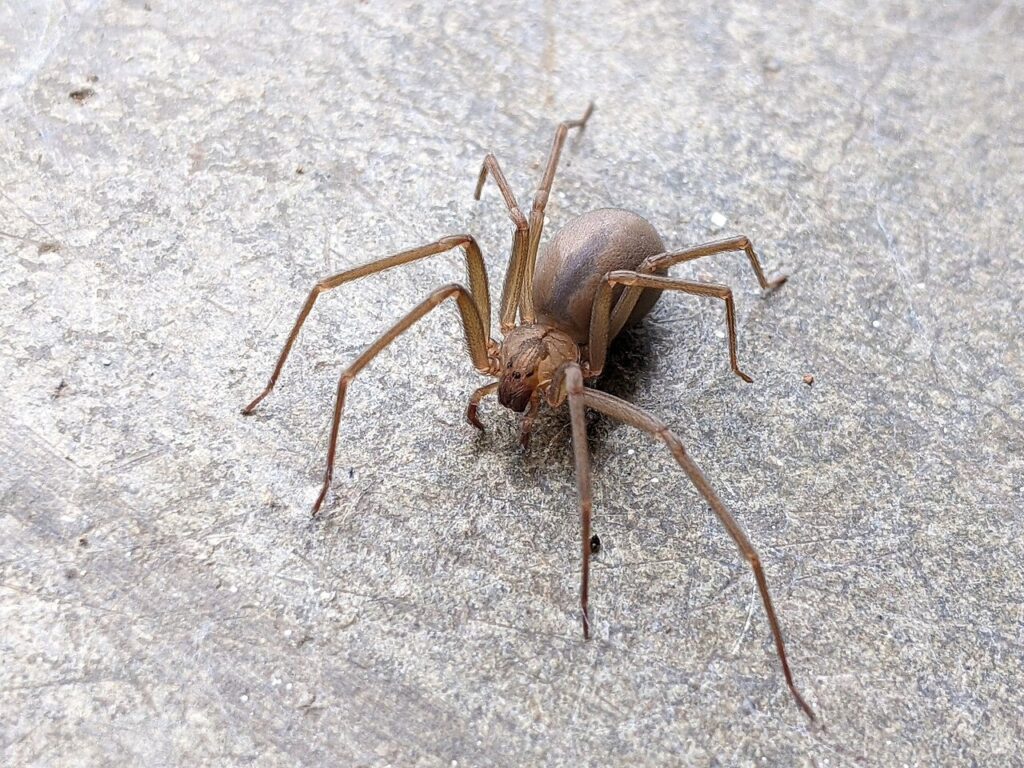
Brown recluse spiders prefer undisturbed and hidden spaces (Image source:“Loxosceles reclusa” by iamfindingplantslicensed under CC0 1.0, via Wikimedia Commons)

The brown recluse has a reputation that often exceeds its actual presence in Northern Virginia. Brown recluse sightings in Northern Virginia are rare, and when they do occur, it’s usually because the spider has been accidentally transported via boxes, furniture, or shipments from areas where it’s more common.
However, its bite can cause necrosis (actual cell death) around the wound site in severe cases, though the severity varies widely from person to person. They will only bite when they feel trapped or threatened.
Key Characteristics
- Size: Body approximately 6–12 mm long (about 3/8 inch), with a leg span of roughly 2.5 cm (1 inch)
- Color: Pale to golden brown, with no stripes or bands on the legs
- Nickname: Violin spider or fiddleback, due to a fiddle-shaped marking near the head
- Eyes: Six eyes arranged in three pairs
- Temperament: Reclusive; bites defensively when trapped
True to their name, brown recluses prefer undisturbed, rarely accessed spaces. Indoors, that means attics, cupboards, behind furniture, and inside stored boxes. They tend to move inside in the fall as temperatures drop, seeking warmth for the winter months.
How to Identify a Brown Recluse
The most reliable identification feature is the eye arrangement: six eyes in three pairs, with visible space between each pair. The fiddle-shaped marking near the head (darker brown against a lighter body) is the other key identifier, though it can be difficult to see on smaller specimens without a close look.
3. Wolf Spider
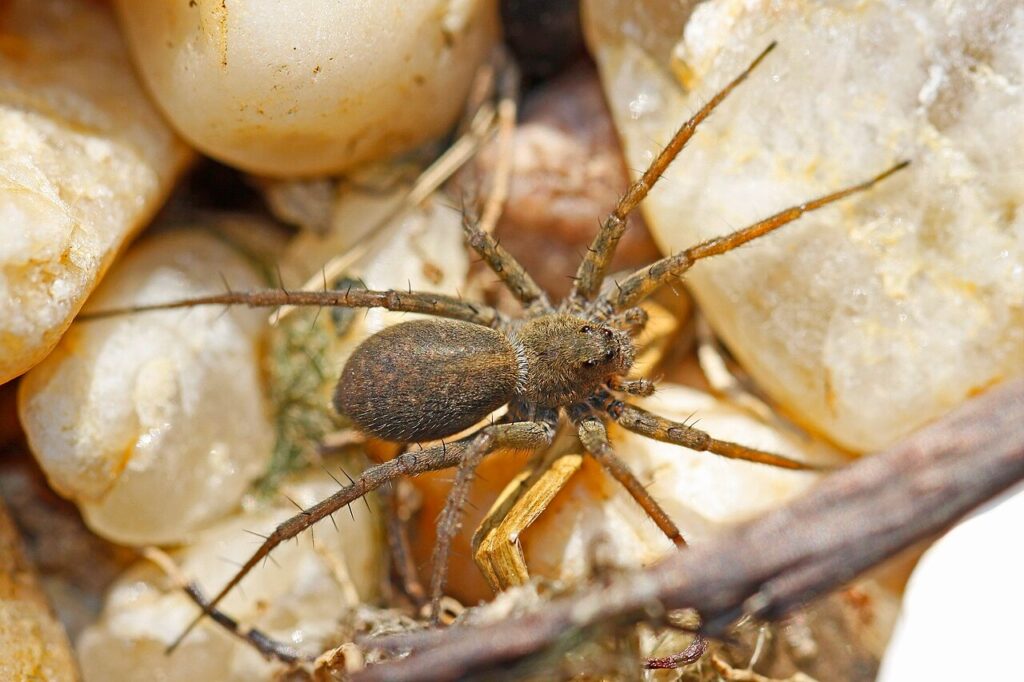
Wolf spiders are the most common ones in Northern Virginia (Image source:“Wolf Spider (Lycosidae), Leesylvania State Park, Woodbridge, Virginia” by Judy Gallagherlicensed under CC BY 2.0, via Wikimedia Commons)
,_Leesylvania_State_Park,_Woodbridge,_Virginia.jpg)
Wolf spiders are the spiders most Northern Virginia residents actually encounter face-to-face, usually because one has sprinted across the basement floor or appeared near a garage door. They’re large, fast, and hairy, which makes them startling.
Key Characteristics
Unlike most spiders, wolf spiders hunt actively, using their speed and exceptional eyesight to chase down insects. This hunting behavior is exactly what brings them into contact with people. They follow their prey wherever it goes, including indoors.
Outdoors, wolf spiders live on the ground: under rocks, in leaf litter, and along the edges of lawns and garden beds. When the weather cools in fall, they move inside searching for warmth, which is when most Northern Virginia homeowners start seeing them. Indoors, they tend to show up near doors, windows, basements, garages, and houseplants.
One thing worth noting: you should avoid squishing a wolf spider carrying spiderlings. Doing so can scatter dozens of tiny spiders across your floor.
How to Identify a Wolf Spider
Wolf spiders range from tan to dark brown and typically have stripes running the length of the body. The easiest way to distinguish them from more dangerous spiders is size and movement. Wolf spiders are noticeably large and move in fast, darting bursts rather than staying still.
4. Jumping Spider
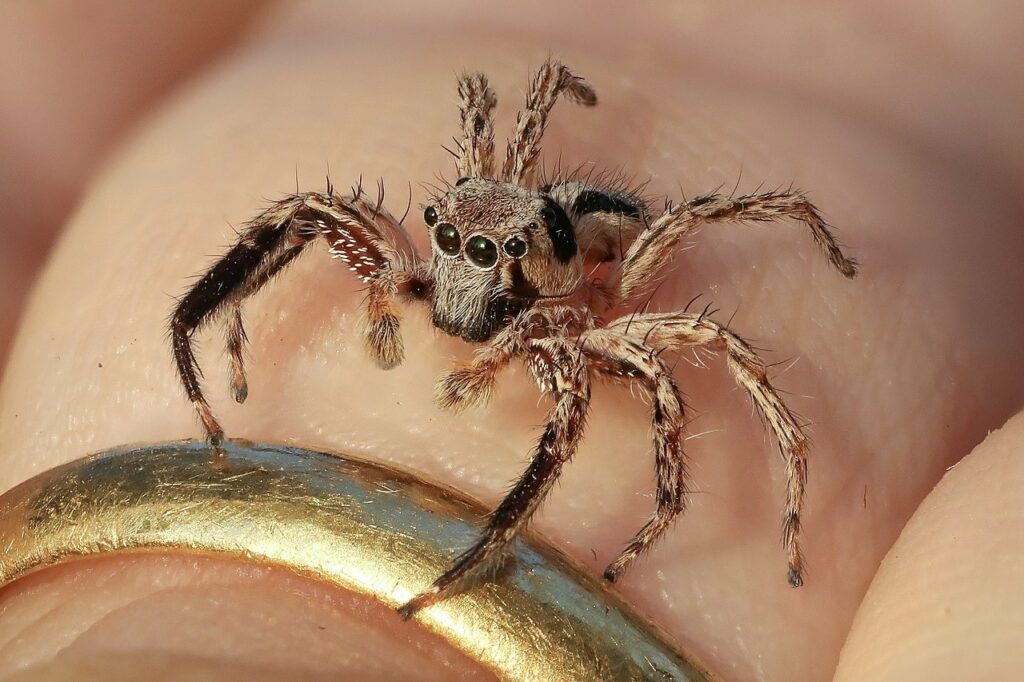
Jumping spiders have a unique fuzzy appearance (Image source:“Plexippus petersi (jumping spider) on a human finger at golden hour” by Basile Morinlicensed under CC BY-SA 4.0, via Wikimedia Commons)
_on_a_human_finger_at_golden_hour.jpg)
Jumping spiders are active daytime hunters that stalk their prey with a methodical, cat-like approach. They creep up slowly on an insect, attach an anchor line of silk to the surface as a safety line, and then leap to strike when they’re close enough.
Key Characteristics
Jumping spiders have eight eyes working together to give them a nearly 360-degree field of view. The two large front-facing principal eyes deliver sharp, high-resolution color vision, while the smaller secondary eyes on the sides and rear detect motion and cover the rest of the field. Their fuzzy, compact bodies and distinctive eye arrangement make them one of the easiest Northern Virginia spiders to identify on sight.
Jumping spiders are found both indoors and outdoors throughout Northern Virginia. Outside, they hunt on fences, tree bark, garden walls, and sunny exterior surfaces where insects are active. Inside the home, they tend to appear near windows and light sources, following the insects that gather there.
How to Identify a Jumping Spider
The most recognizable feature of jumping spiders is their eye arrangement: four eyes across the front face, with the two center eyes noticeably larger than the rest, giving them an almost cartoonish, wide-eyed look. If a small spider turns to look directly at you when you approach, it’s almost certainly a jumping spider.
What Are the Key Differences Between Virginia’s Most Common Spiders?
| Spider | Size | Color | Key Identifier | Common Location |
| Black Widow | Medium | Shiny black | Red hourglass or bars on underside of abdomen | Garages, woodpiles, sheds |
| Brown Recluse | Body ~6–12 mm; ~2.5 cm leg span | Golden to dark brown | Fiddle marking near head; 6 eyes in 3 pairs | Attics, cupboards, stored boxes |
| Wolf Spider | Large | Tan to dark brown | Hairy body with stripes; fast-moving ground hunter | Basements, garages, garden edges |
| Jumping Spider | Small | Dark brown to black | Large front eyes; fuzzy body; turns to face you | Windows, fences, exterior walls |
Keep Spiders Away With Connor’s Pest Pros
If you’re regularly seeing black widows or suspect a brown recluse has made its way into your home, that’s not a situation to manage with a paper towel and some courage.
At Connor’s Pest Pros, we specialize in spider control throughout Northern Virginia and can help identify what you’re dealing with, treat problem areas, and put prevention measures in place so the issue doesn’t come back.
For species like wolf spiders and jumping spiders, the best approach is sealing entry points (gaps around doors, windows, and utility lines) and reducing the insect populations that attract them in the first place. A professional assessment can identify exactly where spiders are getting in and what’s drawing them there.
Contact us today for a free quote!
Frequently Asked Questions (FAQs)
What kind of spiders are in Virginia?
The black widow, brown recluse, wolf spider, and jumping spider can all be found in Northern Virginia specifically. Of these, the black widow and brown recluse are the two species that require caution. The wolf spider and jumping spider, despite their appearance or agility, pose no real threat to humans.
Are wolf spiders in Virginia poisonous?
Wolf spiders are not considered dangerous to humans. While they can technically bite if handled or cornered, their venom does not cause significant reactions in healthy adults.
What is the most poisonous spider in Virginia?
The black widow is the most venomous spider in Virginia. Its venom contains a powerful neurotoxin that can cause muscle cramping, nausea, and sweating. That said, bites are rarely life-threatening and most healthy adults recover without lasting effects.
Why shouldn’t you squish a wolf spider?
Squishing a wolf spider that is carrying an egg sac (or one already carrying spiderlings on her back) can scatter dozens of tiny spiders across your floor in an instant. Unlike most spider species, female wolf spiders carry their young on their bodies after hatching, which means one misplaced stomp can turn a single spider problem into a much larger one.
Can Connor’s Pest Pros remove spiders from my home?
Yes. Connor’s Pest Pros provides spider control services throughout Northern Virginia, including identification, targeted treatment, and prevention strategies built around your specific situation. If you’ve spotted a black widow near your garage or you’re dealing with a recurring wolf spider problem in the basement, their team can assess what’s happening and address it properly.