
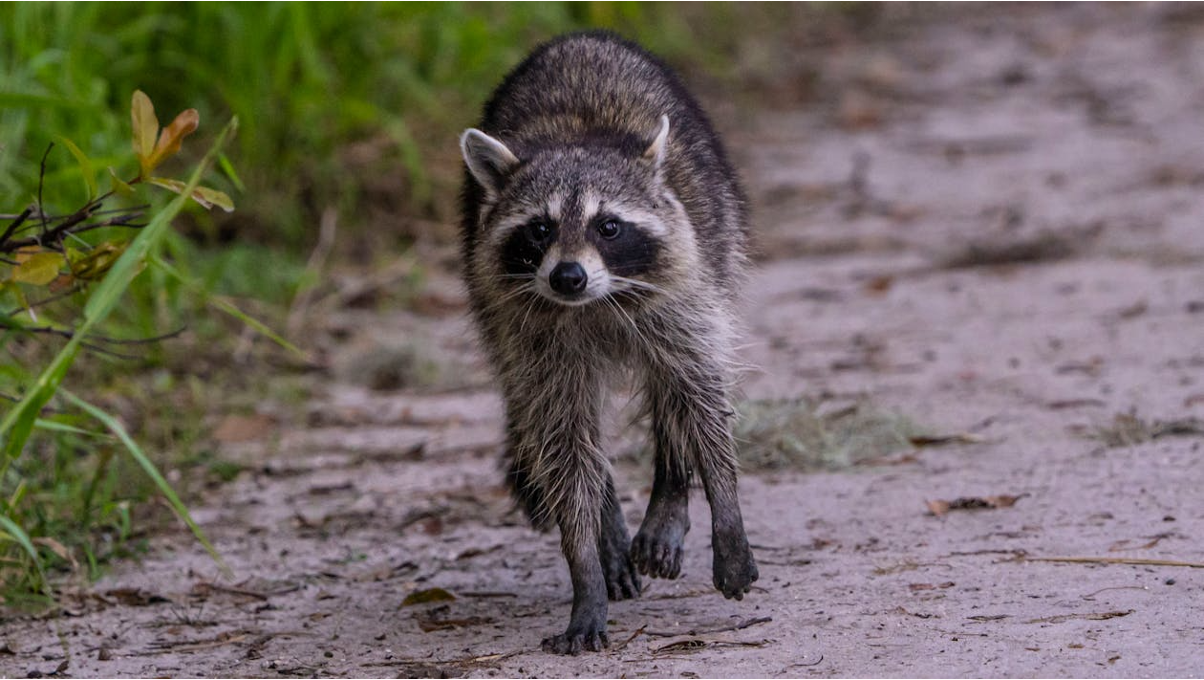
Key Takeaways
- Raccoon tracks have five distinct toes, while cat tracks only have four toes—this is the most reliable way to tell them apart.
- Raccoon prints resemble tiny human handprints with long, finger-like toes that connect directly to the palm pad.
- Cat tracks rarely show claw marks as their claws are retractable, while raccoon tracks almost always display visible claw impressions.
- Raccoon tracks typically measure 1.5–3.2 inches wide and 1.7–3.8 inches long, which are generally larger than domestic cat prints.
- Connor’s Pest Pros helps homeowners identify and address wildlife activity, including raccoons and stray cats, through detailed inspections, expert identification guidance, and targeted solutions, all supported by fast service and a 100% satisfaction guarantee.
Discovering Tracks in Your Backyard: What They Really Mean
Discovering tracks in your backyard, on your deck, or along a hiking trail can feel like stumbling onto a mystery waiting to be solved. But when those prints appear near your home, identifying the visitor becomes more than just curiosity—it’s about protecting your property and family.
Raccoons are notorious for causing property damage, tearing into attics, ripping up insulation, and creating costly entry points in soffits, vents, and rooflines. They’re also known carriers of rabies and roundworm, making their presence near homes a legitimate health concern. If you’re seeing raccoon tracks regularly, especially near your foundation, deck, or trash area, it often signals an active denning situation or a consistent food source that needs immediate attention.
Cat tracks, on the other hand, typically indicate transient activity—a neighborhood pet passing through or a feral cat exploring territory. While they may cause minor nuisances, they rarely establish dens in structures or cause the same level of damage as raccoons.
When it comes to raccoon versus cat tracks, a few key differences can help you instantly identify which nocturnal visitor left those prints behind. With the proper knowledge, you’ll be able to distinguish between these common tracks even in less-than-perfect conditions—and more importantly, know whether you need to take action to protect your home.
|
Connor’s Pest Pros: Family-Owned Pest Control Experts Choose Your Pest Protection Solution:
Customer Praise:
★★★★★ “Quick to answer my call and available same-day… I recommend them to anyone looking for pest control in NOVA.” – Jacquelyn L.
Why Choose Connor’s Pest Pros:
|
The Instant Way to Tell Raccoon & Cat Tracks Apart
The fastest and most reliable way to distinguish between raccoon and cat tracks is by counting the toes. Raccoons have five toes on both their front and hind feet, creating a distinctive five-pointed print that resembles a tiny human hand.
Cats, on the other hand, have only four toes that register in their prints. This single difference is often all you need for an identification, even when the tracks aren’t obvious.
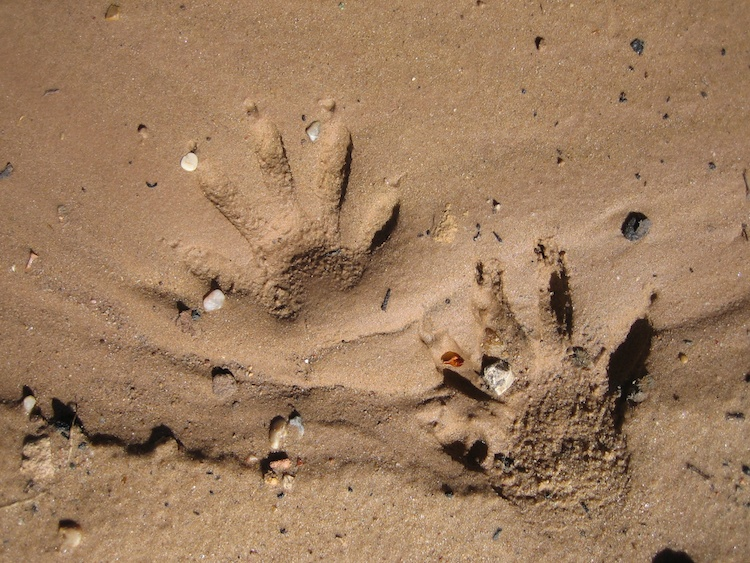
When identifying raccoon tracks, look for an asymmetrical arrangement of the five toes. (Image source: Nature Tracking)
Beyond the toe count, raccoon tracks show distinctive negative-space patterns. Their long, finger-like toes connect directly to the palm pad without the distinct gap you’ll see in cat tracks.
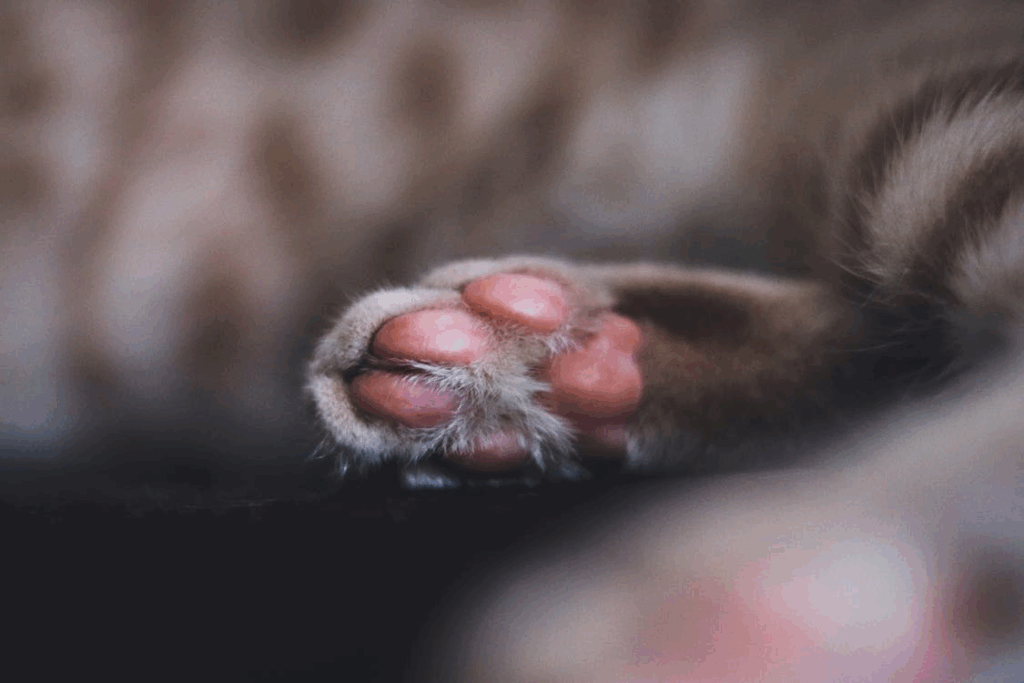
Cat’s soft paw pads, known as toe beans, absorb shocks and enable silent stalking.
Cat prints typically show a clear space between their toes and the main pad, creating a more organized, compact impression. This negative space difference is beneficial when you can’t get a perfect toe count.
Claw marks provide another immediate tell. Cats have retractable claws that rarely show in their tracks unless they’re running or climbing.
Raccoons, however, cannot retract their claws, so their tracks almost always display small claw marks extending beyond the toe pads. These claw impressions are more evident on softer substrates such as mud or wet sand.
Raccoon Track Identification: Key Features
Size Matters: Raccoon Track Measurements
Raccoon tracks fall within a predictable size range that helps distinguish them from both smaller and larger animals.
Front paw prints typically measure between 1.5 and 2.9 inches in length, and between 1.5 and 3.0 inches in width. Hind paw prints are slightly larger, measuring 1.7–3.8 inches long and 1.6–3.2 inches wide. These measurements can vary somewhat based on the animal’s age, sex, and the substrate conditions.
Adult raccoons leave larger tracks than juveniles, which is useful to know when trying to determine if you’re dealing with a family group. Male raccoon tracks tend to be on the larger end of the size spectrum, while females typically leave smaller impressions.
When tracking in snow, remember that melting can enlarge the apparent size of tracks, sometimes significantly, so take this into account when making identifications based on size alone.
The “Hand-like” Shape of Raccoon Prints
The most distinctive feature of raccoon tracks is their remarkable resemblance to human handprints. This similarity isn’t coincidental—raccoons possess highly dexterous front paws with sensitive pads and long digits that function somewhat like our own hands.
The front paw prints clearly show five spread-out digits arranged around a central palm pad, creating that unmistakable hand-like appearance. This feature is especially pronounced in clear impressions made in mud or damp sand.
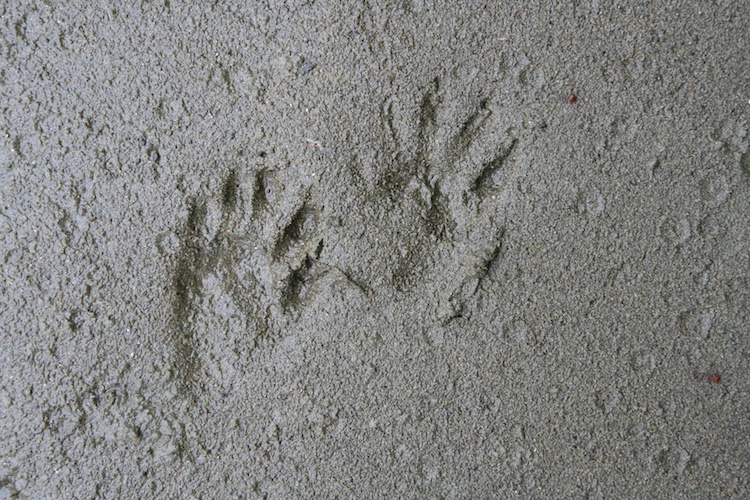
This hand-like quality becomes even more apparent when you observe a full raccoon track pattern (Image source: Nature Tracking)
As raccoons walk, they place their hind feet almost exactly where their front feet landed, creating a pattern where front and hind prints often overlap partially. When examining tracks in soft substrates, you may notice the deeper impression of the heel on hind feet, which bears more of the animal’s weight during movement.
Claw Marks: Almost Always Present in Raccoon Tracks
Unlike cats with their retractable claws, raccoons cannot hide their claws when walking. This means raccoon tracks almost always display small claw marks extending beyond the toe impressions.
These claw marks typically appear as small dots or thin lines protruding from the tips of each toe pad. The prominence of these marks varies depending on the substrate—they are clearly visible in mud but less evident in sand or snow.
Cat Track Identification: Key Features
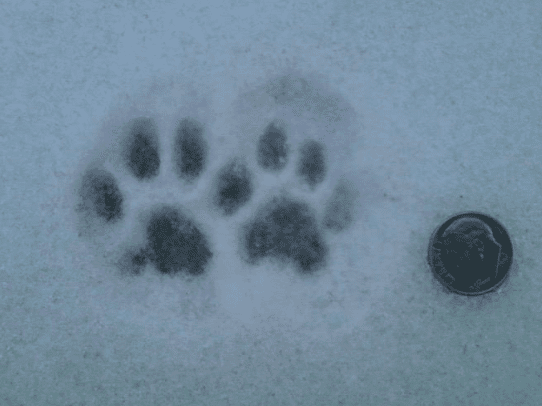
Cat tracks differ clearly from raccoon prints, most notably by their consistent four-toe pattern on both front and hind feet. (Image source: Lost Pet Research)
Cat tracks present a stark contrast to raccoon prints in several important ways. The most immediately noticeable difference is the four-toe pattern, which remains consistent in both the front and hind feet.
Another distinctive feature of cat tracks is their overall symmetry and neatness. Cat prints often have a rounded, compact appearance with clear negative space between the toes and the main pad.
This negative space creates what some trackers call the “M-shaped” pattern at the leading edge of the main pad. This feature is consistent across domestic cats, bobcats, and other wild felids, though the size and proportions vary considerably between species.
Domestic Cat vs Wild Cat Track Sizes
Size provides an important clue when distinguishing between domestic cat tracks and those of wild felids. Domestic cat prints typically measure between 1–1.5 inches in both length and width, noticeably smaller than most raccoon tracks.
Bobcat prints are significantly larger, measuring approximately 1.5–2.5 inches, which can sometimes cause confusion with small raccoon tracks. Mountain lion (cougar) tracks are much larger still, typically 3–4 inches across, well beyond the size range of even the largest raccoon prints.
When in doubt, measuring track size can quickly eliminate particular possibilities from your identification process.
The Distinctive Rounded Shape of Cat Paws
Cat tracks display a distinctive, rounded overall shape that differs markedly from the more elongated, hand-like appearance of raccoon prints. This rounded quality comes from the compact arrangement of the four toes in a neat arc around the front of the main pad.
The main foot pad itself has a distinctive shape often described as tri-lobed or heart-shaped, with two lobes at the rear and one at the front. This pad shape remains relatively consistent across all cat species, though proportions vary between domestic and wild cats.
Missing Claws: Why Cat Tracks Rarely Show Claw Marks
One of the most reliable ways to distinguish cat tracks from raccoon prints is the absence of claw marks. Cats have retractable claws that they keep sheathed while walking on flat surfaces, resulting in tracks that rarely show claw impressions.
This evolutionary adaptation allows cats to keep their claws sharp for hunting and climbing rather than dulling them through regular contact with the ground.
The only time you’re likely to see claw marks in cat tracks is when the animal was running, climbing, or otherwise engaging in activities that require additional traction.
Raccoon Tracks vs Cat Tracks: Comparison Table
| Characteristic | Raccoon Tracks | Cat Tracks (Domestic) |
| Number of Toes (most reliable identifier) | 5 toes on both front and hind feet | 4 toes on both front and hind feet |
| Front Paw Size | Length: 1.5–2.9 inchesWidth: 1.5–3.0 inches | Length: 1.0–1.5 inchesWidth: 1.0–1.5 inches |
| Hind Paw Size | Length: 1.7–3.8 inchesWidth: 1.6–3.2 inches | Length: 1.0–1.5 inchesWidth: 1.0–1.5 inches |
| Overall Shape | Resembles tiny human handprints; elongated and finger-like | Rounded, compact, and symmetrical |
| Toe Arrangement | Asymmetrical with widely splayed toes; five-pointed pattern | Neat arc formation; four toes arranged symmetrically |
| Toe Connection to Pad | Toes connect directly to the palm pad with no gap | Clear space/gap between toes and main pad |
| Claw Marks | Almost always visible, non-retractable claws leave impressions | Rarely visible; retractable claws only show when running/climbing |
| Claw Appearance | Small dots or thin lines extending from the toe tips | Absent in most tracks |
| Main Pad Shape | Central palm pad with connected digits | Tri-lobed or heart-shaped pad (two lobes at rear, one at front) |
| Negative Space Pattern | Minimal space between toes and pad; toes connect directly | Distinctive “M-shaped” pattern at the leading edge of the main pad |
| Overall Impression | Hand-like, finger-like appearance | Rounded, neat, organized appearance |
| Walking Pattern/Gait | Waddling “pace” gait (legs on the same side move together); hind feet placed where front feet landed | “Direct register” pattern; hind feet land almost exactly in front of paw prints |
| Track Overlap | Front and hind prints often overlap partially | Clean, separate prints due to direct register |
| Heel Impression | Deeper heel impression on hind feet (bears more weight) | Even impression across the pad |
| Symmetry | Asymmetrical arrangement | Highly symmetrical and compact |
| Age Variations | Adult tracks are larger (up to 3.8 inches); juvenile tracks are smaller (1–1.5 inches) but maintain a 5-toe pattern | Consistent size for adult domestic cats; wild felids (bobcats) are larger (1.5–2.5 inches) |
| Gender Size Difference | Males leave larger tracks; females leave smaller tracks | Minimal size variation by gender |
| Substrate Visibility | Clear in mud, damp sand; claws prominent | Clear in mud, sand; claws typically absent |
| Track Clarity | Hand-like shape is recognizable even in less-than-perfect conditions | Rounded shape remains recognizable even in less-than-perfect conditions |
| Common Behavior Indicators | Spring tracks near den sites = pregnant females (high intervention priority) | Generally transient; less likely to establish dens in structures |
How Connor’s Pest Pros Can Help

Connor’s Pest Pros specializes in comprehensive behavioral analysis beyond track identification.
Correctly identifying whether tracks belong to raccoons or cats is key to understanding what’s happening on your property and choosing the right next steps. Connor’s Pest Pros helps homeowners accurately identify wildlife activity, eliminating guesswork and preventing unnecessary or ineffective treatments.
Serving homeowners and businesses throughout Virginia and Maryland, we deliver the fast, reliable wildlife solutions you need to protect your property.
Our team conducts thorough inspections to assess track patterns, entry points, and environmental conditions that attract wildlife. Based on our findings, we recommend practical, humane solutions such as exclusion work, habitat adjustments, or wildlife control measures tailored to the animal involved.
When unexplained tracks appear, we offer same-day identification support and proven prevention options to stop repeat activity. Backed by 415+ five-star reviews, a 2024 Angi Super Service Award, and a 100% satisfaction guarantee, Connor’s Pest Pros helps protect your home from raccoons, nuisance animals, and other wildlife concerns.
Reach out today for a free quote!
Frequently Asked Questions (FAQs)
Can raccoon tracks be mistaken for small dog prints?
Raccoon tracks can occasionally be confused with small dog prints, especially when the tracks aren’t clear or complete. Both animals have five toes and non-retractable claws that show in their prints.
However, dog tracks are more oval-shaped overall, with the toes forming a tight arc at the front. Raccoon prints have that distinctive hand-like appearance with more widely splayed toes.
Do baby raccoon tracks look different from adult tracks?
Baby raccoon tracks (from kits or juveniles) follow the same basic pattern as adults but are noticeably smaller in size. While adult raccoon tracks typically measure 1.5–3.2 inches across, juvenile tracks might be closer to 1–1.5 inches wide.
Despite their smaller size, baby raccoon tracks still display the characteristic five-toe pattern and hand-like appearance that distinguish them from similarly sized animal tracks.
How can I tell if the tracks in my yard are from a raccoon or a neighborhood cat?
To determine whether the tracks in your yard belong to a raccoon or a cat, focus on three key features: toe count, track shape, and the presence or absence of claw marks. Count the toes—raccoons have five while cats have four.
Examine the shape—raccoon tracks look like tiny handprints with finger-like toes connecting directly to the palm pad, while cat tracks show a distinct gap between the toes and the main pad.
Finally, look for claw marks—raccoon tracks almost always show small claw impressions beyond the toe pads, while cat tracks rarely display claws.
Do raccoons and cats leave different patterns when they walk?
Raccoons and cats create distinctly different track patterns when walking. Raccoons typically move with a waddling gait called a “pace,” where the legs on the same side of the body move forward together.
Cats, by contrast, typically walk in a pattern called “direct register,” where their hind feet land almost exactly in the prints left by their front feet.
How does Connor’s Pest Pros handle wildlife issues?
Connor’s Pest Pros identifies the animal causing the problem through a detailed inspection, then applies targeted, humane solutions such as exclusion and prevention to stop repeat activity, all backed by fast service and a 100% satisfaction guarantee.
*Image Disclaimer: Some images used in this blog post are sourced from third-party websites and remain the property of their respective owners unless otherwise stated. We do not claim ownership of these images and use them for illustrative purposes only.