

Key Takeaways
- Squirrel droppings are barrel-shaped with pointed ends, measuring about 0.12–0.31 inches (3–8 mm) in diameter, while rabbit droppings are nearly perfectly round and larger at 0.31–0.39 inches (8–10 mm)
- Location provides crucial context: squirrel droppings appear near trees, feeders, or on elevated surfaces like decks, while rabbit droppings cluster in garden beds and grassy areas at ground level.
- Fresh squirrel droppings are dark brown to black with a slight sheen, lightening over time, whereas rabbit pellets start out medium brown and dry to a distinctive gray-beige.
- Both animals’ droppings can carry parasites and diseases, including Salmonella, Leptospirosis, and roundworms. Always use gloves and proper sanitation when cleaning wildlife waste.
- Accurate identification determines appropriate management strategies: if you find droppings in attics, wall voids, or living spaces, contact Connor’s Pest Pros for a professional wildlife assessment and removal.
Droppings Identification Guide
Finding mysterious droppings in your yard or garden? You’re not alone. Wildlife leaves clues about its presence, and learning to read these signs can help you identify which animals are visiting your property.
While tracks and chew marks provide some evidence, droppings are often the most reliable indicator of which animals are present. Two of the most common backyard visitors—squirrels and rabbits leave distinctive droppings that, with a trained eye, are fairly easy to distinguish from one another.
At Connor’s Pest Pros, we’ve helped thousands of DC metro homeowners identify and address wildlife presence on their properties. Proper identification is the crucial first step in either peaceful coexistence or professional removal.
|
Connor’s Pest Pros: Family-Owned Pest Control Experts Choose Your Pest Protection Solution:
Customer Praise:
★★★★★ “Quick to answer my call and available same-day… I recommend them to anyone looking for pest control in NOVA.” – Jacquelyn L.
Why Choose Connor’s Pest Pros:
|
Spot the Difference: Squirrel vs Rabbit Poop Instantly
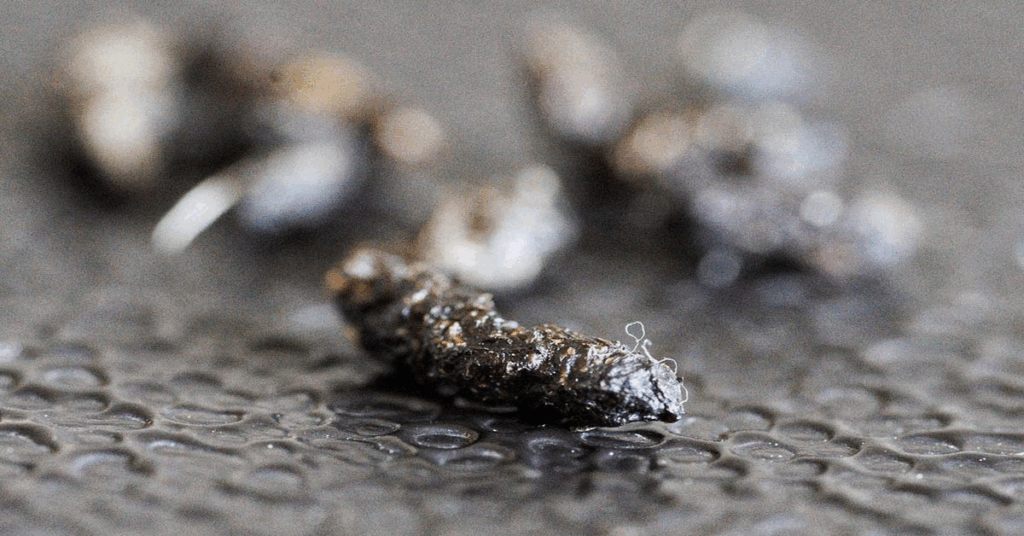
The most immediate way to distinguish between squirrel and rabbit droppings is through their distinctive shapes and sizes. (Image source: Learn About Animal)
Size Matters: Squirrel Droppings Are Smaller
Squirrel droppings are noticeably smaller than rabbit pellets, typically measuring about 0.12 inches (3 mm) in diameter and 0.20–0.31 inches (5–8 mm) in length. This smaller size corresponds with the squirrel’s smaller body size relative to most rabbit species found in North American gardens.
Rabbit droppings, by contrast, are larger and more substantial, usually measuring 0.31–0.39 inches (8–10 mm) in diameter, roughly the size of a pea or small marble.
This size difference is consistent across species, with even smaller rabbit varieties, like cottontails, producing droppings that are distinctly larger than those of squirrels. When examining fresh specimens, this size differential is immediately apparent and provides a quick identification method.
Note: Juvenile rabbits produce smaller droppings that might initially be confused with adult squirrel droppings. However, even young rabbit pellets maintain the characteristic round shape rather than the more oblong form of squirrel waste. If in doubt, look for other identifying characteristics or check for nearby evidence of rabbit nests or feeding activity.
Shape Differences: Barrel vs Round Pellets
The shape of the droppings provides perhaps the most definitive visual difference between these two animals.
Squirrel Droppings:
- Distinctly barrel-shaped or oblong
- Slightly rounded ends resembling miniature dark capsules
- Elongated shape consistent across squirrel species (gray squirrels, red squirrels, fox squirrels)
Rabbit Droppings:
- Almost perfectly spherical
- Rarely have pointed ends
- Consistent ball-like shape with remarkable uniformity—each pellet looks nearly identical to the next
This shape difference relates directly to the digestive systems of these animals. Rabbits are hindgut fermenters that practice coprophagy (re-ingestion of some droppings), resulting in their characteristic round, compressed pellets. Squirrels, with different digestive processes, produce the more barrel-shaped waste that reflects their primarily nut and seed diet.
Color Variations That Tell the Tale
Color provides another useful identifier when distinguishing between squirrel and rabbit droppings.
Squirrel Dropping Color Progression:
- Fresh: Dark brown to nearly black, often with a slight sheen
- Aging: Gradually lightens to medium or light brown
- Old: Loses shiny appearance, may show color variations based on diet
Rabbit Dropping Color Progression:
- Fresh: Medium to dark brown, relatively firm consistency
- Aging: Lightens considerably to distinctive gray-beige or tan
- Old: Maintains uniform color throughout the pellet
This color transformation is quite consistent and provides another reliable identification feature. Rabbit droppings tend to maintain their uniform color throughout the pellet, while squirrel droppings may sometimes show color variations based on recent diet.
Visual Identification Guide With Real Examples
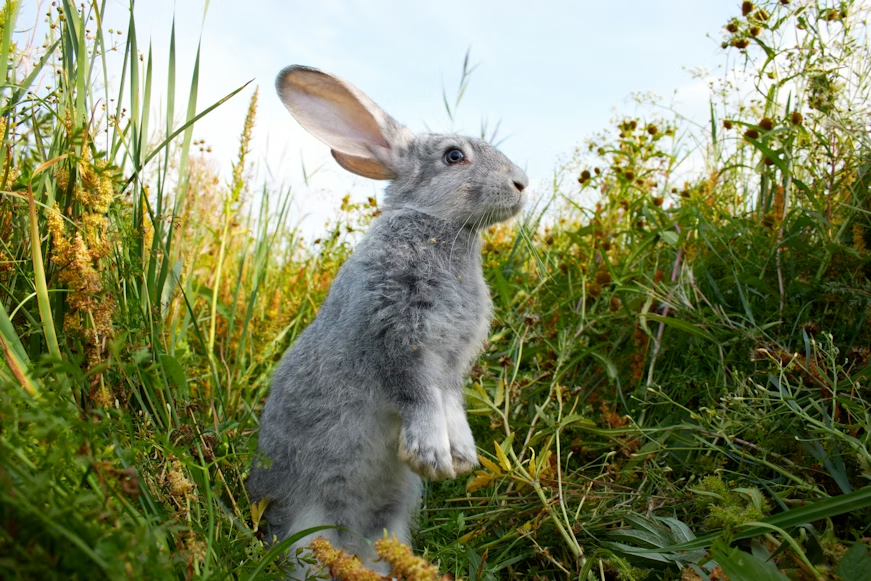
Droppings can appear differently depending on the animal’s diet, the sample’s freshness, and environmental conditions.
Fresh Squirrel Droppings: Key Features
Fresh squirrel droppings are distinctive in several ways. They are small, barrel-shaped pellets with pointed ends that resemble miniature oblong capsules. When newly deposited, they appear moist with a slight shine or gloss and are dark brown to nearly black in colour.
The texture is somewhat smooth when fresh, often with visible bits of nut casings or seed hulls embedded within. Typically 0.12–0.31 inches (3–8 mm) in diameter, they can be easily overlooked in dark soil or mulch.
As squirrel droppings age, they undergo noticeable changes. The colour fades from dark brown to lighter tan or medium brown, and they lose their initial shine as they dry out. The texture becomes more crumbly with cracks appearing on the surface, making them most visible on light-coloured surfaces like decks, patios, or sidewalks.
Typical Rabbit Pellets: Key Features

Fresh rabbit pellets show a characteristic round shape, uniform size, and medium brown coloration typical of recently deposited droppings. (Image source: The Educated Rabbit)
Rabbit pellets are immediately recognisable by their nearly perfect round shape and larger size. They appear as compressed balls of plant material, almost perfectly spherical, measuring approximately 0.31–0.39 inches (8–10 mm) in diameter, about the size of a pea or small marble. When fresh, they are dark brown in colour but less glossy than fresh squirrel droppings.
They have a relatively firm consistency, and their high fibre content becomes more visible as they age. A distinctive feature of rabbit droppings is that as they dry, the compressed plant fibres become more apparent, giving them a characteristic haystack appearance under close examination.
Aged rabbit droppings lighten considerably, often taking on a gray-beige or tan color that stands out against dark soil. Unlike many other wildlife droppings, rabbit pellets produce very little odor, even when fresh.
Side-by-Side Comparison
When placed side by side, the differences between squirrel and rabbit droppings become immediately apparent even to untrained observers. Rabbit pellets typically appear about twice the diameter of squirrel droppings, making size one of the most noticeable distinctions.
The shape contrast is equally striking: squirrel droppings are elongated, barrel-shaped with tapered ends, whereas rabbit pellets are almost perfectly spherical.
The arrangement pattern also differs significantly between the two. Squirrel droppings tend to be scattered individually or found in loose, random groupings, while rabbit droppings appear in tight clusters or piles that often contain dozens of nearly identical pellets.
This clustering pattern is one of the most reliable secondary characteristics for positive identification, particularly when size and shape observations alone are inconclusive.
Seasonal Changes in Appearance
The appearance of both squirrel and rabbit droppings can vary seasonally, reflecting changes in their diets throughout the year.
Rabbit droppings undergo noticeable changes as the seasons shift. During spring and summer, they may appear greener and slightly larger due to increased water and fibre content from fresh vegetation. As autumn and winter arrive, the droppings often become darker and more compact as the diet shifts to bark, twigs, and dried vegetation.
Squirrel droppings follow their own seasonal patterns. In autumn, they may contain more visible nut fragments and appear somewhat darker due to heavy nut and seed consumption. During winter, the droppings might be smaller and less frequent as the squirrel’s metabolism slows and food becomes scarcer. By spring, the droppings often show evidence of increased plant material as squirrels supplement their diet with buds, flowers, and new growth.
Squirrel Poop vs Rabbit Poop: Comparison Table
| Feature | Squirrel Droppings | Rabbit Droppings |
| Size | Approximately 0.12 inches (3 mm) in diameter and 0.20–0.31 inches (5–8 mm) in length | 0.31–0.39 inches (8–10 mm) in diameter (pea-sized) |
| Shape | Barrel-shaped with pointed ends | Nearly perfectly round |
| Fresh Color | Dark brown to black with sheen | Medium to dark brown |
| Aged Color | Lightens to tan/medium brown | Gray-beige or tan |
| Location | Near trees, feeders, and elevated surfaces | Garden beds, grassy areas, ground level |
| Pattern | Scattered individually or loosely | Neat clusters |
| Texture | Rough, may contain nut fragments | Compressed plant fibers are visible |
Connor’s Pest Pros: Your Wildlife Management Partner
When droppings indicate wildlife has moved beyond your yard and into your home, Connor’s Pest Pros provides comprehensive solutions.
At Connor’s Pest Pros, we offer expert wildlife solutions, including wildlife identification to determine exactly which animals are present on your property. We then carry out humane removal through professional trapping and relocation, in accordance with Virginia wildlife regulations.
To prevent re-entry, we perform comprehensive exclusion work by sealing all entry points. We also repair any damage to insulation, wiring, and structural components and complete the process with professional sanitisation to remove droppings and contaminated materials.
Our 415+ five-star reviews and 2024 Angi Super Service Award demonstrate our commitment to effective wildlife management with customer satisfaction. We provide same-day service when you call before noon, addressing urgent wildlife situations immediately.
Our 100% satisfaction guarantee means that if wildlife returns through the entry points we sealed, we will return at no charge to resolve the issue completely.
Ready for a professional wildlife assessment?
Contact us today for your free quote!
Frequently Asked Questions (FAQs)
Can squirrel and rabbit poop be harmful to humans or pets?
Yes, both squirrel and rabbit droppings can potentially carry harmful organisms. Squirrel feces may contain Salmonella, Leptospirosis, and certain roundworms, while rabbit droppings can harbor E. coli, coccidia, Giardia, and other parasites.
The risk is generally low for casual outdoor exposure but increases with direct handling or large indoor accumulations. Always wear gloves when cleaning up droppings, wash your hands thoroughly afterward, and prevent children and pets from direct contact with wildlife waste.
How often do squirrels and rabbits defecate?
Both animals produce droppings frequently throughout the day, though the amount varies by species, size, and diet. A typical adult rabbit can produce 200–300 pellets daily, usually deposited in several sessions during feeding.
Squirrels produce fewer individual droppings, typically 10–20 per day, and deposit them more randomly during active periods. This difference partly explains why rabbit droppings appear in noticeable clusters while squirrel droppings tend to be more scattered and less abundant.
Do baby squirrel and rabbit droppings look different from adult ones?
Yes, juvenile animals produce smaller droppings that maintain the characteristic shape of their species. Baby rabbit droppings are smaller versions of the round adult pellets, while young squirrel droppings are miniature versions of the barrel-shaped adult form.
As animals mature, their droppings gradually increase in size until reaching adult dimensions. The composition may also differ slightly during weaning periods, when juveniles consume different foods than adults do.
Can I use animal droppings to determine if I have a pest problem?
Droppings provide excellent evidence for assessing potential wildlife conflicts. The quantity, location, and freshness of droppings help determine whether you’re dealing with occasional visitors or established residents.
Fresh droppings appearing daily in living spaces, food preparation areas, or water sources suggest a situation requiring attention. However, occasional droppings in garden areas or yards typically indicate normal wildlife activity rather than a problem requiring intervention.
When should I call a professional for wildlife droppings?
Contact Connor’s Pest Pros if you discover large accumulations of droppings in enclosed spaces such as attics, wall voids, or crawlspaces, as these substantial deposits may indicate a serious infestation requiring specialized removal.
Professional help is also advisable if you’re experiencing persistent, heavy wildlife activity despite prevention efforts, if you’re finding droppings in living spaces or food preparation areas, or if you’re unsure about the source of the droppings.
Our wildlife specialists provide proper identification, assess the scope of the situation, and implement appropriate management strategies while ensuring compliance with local wildlife regulations.
*Image Disclaimer: Some images used in this blog post are sourced from third-party websites and remain the property of their respective owners unless otherwise stated. We do not claim ownership of these images and use them for illustrative purposes only.