
Key Takeaways
- Squirrel droppings are small (3/8 inch), pellet-shaped, and typically smooth, while raccoon poop is larger (2–3 inches), tubular, and has visible food fragments.
- Raccoon feces pose serious health risks because they may harbor Baylisascaris procyonis (raccoon roundworm), which requires professional cleanup.
- Location is a key identifier: squirrels leave scattered droppings, while raccoons create communal latrine sites on flat, raised surfaces (logs, rocks, decks, rooftops).
- Color differences help with identification: fresh squirrel droppings are reddish-brown and turn black, while raccoon poop is typically dark brown to black.
- At Connor’s Pest Pros, we provide expert identification and safe removal of wildlife and their droppings to protect your home and family from potential health hazards.
How to Tell Squirrel vs Raccoon Poop at a Glance
Squirrel and raccoon poop can look similar at a glance, but a few quick clues make it easy to tell the difference. In most cases, the giveaway is size and shape: squirrel droppings are small, smooth pellets, while raccoon poop is larger, tubular, and often contains visible food bits. Where you find it also matters, since squirrels leave scattered droppings and raccoons tend to return to the same “latrine” spots.
Correct identification matters for safety, especially with raccoon droppings. Raccoon feces may carry Baylisascaris procyonis (raccoon roundworm), which makes cleanup riskier than most homeowners realize. Below, you’ll learn what to look for, where each animal tends to leave droppings, and when it’s best to call Connor’s Pest Pros for safe removal.
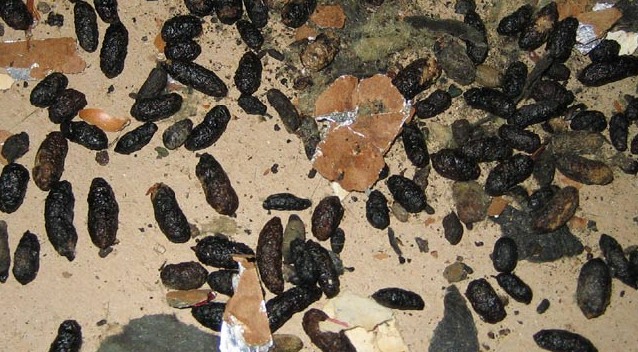
Unlike raccoon droppings, squirrel pellets rarely contain visible seeds or food fragments due to their more thorough digestion process (Image source: Squirrels in the Attic).
What Does Squirrel Poop Look Like?
Squirrel droppings are small and pellet-like. Indoors, you’ll usually only see them if squirrels are nesting in an attic, soffit, chimney, or wall void.
- Size & shape: About 3/8 inch (9 mm) long. Barrel/pellet-shaped with rounded ends.
- Color & texture: Reddish-brown to dark brown when fresh, drying to dark brown/black. Usually smooth with no obvious food pieces.
- Where it shows up: Often scattered in small clusters near tree bases, deck rails, fences, rooftops, or near attic entry points.
If you’re trying to rule out rats, see our guide on squirrel droppings vs. rat droppings.
|
Connor’s Pest Pros: Family-Owned Pest Control Experts Choose Your Pest Protection Solution:
Customer Praise:
★★★★★ “Quick to answer my call and available same-day… I recommend them to anyone looking for pest control in NOVA.” – Jacquelyn L.
Why Choose Connor’s Pest Pros:
|
What Does Raccoon Poop Look Like?
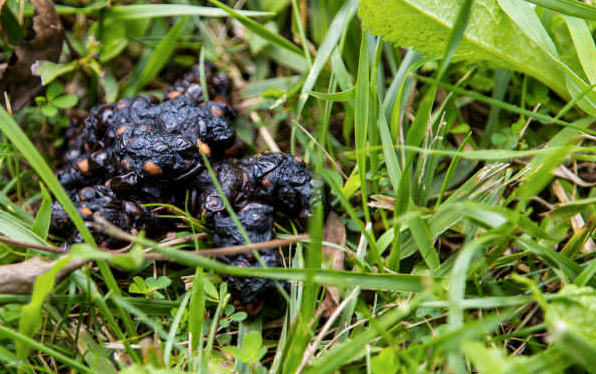
Raccoon droppings often contain seeds and fragments of undigested food.
Raccoon droppings are much larger and are important to identify because they can carry raccoon roundworm risk.
- Size & shape: Typically 2–3 inches long and about 1/2 inch thick. Tubular with blunt ends, often segmented (can resemble small dog poop).
- Color & contents: Usually dark brown to black when fresh; may lighten as it dries. Often contains visible food bits like seeds or fruit skins.
- Where it shows up: Raccoons often use communal latrines—repeated piles on flat, raised surfaces (logs, rocks, decks, rooftops) and sometimes attics/crawlspaces if they get inside.
If they keep returning to your yard, see our tips on keeping raccoons out of your trash.
Squirrel vs Raccoon Poop: Comparison Table
| Feature | Squirrel Poop | Raccoon Poop |
| Size | Small, approximately 9mm long (about the size of a grain of rice) | Large, 5–7.5 cm long (similar to small dog droppings) |
| Shape | Oblong, pellet-shaped with rounded or slightly pointed ends | Tubular, cylindrical with broken or blunt ends |
| Color | Light brown to reddish-brown (darkens with age) | Dark brown to black (varies based on diet) |
| Texture | Smooth, firm | Rough, may contain visible undigested food |
| Contents | Primarily plant matter | Berries, seeds, fur, bones, insects, shell fragments |
| Odor | Mild, relatively inoffensive | Strong, pungent, unpleasant |
| Quantity | Scattered individual pellets | Often deposited in piles (latrines) |
| Location | Near trees, attics, rooflines, bird feeders | Base of trees, decks, attics, flat surfaces (communal latrines) |
| Health Risks | Salmonella, leptospirosis | Raccoon roundworm (Baylisascaris), leptospirosis, other fecal-borne pathogens |
What to Do If You Find Squirrel or Raccoon Droppings in Your Yard
Clean Up & Disinfect the Area
Children playing in the yard and curious pets are at the highest risk of accidental exposure, making immediate action critical. Make sure to follow these steps before cleanup.
- Fence off the area so kids and pets can’t reach it.
- Put on disposable gloves, shoe covers, and an N95 (especially for raccoon droppings or indoor areas).
- Lightly mist the droppings with plain water to reduce dust.
- Scoop the droppings with a disposable tool (or an inverted plastic bag) and seal them in a double bag for outdoor trash.
- For hard surfaces, use heat where safe and appropriate (for example, carefully applying boiling water) since roundworm eggs aren’t reliably killed by household disinfectants.
- For soil or grass, remove the top layer of contaminated material and bag it for disposal.
- Wash hands thoroughly, remove protective gear, and launder clothes separately in hot water.
Know When to Call a Professional
If you’re dealing with recurring droppings, a raccoon latrine, or droppings in your attic or living spaces, it’s best to call in the experts.
A professional pest control service such as Connor’s Pest Pros can safely remove contaminated materials, sanitize affected areas, humanely exclude wildlife, and implement preventative measures to keep your property protected.
At Connor’s Pest Pros, our experts are trained to properly identify animal droppings and determine their source. Our technicians will assess the situation and develop a removal plan specifically tailored to your property’s unique needs. We also offer free inspections and same-day service to ensure that your wildlife problem is taken care of promptly.
Stay Protected from Wildlife with Connor’s Pest Pros
Connor’s Pest Pros offers humane wildlife removal with same-day service.
When wildlife droppings appear on your property, professional identification and safe removal provide peace of mind for your family. At Connor’s Pest Pros, our wildlife technicians specialize in identifying animal activity, implementing proper removal techniques, and creating effective prevention strategies tailored to your unique situation.
We are a family-owned business proudly serving the D.C. metro area with comprehensive wildlife control solutions. We specialize in humane removal and exclusion of wildlife pests like raccoons and squirrels, ensuring animals are safely relocated while your home is secured against future intrusions.
When pests strike, we respond fast with same-day removal services, because we know that every hour counts when unwanted visitors have made themselves at home. Our commitment to quality has earned us 415+ five-star reviews on Google and our website, recognition as an Angi Super Service Award Winner (2024), and proud membership in the National Pest Management Association. We also stand behind our work with free re-treatments until you’re 100% satisfied, because your peace of mind is our top priority.
Don’t let wildlife droppings become a big problem. If you’ve spotted signs of squirrels, raccoons, or other wildlife around your property, contact Connor’s Pest Pros today for a free inspection and same-day service.
Schedule Your Free Inspection Today!
Frequently Asked Questions
Is it safe to handle squirrel or raccoon droppings?
No, direct handling of any wildlife droppings is not recommended. Squirrel feces can contain harmful bacteria, such as Salmonella and occasionally parasites. Raccoon droppings are particularly dangerous as they may harbor Baylisascaris procyonis (raccoon roundworm) eggs, which can cause severe neurological damage in humans if accidentally ingested. Because roundworm eggs are tough and not reliably killed by household disinfectants, professional cleanup is often the safest choice for raccoon latrines.
How can I tell if raccoons or squirrels are active in my yard?
Look out for signs of squirrel activity, such as chewed nuts with characteristic tooth marks, bark stripped from trees, or small holes dug in lawns. Meanwhile, some raccoon activity signs include tipped garbage cans, paw prints resembling small human handprints (especially near water sources), claw marks on trees or house siding, and disturbed gardens with shallow holes.
What does a raccoon’s poop look like?
Raccoon droppings are dark tubular segments about 2–3 inches long and approximately 1/2 inch in diameter with blunt ends. The most distinctive visual feature is their segmented appearance, which often resembles several pieces pushed together.
Additionally, raccoon droppings often contain visible food fragments, such as berry seeds, fruit skins, or crayfish shell fragments, depending on seasonal food sources.
How can I identify a raccoon latrine?
Raccoon latrines are communal bathroom areas where multiple raccoons repeatedly defecate in the same location over time. These sites are characterized by a concentration of droppings in various stages of decomposition, from fresh to aged and deteriorating.
Common latrine locations include flat, elevated surfaces like fallen logs, large rocks, woodpiles, deck or patio areas, roof junctures, and unfortunately, attics or crawlspaces if raccoons have accessed your home.
Can Connor’s Pest Pros help me identify Squirrel or Raccoon poop?
Yes, at Connor’s Pest Pros, we can help you identify any wildlife droppings to determine exactly what animal activity you’re experiencing. We also offer expert wildlife removal, with same-day service and a free re-treatment guarantee to ensure your home stays protected from wildlife.
*Price estimates reflect current market costs and may vary based on your specific situation. For a personalized quote tailored to your needs, contact us directly or request your FREE estimate today!