
Key Takeaways
- Snake droppings carry a chalky white or yellowish urate cap of solidified uric acid that rat pellets never have, making this the single most reliable visual marker for telling reptile waste from rodent waste.
- Rat droppings are uniform dark brown to black pellets roughly half to three-quarters of an inch long, deposited at 40 to 50 per day along walls, corners, and food sources where the same travel routes get used over and over.
- Snake droppings are irregular masses left days or weeks apart and often contain visible prey remains like fur, bones, feathers, or insect parts that reveal what the snake has been eating.
- Finding snake droppings on a property usually points to a rat problem too, because snakes follow rodent prey into residential areas, which means both issues often need to be handled at the same time.
- Connor’s Pest Pros provides same-day rodent and wildlife assessment across the DC metro area for homeowners who call before noon, identifying the source of droppings and treating both rodent activity and the wildlife it attracts.
Snake Poop vs Rat Poop: Which Animal Is on Your Property?
The fastest way to tell snake poop from rat poop is to look for a white or yellowish chalky cap on the dropping. That cap is solidified uric acid, and only reptiles and birds produce it; rats never do. Rat droppings are uniform dark brown to black pellets, roughly half to three-quarters of an inch long, scattered in heavy quantities along walls and corners. Snake droppings are irregular, infrequent masses that often contain fur, bones, or feathers from recent prey. Snake activity in residential areas almost always tracks rodent activity, since snakes follow the food, so finding either type of waste is usually a sign that the other animal may not be far behind.
If you’re a homeowner in the DC metro area trying to identify what’s leaving droppings near your foundation, garage, or shed, this guide walks through the visual differences, the urate test, and what each finding means for your property.
|
Connor’s Pest Pros: Family-Owned Pest Control Experts Choose Your Pest Protection Solution:
Customer Praise:
★★★★★ “Quick to answer my call and available same-day… I recommend them to anyone looking for pest control in NOVA.” – Jacquelyn L.
Why Choose Connor’s Pest Pros:
|
What Does Snake Poop Look Like?
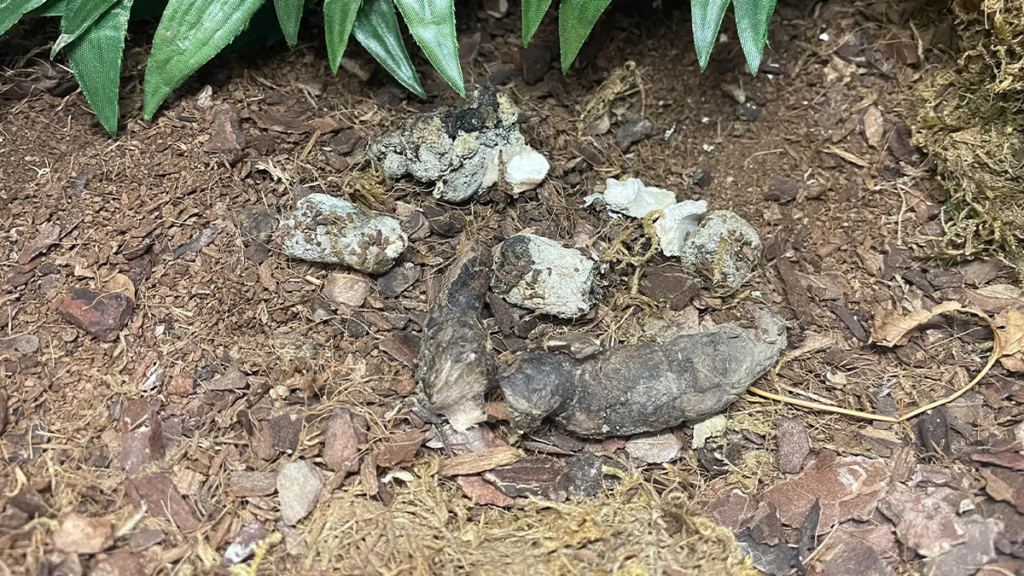
Because snakes have a combined waste elimination system called a cloaca, their feces and urine exit together in a single deposit. (Image courtesy of IFLScience)
The Urate Component
The white or cream-colored portion of snake droppings is solidified uric acid, the snake equivalent of urine. Mammals excrete liquid urine separately from feces, but snakes conserve water by producing solid or semi-solid uric acid that exits with their fecal waste. This urate portion may appear as a cap on one end of the dropping, mixed throughout, or as a separate white mass next to the brown feces.
This urate component is the single most reliable way to identify snake droppings. No rodent, including rats, produces anything similar. If you see white chalky material accompanying brown feces, you’re looking at snake or bird waste rather than rodent droppings.
Size Variations
Snake feces size tracks directly with the snake’s body size. A small garter snake produces droppings roughly half an inch long, while a large rat snake or black snake may leave deposits several inches long. This variability contrasts sharply with rat droppings, which stay consistently sized regardless of the individual rat.
Diameter also varies with snake size. Larger constrictors like rat snakes produce thicker droppings, while slender species like garter snakes leave narrower deposits. When trying to identify the snake species from droppings alone, size offers useful but not definitive clues.
Prey Remains
Snake droppings frequently contain visible remnants of prey animals. Fur, bones, feathers, insect exoskeletons, and scales may all appear in snake feces depending on the snake’s diet. These undigested materials survive the snake’s digestive process and emerge recognizable in the waste.
Finding rodent fur in snake droppings actually gives you useful information: a snake hunting rats or mice has taken up residence on your property. The snake itself may concern some homeowners, but its presence points to a rodent population worth addressing.
Frequency and Placement
Snakes defecate infrequently compared to mammals. Depending on feeding frequency and metabolism, a snake may only produce waste every few days to several weeks. That means finding even one or two snake droppings on your property indicates ongoing presence and warrants closer inspection.
Placement tends to be random rather than following travel patterns. Snakes may defecate wherever they happen to be when the urge strikes, though droppings often appear near favored hiding spots like rock piles, wood stacks, or foundation gaps where snakes rest during digestion.
What Does Rat Poop Look Like?
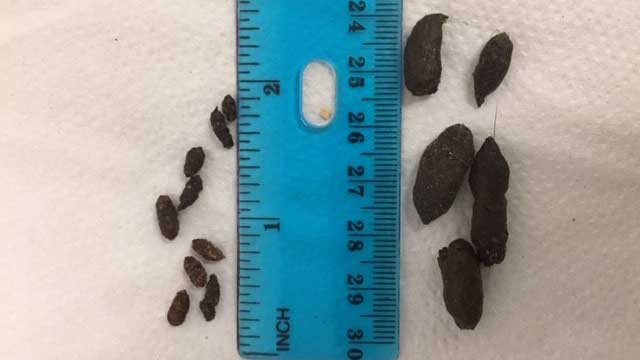
Rat droppings present a strikingly consistent appearance that makes them relatively easy to identify once you know what to look for. (Image source: Alberta)
Shape and Size
Rat droppings resemble dark grains of rice or small capsules with tapered ends. Each pellet measures approximately half to three-quarters of an inch long and about a quarter inch in diameter. This spindle shape with pointed ends distinguishes rat droppings from mouse droppings, which are smaller and more rod-shaped, and from snake feces, which lack this uniform pellet structure.
Norway rats, the most common species in Northern Virginia, produce slightly larger, more capsule-shaped droppings than roof rats, whose feces tend to be thinner with more pointed ends. However, both species produce the characteristic consistent pellet shape that immediately identifies rodent rather than reptile presence.
Color and Texture
Fresh rat droppings appear dark brown to black with a moist, almost shiny surface. The color comes from the rat’s omnivorous diet processing through its digestive system. As droppings age, they dry out, becoming lighter gray-brown and more brittle. Very old droppings may crumble when disturbed.
This aging progression helps estimate how recently rats have been active in a particular area. Shiny, dark droppings indicate current activity within the past few days, while gray, dried pellets suggest older presence that may or may not continue.
Quantity and Distribution
A single rat produces 40 to 50 droppings daily, creating accumulations that quickly reveal infestation scope. This prolific output contrasts sharply with snakes’ infrequent elimination, meaning even short-term rat presence leaves abundant evidence.
Rats deposit droppings along their regular travel routes rather than in random locations. You’ll find concentrations along walls, in corners, near food sources, around entry points, and in nesting areas. This predictable distribution pattern reflects rat behavior of following the same paths repeatedly, leaving scent trails and waste that reinforce route memory.
Absence of Urate
Rat droppings never include the white uric acid component found in snake feces. Rats excrete liquid urine separately from solid feces, so their droppings consist entirely of brown fecal matter without any white or chalky portions. If you see white material accompanying droppings, you’re not looking at rat waste.
Quick Identification: Snake Poop vs Rat Poop
| Feature | Snake Poop | Rat Poop |
| Size | Varies greatly by snake size (1/2 inch to several inches) | Consistent 1/2 to 3/4 inch pellets |
| Shape | Irregular, lumpy mass with pointed or tapered end | Uniform spindle shape with pointed ends |
| Color | Brown/black with white or yellow urate portion | Dark brown to black throughout |
| Texture | Often moist, may contain visible prey remains | Firm when fresh, hardens over time |
| Quantity | Single deposit, infrequent (days to weeks apart) | Multiple pellets, 40-50 per day |
| Location | Random placement, often near hiding spots | Along walls, in corners, near food sources |
Identify the Droppings, Then Address the Real Problem
The white urate cap is the clearest single tell: if it’s there, you’re looking at snake waste; if every dropping is a uniform dark pellet, you’re dealing with rat activity. Quantity, shape, and placement back up the call when urate is faded or weathered. Rat droppings show up in clusters along travel routes, while snake droppings show up alone, often near hiding spots, and frequently with prey remains inside.
Snake activity on a property almost always points back to a rodent problem worth handling at the same time, since the snakes are there because the rats are there. Connor’s Pest Pros offers same-day rodent and wildlife assessment across the DC metro area for homeowners who call before noon, identifies entry points, and treats both the rodent population and the wildlife it draws in.
Contact Connor’s Pest Pros today for your free quote and same-day assessment.
Frequently Asked Questions (FAQs)
How can I tell snake poop from rat poop at a glance?
Look for the white or yellowish urate component that only appears in snake droppings. This chalky substance is solidified uric acid that snakes excrete with their feces. Rat droppings are uniformly dark brown to black without any white portions. If you see white material accompanying brown feces, you’re looking at snake waste. If all the droppings are dark pellets without white, you likely have rats.
Do snake droppings smell different than rat droppings?
Snake droppings have a distinctive musty odor that differs from the ammonia-like smell of rat urine and feces. The scent from snake waste tends to be less pungent than rodent odors, partly because snakes eliminate waste less frequently. Rat infestations produce strong, persistent odors from accumulated droppings and urine that intensify over time. However, smell alone isn’t reliable for identification since both can be unpleasant and overlap in some characteristics.
Does finding snake poop mean I have a snake problem?
Not necessarily. Finding snake droppings indicates a snake has been present, but the implications depend on your situation. A snake living outdoors on your property may be hunting rodents and providing natural pest control. Snake droppings inside your home warrant more concern, indicating the snake has found entry points that should be sealed. Finding snake droppings should also prompt you to look for rodent evidence, since snakes typically follow prey onto properties.
How often do snakes poop compared to rats?
Snakes defecate far less frequently than rats. A snake may only produce waste every few days to several weeks depending on feeding frequency and metabolism. In contrast, a single rat produces 40 to 50 droppings daily. This means finding even one or two snake droppings indicates meaningful presence, while finding only a few rat droppings likely means many more exist nearby that you haven’t discovered yet.
Can rat droppings ever have white on them?
No, rat droppings never contain the white urate component found in snake feces. Rats excrete liquid urine separately from solid feces, so their droppings are entirely brown fecal matter. If you see white material on droppings, it’s either snake waste, bird droppings (which also contain uric acid), or possibly mold growing on very old rodent feces in damp conditions. Fresh or recent rat droppings will never show the chalky white urate characteristic of reptile waste.
What should I do if I find droppings but can’t identify them?
When identification proves difficult, photograph the droppings with something for scale reference like a coin or ruler. Note the location, quantity, and any patterns in distribution. Then contact a pest control professional who can examine the evidence and determine what’s present on your property. Attempting control measures without accurate identification risks addressing the wrong pest while the actual problem continues. Connor’s Pest Pros offers same-day assessment to identify wildlife activity and recommend appropriate response.
*Image Disclaimer: Some images used in this blog post are sourced from third-party websites and remain the property of their respective owners unless otherwise stated. We do not claim ownership of these images and use them for illustrative purposes only.