
Key Takeaways
- Yellow jackets and hornets are both wasps, so the sting looks similar at first, and the nest is what really tells them apart.
- A yellow jacket can sting several times in seconds, which is why one insect often leaves a cluster of welts instead of a single mark.
- Hornets sting less often but deliver more venom at once, so swelling tends to spread wider and settle down more slowly.
- Neither sting outranks the other on pain alone, since hornets hit harder per sting while yellow jackets make up for it in volume.
- Connor’s Pest Pros finds the nest driving the stings and removes it safely, so your yard stops being a stinging zone.
Differentiating Yellow Jacket & Hornet
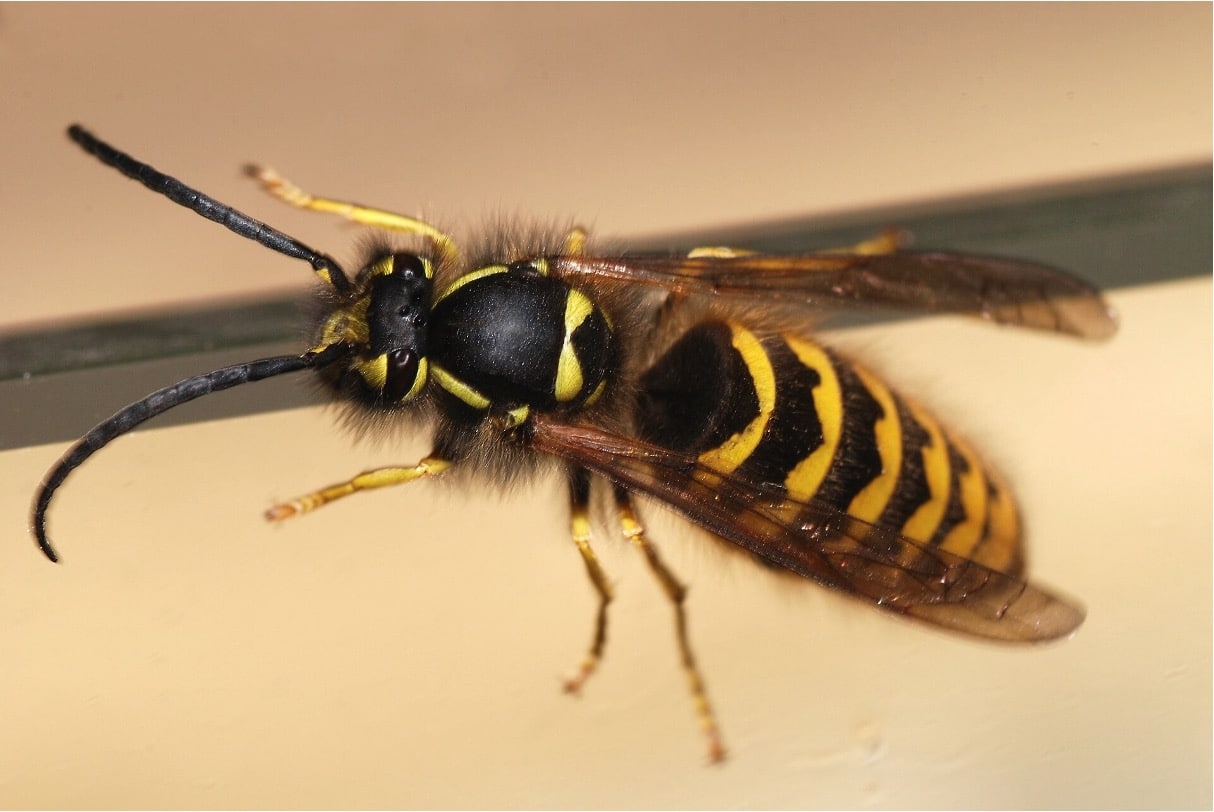
The clearest way to tell a yellow jacket from a hornet is size and nest location: yellow jackets are smaller, around half an inch, and nest underground or in wall cavities, while hornets are larger and build papery nests above ground. That distinction matters because it points you to the source of the stings, not just the sting itself.
The stings differ too, though they look alike at first. A yellow jacket can sting several times in one encounter, often leaving a cluster of welts, while a hornet stings less often but injects more venom at once, so its swelling spreads wider and fades more slowly. Naming the culprit tells you what to expect and how to treat it.
Once you have treated the sting, the nest is the real problem, since both species swarm when disturbed. Connor’s Pest Pros locates and removes yellow jacket and hornet nests safely across Metro DC and Northern Virginia.
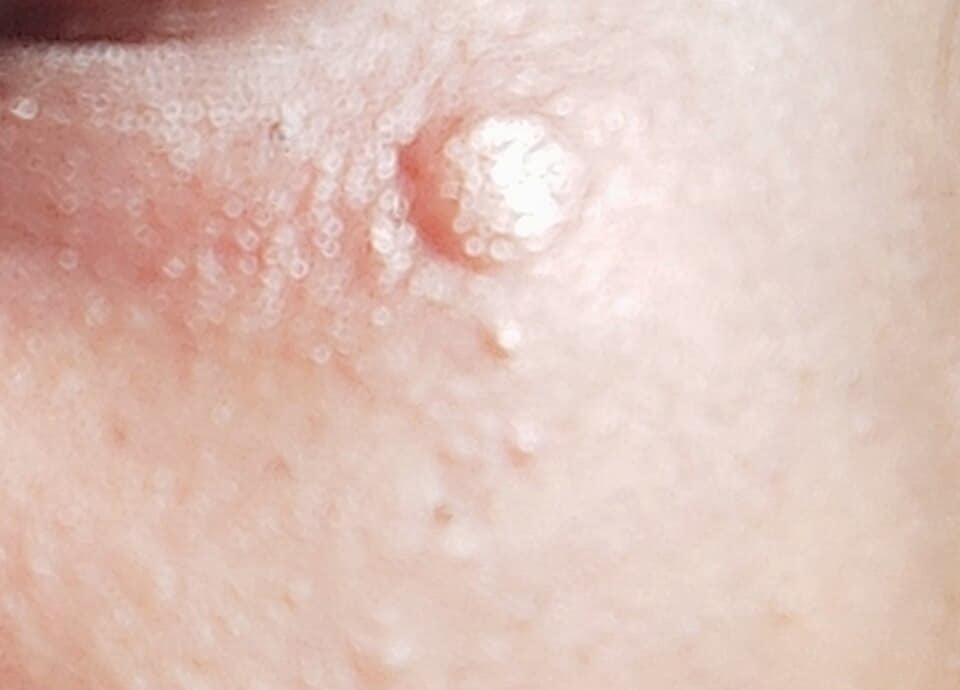
Both yellow jackets and hornets are wasps, and their bites often leave similar swelling on the skin. (Image source: “Swelling after a wasp bite” by Vis M licensed under CC BY-SA 4.0, via Wikimedia Commons.)

Connor’s Pest Pros: Trusted, Family-Owned Pest Control
4.9★ Google Rating | 100% Satisfaction Guarantee

Protect Your Home, Pest-Free:
Get customized, ongoing pest control that adjusts with the seasons, covering everything from ants and spiders to termites, rodents, and bed bugs. Same-day or next-day visits mean fast relief.
What Sets Us Apart:
✓ 950+ 5-star reviews on Google
✓ Family-owned, D.C. metro area
✓ Member of the NPMA
✓ Angi Super Service Award Winner (2024)
✓ 100% Satisfaction Guarantee
Don’t let pests take over your home. Act now.
Request Your Free Estimate →Yellow Jacket Stings
Yellow jacket wasp stings are the most common insect stings in the US. When a yellow jacket stings, its stinger pierces the skin and injects venom directly. Because yellow jackets retain their stingers (unlike honeybees), a single yellow jacket can sting you repeatedly in one encounter.
Symptoms
For people who are not allergic, yellow jacket sting symptoms are localized and typically manageable. The most common reactions include:
- Immediate, sharp burning pain at the sting site
- Redness and skin irritation around the area
- Swelling that may develop over several hours
- Itching
Yellow jacket stings are particularly concerning because they can trigger anaphylaxis in allergic individuals. Symptoms of a severe allergic reaction include dizziness, hives, vomiting, difficulty breathing, and swelling in the throat, lips, tongue, and mouth.
If any of these symptoms appear after a sting, treat it as a medical emergency immediately. Multiple stings (even in non-allergic individuals) can also lead to toxic venom accumulation and require prompt medical attention.
Yellow jacket venom also contains chemicals that are distinctly different from bee venom. This means that being allergic to a bee sting does not automatically mean you’ll react to a yellow jacket sting, and vice versa.
Treatment Options
For mild yellow jacket stings, at-home care is usually enough to manage the symptoms. The goal is to reduce swelling, calm the irritated skin, and relieve pain.
- Cold compress: Apply ice wrapped in a cloth to the sting site for 10–20 minutes to reduce swelling and numb pain.
- Baking soda paste: Mix baking soda with water to form a thick paste and apply it to the sting. The paste can soothe irritation and reduce itching at the sting site.
- Aloe vera gel: Fresh gel can soothe irritated skin.
If you experience expanding redness, increasing pain after 24 hours, or any systemic symptoms like fever or nausea, see a healthcare provider. Seek emergency care if you have breathing difficulty or throat swelling.
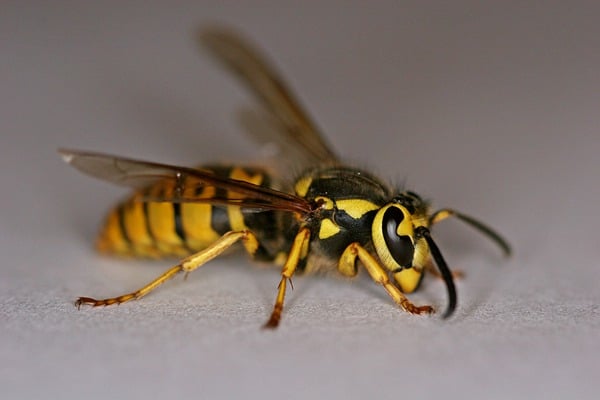
Yellow jackets retain their stingers even after they sting. (Image source: “Yellow jacket wasp” by Bombman356 licensed under CC BY-SA 3.0, via Wikimedia Commons.)

Hornet Stings
Hornets are generally less likely to sting than yellow jackets, but when they do, a single sting can feel more intense because of venom volume. Their larger bodies mean larger venom glands, and hornet venom contains components that cause immediate burning, redness, and swelling.
Symptoms
Hornet sting symptoms overlap with yellow jacket stings, but key differences exist in severity and reaction type. Common symptoms include:
- Immediate sharp pain that can persist for several hours
- A raised, warm, and itchy welt at the sting site
- Skin redness spreading from the point of contact
Severe reactions may include widespread hives, rapid heartbeat, difficulty breathing, and in serious cases, anaphylactic shock. People who are stung multiple times face a compounding risk: each additional sting increases the total venom dose, and a large number of stings can cause toxic effects even in people who are not allergic.
Treatment Options
Treating a hornet sting naturally follows a similar approach to yellow jacket treatment:
- Cold compress: Apply ice or a cold pack for 10 to 20 minutes to reduce swelling and dull the pain.
- Witch hazel: A topical astringent some people find soothing on irritated skin around the sting.
Most hornet stings can be treated on your own, but seek immediate medical treatment if symptoms are severe or spreading. If you’ve had a previous severe reaction to any insect sting, carry an epinephrine auto-injector and use it at the first sign of anaphylaxis.
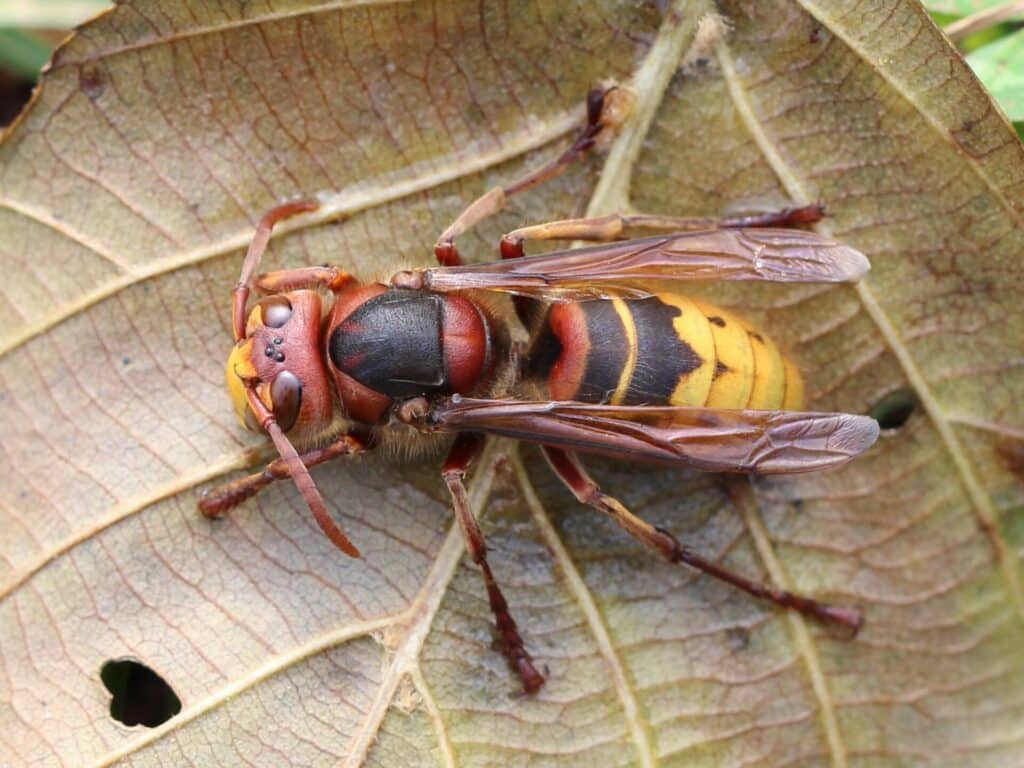
Hornet stings may cause allergic reactions. (Image source: “Vespa crabro 02” by AfroBrazillian licensed under CC BY-SA 4.0, via Wikimedia Commons.)

Yellow Jacket vs Hornet Sting: Comparison Table
| Feature | Yellow Jacket Sting | Hornet Sting |
| Insect Size | Smaller (~0.5 inch) | Larger (~0.75 inch or more) |
| Nesting Location | Underground, hollow logs, wall cavities | Above ground: exposed papery nests, or inside hollow trees and wall voids |
| Can Sting Multiple Times? | Yes | Yes |
| Pain Duration | Immediate, may last hours | Immediate, can persist for several hours |
| Common Symptoms | Pain, swelling, redness, itching | Pain, warmth, redness, raised welt |
| Allergy Risk | Anaphylaxis possible in sensitized people | Anaphylaxis possible; larger venom dose per sting |
| Natural Treatment | Baking soda paste, cold compress, aloe vera | Cold compress, witch hazel |
| When to See a Doctor | Multiple stings or allergic symptoms | Severe swelling, difficulty breathing |
Identify the Culprit & Treat the Infestation with Connor’s Pest Pros
Yellow jacket and hornet stings both hurt, but the differences matter. Hornets deliver more venom per sting, while yellow jackets sting repeatedly and nest where you cannot see them. Knowing which one stung you tells you how to treat it and where the nest sits.
Removing that nest is not something you should handle alone, since both species swarm when disturbed. Connor’s Pest Pros locates nests in walls, eaves, and underground burrows, then treat them safely for families and pets across Metro DC and Northern Virginia. Request your free estimate today, and we will schedule a same-day or next-day visit.
Frequently Asked Questions (FAQs)
How painful is a sting from a yellow jacket?
Yellow jacket stings rate a 2.0 on the Schmidt sting pain index, comparable to a honey bee sting and less painful than a paper wasp sting. The pain is sharp, immediate, and burning. Because yellow jackets retain their stingers, they can deliver multiple stings in rapid succession, which can significantly compound the pain.
What should you do if you got stung by a yellow jacket?
Walk away calmly, since a sting releases a pheromone that calls the colony. At a safe spot, apply a cold compress, then a baking soda paste. Keep the site clean and do not scratch. Watch for hives, dizziness, or breathing trouble, and get emergency help fast.
What happens if you get stung by a hornet?
A hornet delivers a large venom dose, so pain, swelling, and a warm red welt come on fast and can worsen for 24 to 48 hours. Most cases stay local and respond to home care. Get medical help right away if hives, nausea, or breathing trouble start.
Are hornet stings worse than wasp stings?
Technically, hornets are a type of wasp, so the comparison is really between hornets and other wasp species like yellow jackets. In terms of raw pain, hornet and yellow jacket stings both rate a 2.0 on the Schmidt sting pain index, though hornets inject a larger volume of venom per sting. Yellow jackets, by contrast, are more likely to sting you repeatedly in a single encounter, which can make their cumulative impact just as severe.
What services does Connor’s Pest Pros offer?
The Connor’s Pest Pros team treats general household pests, termites, bed bugs, mosquitoes, rodents, and wildlife, plus repair work on the damage they leave behind. We cover homes and businesses across Metro DC, Northern Virginia, and Maryland, and we provide free re-treatments if pests return.
*Price estimates reflect current market costs and may vary based on your specific situation. For a personalized quote tailored to your needs, contact us directly or request your FREE estimate today!