
Key Takeaways
- River otters are generally not aggressive toward humans, but they can become defensive when protecting their young, territory, or when feeling cornered.
- The most dangerous aspects of river otters are their sharp teeth, powerful bite force capable of catching slippery fish, and muscular bodies weighing up to 30 pounds that can inflict serious injury when threatened.
- Late winter through spring breeding seasons are the highest-risk periods when mother otters become hypervigilant, protecting their pups, and males display increased territorial behavior.
- Proper wildlife safety protocols, including maintaining a 60-foot distance, never feeding otters, and recognizing warning behaviors, can prevent virtually all potential conflicts.
- Connor’s Pest Pros provides expert wildlife consultation for waterway property owners experiencing otter conflicts, with same-day assessment and humane management strategies.
River Otter Aggression: Separating Truth From Myth
River otters, with their playful antics and adorable appearance, have captured hearts worldwide. But beneath that cuddly exterior lies a wild animal with instincts and behaviors that demand respect.
While typically not aggressive toward humans, river otters possess sharp teeth, powerful jaws, and strong bodies that can cause serious injury when they feel threatened. Most otters will retreat when encountering humans, choosing flight over fight in nearly all circumstances.
Context matters tremendously when evaluating otter behavior. A river otter swimming away from your kayak is exhibiting normal behavior, while one approaching you directly might indicate unusual circumstances that warrant caution.
Understanding when river otters become aggressive can help us coexist safely with these fascinating animals.
|
Connor’s Pest Pros: Family-Owned Pest Control Experts Choose Your Pest Protection Solution:
Customer Praise:
★★★★★ “Quick to answer my call and available same-day… I recommend them to anyone looking for pest control in NOVA.” – Jacquelyn L.
Why Choose Connor’s Pest Pros:
|
Why River Otters Become Aggressive

Like most wildlife, river otters have specific triggers that can prompt defensive or aggressive responses.
Protecting Their Young
Parental protection is perhaps the most predictable trigger for aggressive behavior in river otters.
Mother otters (sows) become fiercely protective during late winter through spring breeding seasons. If you come between a mother and her pups—one of the most common triggers for aggression—she may attack without warning if she perceives a threat to her offspring. Den sites are particularly sensitive areas where mothers may respond aggressively to any human intrusion.
A mother otter separated from her pups by a human will often respond with immediate aggression. During the breeding season, female otters become especially vigilant and may perceive even distant humans as potential threats.
Territorial Behavior
River otters establish and defend territories, particularly males during breeding season. These territories typically encompass stretches of waterways and the surrounding banks where they hunt, rest, and raise young.
When humans encroach on these areas, otters may interpret this as a territorial challenge. Territorial disputes are more common in areas with limited resources or during breeding periods when competition intensifies.
Males, especially, can become territorial during mating season, when hormone levels rise and competitive instincts peak. Signs of territorial behavior include vocalizations, body posturing, and scent marking.
If you observe an otter repeatedly swimming back and forth in a particular area while watching you, it may be displaying territorial behavior and signaling for you to move away.
Feeling Cornered or Threatened
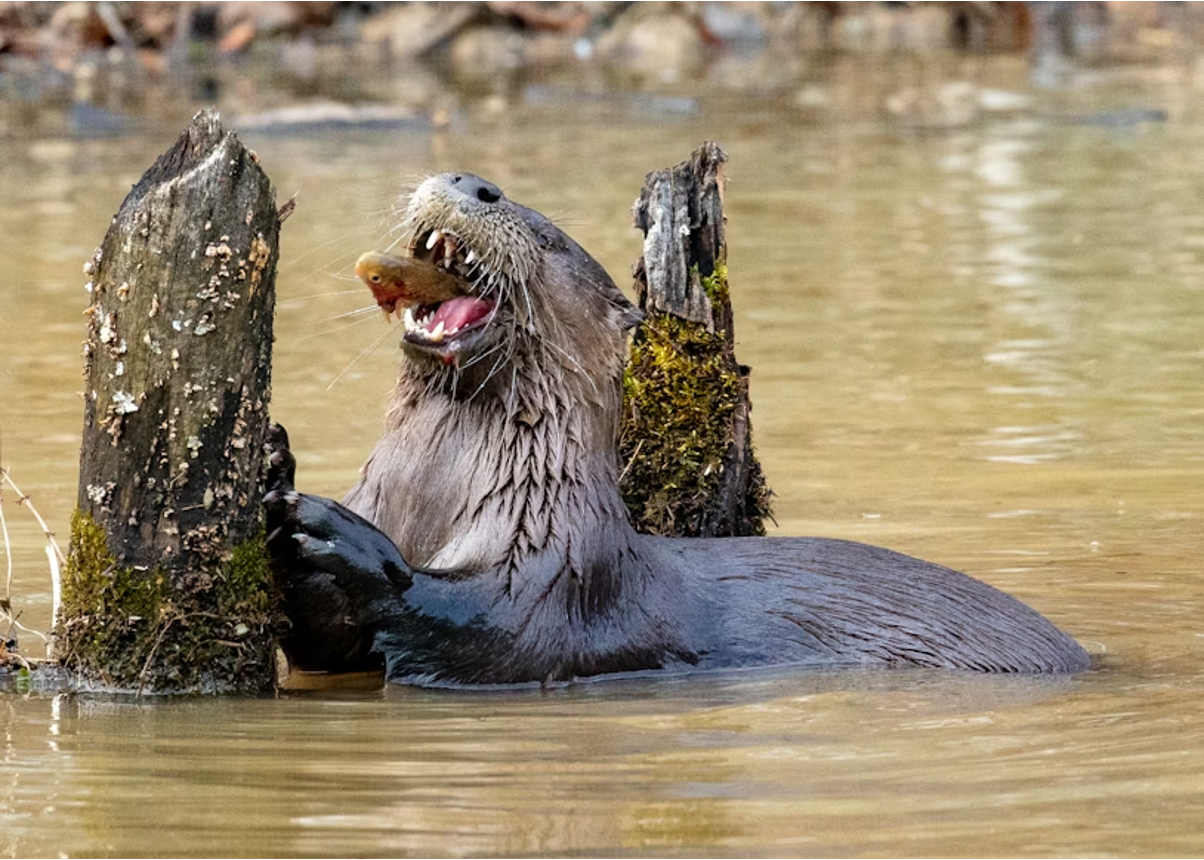
Otters display a progressive series of warning behaviors before attacking. One distinctive sign is ‘periscoping’—when an otter stands upright in the water with its head and upper body elevated to assess threats.
Otters that feel trapped or cornered may respond with aggression as a last resort. When an otter perceives no escape route, its fight-or-flight response leans heavily toward “fight,” using its natural weaponry to create an opportunity to flee.
This reaction is particularly common when humans accidentally corner otters in enclosed spaces such as docks, boat houses, or narrow waterways.
The most serious attacks often occur when otters feel they have no option for retreat. In these situations, they may bite once as a warning before backing off—essentially telling humans they’ve gotten too close.
Most otter bites are defensive rather than predatory. This distinction is important for understanding and preventing potentially dangerous encounters.
Warning Behavior Progression
| Behavior | Threat Level | Recommended Response |
| Direct, focused attention with the head raised | Low – Assessment | Stop approach, begin creating distance |
| Sharp whistling, hissing, or chattering | Moderate – Warning | Back away slowly, avoid sudden movements |
| “Periscoping” behavior (standing upright) | Elevated – High alert | Increase retreat speed, prepare barrier |
| Baring teeth or short lunging movements | High – Imminent attack | Retreat immediately to land/higher ground |
| Swimming directly toward you aggressively | Critical – Attack likely | Use barriers, protect face and neck |
5 Safety Tips for River Otter Encounters

While otter attacks are rare, following proper wildlife safety protocols can virtually eliminate any risk.
1. Keep Your Distance
The single most important rule when encountering river otters is maintaining an appropriate distance. It is recommended to stay at least 60 feet away from otters in their natural habitat.
This distance provides comfort for the animals while allowing you to observe their natural behaviors safely. Use binoculars or a camera zoom lens for close-up views rather than physically approaching.
2. Never Feed Wild Otters
Feeding river otters disrupts their natural behaviors and creates dangerous dependencies. When otters associate humans with food, they lose their natural wariness and may approach people expecting handouts.
This habituation not only increases the risk of aggressive encounters but also compromises the otters’ ability to hunt and survive independently. Even seemingly innocent actions like tossing fish scraps near otters while fishing can establish problematic associations that may lead to future confrontations.
Additionally, human food is rarely nutritionally appropriate for otters and can cause health problems. Their specialized digestive systems are adapted to fresh fish and other natural prey.
Maintaining the wild nature of these animals through a strict no-feeding policy protects both the otters and the humans who share their environment.
3. Protect Small Children & Pets
Small children and pets require extra protection in areas known to have river otter populations. Children should always be closely supervised near waterways where otters live, as their small size and unpredictable movements may trigger defensive responses from otters.
Keep dogs on leashes in otter habitat, as unleashed dogs may chase or corner otters, provoking aggression. Remember that a protective mother otter might perceive a curious dog as a predator threatening her pups, potentially leading to a serious confrontation.
When boating or kayaking with children in areas known for otters, maintain strict vigilance and teach children proper wildlife-viewing etiquette from an early age.
Never allow children to approach or attempt to touch wild otters, no matter how docile they may appear. The seemingly playful nature of otters can be misinterpreted by children as an invitation to interact, creating dangerous situations.
4. Back Away Slowly If Approached
If a river otter approaches you, remain calm and back away slowly without turning your back. Sudden movements might trigger the otter’s predatory instincts or be interpreted as threatening behavior.
Keep your eyes on the animal as you create distance, but avoid direct eye contact, as some wildlife perceives it as a challenge. Speaking in a soft, steady voice as you retreat can help defuse tension and signal that you’re not a threat.
Retreat to higher ground if possible, as otters are less agile on land than in water. If you’re in a kayak or canoe and an otter approaches, use your paddle to maintain distance while steering away from the area.
Never corner an otter against a bank or in shallow water, as this removes their escape route and significantly increases the likelihood of an aggressive response.
5. What to Do If Attacked
In the extremely rare event of an otter attack, protect your face, neck, and hands as these are common targets. Use whatever is available, a paddle, fishing rod, or backpack, as a barrier between yourself and the animal.
If knocked into the water during an attack, try to get back to land immediately, as otters have a significant advantage in aquatic environments. Fighting back decisively is necessary if an attack occurs; use loud shouts and strike at sensitive areas, such as the nose, to discourage further aggression.
After escaping an attack, seek immediate medical attention even for seemingly minor wounds. River otter bites can cause serious infections, and their saliva may contain bacteria that require antibiotic treatment. Report the attack to local wildlife authorities promptly, as an unusually aggressive otter may indicate rabies or other health issues that pose risks to the broader community.
Connor’s Pest Pros: Expert Wildlife Consultation for Waterway Properties

Our approach balances respect for these important animals with practical solutions addressing legitimate property owner concerns
When observation and prevention aren’t enough—when otter behavior escalates beyond normal patterns, or dens appear in problematic locations—professional assessment becomes necessary.
At Connor’s Pest Pros, we provide expert wildlife consultation for waterway property owners in the DC metro area who are experiencing elevated concerns about river otter activity.
While otter conflicts requiring professional intervention are relatively rare compared to issues with raccoons or squirrels, they do occur. Property owners along rivers, lakes, and streams sometimes face situations in which otter activity creates genuine safety or property concerns that warrant a professional assessment.
Our wildlife specialists understand that river otters play vital ecological roles in aquatic ecosystems as both predators and indicators of environmental health. Beyond otter-specific consultation, we provide comprehensive wildlife and pest management to protect waterway properties from the full spectrum of challenges they face.
On the pest side, we tackle household invaders like ants and spiders with 100% guaranteed satisfaction. Termites pose an elevated threat near water, where damp conditions create an ideal habitat—our around-the-clock protection keeps these destroyers away from your investment. Bed bug infestations get swift, thorough treatment.
And when animals have damaged structures, our repair service restores what they’ve compromised.
The numbers tell the story: over 415 five-star reviews from customers across the DC metro region, plus Angi’s 2024 Super Service Award for delivering results that work for both property owners and the animals involved.
Need help on the same-day? Call before noon, and we’ll typically be there that afternoon to evaluate any situation where animal behavior seems threatening or unpredictable. Every service comes backed by our complete satisfaction guarantee—if the problem falls within our scope of work, we resolve it fully.
Contact us today for your free quote!
Frequently Asked Questions (FAQs)
Can river otters carry diseases dangerous to humans?
Yes, river otters can carry several diseases transmissible to humans, with rabies being the most serious concern. While rabies is relatively uncommon in otters compared to other wildlife, such as raccoons or foxes, any otter exhibiting unusual behavior, especially aggression without provocation, should be treated as potentially rabid.
Other diseases that can be transmitted include leptospirosis, which spreads through contact with water contaminated by infected urine, and various parasites that can cause gastrointestinal illness.
What should I do if I find an otter den near my property?
If you discover an otter den (often called a “holt”) near your property, the best approach is to maintain a respectful distance and leave it undisturbed. Establish a buffer zone of at least 100 feet around the den site and avoid activities that create loud noises or vibrations in this area. Never attempt to block den entrances or otherwise interfere with the otters’ use of the site, as this is likely to create conflict.
If the den location poses genuine safety concerns, such as directly under a frequently used dock or near areas where children play, contact Connor’s Pest Pros for guidance rather than attempting to address the situation yourself.
Do river otters attack swimmers or people in kayaks?
Attacks on swimmers or kayakers are extremely rare but have been documented in a handful of cases. Most incidents involve unusual circumstances, such as territorial disputes during the breeding season, protection of young, or otters habituated to humans through feeding.
Swimmers may be at slightly higher risk than kayakers because they’re less visible and their movements in water may trigger predatory or defensive responses.
When should I call a professional about river otter activity on my property?
Most river otter activity on waterway properties represents normal wildlife behavior that doesn’t require professional intervention.
However, professional consultation becomes appropriate:
- When otters have established dens in locations creating safety concerns (under frequently used structures, near play areas)
- When you observe otters displaying potentially rabid behavior (staggering, unusual aggression, lack of fear)
- When repeated aggressive encounters occur despite following proper safety protocols
- When otter activity is causing property damage to docks, boats, or structures
- When you need expert assessment to understand whether observed behaviors are normal or concerning.