

Key Takeaways
- Bat droppings measure 1/4 to 1/2 inch with blunt, rounded ends, while mouse droppings measure 1/8 to 1/4 inch and taper to at least one pointed tip.
- The fastest mistake is judging by size alone, since old droppings of both types fade and shrink. The texture test settles it.
- Press a dropping with a tool: bat guano crumbles into fine dust because it is packed with insect exoskeletons, while mouse droppings stay firm and break into chunks.
- Location confirms the source. Bat guano piles up directly beneath roosting spots, while mouse droppings scatter individually along baseboards and travel routes.
- Once you have identified the pest, Connor’s Pest Pros handles humane bat exclusion and rodent control with EPA-approved sanitization across Northern Virginia, Maryland, and Washington DC.
Spotting the Difference: Bat Droppings vs Mouse Droppings
Bat droppings and mouse droppings can be distinguished by four key differences: size, shape, texture, and location pattern. Both pose serious health risks: mouse droppings can transmit Hantavirus, Salmonellosis, and Lymphocytic Choriomeningitis, while bat droppings can harbor fungi that cause Histoplasmosis. For DC metro homeowners across Northern Virginia, Maryland, and Washington DC dealing with either pest, Connor’s Pest Pros offers same-day service for calls before noon, free inspections, humane bat exclusion alongside rodent control, EPA-approved sanitization protocols, and a 100% satisfaction guarantee backed by 415 or more five-star reviews.
Knowing which pest you have matters because each carries different health risks. Mouse droppings can spread Hantavirus and Salmonellosis, while bat guano can grow the fungus behind Histoplasmosis, so correct identification shapes how you clean up and who you call.
|
Connor’s Pest Pros: Family-Owned Pest Control Experts Choose Your Pest Protection Solution:
Customer Praise:
★★★★★ “Quick to answer my call and available same-day… I recommend them to anyone looking for pest control in NOVA.” – Jacquelyn L.
Why Choose Connor’s Pest Pros:
|
How Do You Identify Bat Droppings?
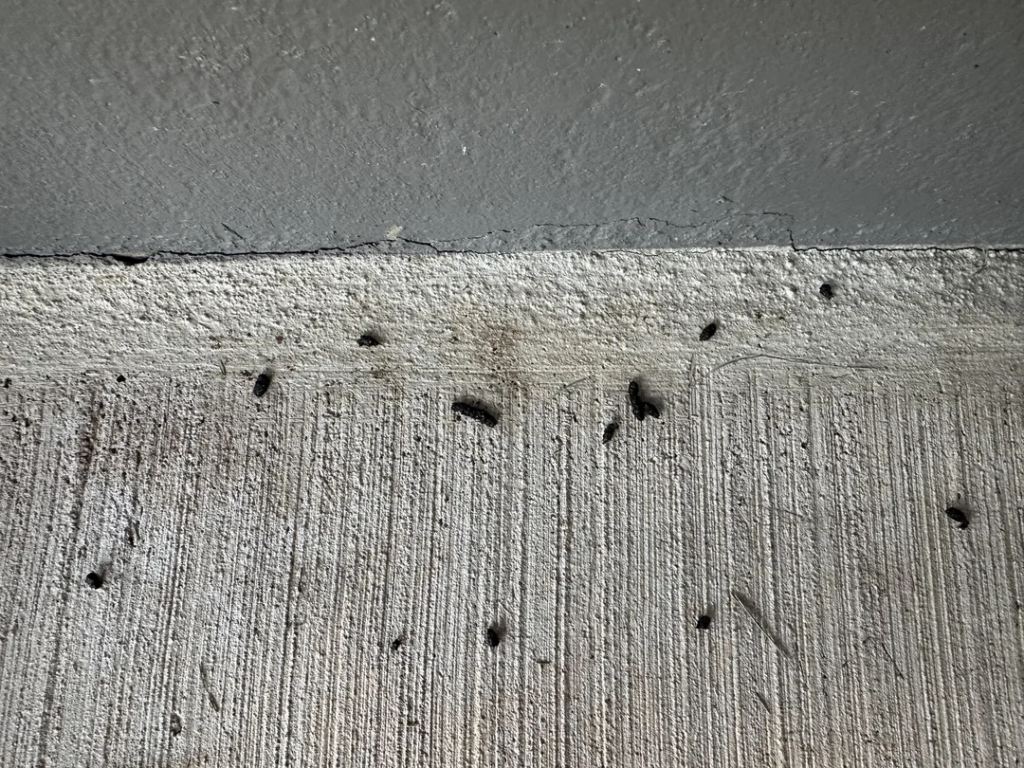
Unlike the scattered pattern of mouse droppings, bat guano accumulates in concentrated piles directly beneath roosting spots. (Image source: Reddit)
Color & Appearance
Bat droppings have a distinctly shiny black appearance that persists even as they age. Unlike mouse droppings that become dull and grayish over time, bat guano retains its glossy sheen due to the high content of insect exoskeletons that reflect light.
This persistent shininess is a key visual indicator that can help distinguish between old bat droppings and old mouse droppings when investigating an unknown infestation.
The surface of bat droppings often exhibits a slightly rough or speckled appearance when examined closely. This textural quality comes from the partially digested insect parts contained within the droppings.
The overall black coloration remains relatively consistent across different bat species. However, the exact size and density of the piles may vary depending on the number of bats present and their specific species.
Visible Insect Parts in Droppings
One of the most definitive characteristics of bat guano is the presence of visible insect fragments. Since bats primarily consume insects, their droppings contain partially digested insect exoskeletons, wings, and other body parts.
When examined closely, especially if a dropping is broken apart, you can often see tiny shiny fragments that reflect light. These insect remains create the distinctive sparkly or glittery appearance that’s characteristic of bat guano.
The insect content in bat droppings varies seasonally based on what insects are available in the local environment:
Summer months:
- More varied insect parts
- Larger, more nutrient-rich droppings
- Abundant beetle fragments and moth wings
Winter months:
- Fewer visible insect parts (if bats are still active)
- Smaller droppings
- Less varied content
This insect content not only affects the appearance but also creates the unique crumbly texture that helps distinguish bat droppings from the more solid mouse droppings.
How Do You Identify Mouse Droppings?
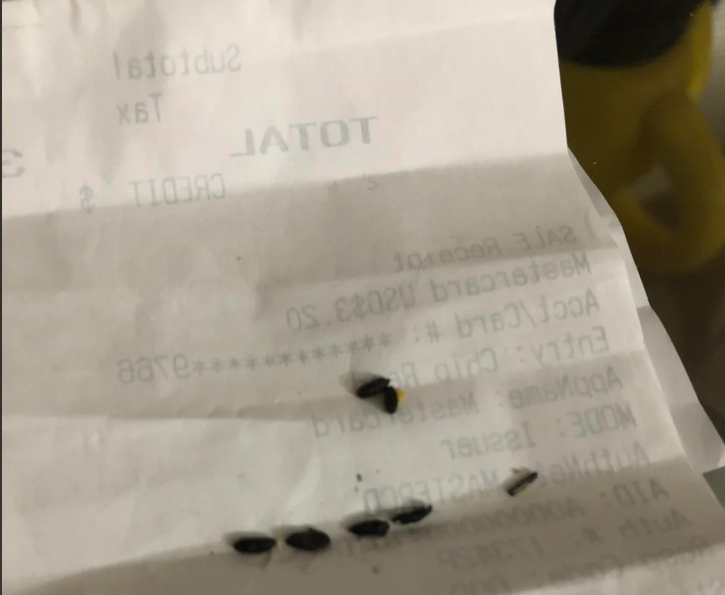
Mice tend to follow the same pathways repeatedly, using urine and droppings to mark their territory and communicate with other mice.
Color & Appearance
Mouse droppings have a distinctive coloration that changes over time, and this transition can help determine whether you’re dealing with an active infestation or remnants of past mouse activity.
| Age of Droppings | Color | Texture | Other Indicators |
| Fresh (0–24 hours) | Shiny black | Moist, putty-like | May smear slightly if disturbed |
| Recent (1–3 days) | Dark but less shiny | Drying and hardening | Holds shape, no longer smears |
| Old (1+ weeks) | Brown to gray | Hard, brittle | Crumbles when disturbed, no sheen |
The surface of mouse droppings typically appears somewhat smooth but may show slight irregularities.
Under close examination (not recommended without proper protective equipment), you might observe tiny rodent hairs embedded in the droppings, a distinguishing feature not present in bat guano.
Never handle mouse droppings directly with your bare hands. Mouse droppings can transmit serious diseases, such as hantavirus, through the inhalation of dust particles. Always use gloves, masks, and proper cleaning agents when dealing with rodent droppings. Dampen droppings before cleanup to prevent particles from becoming airborne.
Distinctive Pointed Ends
The pointed ends of mouse droppings are a key identifying characteristic that helps distinguish them from those of other pests. Mouse droppings typically have at least one pointed end, though many will have points on both ends.
This spindle-like shape is created by the mouse’s digestive system and the way their sphincter muscles work when expelling waste. The pointed ends create a distinctive “rice grain” appearance that pest management professionals immediately recognize as mouse droppings.
What Size Difference Helps Distinguish Bat vs Mouse Droppings?
Size offers one of the most straightforward ways to distinguish between these droppings. Bat droppings are noticeably larger, measuring ¼ to ½ inch in length, which makes them approximately twice the size of mouse droppings.
Mouse droppings typically measure between ⅛ and ¼ inch in length, roughly the size of a grain of rice. This size difference, while subtle, can be a reliable indicator when examining the droppings closely.
For perspective, mouse droppings are similar in size to:
- A single grain of white rice
- A small apple seed
- The tip of a ballpoint pen
Bat droppings are comparable to:
- A coffee bean
- A large grain of brown rice
- A small raisin
Shape Differences: Blunt vs Pointed Ends
Bat and mouse droppings have distinctly different end shapes, which makes them easy to tell apart. Bat droppings have blunt, rounded ends on both sides, creating a smooth, tubular appearance. This rounded shape results from how bats digest insect material, and while the size can vary by species, the blunt-ended form is consistent across all types of bat guano.
In contrast, mouse droppings feature pointed ends, with at least one end tapering to a fine point. Their tapered shape resembles a grain of rice or a small spindle, and this pointed form is consistent across specimens. Due to its reliability, the pointed end shape is one of the most distinct visual markers of mouse activity.
Crumbling Texture Test: Bat Droppings vs Mouse Droppings
The crumbling texture test provides the most reliable method for distinguishing bat from mouse droppings. When gently pressed with a tool (never use bare hands), bat droppings will easily disintegrate into a fine, dusty powder.
This distinctive crumbling occurs because bat guano consists primarily of dried insect exoskeletons that don’t hold together well when disturbed. The dry, brittle nature of the droppings results from how bats digest their insect-based diet.
In contrast, mouse droppings remain relatively solid and firm when prodded. Even when applying significant pressure, mouse droppings typically break into chunks rather than crumbling into powder.
This texture difference stems from the varied diet of mice, which includes seeds, grains, and other plant matter, creating a denser, fibrous dropping. This simple texture test can provide immediate confirmation when identifying unknown droppings.
Bat Droppings vs Mouse Droppings: Comparison Table
| Characteristic | Bat Droppings | Mouse Droppings |
| Size | ¼–½ inch in length | ⅛–¼ inch in length (size of a grain of rice) |
| Shape (Ends) | Blunt, rounded ends on both sides | Pointed ends (at least one end, often both) |
| Color | Shiny black appearance that persists as they age | Fresh: Shiny blackRecent: Dark but less shinyOld: Brown to gray |
| Surface Texture | Slightly rough or speckled appearance | Somewhat smooth with slight irregularities |
| Crumbling Test | Easily disintegrates into fine, dusty powder when pressed | Remains solid and firm; breaks into chunks rather than powder |
| Location Pattern | Concentrated piles directly beneath roosting spots | Scattered individually along travel routes and near food sources |
| Visible Contents | Visible insect fragments, wings, exoskeletons with a sparkly/glittery appearance | May contain tiny rodent hairs; no insect parts |
| Production per Day | 20–30 droppings per bat | 50–75 droppings per mouse |
| Texture When Touched | Dry, brittle, crumbly due to insect content | Fibrous and denser due to seeds, grains, and plant matter |
| Sheen Over Time | Retains a glossy sheen even when old | Becomes dull and grayish over time |
The Safe Way to Clear Droppings Once You Know the Source
Connor’s Pest Pros brings specialized expertise to Northern Virginia’s unique wildlife challenges.
Identifying bat versus mouse droppings comes down to four checks. Bat droppings are 1/4 to 1/2 inch with blunt ends, crumble into dust, and pile up beneath roosting spots; mouse droppings are 1/8 to 1/4 inch with pointed ends, stay firm, and scatter along travel routes and near food. The crumbling texture test gives you the clearest answer when sight alone is not enough.
For DC metro homeowners across Northern Virginia (Alexandria, Springfield, Fairfax, Mount Vernon, Tysons), Maryland, and Washington DC who have confirmed bat or mouse droppings in their homes, Connor’s Pest Pros offers same-day service for calls before noon, free inspections, humane bat exclusion alongside rodent control treatment, EPA-approved sanitization protocols, and a 100% satisfaction guarantee backed by five-star reviews.
Contact us today for your free quote!
Frequently Asked Questions (FAQs)
Can I remove bat droppings without professional help?
While small amounts of bat droppings can be cleaned up by homeowners using proper protective equipment, significant accumulations should be handled by professionals.
Always wear an N95 respirator mask, goggles, gloves, and disposable coveralls when cleaning bat guano to protect against histoplasmosis.
How quickly do mice and bats produce droppings?
Mice are prolific producers of droppings, with a single mouse capable of generating 50–75 droppings per day. This high production rate explains why even small mouse infestations can quickly lead to noticeable evidence throughout a home.
Bats produce fewer individual droppings but still generate significant accumulations over time. A single bat can produce 20–30 droppings per day, and since bats often roost in colonies, guano can accumulate rapidly beneath roosting areas. A colony of 100 bats could produce 2,000–3,000 droppings daily, quickly creating substantial piles.
What if I find droppings but haven’t seen any pests?
Finding droppings without seeing the actual pests is extremely common and typically how most infestations are first discovered. Both mice and bats are primarily nocturnal and excellent at avoiding human detection.
Mice are active at night when houses are quiet, while bats leave their roosts at dusk to feed and return before dawn. Fresh droppings indicate an active infestation that requires immediate attention.
Does Connor’s Pest Pros provide same-day service for bat or mouse emergencies?
Yes, Connor’s Pest Pros offers same-day service for Northern Virginia residents who call before noon, typically arriving that afternoon for urgent wildlife situations that require immediate attention.
Our prompt response prevents the escalating health risks and property damage that follow delayed action. Discovering wildlife waste in your home is unsettling, and our same-day availability means you don’t have to live with the problem any longer than necessary. Schedule your free inspection with Connor’s Pest Pros to confirm the pest and clear it safely.
*Image Disclaimer: Some images used in this blog post are sourced from third-party websites and remain the property of their respective owners unless otherwise stated. We do not claim ownership of these images and use them for illustrative purposes only.