

Key Takeaways
- Mouse and roach droppings look similar at a glance, but the differences decide your treatment plan: mouse pellets are rod-shaped with pointed ends and scatter along baseboards, while roach droppings are blunt-ended, ridged, and cluster near warm appliances.
- Misidentifying the pest sends most homeowners after the wrong fix, since traps that work on mice do nothing for roaches, and gel baits that knock down roaches won’t catch a rodent.
- For Virginia, Maryland, and D.C. metro homes, Connor’s Pest Pros clears the full infestation and seals entry points, going further than DIY traps, sprays, and store-bought gel baits that only treat the surface.
- A single mouse drops 50 to 75 pellets a day, so visible scatter along walls usually means an active rodent run, while tight clusters of pepper-sized specks near a fridge or under a sink point to German roaches breeding nearby.
- Connor’s Pest Pros provides same-day service, family-safe treatments, and a 100% satisfaction guarantee on rodent and roach removal across Virginia, Maryland, and the D.C. metro.
Strange Droppings in Your Home? Here’s How to Identify the Culprit
Mouse droppings are rod-shaped pellets with pointed ends, scattered in trails along walls, while cockroach droppings are blunt, ridged, and clustered in piles near warm appliances or food sources. Mouse pellets run 3 to 6mm and look like dark grains of rice, while German roach droppings sit closer to 1mm and resemble black pepper or coffee grounds. Which one you’re dealing with decides everything from the trap type to whether you need a professional treatment.
Both pests thrive in the same kitchens, pantries, and basements across Virginia, Maryland, and the D.C. metro, and the longer a misidentified infestation runs, the harder it is to clear without help. If you’ve found droppings in your home and aren’t sure what left them, this guide walks through the visual differences, the other signs that confirm the pest, and the treatment options that actually work.
|
Connor’s Pest Pros: Family-Owned Pest Control Experts Choose Your Pest Protection Solution:
Customer Praise:
★★★★★ “Quick to answer my call and available same-day… I recommend them to anyone looking for pest control in NOVA.” – Jacquelyn L.
Why Choose Connor’s Pest Pros:
|
Mouse Droppings: Size, Shape & Appearance
Mouse infestations often reveal themselves through droppings before you ever spot the rodent. Recognizing these signs is important for control and prevention.
What Mouse Dropping Looks Like
Mouse droppings are tiny, rod-shaped pellets about 1/8 to 1/4 inch (3–6mm), resembling dark rice with pointed ends. Fresh ones look shiny and black, while older droppings fade to brown or gray and become crumbly. A single mouse can leave 50–75 droppings a day, quickly building up visible evidence.

Mouse droppings are small, rod-shaped, and often mistaken for food particles (image taken from Reddit).
Where You’ll Typically Find Mouse Droppings
Mice follow set routes along walls, behind furniture, and under appliances. You’ll often see droppings in cabinets, under sinks, or near food sources. Unlike cockroaches, mice scatter droppings in trails rather than piles, often marking baseboards or hidden corners.
Fresh vs. Old Mouse Droppings
Fresh droppings are shiny, moist, and signal activity within the past 24–48 hours. Older ones turn dull, dry, and brittle. Cleaning and rechecking for new droppings helps confirm if mice are still active. Regardless of age, droppings carry health risks and should always be handled with care.
Cockroach Droppings: Visual Identification Guide
Cockroach droppings look different from mouse droppings, and recognizing them helps you choose the right control method.
Size & Appearance Differences by Roach Species
German cockroach droppings resemble black pepper or coffee grounds. American cockroach droppings are larger, ridged, and blunt-ended. Usually, the droppings are an inch long. Oriental and brown-banded species fall between these sizes, always cylindrical with rounded ends. Unlike mouse droppings, roach droppings never have pointed tips. Under magnification, they show ridges along their surface.
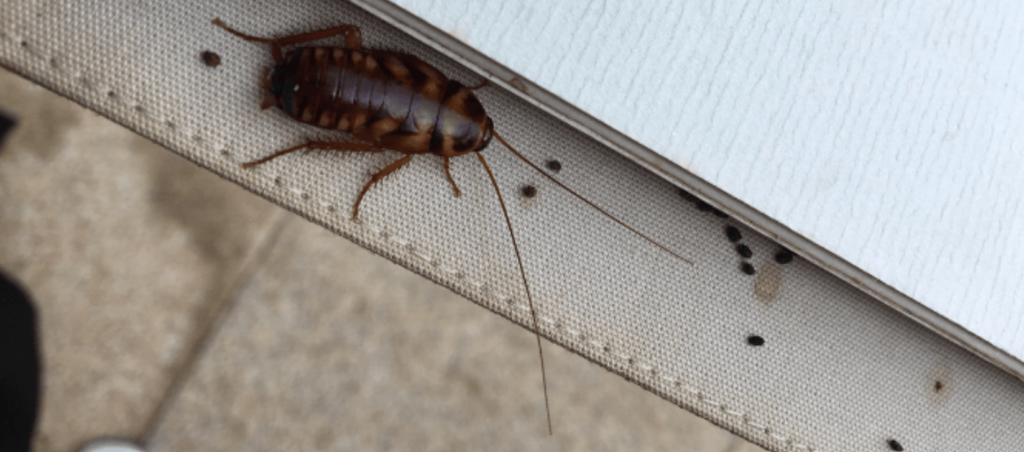
Fresh droppings indicate recent pest activity and should be addressed quickly (image courtesy of ABC Blog).
Common Locations for Roach Droppings
Roaches leave droppings in clusters near where they eat and hide such as inside cabinets, under sinks, behind appliances, or in bathrooms. Unlike mice, they also climb, so droppings may appear on upper shelves, ceiling corners, or cabinet tops. Warm spots near motors and appliances are especially common sites.
Easily Confused: Roach Egg Cases vs. Droppings
Egg cases (oothecae) are often mistaken for droppings. These brown, capsule-like cases measure about 8mm and can hold 30–50 eggs. Empty cases mean nymphs have already hatched, while intact ones signal ongoing reproduction and an active infestation.
Side-by-Side Comparison: Mouse vs. Roach Droppings
| Characteristic | Mouse Droppings | Cockroach Droppings |
| Size | 1/8 to 1/4 inch (3–6mm) | Varies by species: an inch long |
| Shape | Rod-shaped with pointed ends | Cylindrical with blunt, rounded ends |
| Texture | Smooth surface | Ridged surface with grooves |
| Color | Black when fresh, fading to gray-brown | Dark brown to black |
| Pattern | Scattered along pathways | Clustered near harborage areas |
| Quantity | 50–75 per mouse daily | Numerous small specks |
| Location | Along walls, inside drawers, under furniture | Cabinets, appliances, crevices, elevated surfaces |
What Other Signs Confirm Your Pest Identification?
Droppings are often the first clue, but other evidence helps confirm if you’re dealing with mice or cockroaches.
Mouse Infestation Signs
- Gnaw marks on food packaging or furniture with visible tooth impressions
- Grease smudges along the walls from their fur
- Nests made of shredded paper or fabric are hidden in wall voids or behind appliances
- Scratching or scurrying sounds at night
- A strong musky, ammonia-like urine odor in enclosed spaces
Cockroach Infestation Signs
- A musty, oily odor that intensifies as populations grow
- Shed skins resemble empty shells left behind after molting
- Dark, capsule-shaped egg cases (oothecae) containing dozens of eggs
- Smear marks along walls and surfaces where they travel
- Dead roaches or body parts, often found after treatments, confirm an established population
How Should You Treat Mice or Roach Infestations?
Once you’ve identified if you’re dealing with mice or cockroaches, pest control is the next step. Each pest requires specific methods, and using the wrong approach wastes time while infestations spread. The fix is two-part: address what’s there now, and shut down what’s letting them in.
Best Control Methods for Mice
Trapping is the most reliable way to control mice quickly while avoiding the odor issues that come with poison baits. Traditional snap traps work best when placed perpendicular to walls with the trigger facing the wall. For safety, especially with children or pets, enclosed traps are effective alternatives.
Trap placement is pivotal. Set them along mouse runways, behind appliances, inside cabinets, and near food sources. Use multiple traps at once rather than just a few; a dozen traps for a major infestation is reasonable. Check traps daily, and reset or relocate them as needed since mice adapt quickly to danger.
Most Effective Cockroach Elimination Strategies
Cockroach control requires a multi-pronged approach. Core methods include:
- Gel baits: Apply in pea-sized amounts in many small spots near harborage areas
- Boric acid dust: Lightly puff into cracks and crevices
- Insect growth regulators (IGRs): Disrupt reproduction cycles
- Bait stations: Place under appliances and in corners
- Diatomaceous earth: Apply in dry areas where roaches travel
Pair these with strict sanitation, clean food prep areas nightly, store food in sealed containers, fix leaks, and remove cardboard clutter. Rotate bait ingredients to prevent resistance and use sticky traps to monitor populations and identify hotspots. In heavy infestations, combine chemical and physical methods, including void treatments for hidden colonies.
IGRs work best when combined with faster-acting products, giving both immediate knockdown and long-term control.
When to Call Professional Pest Control
If no progress is seen after 2–3 weeks of consistent effort, professional help is recommended. Expert pest control services have stronger products, specialized equipment, and deeper knowledge of how these pests move and breed. For severe infestations, especially with resilient species like American cockroaches or Norway rats, professional treatment may be necessary from the start.
In multi-unit buildings, coordinated treatments matter since pests move through walls, plumbing, and HVAC systems. Professionals can also spot and fix structural issues, such as foundation cracks or leaks, that create ongoing entry points.
Connor’s Pest Pros: Providing Lasting Relief from Mice and Roaches
Professional inspections ensure accurate identification and treatment.
Telling mouse droppings from roach droppings is the first step, but the lasting fix comes from clearing the full infestation and shutting down the entry points behind it. DIY traps and gel baits handle small problems on the surface, but persistent or hidden cases need professional treatment to reach the source.
Connor’s Pest Pros treats both rodents and roaches at the source, with same-day service across Virginia, Maryland, and the D.C. metro, family-safe products, and a 100% satisfaction guarantee on every visit. Whether you’re seeing rod-shaped pellets along your baseboards or pepper-like specks behind the fridge, the next step is the same: book a free inspection and let the team handle the cleanup, the treatment, and the sealing.
Reach out today for a free quote!
Frequently Asked Questions (FAQs)
Can I have both mice and cockroaches at the same time?
Yes, it’s common to have both, since they thrive in homes with food, water, and shelter. Mice often dominate basements and lower floors, while cockroaches cluster near kitchens and bathrooms. Dual infestations require separate strategies, often best handled professionally.
How quickly should I act after finding droppings in my home?
Act immediately, within 24–48 hours. Both pests reproduce quickly, and small signs often indicate larger infestations. Mouse droppings may represent a breeding pair, while cockroach droppings suggest hidden populations. Begin treatment quickly while addressing sanitation and entry points to prevent worsening problems.
Are certain rooms in my home more likely to show evidence of these pests?
Yes. Kitchens and pantries attract both due to food access. Bathrooms and laundry rooms often harbor cockroaches because of moisture, while mice hide in attics, basements, and storage areas. Utility spaces with warmth and plumbing also provide prime harborage for both pests.
Can household pets help control mice or cockroach infestations?
Pets aren’t reliable pest control. Some cats hunt mice, but results vary, and dogs offer little help. Neither affects cockroaches. Pet food often worsens infestations, and pesticides can endanger pets. Instead, use exclusion, trapping, and safe professional methods designed for pet households.
What if the droppings don’t match either mice or cockroaches?
Other pests like rats, bats, squirrels, bed bugs, or pantry pests leave distinctive droppings too. Capture clear photos with scale for identification, or use pest control services. Until confirmed, treat droppings as hazardous and clean cautiously.
For quick, accurate identification and safe solutions, Connor’s Pest Pros can help pinpoint the source and recommend the right treatment.
*Price estimates reflect current market costs and may vary based on your specific situation. For a personalized quote tailored to your needs, contact us directly or request your FREE estimate today!