
Key Takeaways
- Flea dirt is the only common household insect dropping that turns reddish-brown when moistened with water, because it consists almost entirely of digested blood that no other pest waste can replicate.
- Most insect droppings look like nearly identical dark specks on visual inspection alone, so guessing without the water test often leads homeowners to treat the wrong pest while the real infestation keeps growing.
- Confirming flea dirt means treating every pet in the household at the same time as the environment, since roughly 95% of a flea infestation lives in the home as eggs, larvae, and pupae rather than as adult fleas on pets.
- Flea dirt clusters on pet bedding, favourite resting spots on furniture, and carpeted areas where pets lie, while cockroach droppings stay near food and water and bed bug feces concentrate around mattresses and box springs.
- Connor’s Pest Pros treats confirmed flea infestations across the DC metro area with same-day service for homeowners who call before noon, backed by 415+ five-star reviews and a 100% satisfaction guarantee.
Flea Dirt vs Other Bug Droppings: How to Tell What Is in Your Home
Flea dirt is the most reliably identifiable common household insect dropping because the water test produces an unmistakable reddish-brown reaction that no other insect waste can replicate. Cockroach feces, bed bug waste, and carpet beetle frass all look like dark specks on visual inspection, so location, texture, and the water test together are what tell them apart. Connor’s Pest Pros treats confirmed flea infestations and other pest problems across the DC metro area, with same-day service for homeowners who call before noon.
Pet owners across Virginia, Maryland, and the DC metro area often spot dark specks on bedding or fur and assume the worst before they have actually identified the pest. Knowing what you are looking at saves you from buying the wrong product, treating the wrong room, or missing the real source entirely. This guide walks through what flea dirt looks like, how to run the water test, how to distinguish flea droppings from other bug waste, and what to do once you have a confirmed identification.
|
Connor’s Pest Pros: Family-Owned Pest Control Experts Choose Your Pest Protection Solution:
Customer Praise:
★★★★★ “Quick to answer my call and available same-day… I recommend them to anyone looking for pest control in NOVA.” – Jacquelyn L.
Why Choose Connor’s Pest Pros:
|
What Does Flea Poop Look Like?
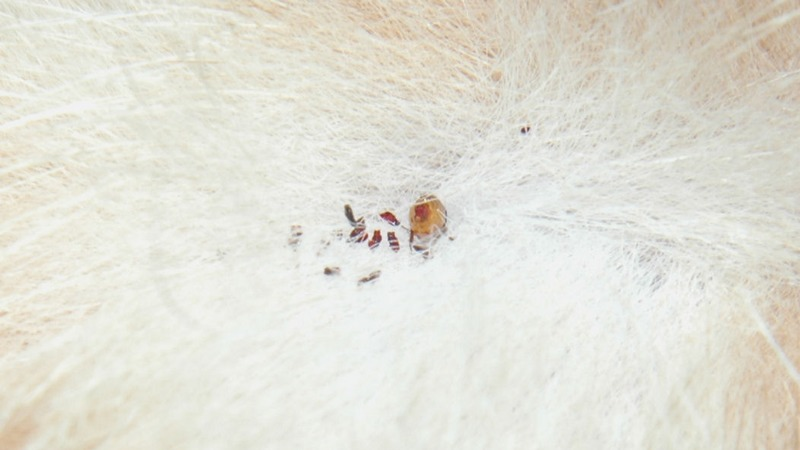
Fleas feed exclusively on blood from host animals, so their droppings consist almost entirely of digested blood. (Image courtesy of fleascience)
Appearance and Size
Fresh flea dirt appears as tiny dark reddish-brown to black specks, roughly the size of ground pepper or fine sand grains. Individual particles typically measure less than one millimeter, though they may clump together into slightly larger aggregations. The specks have an irregular, slightly curved or comma-like shape when examined closely, though this detail requires magnification to appreciate.
On light-colored surfaces or pet fur, flea dirt stands out as obvious dark specks. On darker surfaces, it blends in and may go unnoticed until accumulation becomes significant. Running your hand through pet fur against the direction of growth often reveals flea dirt that wasn’t visible with casual observation.
Where Flea Dirt Accumulates
Flea dirt appears wherever fleas feed and wherever infested pets spend time. On pets themselves, you’ll find concentrations at the base of the tail, along the spine, around the neck, and on the belly where fur is thinner and skin access is easier. Part your pet’s fur in these areas to check for the telltale dark specks against the skin.
In the home environment, flea dirt accumulates on pet bedding, favorite resting spots on furniture, carpeted areas where pets lie, and any fabric surfaces pets contact regularly. The droppings fall from pets as they move, creating scattered deposits that follow pet activity patterns throughout the house.
The Blood Connection
Because flea dirt is digested blood, it retains hemoglobin that reacts distinctively when moistened. This blood content distinguishes flea droppings from all other common household insect waste and forms the basis of the definitive identification test described below.
What Does Bug Poop Look Like?
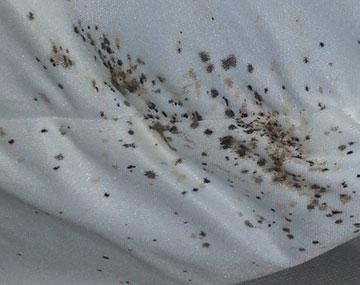
Common household bug droppings vary by species but share a dark, speck-like appearance that makes visual identification alone unreliable without the water test or location analysis. (Image courtesy of Cornell CALS)
Bed Bug Droppings
Bed bug feces appear as small dark ink-like spots, typically found on mattresses, box springs, bed frames, and nearby furniture. Unlike flea dirt’s scattered granular appearance, bed bug droppings tend to appear as spots that sink into porous surfaces and bleed at the edges rather than sitting on top of the material. Bed bug waste does contain digested blood since bed bugs also feed exclusively on blood, but the presentation and location differ fundamentally from flea dirt.
Cockroach Droppings
Cockroach feces vary by species. German cockroach droppings look like dark pepper-like specks or smears and concentrate in kitchens and bathrooms near food and water sources. Larger species including American and Oriental cockroaches produce more distinct pellet-shaped droppings with ridged surfaces running lengthwise, approximately two millimeters long. These pellets can resemble mouse droppings but are smaller and carry the distinctive ridged texture that rodent feces lack.
Carpet Beetle Frass
Carpet beetle larvae leave behind frass and shed skins as they feed on natural fibers. The frass appears as tiny dark pellets, sometimes mixed with fibrous material from whatever the larvae were consuming. You will find this material in closets, along carpet edges, in stored clothing, and anywhere natural fiber textiles provide a food source.
What Are the Key Differences Between Flea Poop and Bug Poop?
The Water Test: The Definitive Identifier
The simplest and most reliable way to distinguish flea dirt from all other bug droppings is the water test. Collect suspicious specks onto a white paper towel, tissue, or cotton ball by combing through pet fur over white paper, pressing a damp paper towel against surfaces where specks appear, or simply picking up visible particles. Add a few drops of water and wait 30 seconds to a minute. Gently smear the moistened material with your finger or fold the paper towel to press the specks together, then examine the results.
If the specks are flea dirt, the water will turn reddish-brown or rust-colored as the digested blood dissolves. Reddish streaks will spread from the specks or a general rust-colored stain will develop on the white surface. This color change is unmistakable. If the specks are ordinary dirt, debris, or droppings from cockroaches, carpet beetles, drain flies, or fungus gnats, the water will remain clear or turn muddy brown-gray without any reddish tint. Bed bug droppings will produce dark smearing when moistened but without the reddish-brown blood coloration that flea dirt produces.
Texture and Surface Interaction
Flea dirt is granular and sandy to the touch, sitting loosely on surfaces rather than absorbing into them. Bed bug droppings have already absorbed into porous surfaces and cannot be picked up as distinct particles. Cockroach pellets are solid and discrete, picking up individually without dissolving. Carpet beetle frass is dry and crumbles rather than smearing. These texture differences help confirm identification when combined with location analysis and the water test result.
What Should You Do If You Find Flea Dirt?
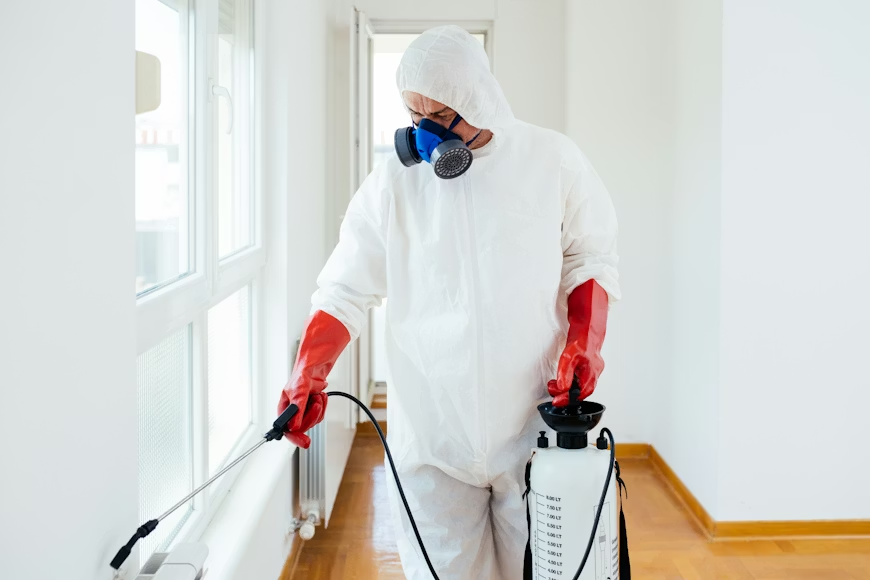
Confirming flea dirt requires immediate action addressing both infested pets and the home environment simultaneously to break the flea life cycle effectively.
Treat All Pets Immediately
Every pet in the household needs flea treatment, not just the one showing obvious signs. Fleas move between hosts, and untreated animals serve as reservoirs that reinfest treated pets. Consult your veterinarian for appropriate flea control products based on your pets’ species, size, age, and health status. Avoid using dog products on cats, as some ingredients toxic to cats appear in canine formulations.
Address the Environment
Pet treatment alone will not eliminate fleas because eggs, larvae, and pupae survive throughout your home independent of host animals. Approximately 95% of a flea infestation exists as eggs, larvae, and pupae in the environment rather than adult fleas on pets. Vacuum thoroughly and frequently, focusing on pet resting areas, carpet edges, furniture crevices, and anywhere organic debris accumulates.
Consider Professional Treatment
Severe infestations, recurring problems despite home treatment, or homes with extensive carpeting may benefit from professional flea control. Professional treatments reach areas homeowners cannot easily access and use products with longer residual activity than consumer options.
What Should You Do If You Find Other Bug Droppings?
Bed Bug Response
Bed bug droppings around sleeping areas warrant immediate professional assessment. Bed bugs are notoriously difficult to eliminate with DIY methods, and delayed response allows populations to grow and spread. Avoid moving furniture or bedding to other rooms, as this spreads bed bugs throughout the home. Do not discard furniture without encasing it and marking it as infested, as discarded items can spread bed bugs to other homes.
Cockroach Response
Cockroach droppings indicate established populations requiring sanitation improvements and targeted control. Reduce food and water access by fixing leaks, storing food in sealed containers, cleaning up crumbs and spills, and removing garbage regularly. Seal entry points around pipes, vents, and gaps in walls. Bait-based cockroach control products work effectively when properly placed in areas of activity indicated by droppings.
Carpet Beetle Response
Carpet beetle frass requires locating and eliminating larval food sources. Inspect stored clothing, wool items, natural fibre carpets, and areas where animal hair accumulates. Dry cleaning or hot laundering kills larvae in textile items. Thorough vacuuming removes larvae and eggs from carpets and hidden areas. Store susceptible items in sealed containers to prevent future infestations.
Quick Identification: Flea Poop vs Common Bug Droppings
| Feature | Flea Dirt | Bed Bug Droppings | Cockroach Droppings | Carpet Beetle Frass |
| Size | Tiny specks under 1mm | Tiny dots under 1mm | 1mm specks to 2mm pellets | Tiny dark pellets |
| Shape | Irregular, slightly curved specks | Round ink-like spots | Pellets (large species) or specks (small species) | Small irregular pellets |
| Color | Dark reddish-brown to black | Dark brown to black | Dark brown to black | Dark brown |
| Texture | Granular, sandy | Absorbs into surfaces, smears when wet | Solid, does not dissolve easily | Dry, granular, mixed with fibrous material |
| Primary Location | Pet bedding, furniture, carpets where pets rest | Mattresses, box springs, bed frames | Kitchens, bathrooms, behind appliances | Closets, stored clothing, carpet edges |
| Water Test | Turns reddish-brown (blood present) | Dark smear, no red tint | No color change | No color change |
Confirm the Pest Before You Treat, Then Call Connor’s Pest Pros for Fleas
Distinguishing flea dirt from other insect droppings makes sure you treat the actual pest instead of throwing the wrong product at a growing infestation. The water test gives you a reliable answer in under a minute with nothing more than a white paper towel and water, and confirmed flea dirt means treating every pet at the same time as the environment, because incomplete treatment leaves surviving life stages that quickly rebuild the population.
For confirmed flea infestations across Virginia, Maryland, and the DC metro area, Connor’s Pest Pros provides professional identification and full pet-and-home treatment, with same-day service for homeowners who call before noon and a 100% satisfaction guarantee on every visit.
Contact us today for your free quote!
Frequently Asked Questions (FAQs)
Can I have flea dirt without having pets?
Yes, though it’s uncommon. Fleas can enter homes on visiting animals, wildlife like raccoons or opossums that access crawl spaces, or human clothing after exposure elsewhere. Vacant homes previously occupied by pets may harbor flea populations that survive for months. If you find flea dirt without current pets, consider whether pets visited recently, whether wildlife might be present, or whether the home had pets before your occupancy.
What does bed bug poop look like compared to flea dirt?
Both appear as small dark specks, but location and presentation differ. Bed bug droppings concentrate around mattresses and sleeping areas, often appearing as ink-like spots that bleed into fabric. Flea dirt scatters across pet resting areas as granular specks. Bed bug waste also fails the water test since it produces dark rather than reddish coloration despite containing digested blood, because it’s already been deposited as liquid that dried in place.
How much flea dirt indicates a serious infestation?
Any flea dirt indicates active fleas feeding on hosts, which means females are laying eggs. Finding flea dirt in multiple locations, seeing it reappear shortly after cleaning, or spotting live fleas alongside the dirt suggests established infestation. Even small amounts warrant treatment since flea populations grow rapidly. One female flea can produce hundreds of eggs over her lifetime.
Do I need professional treatment for fleas or can I handle it myself?
Many flea infestations respond to thorough DIY treatment that combines pet medication with environmental control. Professional treatment is the better choice for severe infestations, recurring problems despite DIY efforts, or homes where thorough cleaning is not feasible. Connor’s Pest Pros handles flea identification and full home-and-pet treatment across the DC metro area, with same-day service for homeowners who call before noon.
*Image Disclaimer: Some images used in this blog post are sourced from third-party websites and remain the property of their respective owners unless otherwise stated. We do not claim ownership of these images and use them for illustrative purposes only.