
Key Takeaways
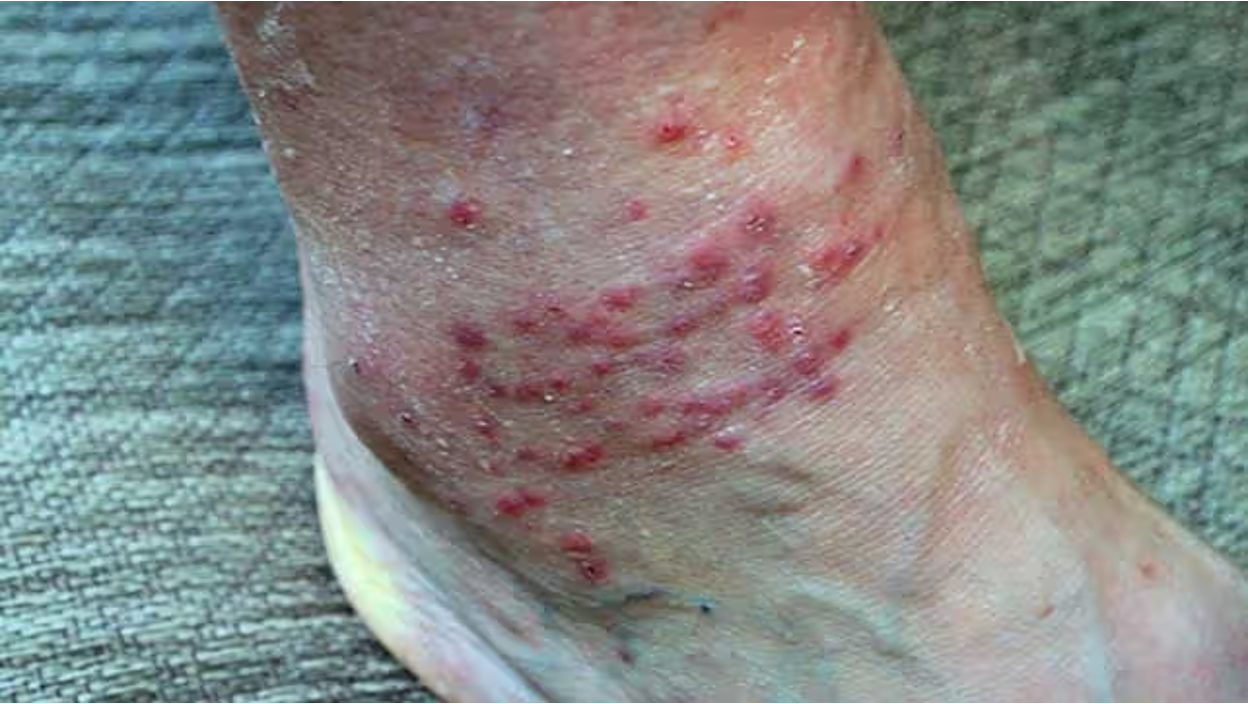
- Chigger bites appear as intensely itchy red welts with a central bright red dot, typically clustered where clothing fits tightly against the skin, such as waistbands, sock lines, and bra lines, and develop 1 to 3 hours after outdoor exposure rather than immediately.
- Flea bites present as small red bumps with a distinctive lighter halo, usually appearing in linear patterns or clusters on lower legs and ankles because fleas jump from floor level to access hosts.
- Chigger bites itch more intensely and persist for one to three weeks because chigger feeding creates a hardened stylostome tube embedded in the skin that continues to irritate the tissue long after the mite detaches.
- Fleas live indoors and create ongoing bite exposure until the full infestation, including eggs, larvae, and pupae, is eliminated from the home environment, while chiggers live exclusively outdoors and cannot infest homes.
- Connor’s Pest Pros provides comprehensive flea treatment throughout the DC metro area, targeting all life stages, with same-day service for calls placed before noon and a 100% satisfaction guarantee backed by five-star reviews.
Chigger Bites vs Flea Bites: Which Pest Is Responsible?
Chigger bites and flea bites are easiest to tell apart by their locations and patterns. Chigger bites cluster as raised red welts with a bright central dot along clothing lines like waistbands, sock lines, and bra straps, appearing 1–3 hours after outdoor exposure. Flea bites are small, flat red bumps with a lighter halo, grouped in lines of two or three on the ankles and lower legs, appearing within minutes of contact.
Chigger bites indicate outdoor exposure and require no home treatment since chiggers cannot infest indoor environments. Flea bites signal an active home infestation that will continue producing bites until every life stage in your carpets, bedding, and furniture is eliminated. Connor’s Pest Pros provides comprehensive flea treatment throughout the DC metro area, targeting all flea life stages with same-day service for calls before noon and a 100% satisfaction guarantee.
This article covers how to identify each bite type by appearance and location, why they itch so differently, how to treat both, and when flea bites mean it is time to call a professional.
|
Connor’s Pest Pros: Family-Owned Pest Control Experts Choose Your Pest Protection Solution:
Customer Praise:
★★★★★ “Quick to answer my call and available same-day… I recommend them to anyone looking for pest control in NOVA.” – Jacquelyn L.
Why Choose Connor’s Pest Pros:
|
What Do Chigger Bites Look Like?
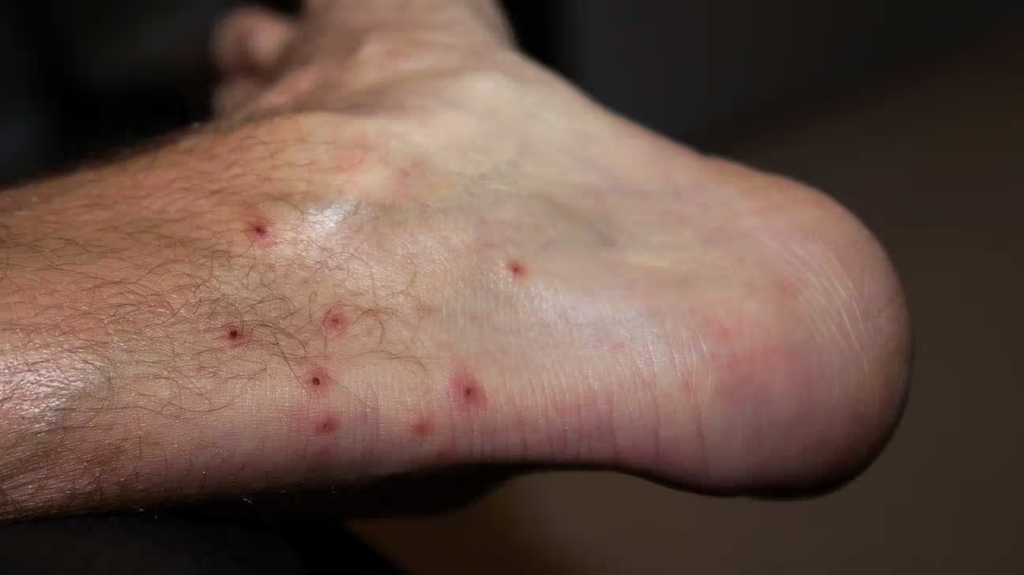
Chigger bites produce distinctive red welts with characteristic central dots that develop hours after exposure in outdoor environments. (Image courtesy of Healthline)
Initial Appearance
Chigger bites don’t appear immediately after exposure. The first signs typically emerge one to three hours after chiggers attach and begin feeding, with the full reaction developing over 24 to 48 hours. This delayed onset often confuses people who don’t connect their symptoms to outdoor activity from the previous day.
The bites appear as raised red welts that look somewhat like pimples or small hives. A distinguishing characteristic is the bright red dot or small raised bump at the center of each welt, which marks where the chigger attached and fed. This central puncture point helps differentiate chigger bites from other insect bites that lack this feature.
Clustering Patterns
Chigger bites appear in clusters rather than randomly scattered across the body. The clusters concentrate where clothing fits snugly against skin, creating the warm, moist conditions chiggers prefer. Common cluster locations include the waistband area, sock lines around ankles, behind the knees, in the groin area, and around bra lines or underwear elastic.
You might find dozens of bites concentrated in a small area where clothing created a barrier that the chiggers couldn’t easily cross. This clustering pattern strongly suggests chiggers rather than fleas or mosquitoes, which distribute bites more randomly across exposed skin.
Symptom Development
Chigger bite reaction progresses to welts, enlarge, and may progress to fluid-filled blisters in sensitive individuals. The skin around each bite becomes inflamed and may feel warm to the touch. Welts can reach the size of a pencil eraser or larger, significantly bigger than typical flea bites.
The affected area may develop a hardened center where the chigger’s saliva created a feeding tube called a stylostome. This tube, formed from hardened skin tissue around the chigger’s saliva path, remains in the skin after the chigger detaches and continues causing irritation long after the mite is gone. This explains why chigger bites itch so intensely and for so long compared to other insect bites.
What Do Flea Bites Look Like?
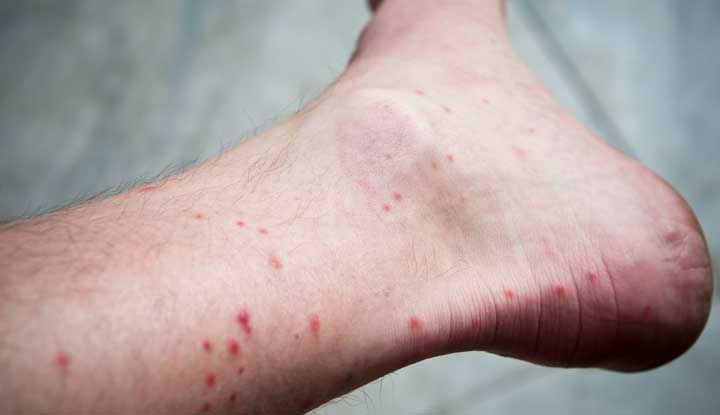
Flea bites create small red bumps with characteristic halos, typically appearing in linear patterns on lower extremities where fleas access skin most easily. (Image courtesy of Cleveland Clinic)
Characteristic Appearance
Flea bites appear as small red bumps, typically smaller than chigger welts. Each bite often features a lighter-colored halo or ring surrounding the red center, creating a target-like appearance. The bumps remain relatively flat compared to the raised welts that chiggers produce.
The central puncture point from the flea’s bite may be visible as a tiny dark dot, but it’s less prominent than the bright central marking on chigger bites. Fresh flea bites may show a small amount of crusting at the bite site where the skin was punctured.
Pattern Recognition
Fleas often bite in patterns that reflect their feeding behavior. The classic presentation is groups of three bites in a line or triangle, sometimes called “breakfast, lunch, and dinner” because a single flea may bite multiple times as it feeds.
Flea bites concentrate on the lower body, particularly ankles, feet, and lower legs, because fleas jump from floor surfaces and pet bedding to access hosts. Unlike chiggers that climb upward seeking tight clothing areas, fleas typically bite whatever skin they encounter first at ground level.
Symptom Development
Flea bites produce reactions more quickly than chigger bites. Itching and visible bumps often appear within minutes to a few hours of the bite, compared to the delayed onset of chigger reactions. This faster timeline means you might notice flea bites while still in the environment where exposure occurred, which can help identify the source.
The bites may develop small blisters in some individuals, particularly those with flea allergy dermatitis who experience heightened reactions. In sensitive people, flea bites can trigger larger hive-like reactions that extend beyond the immediate bite site.
Treatment Options for Both Bite Types

Effective treatment reduces itching and prevents complications from both chigger and flea bites, though the underlying causes require different prevention strategies.
Immediate First Aid
For both bite types, start by washing the affected area with soap and water to remove any remaining irritants and reduce the risk of infection. Avoid hot water, which can intensify itching. Pat the area dry gently rather than rubbing.
Applying a cold compress or ice pack wrapped in cloth provides immediate itch relief for both chigger and flea bites. The cold reduces inflammation and temporarily numbs nerve endings that transmit itch signals. Apply cold for 10 to 15 minutes at a time as needed.
Topical Anti-Itch Treatments
Over-the-counter hydrocortisone cream effectively reduces inflammation and itching for both types of bites. Apply a thin layer to affected areas according to package directions, typically two to three times daily. Higher-strength hydrocortisone is available by prescription for severe reactions.
Calamine lotion provides a cooling sensation that relieves itching while forming a protective layer over bites. This traditional remedy works well for both chigger and flea bites, though it may be less effective than hydrocortisone for intense chigger reactions.
Antihistamine creams containing diphenhydramine can reduce itching, though prolonged use may cause skin sensitivity. Use these products as directed and consider switching to oral antihistamines for widespread bites.
Oral Medications
Oral antihistamines help control itching from the inside out. These medications block histamine reactions throughout your body, providing relief for multiple bites simultaneously. Non-drowsy options allow daytime use without sedation.
For severe chigger reactions, a doctor may prescribe oral corticosteroids to control severe inflammation. This intervention is rarely needed for flea bites, but may help with severe chigger exposure affecting large body areas.
Over-the-counter pain relievers like ibuprofen can reduce inflammation and provide some relief from the discomfort of severe bite reactions.
Preventing Infection
The greatest risk from both bite types comes from secondary bacterial infection introduced through scratching. Keep fingernails trimmed short to minimize skin damage if you scratch unconsciously. Cover heavily affected areas with loose bandages to create a barrier against scratching, especially during sleep.
Watch for signs of infection, including increasing redness spreading from bite sites, warmth, swelling, pus formation, or fever. Infected bites require medical attention and may need antibiotic treatment.
Quick Identification: Chigger Bites vs Flea Bites
| Feature | Chigger Bites | Flea Bites |
| Appearance | Raised red welts with a bright central dot | Small flat red bumps with a lighter halo ring |
| Size | Pencil eraser or larger | Smaller than chigger welts |
| Location | Waistbands, sock lines, behind knees, groin | Lower legs, ankles, feet |
| Pattern | Clustered at clothing lines | Linear groups of three or more |
| Onset | 1 to 3 hours after exposure | Minutes to a few hours |
| Itch Duration | 1 to 3 weeks | 1 to 2 weeks |
| Requires Home Treatment | No | Yes |
Connor’s Pest Pros: Professional Flea Control
Distinguishing chigger bites from flea bites determines whether you need professional pest control intervention. Chigger bites indicate outdoor exposure requiring personal prevention during future activities. Flea bites signal a home infestation that will continue until the flea population is eliminated.
If flea bites are appearing on family members, professional intervention addresses both the visible adults and the hidden eggs and larvae sustaining the infestation. Connor’s Pest Pros provides comprehensive flea treatment throughout the DC metro area, targeting all life stages to eliminate populations rather than just temporarily reducing adult numbers.
Contact us today for your free quote!
Frequently Asked Questions (FAQs)
Can chiggers live in my house?
No, chiggers cannot survive or reproduce indoors. They require outdoor environments with vegetation and specific humidity conditions to complete their lifecycle. Chiggers you bring inside on clothing or skin will die within hours without access to a host, and they cannot establish populations in your home. If you’re experiencing ongoing bites indoors, you’re dealing with fleas or another indoor pest rather than chiggers.
How do I know if my pet has fleas?
Check your pet’s fur, especially around the neck, base of the tail, and belly, where fur is thinner. Part the fur and look for small, fast-moving dark insects or tiny black specks that resemble pepper, which is flea dirt (flea feces). The wet paper towel test confirms flea dirt: place specks on a damp white paper towel, and if they turn reddish-brown, it’s digested blood from flea droppings. Excessive scratching, hair loss, and visible bite marks on your pet also indicate flea problems.
Why do chigger bites itch so much worse than flea bites?
Chigger bites itch intensely because of the stylostome, a hardened tube of digested skin cells the chigger creates during feeding. This structure remains embedded in your skin even after the chigger detaches, continuing to irritate surrounding tissue for one to three weeks. Flea bites cause itching through a simpler allergic reaction to saliva proteins, which typically resolves faster once the histamine response subsides.
Can I get diseases from chigger or flea bites?
In the United States, chigger bites rarely transmit diseases, though chiggers in other parts of the world can carry scrub typhus. Flea bites can potentially transmit diseases, including murine typhus and, historically, plague, though transmission is rare in modern domestic settings. Still, eliminating flea infestations promptly reduces any risk and prevents continued exposure for pets and family members.
What does Connor’s Pest Pros offer DC metro homeowners dealing with flea bites?
Connor’s Pest Pros provides same-day flea treatment for DC metro homeowners who call before noon, targeting all flea life stages, including eggs, larvae, and pupae that home treatments miss. Every service is backed by a 100% satisfaction guarantee and hundreds of five-star reviews.
*Price estimates reflect current market costs and may vary based on your specific situation. For a personalized quote tailored to your needs, contact us directly or request your FREE estimate today!