
Key Takeaways
- Coyote scat is typically about 3–5 inches long and 0.75 to 1.5 inches in diameter, segmented, twisted, and tapered at one or both ends; dog poop is usually blunt-ended and more uniform.
- The most reliable identification clue is scat contents: coyote poop frequently contains fur, small bones, feathers, berry skins, or seeds; dog poop from kibble-fed pets rarely does.
- Placement matters. Coyotes deliberately deposit scat on trails, path junctions, and raised objects to mark territory, a behavior domestic dogs do not repeat.
- A dog that eats raw food or scavenges and a coyote that raids garbage can produce nearly identical-looking scat, so no single feature gives a definitive answer.
- Connor’s Pest Pros provides professional wildlife removal to address coyote activity before it escalates, with same-day or next-day availability and a 100% satisfaction guarantee.
What’s the Difference Between Coyote Poop & Dog Poop?
Coyote scat measures roughly 3–5 inches long, while dog poop varies widely depending on the dog’s size and breed. Coyote poop often looks ropy and twisted, dark when fresh but fading toward gray or white as the fur and bone inside it weather. A well-fed dog’s poop appears as a smooth, even sausage shape in medium to dark brown, and breed size alone creates wide overlap with coyote scat.
Coyotes use scat as a deliberate scent-marking tool, placing deposits at trail intersections, on rocks, logs, and lawn edges in ways domestic dogs do not. Finding a twisted, tapered dropping in the center of a walking path is meaningfully different from finding one in a backyard corner.
Connor’s Pest Pros offers professional wildlife removal services designed for situations where coyote activity is detected near residential areas, helping homeowners move from identification to a safe, effective response.
Connor’s Pest Pros: Trusted, Family-Owned Pest Control
4.9★ Google Rating | 100% Satisfaction Guarantee

Protect Your Home, Pest-Free:
Get customized, ongoing pest control that adjusts with the seasons, covering everything from ants and spiders to termites, rodents, and bed bugs. Same-day or next-day visits mean fast relief.
What Sets Us Apart:
✓ 950+ 5-star reviews on Google
✓ Family-owned, D.C. metro area
✓ Member of the NPMA
✓ Angi Super Service Award Winner (2024)
✓ 100% Satisfaction Guarantee
Don’t let pests take over your home. Act now.
Request Your Free Estimate →What Does Coyote Poop Look Like?
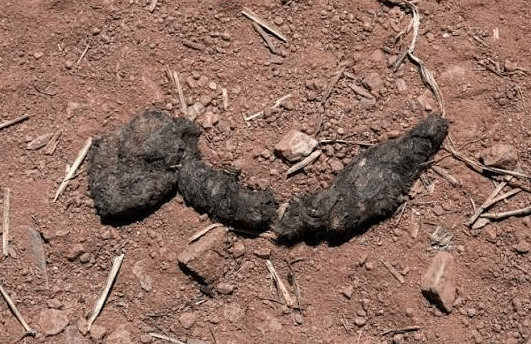
Coyote poop features a twisted, rope-like texture, which results from the fibrous nature of fur and plant material passing through the digestive tract (image source: Colorado Arts & Science Magazine).
Coyote scat is tubular, segmented, and almost always tapered to a point at one or both ends. Typical coyote scat is about 3–5 inches long and 0.75 to 1.5 inches in diameter, though the total deposit can run longer when multiple segments connect. Fresh scat tends to be dark brown or black, but it lightens as it weathers and dries, often turning gray or white, especially when it contains a high proportion of bone or fur.
Because coyotes are highly opportunistic predators and scavengers, their diet shifts constantly across seasons. Their scat can contain fur and hair from small mammals such as rodents and rabbits, small bone fragments, feathers from birds, insect parts, and berry skins, seeds, fruit pits, and grass.
What Does Dog Poop Look Like?
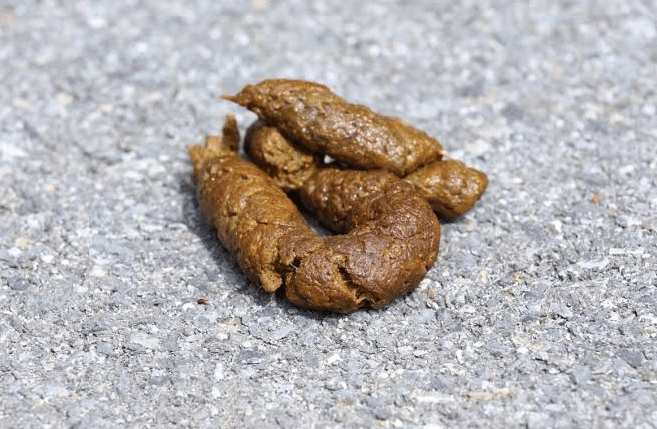
Dog poop rarely contains visible fur, bones, or plant matter unless the dog has been scavenging, eating raw food, or consuming bones (image source: Canine Journal).
Dog poop varies widely because domestic dogs differ greatly in size, breed, and diet. A healthy dog fed a consistent commercial diet typically produces medium-to-dark-brown, formed, sausage-shaped stool that is smoother and more uniform than coyote scat. The ends are usually blunt or rounded, not tapered.
Breed and body size create significant size overlap with coyote scat. A small dog may leave droppings smaller than typical coyote scat, while a large breed can leave deposits considerably larger.
How to Identify Coyote Poop vs Dog Poop
- Look for Fur, Bones, or Feathers Inside: Examine the scat closely without touching it. Visible fur twisted through the deposit, small white bone fragments, feathers, or berry skins strongly indicate a coyote origin. A pet dog fed commercial kibble rarely produces scat with these materials inside. If the contents look like compressed wild prey remains, that is a meaningful signal regardless of what the outside of the deposit looks like.
- Note Where the Scat Was Left: Coyotes are deliberate scent markers and consistently choose prominent, visible placements for their scat. Common coyote scat placement locations include the center or edge of walking trails and footpaths, raised objects such as rocks, logs, and stumps, and lawn edges. Dog waste is typically found where dogs walk with their owners or where they are allowed to use a yard.
- Look for Nearby Tracks: Coyote tracks are oval-shaped, with four toe pads and visible claw marks that point forward. Dog tracks are rounder overall, and the gait pattern is less linear. Large dog tracks can overlap significantly with coyote track size, but a coyote’s straight, purposeful travel line is usually distinguishable from the wandering pattern of a domestic dog exploring a yard or trail.
- Check for Repeated Deposits Along the Same Route: Multiple deposits along the same trail, fence line, or property edge strongly suggest coyote territorial marking. Coyotes revisit and refresh scent-marking sites regularly, so a route with several deposits at different stages of weathering reliably indicates ongoing activity. Dog waste can be distributed along a walking route, but it is rarely deposited at deliberate intervals in the center of paths or on top of raised objects.
What to Do If Coyotes Are Near Your Home
The presence of scat indicates the coyote has identified your property as part of its territory or as a reliable food supply, and both situations tend to worsen without direct action. Start by removing attractants that may be drawing the animal close.
Secure all trash cans with locking or bungee-fastened lids, remove outdoor pet food bowls after each feeding, and eliminate brush piles and dense ground cover that could serve as denning habitat.
When coyote activity persists, escalates, or threatens children, small pets, or livestock, professional wildlife removal is the appropriate next step. Attempting to trap or relocate coyotes without proper licensing and equipment is ineffective and illegal in many areas.
Coyote Poop vs Dog Poop: Comparison Table
| Feature | Coyote Poop (Scat) | Dog Poop |
| Shape | Tubular, segmented, rope-like or twisted | Sausage-shaped, smoother, more uniform |
| End shape | Tapered or pointed at one or both ends | Usually blunt or rounded at both ends |
| Size | Approximately 3–5 inches long and 0.75 to 1.5 inches in diameter | Highly variable by breed; overlaps with coyote size |
| Color (fresh) | Dark brown to black; lightens as it dries | Medium to dark brown; varies with diet |
| Contents | Fur, small bones, feathers, berry skins, seeds, grass | Usually uniform; rarely contains bones or fur unless diet includes raw food |
| Texture | Fibrous, twisted, or braided from fur and plant matter | Smoother and more consistent |
| Placement | Trail centers, junctions, raised objects, property edges | Yards, walking paths, wherever the dog was exercised |
| Deposit pattern | Repeated at intervals along routes and boundaries | Distributed where dog walks; not deliberately placed |
Protect Your Property From Wildlife With Connor’s Pest Pros

Connor’s Pest Pros offers free inspections and wildlife removal plans tailored to each unique property.
Coyote scat near your home is an early warning sign. Repeated deposits along a fence line, trail edge, or near a food source mean a coyote has already claimed your property as part of its territory, and that pattern rarely reverses on its own.
At Connor’s Pest Pros, we provide professional wildlife removal services with same-day or next-day availability, backed by a 100% satisfaction guarantee. We assess your property to pinpoint what’s drawing coyotes in, from unsecured trash and pet food to brush piles and denning cover, then install the right deterrents and exclusion measures and coordinate licensed trapping when warranted. Request your free estimate, and we’ll come take a look.
Frequently Asked Questions (FAQs)
How can I tell if it’s dog poop or coyote poop?
Check the ends first. Coyote scat tapers to a point while dog poop is usually blunt. Then look at the contents: fur, small bones, feathers, or berry skins inside the deposit strongly indicate a coyote. Finally, note the location. A deposit deliberately placed at a trail junction or on a raised object fits coyote scent-marking behavior, not domestic dog habits.
What is the typical size of coyote poop?
Coyote scat is typically about 3–5 inches long and 0.75 to 1.5 inches in diameter. The total deposit can be longer when multiple segments connect. Size alone isn’t a reliable identifier because large dogs can produce scat in the same size range, and coyote scat size also shifts with diet and the animal’s age.
How can I tell if a coyote is near?
Repeated scat deposits placed along trails, fence lines, or property boundaries are one of the clearest signs of nearby coyote activity. Additional indicators include oval tracks roughly 2 to 3 inches long with forward-pointing claw marks, vocalizations at dusk or dawn, and missing small pets or poultry. Scat found in deliberate, prominent locations points to active territorial marking rather than a single animal passing through.
What can be mistaken for coyote poop?
Large domestic dogs are the most common source of confusion, particularly dogs fed raw diets or those that chew bones, since their scat can contain fur and bone fragments similar to coyote scat. Fox scat is also frequently mistaken for coyote scat, as both are tapered and may contain similar contents, though fox scat tends to be narrower.
Does Connor’s Pest Pros offer wildlife removal services for coyote activity?
Yes. Connor’s Pest Pros provides professional wildlife removal services for homeowners dealing with coyote activity, including repeated scat deposits, territorial marking near the property, or direct sightings close to pets and children. The company’s technicians perform a free inspection to identify what is on the property and find entry points, then complete removal and exclusion work.
*Price estimates reflect current market costs and may vary based on your specific situation. For a personalized quote tailored to your needs, contact us directly or request your FREE estimate today!