
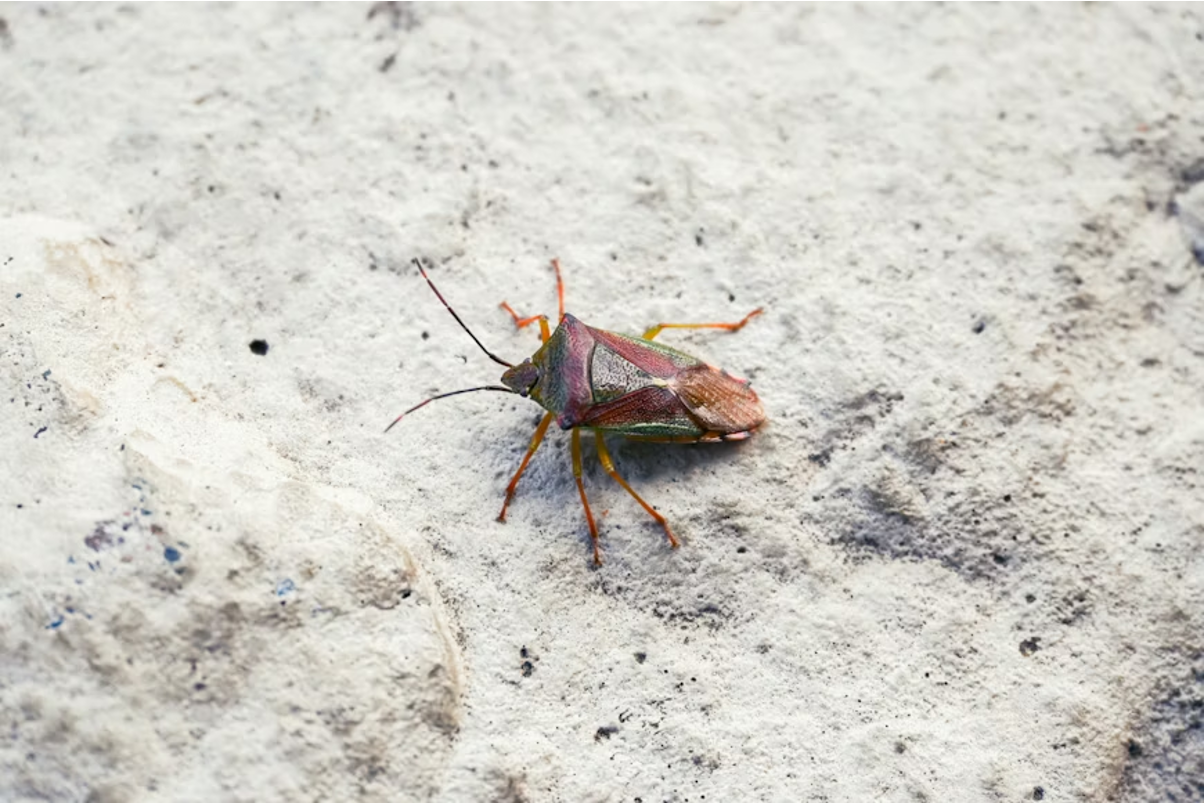
Key Takeaways
- Flea bites typically have a dark center surrounded by a red halo and cluster around ankles and lower legs, while bed bug bites appear as red welts in linear patterns on exposed skin.
- Bed bug bites often form a distinctive line or zigzag pattern and may take 1–3 days to become visible, whereas flea bites appear almost immediately and are intensely itchy from the start.
- Natural remedies, such as cold compresses, aloe vera, and tea tree oil, can provide relief from both types of bites. However, identifying the source is crucial for proper home treatment.
- While both pests can cause significant discomfort, bed bugs typically require professional extermination, whereas flea infestations can often be addressed with thorough cleaning and pet treatment.
- Connor’s Pest Pros offers professional-grade, same-day treatment for both pests, along with comprehensive multi-location services.
*Medical Disclaimer: This article is for informational purposes only and does not constitute medical advice. Spider and ant bites can cause serious reactions in some individuals. If you experience severe symptoms, allergic reactions, or signs of infection, seek immediate medical attention. Always consult with a qualified healthcare professional for proper diagnosis and treatment. For more information about our pest control services, visit Connor’s Pest Pros.
Understanding What’s Biting You
Those red, itchy bumps on your skin can be unsettling, and determining whether fleas or bed bugs cause them is the first step toward proper treatment.
While both pests feed on human blood, their bites look and behave differently, and identifying the culprit helps you choose the right approach.
Knowing which pest you’re dealing with also determines whether DIY methods may work or if professional help is necessary, since bed bugs rarely respond to home treatments while fleas sometimes do.
|
Connor’s Pest Pros: Family-Owned Pest Control Experts Choose Your Pest Protection Solution:
Customer Praise:
★★★★★ “Quick to answer my call and available same-day… I recommend them to anyone looking for pest control in NOVA.” – Jacquelyn L.
Why Choose Connor’s Pest Pros:
|
Flea Bites: Identifying the Tiny Jumpers’ Marks
What Flea Bites Look Like
Flea bites appear as small, red, slightly raised bumps on the skin, usually no larger than a pencil eraser.
The hallmark feature that distinguishes them from other insect bites is the tiny dark red center—the actual puncture point where the flea’s mouthparts penetrated the skin. This dark center is surrounded by a red “halo” or ring, creating a bull’s-eye appearance when examined closely.
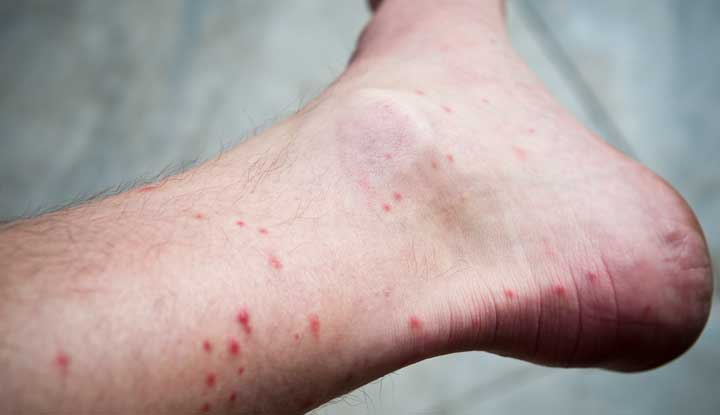
When a flea bites, it injects saliva containing anticoagulants and digestive enzymes into your skin, allowing it to feed on your blood more efficiently.
The bites often appear in clusters or lines of three or four, sometimes referred to as “breakfast, lunch, and dinner” patterns, although they’re typically more random than the neat rows associated with bed bugs.
Within minutes of being bitten, the area becomes intensely itchy as your body reacts to the flea’s saliva, and scratching can lead to secondary infections if the skin is broken.
Why Flea Bites Cluster on Ankles & Lower Legs
Flea bites predominantly appear on the lower parts of the body due to the insects’ limited jumping height and their preference for specific habitats.
These tiny pests typically live in carpets, pet bedding, and floor cracks, making your ankles and legs their first point of contact when seeking a blood meal.
When fleas sense the vibration, warmth, and carbon dioxide from a potential host walking nearby, they spring into action, jumping onto the closest available skin surface.
The clustering pattern of flea bites also has a logical explanation. Once a flea finds a suitable feeding spot, it often takes multiple blood meals in quick succession, moving only short distances between bites. This feeding behavior creates the characteristic groupings of three to four bites in proximity.
The Telltale Dark Center Dot
The most distinctive visual characteristic of a flea bite is the dark center dot, which represents the actual puncture site where the flea’s mouthparts penetrated the skin.
This tiny dot appears darker red than the surrounding inflammation and is often visible to the naked eye upon close inspection. The presence of this central puncture point is one of the most reliable ways to distinguish flea bites from bed bug bites, which typically lack this feature.
The dark center develops because fleas inject anticoagulant-containing saliva to prevent blood from clotting. At the same time, they feed, creating a microscopic hemorrhage at the bite site that appears as a dark red or purple speck.
How Long Flea Bites Last
Flea bites typically last between one and two weeks, though individual healing times vary based on your immune response and whether you’ve scratched the bites.
Initially, flea bites develop within minutes of being bitten and reach their peak inflammation within the first 24 hours. The intense itching usually subsides after the first few days, while the visible red marks gradually fade over the following week.
For individuals with heightened sensitivity to flea saliva, bites may develop into painful, itchy blisters that take longer to heal and occasionally leave temporary hyperpigmentation marks on the skin.
Bed Bug Bites: Spotting These Night Feeders’ Work
What Bed Bug Bites Look Like
Unlike flea bites, bed bug bites lack a central dark dot and instead present as smooth, rounded bumps with clearly defined edges. The size can vary from a small pimple-like elevation to a larger welt up to half an inch in diameter, depending on individual sensitivity.
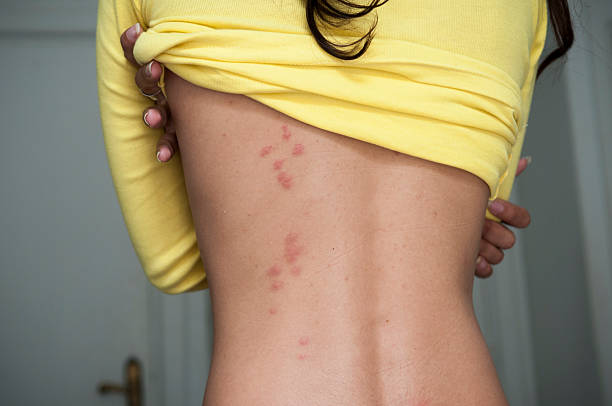
Bed bug bites appear as raised, red welts that are typically larger and more inflamed than flea bites.
The redness often intensifies over time rather than immediately, with many people not noticing the bites until hours or even days after being bitten.
The coloration of bed bug bites typically begins as light pink and gradually becomes darker red as inflammation increases. In individuals with fair skin, the surrounding area may appear bright red, while in darker skin tones, the bites may appear as darkened or purple-tinged areas.
Some bites develop a small, fluid-filled blister at the center within a day or two, particularly in individuals with more pronounced allergic reactions. While some individuals develop prominent, itchy welts, others may show minimal reaction or no visible symptoms at all despite being bitten, making detection challenging in some cases.
The Linear or Zigzag Pattern
The arrangement of bed bug bites in straight lines or zigzag patterns is their most distinctive characteristic and a key diagnostic feature. This orderly pattern occurs because bed bugs feed incrementally, taking a blood meal, moving a short distance along the skin, and then feeding again.
The insect typically continues this pattern three to five times during a single feeding session, creating what pest control professionals often refer to as “breakfast, lunch, and dinner” rows.
This methodical feeding behavior contrasts sharply with the more scattered, random clustering of flea bites, providing a reliable visual clue when determining which pest may be responsible for your discomfort.
Why Bed Bugs Target Exposed Skin While You Sleep
Bed bugs feed at night because they’ve evolved to take advantage of deep human sleep.
Attracted to the carbon dioxide we exhale and the warmth of our bodies, they move toward exposed areas such as the face, neck, arms, and shoulders. Unlike fleas, which can bite through clothing, bed bugs prefer uncovered skin and rarely attempt to bite through fabric.
Their feeding typically occurs between 2 a.m. and 5 a.m., when people are least likely to wake. During a bite, they inject an anesthetic and an anticoagulant, allowing them to feed for several minutes without detection.
As a result, most people only notice the bites hours later, once the anesthetic wears off and the body’s inflammatory response begins.
How Long Do Bed Bug Bites Persist
Bed bug bites can last significantly longer than flea bites, often taking one to three weeks to fully resolve.
Many people experience a delayed reaction, with the bites becoming visible one to three days after the initial feeding. Once they appear, inflammation typically peaks around day three, bringing intense itching that gradually decreases over the following week.
As the welts fade during the second and third weeks, some people may develop temporary hyperpigmentation that lingers longer. Individuals with heightened sensitivity to bed bug saliva may experience larger, more inflamed welts, and in rare cases, severe allergic reactions such as blisters or hives may require medical attention.
Natural Treatments for Flea & Bed Bug Bites

While professional pest control eliminates the source problem, natural remedies provide relief from existing bite symptoms.
Important Note: These remedies treat bite symptoms only and do not eliminate flea or bed bug infestations. Professional pest control remains essential for solving the underlying problem, and you should seek medical attention if you experience severe swelling, signs of infection, or an allergic reaction.
Immediate Relief with Cold Compresses
Cold therapy offers fast relief for both flea and bed bug bites by constricting blood vessels and calming the inflammation that causes itching and swelling. The cooling effect also numbs nerve endings, helping break the itch-scratch cycle that can lead to skin irritation or infection.
To make a simple cold compress, wrap ice cubes or a bag of frozen vegetables in a thin cloth and apply it to the bites for 10–15 minutes.
For broader coverage, a cool bath with colloidal oatmeal can soothe widespread irritation and reduce inflammation. If you prefer a more targeted option, chilled tea bags—especially those made from chamomile or green tea—work well because their natural polyphenols provide additional anti-inflammatory benefits.
Steep the bag, chill it until cold but not frozen, and apply for 5–10 minutes.
Anti-Itch Remedies from Your Kitchen
Your pantry likely contains several effective anti-itch remedies for insect bites:
- Raw honey, with its natural antibacterial and anti-inflammatory properties, creates a protective barrier when applied to bites, thereby reducing inflammation. Simply dab a small amount directly onto the bite, allow it to remain for 30–60 minutes, then gently rinse.
- Apple cider vinegar, diluted 1:1 with water, helps neutralize the bite area when applied with a cotton ball, though it should be avoided on broken skin.
- A baking soda paste (made by mixing baking soda with just enough water to achieve a thick consistency) draws out venom and neutralizes the pH of the affected area when applied for 10 minutes before rinsing.
- Fresh aloe vera gel stands out as the most effective kitchen remedy, offering cooling relief while delivering anti-inflammatory compounds directly to irritated skin. If you have an aloe plant, simply break off a leaf and apply the clear gel directly to the bites several times a day.
Herbal Solutions for Reducing Inflammation
If you’re more into herbal remedies, check them out below:
- Calendula stands out for its remarkable skin-healing properties, available as creams or tinctures that can be applied directly to bites several times daily. This gentle herb reduces inflammation while promoting tissue repair without irritation.
- Witch hazel, available as a distilled liquid in most pharmacies, contains tannins that reduce swelling and create a cooling sensation when dabbed onto bites with a cotton ball.
- Plantain leaves (a typical yard “weed”) can be crushed and applied directly to bites as a poultice, drawing out irritants while delivering soothing compounds to irritated skin.
- Chamomile deserves special mention for its versatility in treating insect bites. A strong chamomile tea, cooled and applied with a cloth, delivers anti-inflammatory bisabolol directly to bite sites. Alternatively, a few drops of chamomile essential oil diluted in a tablespoon of carrier oil (such as coconut or olive oil) creates an effective anti-itch salve.
Essential Oils That Soothe Bite Reactions
Essential oils offer concentrated plant compounds that can dramatically reduce bite-related discomfort when appropriately used:
- Tea tree oil stands out for its dual action; it reduces inflammation while simultaneously fighting potential infection with its natural antimicrobial properties. For safe use, always dilute 2–3 drops in a tablespoon of carrier oil (such as coconut or jojoba oil) before applying directly to bites.
- Lavender essential oil provides notable itch relief while promoting faster healing and can be used similarly diluted or added to bathwater for widespread bites.
- Peppermint oil creates an immediate cooling sensation that interrupts the itch signal to the brain. However, its potency requires careful dilution (1–2 drops per tablespoon of carrier oil) to prevent skin irritation.
Flea Bites vs Bed Bug Bites: Comparison Table
| Feature | Flea Bites | Bed Bug Bites |
| Appearance | Small, red, slightly raised bumps (pencil eraser size) with dark red center dot surrounded by red halo – creates bull’s-eye appearance | Smooth, rounded bumps with clearly defined edges, no dark center dot; varies from pimple-like to welts up to half an inch in diameter |
| Distinctive Feature | Dark center dot marking the puncture site where mouthparts penetrated skin | Linear or zigzag pattern arrangement; coloration starts light pink and darkens to red over time |
| Location on Body | Predominantly ankles and lower legs | Exposed skin during sleep: face, neck, arms, shoulders |
| Pattern | Clusters or lines of 3–4 bites, with a more random distribution | Straight lines or zigzag patterns – “breakfast, lunch, dinner” rows of 3–5 bites |
| Time to Appear | Within minutes – almost immediately visible | 1–3 days (delayed reaction common); may take up to 14 days for first-time exposures |
| When Itching Starts | Intensely itchy within minutes of being bitten | Delayed itching; typically peaks around day 3 |
| Duration | 1–2 weeks typically; peak inflammation within the first 24 hours | 1–3 weeks; inflammation peaks around day 3, and gradually decreases |
| Feeding Time | Anytime – opportunistic feeders when the host is available | Primarily, 2 a.m.–5 a.m., when humans are in deepest sleep |
| Can Bite Through Clothing | Yes, fleas can bite through thin fabric | No, bed bugs prefer uncovered skin and rarely bite through fabric |
| Pest Habitat | Carpets, pet bedding, and floor cracks | Mattresses, box springs, bed frames, furniture near sleeping areas |
| DIY Elimination Success | Sometimes possible with thorough cleaning, vacuuming, and coordinated pet treatment | Rarely successful – typically requires professional heat treatment or extermination |
Protect Your Home From Bed Bugs & Fleas with Connor’s Pest Pros

Connor’s Pest Pros specializes in professional-grade elimination expertise.
At Connor’s Pest Pros, we provide professional-grade elimination with protocols that DIY methods cannot match.
Our bed bug heat treatment utilizes professional equipment to achieve sustained temperatures necessary for killing all life stages. Our detection expertise identifies all infestation locations, preventing partial treatments that allow pests to rebound.
For flea infestations, we provide a comprehensive three-part elimination: coordinating with you for appropriate pet treatment, thoroughly treating home environments (including carpets, furniture, and bedding), and addressing outdoor areas where pets spend time.
Same-Day Response for Urgent Infestations
Bed bug and flea infestations create genuine distress for families—sleepless nights, anxiety about sleeping in one’s own bed, and concern about the spread of pests to other family members or friends. Our same-day service means calling before noon typically gets a specialist to your property that afternoon for urgent situations.
Proven Elimination Success You Can Trust
With more than 415 five-star reviews across the DC metro area, we’ve demonstrated consistent success in handling even the toughest pest infestations. Our 2024 Angi Super Service Award further highlights our commitment to professional-grade solutions that truly work.
And with our 100% satisfaction guarantee, if pests return after treatment, we will return at no additional charge.
Reach out today for a free quote!
Frequently Asked Questions (FAQs)
Can I get diseases from flea or bed bug bites?
Fleas can transmit diseases such as typhus, plague, cat scratch fever, and tapeworms, though transmission is uncommon in modern, well-sanitized areas. Bed bugs have not been proven to transmit diseases to humans.
The primary health risks associated with both are allergic reactions and infections resulting from scratching.
Why do some people react severely to bites while others barely notice them?
Reactions vary because each person’s immune system responds differently to the proteins in insect saliva.
Do DIY treatments actually work for bed bugs or fleas?
DIY bed bug treatments seldom work due to pesticide resistance and their ability to hide and reproduce quickly. Flea DIY treatments have higher—but still inconsistent—success rates because they require precise timing of indoor, outdoor, and pet treatments.
When should I call professional pest control instead of trying DIY methods?
Call a professional if you see confirmed bed bugs, notice linear bite patterns, find blood spots or shed skins on bedding, or multiple people wake up with bites. For fleas, get help if several people are bitten, pets show signs of infestation, fleas are visible in the home, DIY methods have failed, or bites continue despite treating pets.
Connor’s Pest Pros uses professional-grade methods that eliminate both pests at all life stages, treat every affected area, and include follow-up protocols. If pests return, we return at no charge.
*Image Disclaimer: Some images used in this blog post are sourced from third-party websites and remain the property of their respective owners unless otherwise stated. We do not claim ownership of these images and use them for illustrative purposes only.