

Key Takeaways
- Rabbit pellets are round and measure 1/4 to 1/2 inch in diameter, while mouse droppings are rice-shaped with pointed ends and only 1/8 to 1/4 inch long.
- Rabbits can produce up to 300 pellets daily in concentrated piles, while mice scatter 50–75 smaller droppings along their travel paths.
- Mouse droppings require protective equipment (gloves and an N95 mask) and proper disinfection due to disease risks.
- For severe mouse infestations or persistent wildlife problems in Northern Virginia and Maryland, contact Connor’s Pest Pros for professional control with same-day or next-day service and a 100% satisfaction guarantee.
Spot the Difference: Rabbit vs Mouse Droppings at a Glance
At first glance, rabbit and mouse droppings might seem similar to the untrained eye. However, several key characteristics set them apart.
Rabbit pellets are larger, rounder, and often found in outdoor areas, particularly gardens where rabbits feed. Mouse droppings, on the other hand, are smaller with pointed ends and commonly appear inside homes along baseboards, behind appliances, and in food storage areas. The location alone can be your first clue about which animal you’re dealing with.
The health implications also differ significantly. While rabbit droppings are relatively harmless and can be beneficial as garden fertilizer, mouse droppings can carry dangerous pathogens such as hantavirus and salmonella.
Rabbit activity typically peaks in spring and fall, while mice often seek indoor shelter as temperatures drop in autumn and winter, making year-round vigilance important for Northern Virginia homeowners.
|
Connor’s Pest Pros: Family-Owned Pest Control Experts Choose Your Pest Protection Solution:
Customer Praise:
★★★★★ “Quick to answer my call and available same-day… I recommend them to anyone looking for pest control in NOVA.” – Jacquelyn L.
Why Choose Connor’s Pest Pros:
|
What Rabbit Poop Looks Like
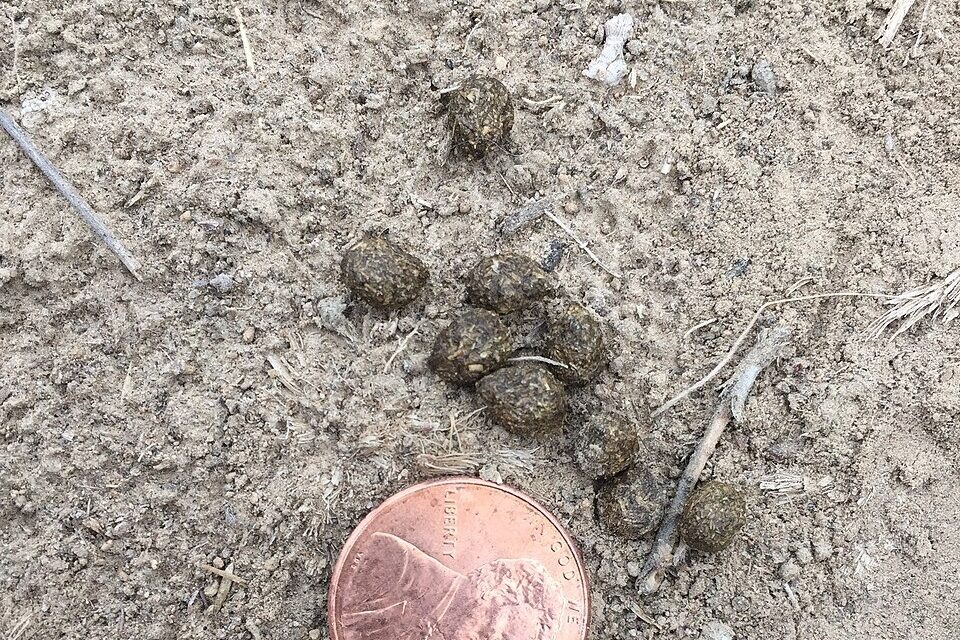
Rabbit droppings look like tiny pellets that maintain their appearance (Image source:“USFWS Pygmy rabbit droppings” by USFWS Pacific Regionlicensed under CC BY-SA 2.0, via Wikimedia Commons)

Rabbit droppings have a distinctive appearance that makes them relatively easy to identify once you know what to look for. Their appearance is consistent across wild rabbits and domestic pets, with minor variations depending on diet and health.
Size & Shape Characteristics
Rabbit droppings are round, pea-sized pellets, typically 1/4 to 1/2 inch in diameter. Their uniform, ball-like shape resembles small garbanzo beans, with no tapered or pointed ends.
Unlike some other animal droppings, rabbit pellets hold their shape well and don’t crumble easily when touched. This firm texture makes them easy to identify and distinguish from mouse droppings.
Color Variations in Rabbit Droppings
Fresh rabbit droppings range from dark brown to black, though a greenish tint may appear depending on the rabbit’s diet. Rabbits that eat more fresh vegetation tend to produce greener pellets, while those feeding on hay and dried plants leave behind darker droppings.
As the pellets age, they gradually lighten to a tan or grayish-brown color. This color change can help you determine how recently rabbits have been active in an area.
Where You’ll Typically Find Rabbit Poop
Rabbit droppings are most commonly found outdoors in garden areas, especially near vegetables and ornamental plants. Unlike mice, rabbits tend to establish designated “latrine” spots where droppings accumulate in piles, often near burrow entrances or along fence lines.
You’re most likely to spot fresh droppings during dawn and dusk when rabbits are actively feeding. Finding concentrated piles of round pellets in these outdoor locations is a strong indicator of regular rabbit activity.
The Impressive Volume: Why Rabbits Produce Up to 300 Pellets Daily
Rabbits have fast-moving digestive systems that can produce up to 300 pellets daily. This high volume is perfectly normal for these herbivores, whose bodies are designed to process large amounts of plant material efficiently.
If you’re discovering substantial piles of round droppings around your property, it’s a reliable sign that rabbits are visiting regularly.
What Mouse Poop Looks Like
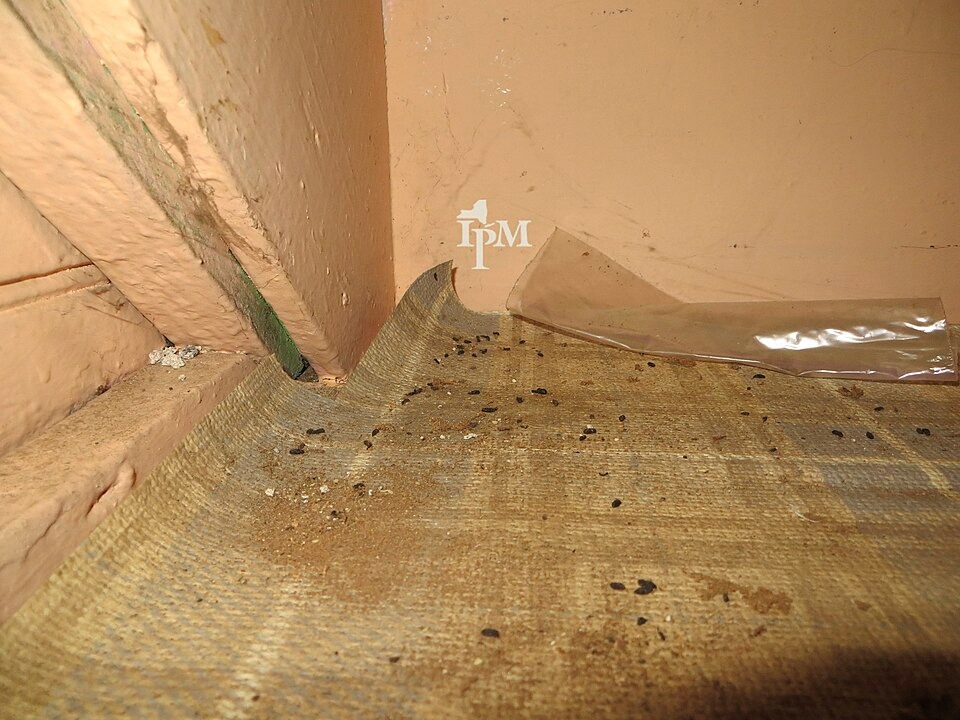
Mouse droppings look like grains of rice and are smaller compared to rabbit pellets. (Image source:“House Mouse droppings” by Matt Frye, NYSIPMlicensed under CC BY-SA 2.0, via Wikimedia Commons)

Mouse droppings look distinctly different from rabbit pellets and often signal a more serious problem, especially when found indoors. Their smaller size, pointed shape, and indoor locations make them easy to distinguish once you know what to look for.
Size & Shape Characteristics
Mouse droppings are significantly smaller than rabbit pellets, measuring just 1/8 to 1/4 inch in length. Their shape resembles rice grains with pointed ends on both sides, unlike the rounded appearance of rabbit droppings.
Fresh droppings have a shiny, moist surface that becomes duller and more crumbly as they dry out. This size and shape difference is substantial enough to distinguish between the two animals at a glance.
Color Variations in Mouse Droppings
Fresh mouse droppings appear very dark brown to black with a shiny, almost wet-looking surface. As they age, droppings gradually lighten to a dull grayish-brown color.
Finding droppings of varying shades in the same area typically indicates ongoing mouse activity rather than a one-time visit. This color progression can help you determine whether you’re dealing with a current or past infestation.
Where You’ll Typically Find Mouse Poop
Mouse droppings are typically found indoors along baseboards, inside cabinets and drawers, near food sources, and in hidden corners like attics or behind appliances. Unlike rabbits, which use designated bathroom spots, mice drop waste randomly as they travel along walls and established pathways.
Finding droppings in food storage areas is particularly concerning due to contamination and disease risks. Indoor droppings almost always indicate mice rather than rabbits.
Rabbit vs Mouse Poop: Comparison Table
| Characteristic | Rabbit Droppings | Mouse Droppings |
| Size | 1/4 to 1/2 inch diameter | 1/8 to 1/4 inch long |
| Shape | Round, ball-like | Rice grain-shaped with pointed ends |
| Color | Dark brown to black, sometimes greenish | Very dark brown when fresh, lightening with age |
| Quantity | Abundant (up to 300 daily), in piles | Less numerous, scattered individually |
| Location | Outdoors, in gardens, yards, near burrows | Indoors, along walls, in cabinets, near food |
| Health Risk | Minimal | Significant (may carry diseases) |
Effective Removal & Prevention for Rabbit & Mouse Poop
Once you’ve identified whether you’re dealing with rabbits or mice, you can take the appropriate steps to address the issue. Cleanup and prevention approaches vary significantly by animal.
Rabbit droppings pose minimal health risks, but wearing gloves during cleanup is still advisable. A simple rake or broom works well for collection, and no special disinfection is needed. In garden areas, you can leave the pellets in place, as they make excellent natural fertilizer.
Mouse droppings require more careful handling due to potential health risks from hantavirus and salmonellosis. Always wear disposable gloves and an N95 mask, and never sweep or vacuum, as these activities can release hazardous particles into the air.
Spray the droppings with a disinfectant solution (1 part bleach to 10 parts water) and allow it to soak for at least 5 minutes. Then wipe up with paper towels and dispose of everything in sealed plastic bags. You can also hire a professional pest control service to ensure all traces are safely removed.
If you’re dealing with a mouse infestation, time matters. Connor’s Pest Pros offers same-day and next-day appointments throughout Northern Virginia and Maryland, ensuring you get fast relief when you need it most.

At Connor’s Pest Pros, we will help you guard your home against pests like mice and rabbits.
Protect Your Northern Virginia & Maryland Property Against Rabbits & Mice
You shouldn’t have to share your home or garden with unwanted pests. Whether rabbits are destroying your landscaping or mice are leaving droppings in your kitchen, you deserve a solution that works—and lasts.
At Connor’s Pest Pros, our family-owned business has been protecting homes in Northern Virginia and Maryland since 1944. We identify how pests are entering, remove them safely, and implement preventive measures to prevent recurrence.
With over 415 five-star reviews, we’re trusted by homeowners throughout the DC metro area. We offer same-day or next-day appointments, free re-treatments if needed, and a 100% satisfaction guarantee because your peace of mind matters.
Contact us today for your free quote!
Frequently Asked Questions (FAQs)
Are rabbit droppings harmful?
Rabbit droppings pose minimal health risks and can actually be used as garden fertilizer due to their high nitrogen content. Basic hygiene practices, such as wearing gloves and washing hands after handling them, are still recommended.
What should I do if I find mouse droppings?
Wear gloves and an N95 mask, spray the droppings with disinfectant (1 part bleach to 10 parts water), let it soak for 5 minutes, then wipe up with paper towels and dispose of them in sealed bags. Never sweep or vacuum, as this can release dangerous particles into the air.
How to get rid of mice quickly?
Remove all food sources, seal entry points larger than 1/4 inch, and place traps along walls with the trigger end facing the wall. For severe infestations, contact a professional pest control service for a comprehensive treatment plan.
What to do if I accidentally touch poop?
Wash your hands thoroughly with soap and warm water for at least 20 seconds, avoiding contact with your face, mouth, or eyes. If you touch mouse droppings, monitor for symptoms like fever or muscle aches, and consult a healthcare provider if concerns arise.
How can I keep rabbits and mice away from my home?
The most effective way to keep rabbits and mice off your property is through professional exclusion and prevention services. Connor’s Pest Pros can help you identify entry points, eliminate existing pests, and prevent their return.
*Image Disclaimer: Some images used in this blog post are sourced from third-party websites and remain the property of their respective owners unless otherwise stated. We do not claim ownership of these images and use them for illustrative purposes only.