
Key Takeaways
- Virginia is home to five distinct squirrel species: Eastern Gray Squirrel, Fox Squirrel, Red Squirrel, Southern Flying Squirrel, and Northern Flying Squirrel.
- Eastern Gray Squirrels cause the most residential problems due to their abundance and adaptability.
- Different squirrel species leave distinct evidence of their presence, from acorn shells and characteristic gnaw marks to nocturnal scurrying sounds, making proper identification essential for targeted management.
- Connor’s Pest Pros provides the best squirrel removal in Virginia through comprehensive multi-point exclusion and species-specific expertise.
Virginia’s Squirrel Diversity: Understanding Your Wildlife Neighbors
Squirrels are common across Virginia, from neighborhoods to forests, but many residents don’t realize how many species live in the state. Each type has its own behaviors and habitat preferences, shaping how they show up around homes and properties.
Virginia’s varied landscapes (from the coast to the Appalachians) create ideal conditions for multiple squirrel species. Knowing the differences helps wildlife enthusiasts appreciate them and helps homeowners identify possible nuisance activity that may need professional attention.
|
Connor’s Pest Pros: Family-Owned Pest Control Experts Choose Your Pest Protection Solution:
Customer Praise:
★★★★★ “Quick to answer my call and available same-day… I recommend them to anyone looking for pest control in NOVA.” – Jacquelyn L.
Why Choose Connor’s Pest Pros:
|
5 Common Squirrels in Virginia (Pictures Included)
1. Eastern Gray Squirrel: Virginia’s Most Abundant Species
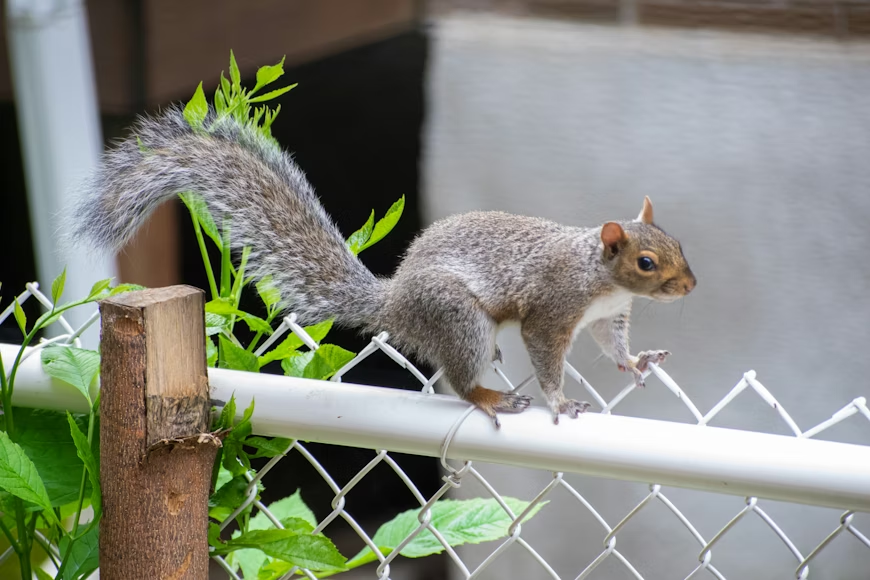
For homeowners, Gray Squirrels often become nuisance visitors when they invade attics, chew on structures, or raid bird feeders.
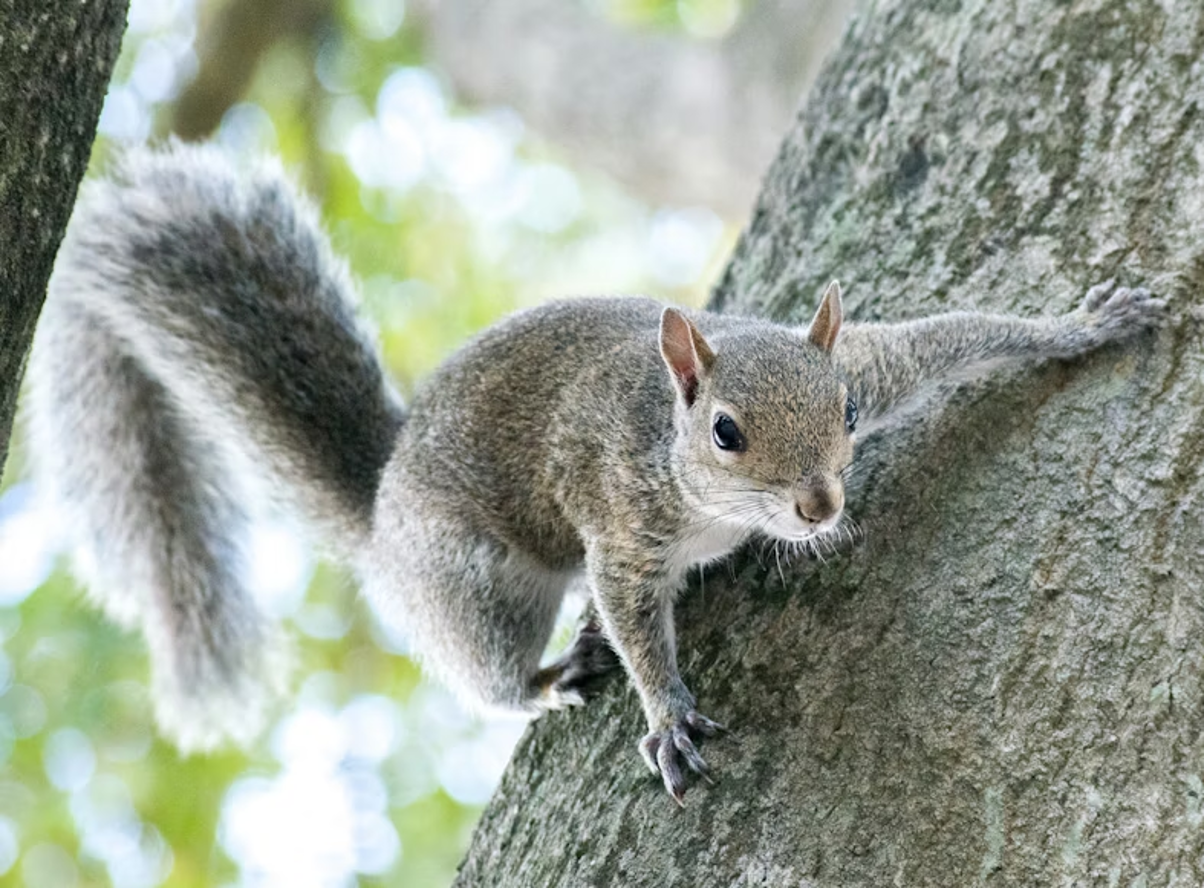
The Eastern Gray Squirrel (Sciurus carolinensis) reigns as Virginia’s most common and widely recognized squirrel species. These adaptable rodents thrive in virtually every Virginia county, with two subspecies present: the Northern Gray Squirrel and the Carolina Gray Squirrel.
Typically weighing between 14 and 21 ounces and measuring 9–11 inches in length, these nimble creatures sport their characteristic salt-and-pepper gray fur with white undersides, though melanistic (black) and albino variations occasionally occur.
Eastern Gray Squirrels demonstrate remarkable adaptability, flourishing in environments ranging from deep forests to urban parks. Their diet primarily consists of nuts, seeds, fruits, fungi, and occasionally bird eggs or insects.
These squirrels are famous for their food-caching behavior, burying thousands of acorns and nuts each fall—a habit that inadvertently contributes to forest regeneration when these forgotten caches sprout into new trees.
2. Southern Flying Squirrel: The Nocturnal Glider
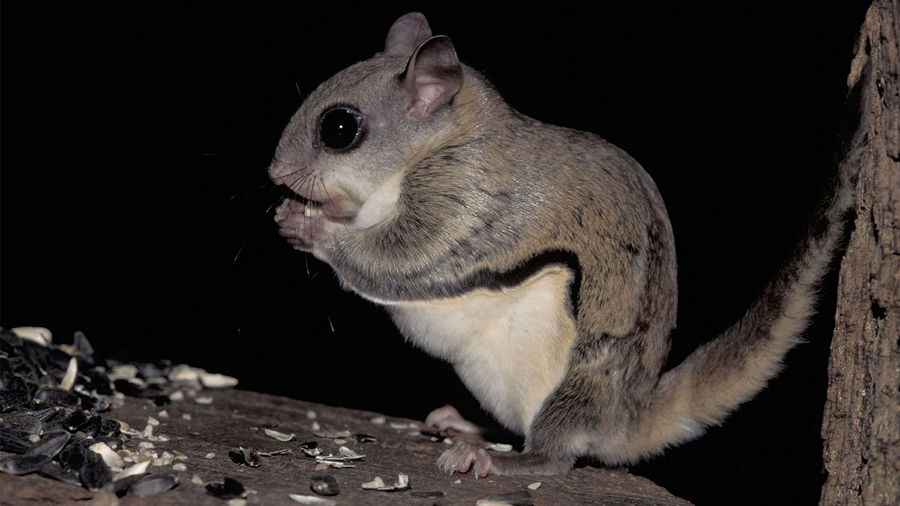
Contrary to their name, flying squirrels don’t actually fly but instead glide distances up to 150 feet by leaping from high perches and extending their specialized skin membranes. (Image courtesy of Illinois Department of Natural Resources)
Despite being Virginia’s most common flying squirrel, the Southern Flying Squirrel (Glaucomys volans) remains largely unseen due to its strictly nocturnal lifestyle.
Significantly smaller than their gray cousins, at only 2–4 ounces, these diminutive mammals possess large, soulful eyes perfectly adapted for night vision and a distinctive loose membrane of skin (patagium) that stretches from wrist to ankle, enabling their impressive gliding abilities.
Their flattened tails serve as rudders during these aerial journeys, allowing remarkable precision in landing. These social creatures often nest in groups during winter months, sharing body heat in tree cavities, nest boxes, or occasionally attics, with up to 20 individuals sometimes sharing a single nest.
3. Fox Squirrel: Virginia’s Largest Tree Squirrel
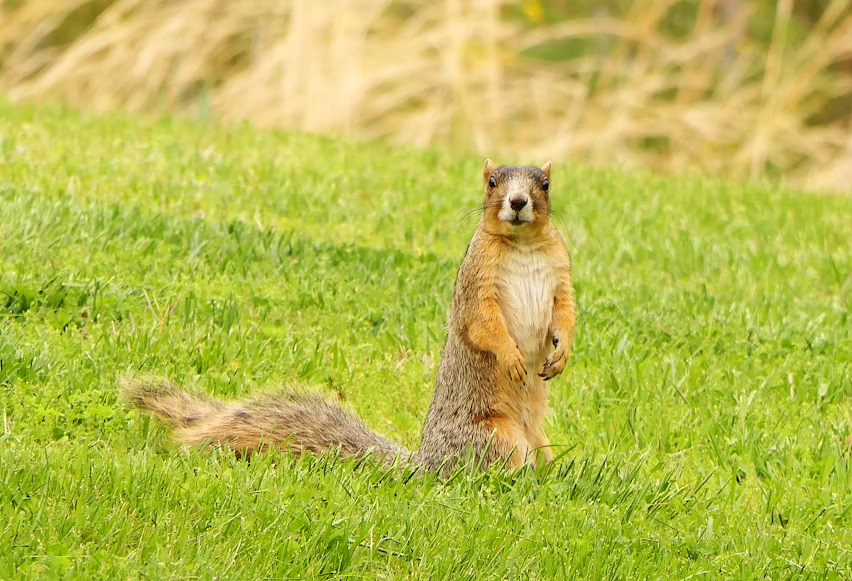
The Fox Squirrel (Sciurus niger) stands as Virginia’s largest tree squirrel species, with four subspecies recognized throughout the state.
These impressive rodents can weigh from 2.5 up to 3 pounds and have body lengths of up to 15 inches, not including their magnificent bushy tails. Their coloration varies significantly across subspecies, ranging from gray with yellowish-brown bellies to striking silver-gray with black heads and white noses, to the most distinctive rusty-orange variety with black masks.
Unlike the adaptable Gray Squirrel, Fox Squirrels prefer more specialized habitats, including open woodlands, pine-oak forests, and river bottoms. In Virginia, they’re most commonly found in the western and southwestern regions, though populations have declined in some areas due to habitat loss.
These generally solitary creatures are less likely to invade homes than their gray cousins, but occasionally cause similar problems when they do—and their larger size means more substantial damage when gnawing on structures or wiring.
Fox Squirrels move with a distinctive lumbering gait compared to the quicker, more nervous movements of Gray Squirrels. Their diet parallels that of other tree squirrels, consisting primarily of nuts, seeds, fungi, fruits, and occasional insects.
4. Red Squirrel: The Territorial Forest Dweller
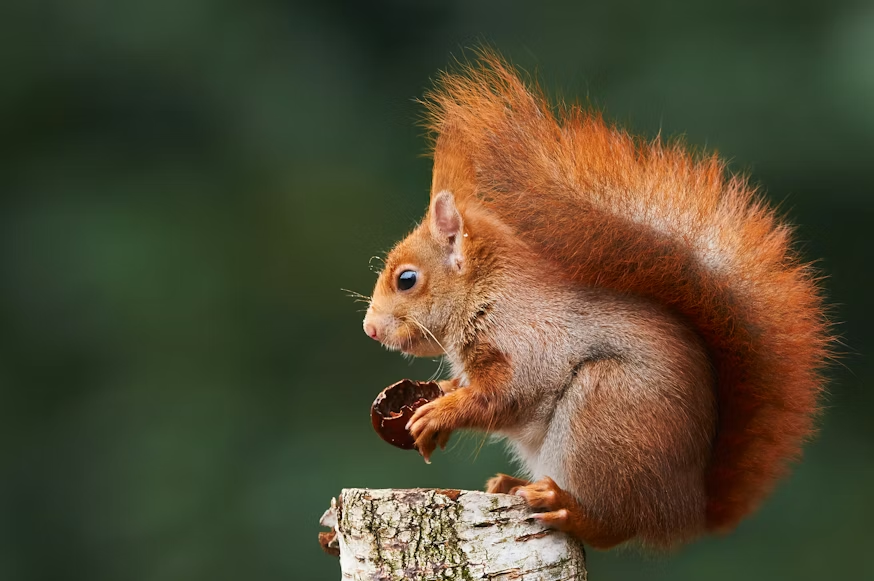
The Red Squirrel (Tamiasciurus hudsonicus) inhabits Virginia’s western mountain regions, particularly in coniferous forests.
Significantly smaller than Gray or Fox Squirrels but larger than Flying Squirrels, Red Squirrels typically weigh 9–10 ounces with 6–10 inch body lengths.
Their rusty-red upperparts contrast with white underparts and the characteristic white eye-ring that helps distinguish them from other species. These highly vocal and territorial squirrels announce their presence with distinctive chattering calls, especially when defending their territories against intruders.
Unlike other Virginia squirrels that primarily cache individual nuts, Red Squirrels create large middens—central caching areas where they store pine cones and other conifer seeds. These middens, often located near their nests in tree cavities or leaf nests, can contain thousands of cones and persist for generations of squirrels.
Red Squirrels rarely enter homes but occasionally nest in outbuildings or cabins in mountainous areas. Their populations fluctuate with conifer seed production cycles, and they face habitat challenges as climate change impacts high-elevation forest ecosystems.
5. Northern Flying Squirrel: The Endangered Mountain Dweller
The Northern Flying Squirrel (Glaucomys sabrinus), specifically the Virginia subspecies (Glaucomys sabrinus fuscus), represents one of Virginia’s rarest and most ecologically significant mammals.
Unlike its more common Southern Flying Squirrel cousin, the Northern Flying Squirrel is restricted to isolated high-elevation habitats in Virginia’s western mountain regions, where it faces ongoing conservation challenges.
Larger than the Southern Flying Squirrel, the Northern Flying Squirrel measures 11–12 inches in total length and weighs 4–6.5 ounces. Its coat is dense and soft, with grayish-brown sides sometimes washed with cinnamon coloring.
A key distinguishing feature is the belly fur, which appears slate-colored at the base rather than the pure white of the Southern species.
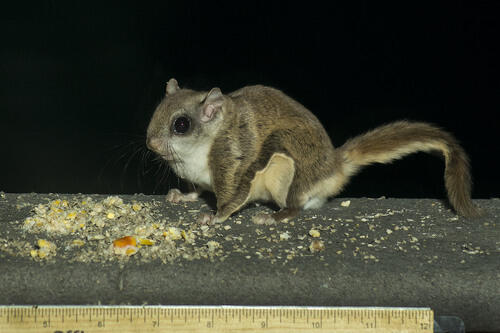
Like all flying squirrels, Northern Flying Squirrel possesses the characteristic patagium membrane between their fore and hind legs and is large. (Image source: Mass.gov, Commonwealth of Massachusetts)
These squirrels inhabit the ecotone between coniferous and northern hardwood forests, especially red spruce–dominated areas above 3,400 feet, and rely heavily on lichens and underground fungi they locate by smell.
This specialized diet, unlike the nut-focused diets of other Virginia squirrels, ties them closely to specific high-elevation forest conditions.
Signs of Squirrels on Your Property
Sounds and Activity Patterns
Scratching, scampering, and scurrying sounds in attics or walls often provide the first indication of squirrel activity. Gray Squirrels, Fox Squirrels, and Red Squirrels are most active during early morning and late afternoon, so daytime noises typically indicate these species.
In contrast, sounds heard after dark suggest Flying Squirrels, which are strictly nocturnal. The persistent scratching of a squirrel gnawing on wood or wiring differs distinctly from the rapid scampering of movement between locations.
Gnaw Marks and Entry Points
Squirrels’ teeth grow continuously, requiring constant gnawing to keep them manageable. Look for gnaw marks on wooden structures, fascia boards, roof vents, soffit intersections, and eaves.
Chewed holes measuring 1.5 inches or larger on rooflines, siding, or near eaves indicate potential entry points. Cedar shingles are particularly vulnerable to squirrel damage. Urine-stained roof shingles combined with visible chew marks often signal an impending attic invasion.
Droppings and Waste
Squirrel droppings are small, dark brown, pellet-shaped, and similar in appearance to large grains of rice. They accumulate in attics, garages, and near entry points.
Over time, droppings and urine can seep through insulation, causing staining, peeling, and bubbling on ceilings and walls that may initially resemble water damage.
Nesting Materials and Food Caches
Squirrels construct nests from twigs, leaves, grass, moss, and shredded bark. Inside homes, they supplement these materials with torn insulation, cardboard, and fabric. Finding piles of shredded materials in attic spaces indicates active nesting.
Additionally, squirrels create food caches of nuts and seeds throughout their territory. Discovering acorn shells, hickory nut fragments, or pine cone debris in attics or gutters confirms squirrel activity and may attract additional pests.
Virginia Squirrel Species: Summary Table
The following table summarizes key characteristics of Virginia’s five squirrel species to aid in identification and understanding their potential impact on residential properties.
| Species | Size & Weight | Habitat | Activity Pattern | Residential Risk |
| Eastern Gray Squirrel | 9–11 inches; 14–21 oz | Statewide; forests to urban parks | Diurnal (daytime) | High – most common home invader |
| Southern Flying Squirrel | 8–10 inches; 2–4 oz | Statewide; deciduous and mixed forests | Nocturnal | Moderate – colonial attic nesting |
| Fox Squirrel | Up to 15 inches; 2.5–3 lbs | Western/SW Virginia; open woodlands | Diurnal (daytime) | Low – prefers natural habitats |
| Red Squirrel | 6–10 inches; 9–10 oz | Western mountains; coniferous forests | Diurnal (daytime) | Low – rare near residences |
| Northern Flying Squirrel | 11–12 inches; 4–6.5 oz | High elevations (3,400+ ft); spruce forests | Nocturnal | Very Low – endangered; remote habitat |
Note: Residential risk refers to the likelihood that the species will cause property damage or require pest management intervention. Conservation status should be considered when encountering any squirrel species, particularly the endangered Northern Flying Squirrel.
Effective Squirrel Pest Control Options
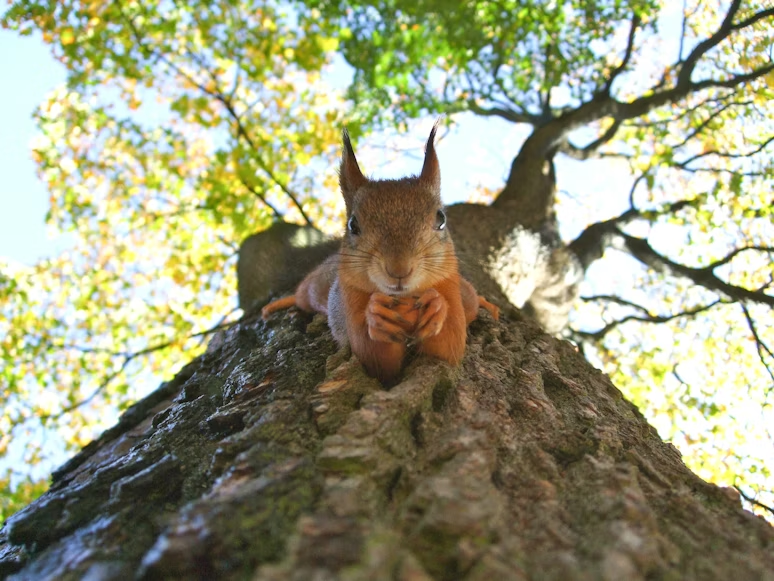
The most successful approach combines habitat modification, exclusion techniques, and deterrents tailored to the specific squirrel species causing concern.
Securing Your Home Against Entry
The most effective squirrel prevention strategy involves thorough inspection and sealing of potential entry points around buildings. Gray Squirrels can squeeze through openings as small as 1.5 inches in diameter, while Flying Squirrels need only 1-inch gaps.
Common entry points include damaged roof vents, deteriorated soffit intersections, gaps along rooflines, uncapped chimneys, and openings around utility penetrations. Special attention should be paid to trees providing roof access, as squirrels excel at climbing and jumping between structures.
Landscape Modifications That Deter Squirrels
Strategic landscape management can significantly reduce squirrel problems around homes without eliminating these beneficial wildlife completely. Maintaining at least a 10-foot clearance between tree branches and rooflines prevents easy access to structures, while trimming overhanging limbs disrupts the “squirrel highways” these agile creatures establish.
Installing properly designed squirrel baffles on bird feeder poles, promptly removing fallen nuts and fruits, and positioning gardens away from trees and structures all contribute to reduced squirrel activity in sensitive areas without harming these important ecosystem contributors.
How Connor’s Pest Pros Can Help

Connor’s Pest Pros delivers species-specific expertise to effectively serve Virginia homeowners.
Squirrels don’t use just one way in. That’s why at Connor’s Pest Pros, we inspect your entire structure methodically—finding the holes they’re using now, the weak spots they’d move to next, and the vulnerabilities that half-measure solutions always miss.
Timing matters more than most people realize. Squirrel breeding seasons complicate removal, but when urgent situations can’t wait, we use reunification methods that keep families together while still getting them out for good. Our technicians show up on time, explain your options without pressure, and know their stuff.
Squirrels are rarely the only concern Virginia homeowners face. That’s why we handle the full range: ants, spiders, and other household pests, with same-day or next-day availability. Termites get 24/7 proactive protection to safeguard your property value. Bed bugs are eliminated quickly with professional protocols. And when squirrels have already torn through insulation, gnawed wiring, or damaged building materials, our repair service puts things back together.
Over 415 five-star reviews back up what thorough exclusion work accomplishes—results that quick fixes simply can’t deliver. Our 100% satisfaction guarantee means we’ll provide free re-treatments until you’re completely satisfied.
Got squirrels right now? Call before noon, and we’ll typically be out to provide same-day service.
Contact us today for your free quote!
Frequently Asked Questions (FAQs)
What kind of squirrels are in Virginia?
Virginia is home to five squirrel species: the Eastern Gray Squirrel, Southern Flying Squirrel, Fox Squirrel, Red Squirrel, and Northern Flying Squirrel. The Eastern Gray Squirrel is the most common and widespread throughout the state.
Are there any flying squirrels in Virginia?
Yes, Virginia is home to two flying squirrel species: the Southern Flying Squirrel and the Northern Flying Squirrel.
Do Virginia squirrels hibernate during winter?
None of Virginia’s squirrel species truly hibernates. Eastern Gray Squirrels, Fox Squirrels, and Red Squirrels remain active year-round, though they significantly reduce activity during severe weather events. These species prepare for winter by caching food, building insulated nests, and increasing body fat reserves.
Southern Flying Squirrels enter a state called torpor during the coldest periods—temporarily reduced body temperature and metabolism that lasts days rather than the months-long shutdown of true hibernation.
Can squirrels in Virginia transmit diseases to humans?
Virginia’s squirrels pose a relatively low risk of disease transmission to humans compared to some other wildlife, but several potential health concerns warrant attention. Squirrels can carry ectoparasites, including ticks, fleas, and mites, which may transfer to humans or pets and potentially transmit diseases like Lyme disease.
When squirrels establish nests in attics or wall voids, these parasites sometimes migrate into living spaces after the squirrels depart or die.
What should I do if I find baby squirrels in my attic?
Discovering baby squirrels in your attic requires careful consideration of both humane treatment and effective resolution. First, determine if the juveniles are truly orphaned or if the mother is still caring for them—mother squirrels regularly leave babies unattended while foraging, typically returning within a few hours.
If possible, maintain distance and monitor for maternal returns before intervening. When immediate removal is necessary due to property damage or safety concerns, Connor’s Pest Pros implements reunification strategies that keep families together while removing them from the structure.
*Image Disclaimer: Some images used in this blog post are sourced from third-party websites and remain the property of their respective owners unless otherwise stated. We do not claim ownership of these images and use them for illustrative purposes only.