
Key Takeaways
- Cockroach droppings hold solid form as either pepper-like specks (German cockroaches, around 1mm) or ridged cylindrical pellets up to 2mm (American and Oriental cockroaches), while bed bug feces appear as ink-like spots under 1mm that absorb into fabric.
- Most homeowners misread the evidence by checking only color or size, when location and moisture response are the faster tells: cockroach waste sits on surfaces near food and water, and bed bug waste bleeds into mattress seams and box springs.
- For DC metro homeowners who want a definitive answer the same day, Connor’s Pest Pros confirms whether the droppings are from cockroaches, bed bugs, or another pest and starts targeted treatment on the spot.
- The smear test settles ambiguous finds in seconds: a damp white cloth wiped across a suspicious spot produces dark rust-coloured streaks for bed bug feces and lifts cockroach pellets cleanly with no spread.
- Connor’s Pest Pros dispatches a technician for same-day pest inspection across the DC metro area when you call before noon, backed by 415+ five-star reviews and a 100% satisfaction guarantee.
Cockroach vs Bed Bug Droppings: Which Pest Is in Your Home?
Cockroach droppings are solid pellets or pepper-like specks that sit on top of surfaces near food and water, while bed bug droppings are ink-like spots under 1mm that absorb into fabric and smear rust-coloured when wiped with a damp cloth. German cockroaches leave 1mm grainy specks in kitchens and bathrooms, larger American and Oriental cockroaches drop ridged 2mm pellets in basements and crawl spaces, and bed bugs cluster their waste on mattress seams, box springs, and headboards. Which pest is in your home depends on where the droppings sit and how they react to moisture.
If you live in the DC metro area and need a definitive answer, this guide walks through the visual differences, the smear test, the location patterns, and when it is time to bring in a professional.
|
Connor’s Pest Pros: Family-Owned Pest Control Experts Choose Your Pest Protection Solution:
Customer Praise:
★★★★★ “Quick to answer my call and available same-day… I recommend them to anyone looking for pest control in NOVA.” – Jacquelyn L.
Why Choose Connor’s Pest Pros:
|
What Does Cockroach Poop Look Like?
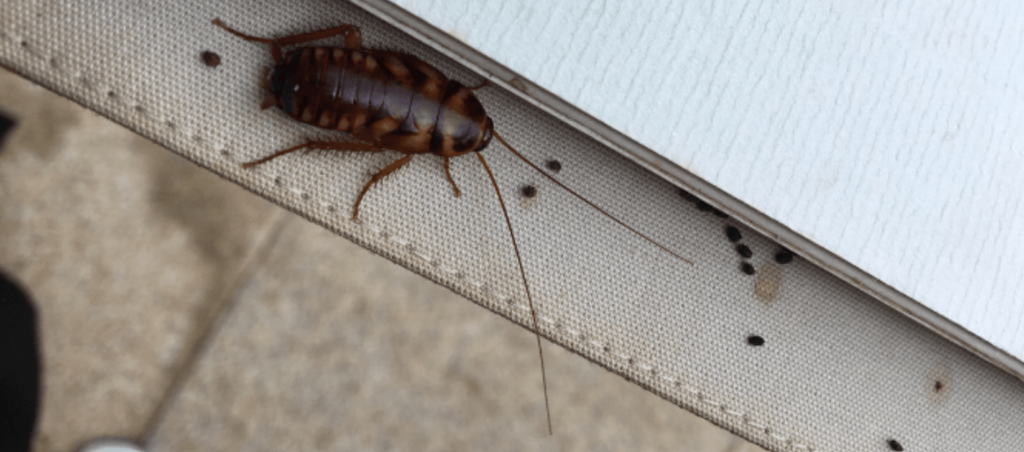
Cockroach droppings vary significantly by species, from the pepper-like specks of German cockroaches to the larger ridged pellets produced by American and Oriental roaches. (Image adapted from here)
German Cockroach Droppings
German cockroaches are the most common indoor species in the DC metro area, and their droppings appear as small dark specks resembling ground black pepper or coffee grounds. Individual particles measure roughly one millimeter or less. Because German cockroaches prefer humid environments near food and water, their droppings concentrate in kitchens and bathrooms.
The texture of German cockroach waste tends toward grainy or slightly smeared rather than distinct pellet shapes. In areas of heavy activity, droppings may accumulate into dark staining on surfaces. Cabinet corners, drawer interiors, under sinks, and behind appliances often show this characteristic dark speckling or smearing.
German cockroach feces sometimes creates a distinctive pattern of small dots surrounded by larger smear marks where roaches have rested. This combination of specks and smears helps distinguish German cockroach waste from other small insect droppings.
American and Oriental Cockroach Droppings
Larger cockroach species produce more substantial droppings that look distinctly different from German cockroach waste. American cockroaches, the large reddish-brown roaches sometimes called water bugs, leave cylindrical pellets approximately two millimetres long with blunt ends and visible ridges running lengthwise. These ridges are a key identifier, since few other insect droppings share this characteristic.
Oriental cockroaches produce similar pellet-shaped droppings, though slightly smaller than American cockroach waste. The ridged, cylindrical shape remains consistent across larger roach species.
These pellets resemble mouse droppings at first glance, though they’re smaller and have the distinctive ridged texture that rodent feces lack. Finding ridged cylindrical pellets in basements, crawl spaces, or around floor drains suggests larger cockroach species rather than mice.
Cockroach Dropping Locations
Cockroaches leave droppings along their travel routes and near areas where they spend time. You’ll find accumulations in cabinet corners and along hinges, inside drawers, behind and under appliances, near water sources like sinks and pipes, in pantries and food storage areas, along baseboards, and in cracks and crevices where roaches hide during daylight.
The kitchen typically shows the heaviest concentration since cockroaches seek food and water. Bathrooms rank second due to moisture availability. Basements, utility rooms, and areas with plumbing access also accumulate droppings.
Cockroach waste appears at floor level and on horizontal surfaces rather than on walls or elevated areas. Roaches travel along edges and through crevices, so droppings follow these pathways. Finding droppings high on walls or ceilings suggests a different pest.
What Does Bed Bug Poop Look Like?
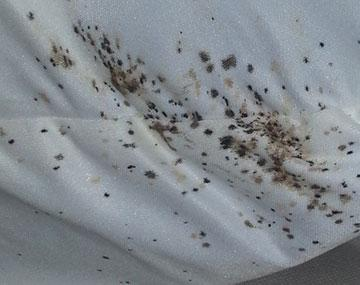
Bed bug fecal spots have a distinctive ink-like appearance that bleeds into fabric and porous surfaces, creating dark stains that smear when touched with moisture. (Image courtesy of Cornell CALS.)
Appearance and Texture
Bed bug feces appear as small dark spots, typically under one millimeter in diameter. Rather than solid pellets, bed bug waste has an ink-like consistency when deposited. On fabric surfaces like mattresses, sheets, and upholstery, the droppings absorb into fibers and spread slightly, creating spots with soft or bleeding edges rather than crisp boundaries.
The color ranges from dark brown to black, sometimes appearing rust-colored especially when fresh or when smeared. This coloration comes from digested blood, since bed bugs feed exclusively on blood. However, unlike flea dirt which turns distinctly reddish-brown when moistened, bed bug feces already present as dried spots that produce dark smearing rather than bright color change.
On non-porous surfaces like wood, metal, or plastic, bed bug droppings may appear more raised and bead-like before drying. Once dried, they leave dark staining that can be difficult to remove completely.
The Smear Test
Bed bug droppings smear when wiped with a damp cloth or paper towel, producing dark streaks. This happens because the digested blood partially rehydrates and spreads. The smearing behavior helps distinguish bed bug waste from dirt, debris, or droppings from non-blood-feeding insects that would flake away rather than smear.
To perform this test, dampen a white cloth or paper towel and gently wipe across suspicious spots. Bed bug feces will produce dark brownish streaks on the cloth. Other debris typically wipes away cleanly or crumbles rather than smearing.
Bed Bug Dropping Locations
Bed bug droppings concentrate in and around sleeping areas because bed bugs live near their hosts and feed during sleep. The primary locations include mattress seams, piping, and tags, box spring fabric and interior surfaces, bed frame joints and crevices, headboard attachment points and decorative details, nightstand interiors and undersides, and wall areas behind and around the bed.
As infestations grow, droppings may appear on nearby furniture, along baseboards, behind picture frames, in electrical outlet covers, and in any crack or crevice within traveling distance of the bed. However, the heaviest concentration remains near sleeping areas.
Unlike cockroach droppings that follow routes to food and water, bed bug waste maps directly to hiding spots near where hosts sleep. This location difference provides one of the clearest distinctions between these two pests.
What Are the Key Differences Between Cockroach and Bed Bug Droppings?
Texture and Form
Cockroach droppings maintain solid form. German cockroach waste appears granular, while larger species produce distinct pellets you can pick up individually. The material feels gritty or sandy when touched and doesn’t easily dissolve or spread.
Bed bug feces lack solid structure. The spots have absorbed into whatever surface they contacted, becoming part of the material rather than sitting on top. You cannot pick up bed bug droppings as distinct particles because they’ve already spread into the surface.
Edge Definition
Cockroach droppings, even small German cockroach specks, have relatively defined edges. Each particle is discrete, with clear boundaries between the dropping and surrounding surface.
Bed bug spots have soft, bleeding edges where the liquid waste spread into porous materials before drying. On fabric especially, you’ll notice the spot gradually fading at its edges rather than stopping crisply.
Response to Moisture
Adding water to cockroach droppings produces minimal effect. The pellets or specks may soften slightly but largely retain their form. Wiping them with a damp cloth removes them without significant smearing.
Bed bug droppings respond dramatically to moisture. Adding water or wiping with a damp cloth causes immediate smearing as the digested blood rehydrates. Dark streaks spread from the original spots, creating obvious staining on cleaning cloths.
Surface Interaction
Cockroach waste sits on surfaces without penetrating. You’ll find droppings in corners, along edges, and in protected spots, but they rest on the material rather than soaking in. Even on porous surfaces, cockroach droppings remain largely superficial.
Bed bug feces penetrate porous surfaces. On mattresses, fabric, unfinished wood, and paper, the droppings stain deeply and permanently. Cleaning removes surface evidence but often leaves lasting discoloration.
Quick Identification: Cockroach vs Bed Bug Droppings
| Feature | Cockroach Droppings | Bed Bug Droppings |
| Size | Varies by species: 1mm specks to 2mm pellets | Tiny dots, typically under 1mm |
| Shape | Cylindrical pellets with ridged ends (large species) or pepper-like specks (small species) | Round or irregular ink-like spots |
| Color | Dark brown to black | Dark brown to black, rust-colored when smeared |
| Texture | Solid, granular, doesn’t dissolve easily | Absorbs into porous surfaces, smears when wet |
| Primary Location | Kitchens, bathrooms, behind appliances, near food sources | Mattresses, box springs, bed frames, headboards |
| Pattern | Scattered along travel routes and near harborage | Clustered in hiding spots near sleeping areas |
The Fastest Way to Confirm What’s in Your Home
Location tells you most of what you need: cockroach droppings near food, water, and harborage; bed bug droppings around mattresses, box springs, and bed frames. Texture and the smear test confirm it. Cockroach pellets stay solid and lift cleanly, and bed bug spots bleed rust-coloured into a damp cloth.
When the evidence is mixed or you want certainty before treating, Connor’s Pest Pros sends a technician the same day for DC metro homeowners who call before noon, confirms the pest, and starts the right treatment on the first visit. One inspection settles the question and starts the fix.
Contact us today for your free quote!
Frequently Asked Questions (FAQs)
Can cockroach droppings look like bed bug droppings?
German cockroach droppings can superficially resemble bed bug feces since both appear as small dark specks. However, key differences emerge on closer examination. Cockroach waste has defined edges and sits on surfaces without absorbing in, while bed bug droppings have bleeding edges and penetrate porous materials. Location also differs dramatically. Finding specks in kitchen cabinets suggests cockroaches, while specks on mattress seams indicate bed bugs.
Do bed bug droppings have a smell?
Heavy bed bug infestations produce a distinctive sweet, musty odor sometimes compared to overripe raspberries or coriander. This smell comes from bed bug scent glands rather than droppings specifically, but the odor accompanies significant fecal accumulation. Light infestations may not produce noticeable odor. Cockroach infestations also create characteristic smells, often described as oily or musty, particularly in areas with heavy populations.
How do I clean up cockroach or bed bug droppings?
Wear gloves during cleanup. For cockroach droppings, vacuum accumulations thoroughly, then clean surfaces with disinfectant solution. Pay special attention to food storage and preparation areas. For bed bug droppings, vacuum affected surfaces and launder bedding in hot water. Mattress spots may require enzymatic cleaners to break down the blood-based stains. Both situations benefit from HEPA-filtered vacuums, and dispose of vacuum contents in sealed bags outside your home.
How quickly do droppings accumulate after infestation begins?
Both pests produce droppings continuously while active. Cockroaches defecate frequently, with populations leaving noticeable accumulation within days to weeks depending on numbers. Bed bugs leave fecal spots after each blood meal, typically weekly for established bugs. Finding significant dropping accumulation indicates established presence rather than recent arrival. Even small amounts of bed bug evidence warrant prompt attention due to rapid reproduction potential.
What does Connor’s Pest Pros offer DC metro homeowners dealing with cockroach or bed bug droppings?
Connor’s Pest Pros provides same-day pest identification and treatment for DC metro homeowners who call before noon. Technicians confirm whether droppings are from cockroaches, bed bugs, or another pest and implement targeted control for the confirmed infestation. Every service is backed by a 100% satisfaction guarantee.
*Image Disclaimer: Some images used in this blog post are sourced from third-party websites and remain the property of their respective owners unless otherwise stated. We do not claim ownership of these images and use them for illustrative purposes only.